
Acanthognathus rudis
- Sci. Name
- Acanthognathus rudis
- Tribe
- Attini
- Subfamily
- Myrmicinae
- Author
- Brown & Kempf, 1969
- Distribution
- Found in 1 countries
Introduction
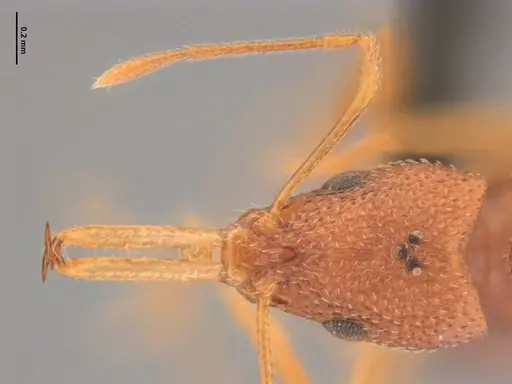
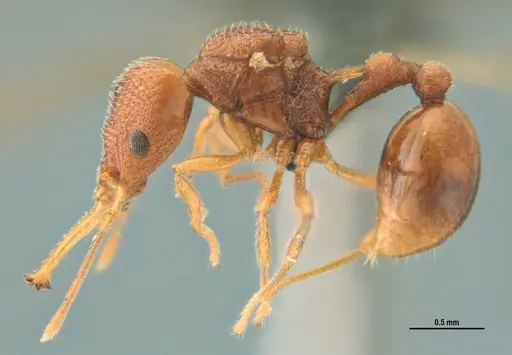
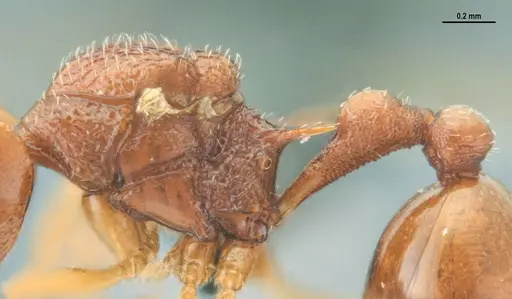
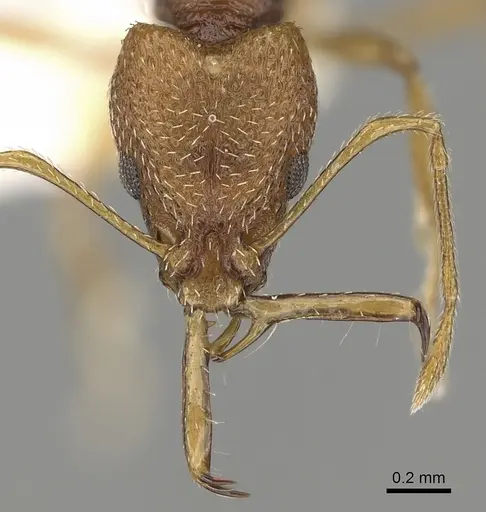
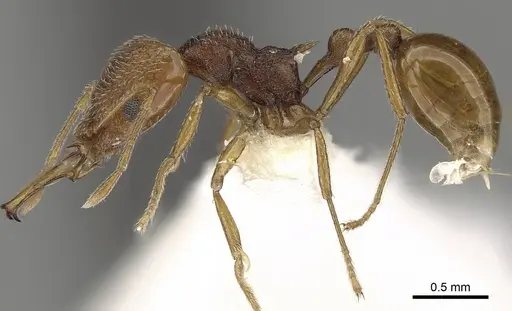
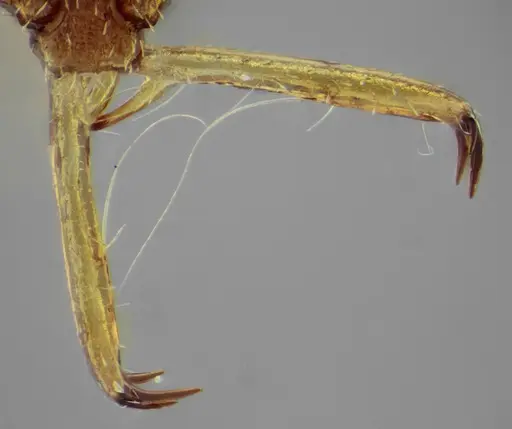
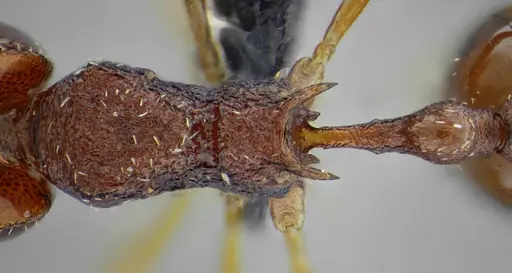
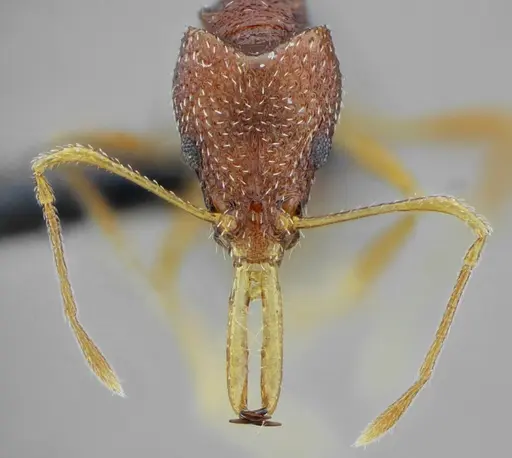
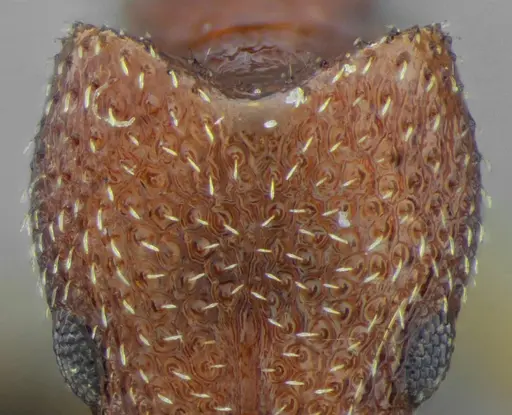
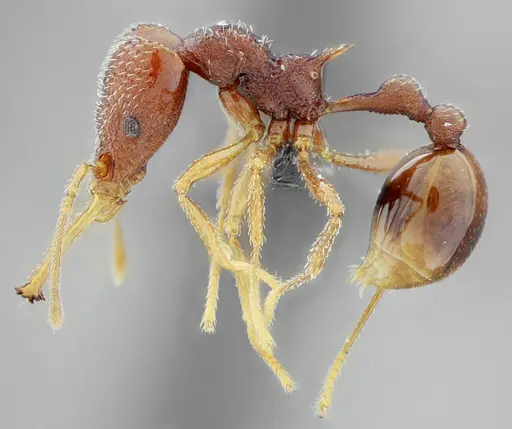
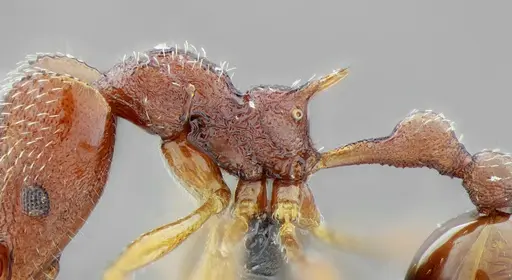
Acanthognathus rudis is a small trap-jaw ant from the Atlantic Forest of South America. Workers total about 4.2 mm long and have a light reddish-brown color with a darker band across the abdomen . Their most striking feature is the pair of extremely long, slender mandibles that can open to 180° and snap shut in less than 2.5 ms to capture prey . In the wild they nest in cavities inside rotting wood and decomposing logs in primary Atlantic Forest in Brazil, Paraguay, and Argentina . These ants are specialized predators with a unique hunting style. Workers forage alone and stalk springtails (collembola) in the leaf litter, holding their mandibles open at a 180° angle while approaching . When prey touches specialized trigger hairs on the mandibles, the jaws snap shut with incredible speed, impaling the victim on long fang‑like teeth . After capture, workers sting the prey repeatedly and carry it back to the nest, where they knead the body to squeeze out liquid food, leaving the husk nearly intact . The species produces both winged queens and wingless ergatoid queens that can serve as replacement reproductives .
Quick Summary
- Difficulty: Expert
- Origin & Habitat: Atlantic Forest of Brazil, Paraguay, and Argentina, nests in rotting wood and leaf litter in primary forest [1][4][3]
- Colony Type: Single-queen colonies with both winged and ergatoid (wingless) replacement queens documented [6]
- Size & Growth:
- Queen: 4.2–4.8 mm total length (winged queens), 3.5–4.2 mm (ergatoid queens) [6]
- Worker: About 4.2 mm total length [1]
- Colony: Unknown, likely under 100 workers based on solitary foraging and observed colony composition [5]
- Growth: Slow to moderate
- Development: Unknown, probably 6–10 weeks at 25°C based on related small Myrmicinae [2] (Development time not directly studied, this estimate assumes a steady 25°C [2])
- Antkeeping:
- Temperature: Keep at 25°C – the species was successfully reared at this temperature in the lab [2]. Tropical ants need stable warmth.
- Humidity: High humidity required, the nest substrate should feel damp, like rotting wood. Use moist plaster or Y‑tong nests [2][1].
- Diapause: No – this tropical species stays active year‑round [1]
- Nesting: In nature they nest in cavities in rotting wood. In captivity use moist plaster or Y‑tong nests with small chambers. Avoid dry setups [2][1].
- Behavior: Solitary foraging specialist that hunts springtails using trap‑jaw strikes. Workers hold mandibles open at 180° when foraging or threatened [3][5]. Not aggressive toward humans but will sting prey. Because of their small size (4 mm) and slender build, they are excellent escape artists [1].
- Common Issues: diet specialization is extreme – they need live springtails (collembola) and may reject other prey including termites and mealworms [7], tiny size means standard escape barriers may fail, use fine mesh and Fluon barriers, requires consistently moist nest conditions, drying out kills colonies quickly, prey capture requires live springtails that trigger the mandible hairs, dead prey is not accepted
The Trap‑Jaw Hunting Mechanism
Acanthognathus rudis has one of the fastest predatory strikes in the animal kingdom. Its mandibles can snap shut in less than 2.5 ms – faster than a human blink [2]. Workers hunt by approaching prey slowly with mandibles held open at 180° [3]. Each mandible has a specialized trigger hair that acts as a range finder. When prey touches these hairs, the mandibles release with a catapult mechanism powered by massive slow muscle fibers that store elastic energy [2]. The mandibles are asymmetrical – all Acanthognathus species are 'right‑handed': the right accessory process slides under the left one [2]. After catching prey, workers sting it repeatedly and carry it back to the nest, where they knead it for minutes to squeeze out liquid food, leaving the husk almost intact [2].
Specialized Diet Requirements
This species is an obligate predator of springtails (collembola). In feeding trials workers captured entomobryid springtails and also accepted tenebrionid beetle larvae (Palembus sp.), but they rejected termite workers and Tenebrio mealworm larvae [7]. This extreme specialization makes them very challenging to keep. You must provide live springtails that are small enough to trigger the hunting response. The prey must be active – workers use antennal contact to start hunting and will not take dead insects [2]. Offer springtails in a small outworld with leaf‑litter substrate where the ants can hunt naturally.
Nest Setup and Humidity
In nature Acanthognathus rudis nests in cavities inside rotting wood and decomposing logs [1][3]. In captivity they need consistently moist conditions that mimic rotting wood. A plaster nest kept damp works well, as does a Y‑tong nest with small chambers [2]. The substrate should feel damp but not waterlogged. Provide a humidity gradient if possible, though they generally prefer moist areas. Because workers are only 4 mm long, cover any ventilation holes with fine mesh to prevent escapes [1].
Ergatoid Queens and Colony Reproduction
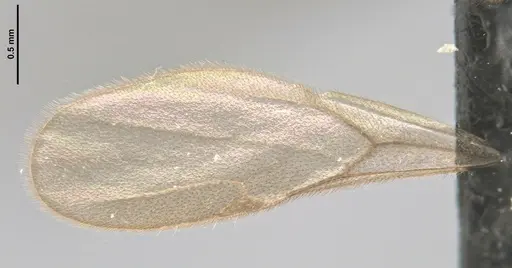
Unlike most ants that only produce winged queens, Acanthognathus rudis colonies contain both normal winged queens and ergatoid queens – wingless reproductive females that look like large workers [6]. These ergatoids have a median ocellus (simple eye) on the head (though smaller than in winged queens), and their body size falls between workers and winged queens [6]. The presence of ergatoids suggests they can serve as replacement reproductives if the primary queen dies. Both types of queens can occur together in the same colony [6].
Hunting Behavior and Foraging
Workers forage alone, not in groups [5]. They are visual hunters that stalk prey in the leaf litter. When threatened or approaching prey, workers hold their mandibles open at about 180° [3]. They use their antennae for initial contact with prey, then withdraw them during the final approach to protect them from the struggling victim [2]. After a strike they use the basal processes of their mandibles to handle and transport prey and brood items [3]. This solitary hunting strategy means colonies grow slowly and do not need large foraging areas.
Frequently Asked Questions
What do Acanthognathus rudis eat?
They are specialized predators of springtails (collembola). They may accept small beetle larvae but have been observed rejecting termites and mealworms. You must provide live, active prey to trigger their hunting response [7][2].
How long until Acanthognathus rudis gets first workers?
The egg‑to‑worker timeline has not been studied. Based on their small size and related Myrmicinae species, expect roughly 6–10 weeks at 25 °C, though this is an estimate [2].
Are Acanthognathus rudis good for beginners?
No. They are expert‑level ants because of their specialized diet (live springtails), high humidity needs, and small size that makes them prone to escaping [7][1].
Do Acanthognathus rudis need hibernation?
No. They are a tropical species from the Atlantic Forest and remain active year‑round at about 25 °C [1][2].
Can I keep multiple Acanthognathus rudis queens together?
Not recommended. Colonies appear to be single‑queen (monogyne), and combining queens has not been documented. Ergatoid queens in the colony are likely daughters that replace the mother, not co‑founders [6].
Why are my Acanthognathus rudis not eating?
They likely need live springtails. They hunt using trigger hairs on their mandibles that respond to movement, and they have been observed rejecting dead prey and inactive insects like termites [7][2].
Can I keep Acanthognathus rudis in a test tube?
A test tube can work for small colonies if kept moist, but they prefer nest materials that mimic rotting wood. Make sure the tube has a tight seal and very small openings – they are only 4 mm long and can escape through tiny gaps [1].
What temperature do Acanthognathus rudis need?
Keep them at about 25 °C, based on successful laboratory rearing. As tropical ants they need stable warm temperatures and will not tolerate cold [2].
How big do Acanthognathus rudis colonies get?
Maximum colony size is unknown. They are solitary foragers with a specialized diet, which suggests they remain relatively small compared to generalist species [5].
Report an Issue
The current care sheet is based fully on literature. See inconsistencies, or something that's incorrect? Please , it will be resolved after review from an admin. Contributing to the blogs tab also helps providing information, to make us be able to further improve the caresheets. Thank you for your support!
References

This caresheet is licensed under CC BY-SA 4.0 .
Community Blogs
ANTWEB1032965
View on AntWeb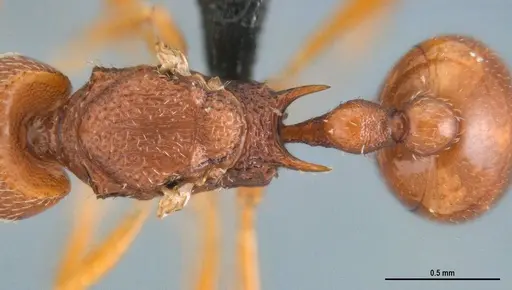
CASENT0280685
View on AntWeb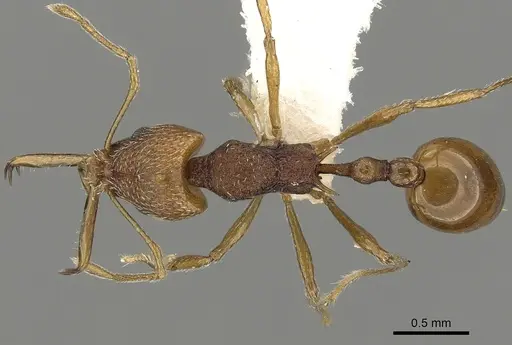
UFV-LABECOL-004828
View on AntWeb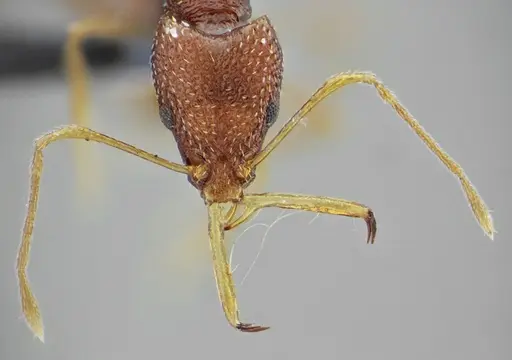
UFV-LABECOL-004829
View on AntWeb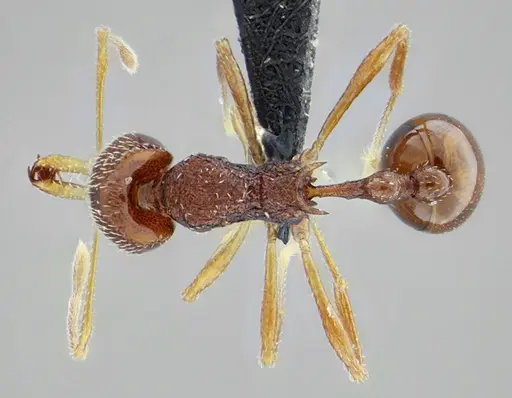
Literature
Loading distribution map...Loading products...