
Tetramorium robertsoni
- Wiss. Name
- Tetramorium robertsoni
- Tribus
- Crematogastrini
- Unterfamilie
- Myrmicinae
- Autor
- Hita Garcia <i>et al.</i>, 2010
- Verbreitung
- In 0 Ländern gefunden
Einleitung
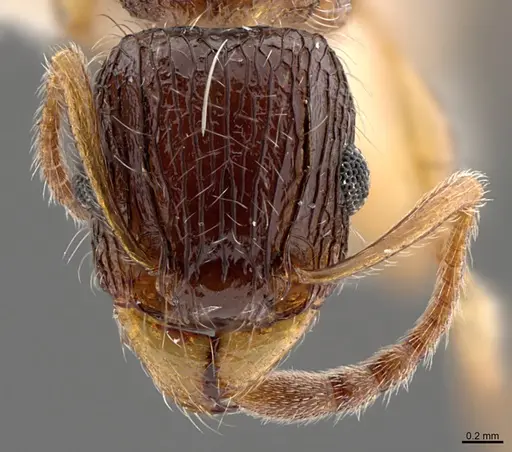
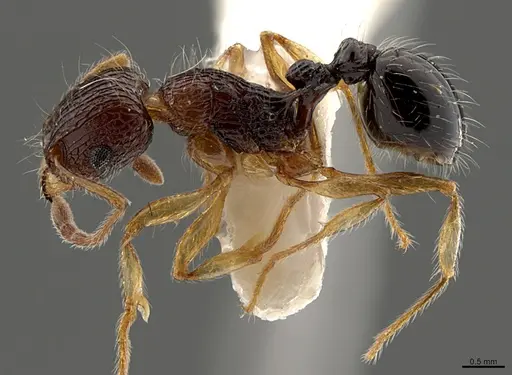
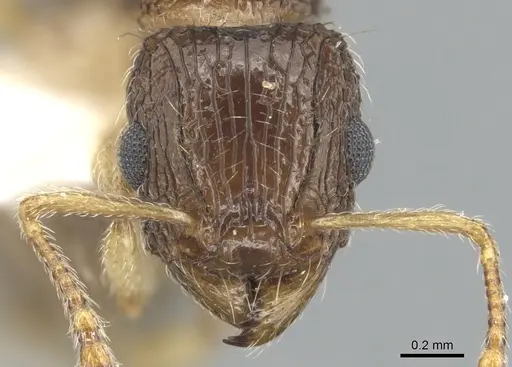
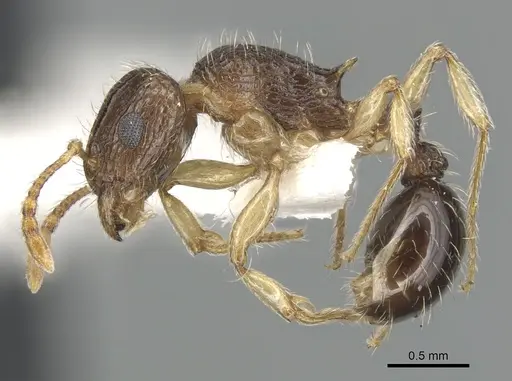
Tetramorium robertsoni is a small ant from Tanzania, East Africa. Workers have a uniformly brown body with lighter legs and antennae. They stand out for their relatively large eyes, long propodeal spines, and a covering of long, simple hairs on their head, middle body, and rear . Described in 2010,this species is known only from a few scattered sites in Tanzania, mainly in savanna habitats . Beyond a preference for open areas, almost nothing is known about their wild biology .
Quick Summary
- Difficulty: Medium
- Origin & Habitat: Tanzania, East Africa, found in savanna habitats, for example on unburnt slopes in Mkomazi Game Reserve and near Amani [1][2]
- Colony Type: Unconfirmed, likely monogyne (single queen) based on typical Tetramorium patterns, but no species‑specific data exists
- Size & Growth:
- Queen: Unknown, not described in the literature, estimated ~6‑8mm from genus patterns
- Worker: Size data unavailable (only head and other partial measurements exist), estimated ~3‑4mm based on typical Tetramorium worker size
- Colony: Unknown, typical Tetramorium reach several hundred workers
- Growth: Moderate, estimated from genus patterns
- Development: Estimated 6‑8 weeks at 24‑26°C based on related Tetramorium species (Development timeline is unconfirmed for this species, estimates are based on genus‑level data for savanna Tetramorium)
- Antkeeping:
- Temperature: Keep at 22‑26°C. These are African savanna ants that need stable warmth. A heating cable on one side of the nest creates a useful temperature gradient.
- Humidity: Moderate, keep the nest substrate slightly moist but allow parts to dry. Savannah species tolerate drier conditions than forest ants.
- Diapause: Unlikely, Tanzania is near the equator with little seasonal temperature change. A slight winter temperature drop is fine but not needed.
- Nesting: In nature they likely nest in soil under stones or shallow cavities. In captivity a Y‑tong (AAC) or plaster nest works well. Provide a moisture gradient so the colony can choose its preferred humidity.
- Behavior: Typical of Tetramorium, generally non‑aggressive but will defend the nest. Workers forage for small insects and honeydew. As Myrmicinae they possess a functional stinger and can deliver a mild sting if handled roughly. Escape risk is moderate: these ants are small but not as prone to escaping as tiny species like Pheidole.
- Common Issues: very little biological data exists, making care recommendations uncertain, wild‑caught colonies may carry parasites that are hard to treat, colony growth may be slow due to limited founding documentation, temperature management is critical, avoid cold drafts, small colonies need careful feeding to avoid mold from excess food
Appearance and Identification
Tetramorium robertsoni workers are small ants, estimated at roughly 3‑4mm total length. They are uniformly brown with lighter legs and antennae. Their head is slightly longer than wide, and they have relatively large eyes for a Tetramorium, probably an adaptation for open savanna. They are covered with many long, simple, standing hairs on the head, middle body, petiole, postpetiole, and gaster. Other key features: long propodeal spines, a high nodiform petiole, and an unsculptured, shiny clypeus (the front part of the head above the mandibles) [1]. These traits separate them from similar species like Tetramorium edouardi and Tetramorium rubrum [1].
Natural History and Distribution
This species is known only from a few locations in Tanzania, East Africa. Type specimens were collected in savanna habitats of the Mkomazi Game Reserve (on an unburnt slope) and near Amani in the Eastern Arc Mountains [1]. Unlike some Tetramorium that prefer forest understory, T. robertsoni shows a clear preference for open areas [2]. The savanna environment gives them warm temperatures year‑round with distinct wet and dry seasons, not cold winters [1].
Housing and Nest Setup
For Tetramorium robertsoni, a Y‑tong (AAC) or plaster formicarium works well. These ants appreciate a moisture gradient, keep one side of the nest moderately humid and the other side a bit drier, so the colony can self‑regulate. A test tube setup is fine for starting a colony, but move them to a larger nest once you have 20‑30 workers. Because they come from open savanna, make sure the outworld is well‑ventilated while the nest stays at stable humidity. Use a shallow water reservoir in the nest to provide moisture without flooding.
Feeding and Diet
Like most Tetramorium, these ants are omnivorous but prefer protein. Offer small live insects like fruit flies, pinhead crickets, or tiny mealworms. They also take sugar water or honey water. Feed protein 2‑3 times per week and remove any leftover prey after 24 hours to prevent mold. Keep a constant sugar source (a small cotton ball soaked in honey water). Since the ants are small, make sure any prey is no larger than the workers themselves.
Temperature and Seasonal Care
As savanna ants from Tanzania, Tetramorium robertsoni prefer warmth. Keep the nest at 22‑26°C. A heating cable on one side of the nest creates a temperature gradient, which many ants naturally prefer. Avoid temperatures below 20°C or above 30°C for long periods. Because Tanzania is near the equator, these ants probably do not need a true hibernation diapause. You might see less activity in winter if your room cools, but that's normal, no cold rest period is required.
Colony Development and Growth
The queen has not been described in the literature. Based on related Tetramorium, she likely measures 6‑8mm. Founding is assumed to be claustral, the queen seals herself in and raises the first brood without foraging. First workers (nanitics) will be smaller than normal workers and should appear within 6‑8 weeks at 24‑26°C. Colony growth is moderate, expect 50‑100 workers in the first year with good care. Maximum colony size is unknown but probably several hundred workers. Be patient with new colonies, they are vulnerable to stress.
Frequently Asked Questions
How long does it take for Tetramorium robertsoni to have first workers?
Based on typical Tetramorium development, expect first workers (nanitics) about 6‑8 weeks after the queen lays eggs, as long as temperatures stay at 24‑26°C. This is an estimate, no specific data exists for this species.
What do Tetramorium robertsoni ants eat?
They are omnivorous but prefer protein. Offer small live insects like fruit flies, small crickets, or tiny mealworms. They also accept sugar water or honey water. Feed protein 2‑3 times per week and keep a constant sugar source.
Do Tetramorium robertsoni ants sting?
Yes, they belong to Myrmicinae, so they have a functional stinger. However, they are not aggressive and will only sting if handled roughly. The sting is mild, like other small Tetramorium.
What temperature do Tetramorium robertsoni ants need?
Keep them at 22‑26°C. They are warm‑adapted savanna ants from Tanzania that need consistent warmth. A heating cable on one side of the nest can help maintain the right conditions.
Are Tetramorium robertsoni good for beginners?
This species is rated medium difficulty. While not the hardest ant to keep, the lack of biological data makes care more of a guess. Better for keepers with some experience who can adapt based on colony behavior.
How big do Tetramorium robertsoni colonies get?
Maximum colony size is unknown for this species. Based on typical Tetramorium patterns, colonies likely reach several hundred workers. Growth is moderate, a well‑established colony takes 1‑2 years.
Do Tetramorium robertsoni need hibernation?
Hibernation is probably not needed. Tanzania is near the equator with year‑round warmth. You may see less activity in winter if room temperatures drop, but no formal diapause is required.
What type of nest is best for Tetramorium robertsoni?
A Y‑tong (AAC) or plaster formicarium works well. Provide a moisture gradient so the colony can choose its humidity level. Test tubes are fine for starting out but upgrade once the colony grows.
Where is Tetramorium robertsoni found in the wild?
It is known only from a few locations in Tanzania, East Africa. Specimens have been collected in savanna habitats of the Mkomazi Game Reserve and near Amani. They prefer open areas, not forest understory [1][2].
Can I keep multiple Tetramorium robertsoni queens together?
Not recommended. Although colony structure is unconfirmed for this species, most Tetramorium are monogyne (single queen). Putting unrelated queens together usually leads to fighting. Stick to one queen per colony.
Report an Issue
The current care sheet is based fully on literature. See inconsistencies, or something that's incorrect? Please , it will be resolved after review from an admin. Contributing to the blogs tab also helps providing information, to make us be able to further improve the caresheets. Thank you for your support!
References

Dieses Caresheet ist lizenziert unter CC BY-SA 4.0 .
Community-Blogs
CASENT0218277
Auf AntWeb ansehen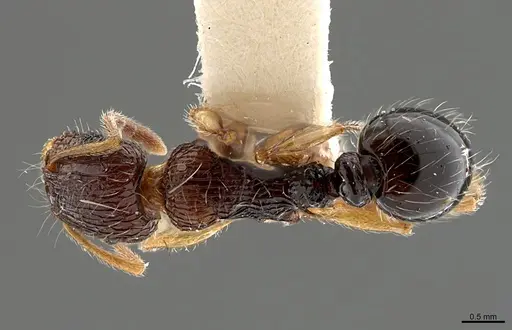
ZFMKHYM20096090
Auf AntWeb ansehen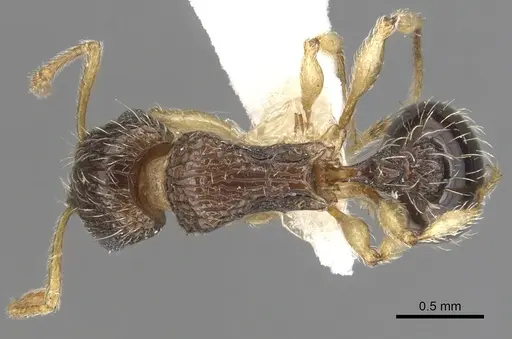
Literatur
Verbreitungskarte wird geladen...Produkte werden geladen...