
Tetramorium jarawa
- Wiss. Name
- Tetramorium jarawa
- Tribus
- Crematogastrini
- Unterfamilie
- Myrmicinae
- Autor
- Agavekar <i>et al.</i>, 2017
- Verbreitung
- In 0 Ländern gefunden
Einleitung
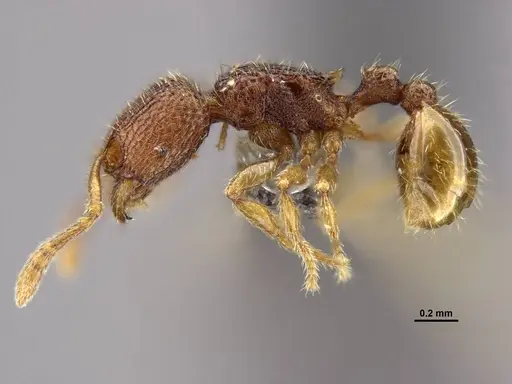
Tetramorium jarawa is a tiny ant from the Tetramorium inglebyi species group . Workers have a striking two-toned look: the head, mesosoma, petiole, and postpetiole are dark reddish brown, while the mandibles, antennae, gaster, and legs are brownish yellow . Their eyes are very small (just 2-3 facets) and their antennae are short, not reaching the back of the head . The propodeal spines are moderately long and curve slightly upward . This species is currently only known from Havelock Island in the Andaman Islands, making it an endemic with a very restricted range . What makes T. jarawa particularly unusual is its extreme rarity and specialized habitat. Researchers found it in only 1 out of 22 leaf‑litter transects during a comprehensive island survey, and it was completely absent from coastal forests and disturbed areas . This suggests it needs very specific, stable microhabitat conditions - likely the damp, undisturbed leaf‑litter of inland evergreen forest . The species was described in 2017,so there is no captive breeding history or established care protocols in the antkeeping hobby.
Quick Summary
- Difficulty: Expert
- Origin & Habitat: Havelock Island, Andaman Islands, India, collected at 5 m elevation in tropical semi‑evergreen forest leaf‑litter, restricted to undisturbed inland evergreen forests [1]
- Colony Type: Unknown, colony structure has not been studied. Most Tetramorium species are monogyne (single‑queen), but this is unconfirmed for T. jarawa.
- Size & Growth:
- Queen: Not described, size data unavailable.
- Worker: Size data unavailable (only head measurements recorded, total length not provided in literature).
- Colony: Unknown, no colony size data available.
- Growth: Unknown, no development data exists.
- Development: Unknown, estimated 6-10 weeks based on related small Tetramorium species, but not confirmed for T. jarawa. (No direct studies exist. The estimate is a rough guess from genus‑level patterns.)
- Antkeeping:
- Temperature: Needs warm, stable conditions around 24-28 °C based on its tropical forest origin. Avoid long periods below 22 °C. Use a heating cable on one side of the nest to create a gentle gradient if room temperature is lower [1].
- Humidity: Requires high humidity (likely 70-85%) matching its evergreen forest leaf‑litter home. Keep the nest substrate consistently moist but not waterlogged. Monitor for drying, especially in hot weather [1].
- Diapause: Likely no diapause required as a tropical species from near the equator (~12°N). However, some seasonal slowing may occur during cooler months, observe colony activity [1].
- Nesting: Collection data (leaf‑litter sifting) suggests nesting in soil or rotting wood debris on the forest floor. In captivity, use a naturalistic terrarium with deep moist substrate, or a well‑humidified Y‑tong/plaster nest with small chambers scaled to their tiny size [1].
- Behavior: Behavior has not been documented in captivity. As a Tetramorium species, they are likely generalist foragers that hunt small prey and collect honeydew. Their very small eyes suggest they rely more on chemical cues than vision. Workers are minute (under 1 mm), so escape prevention must be excellent, they squeeze through tiny gaps. Temperament is unknown, but most Tetramorium are not particularly aggressive. Since no one has kept this species, expect a period of careful observation [1].
- Common Issues: no established care protocols exist, you will be pioneering captive breeding, with high risk of colony failure., tiny size means escape is nearly certain with standard barriers, use fine mesh (≤0.5 mm) and seal all connections., high humidity needs may promote mold, ensure adequate ventilation while keeping substrate moist., unknown diet, starvation is possible if offered prey is too large or rejected, start with small live food (fruit flies, springtails) and sugar water., no data on founding behavior, if queens are semi‑claustral (unconfirmed), providing food during founding is critical but unknown., this species is extremely rare in the wild and unlikely to be available in trade, if obtained, it may come from wild collection of a rare and vulnerable population.
Discovery and Distribution
Tetramorium jarawa was described in 2017 by Agavekar, Hita Garcia, and Economo [1]. The species is named after the Jarawas, an indigenous people of the Andaman Islands, the name is a noun in apposition and does not change form [1]. So far, it is only known from its type locality on Havelock Island in the Andaman archipelago [1]. Because the island is small and close to larger islands, researchers think the species may occur elsewhere in the archipelago, but surveys have not confirmed this [1]. The holotype was collected in November 2015 from leaf‑litter in a tropical semi‑evergreen forest at just 5 m elevation [1].
Identification and Morphology
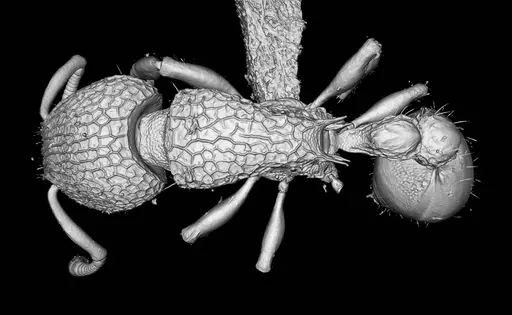
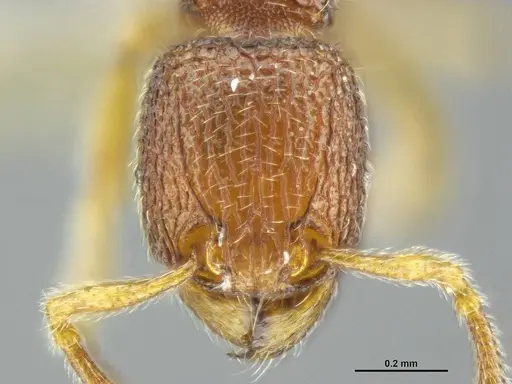
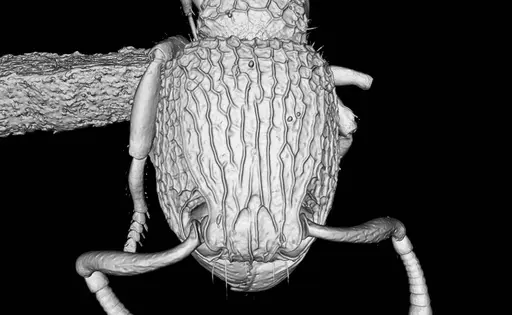
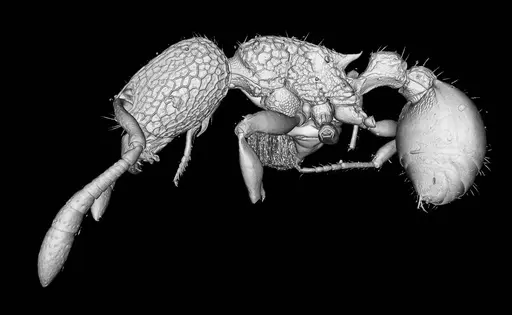
T. jarawa belongs to the Tetramorium inglebyi group [1]. It can be recognized by very small eyes (only 2-3 facets), short antennae, moderately long propodeal spines, and a square‑shaped petiolar node with a flat top [1]. In dorsal view, the top of the petiolar node is clearly longer than wide [1]. The mandibles are striate, the clypeus has a strong median ridge, and most of the head is covered in a rough net‑like pattern, except near the clypeus where the sculpture is more lengthwise [1]. The body is dark reddish brown, while the appendages and gaster are brownish yellow, giving a two‑toned look [1].
Habitat and Rarity
This is one of the rarest Tetramorium species documented in the Andaman Islands. During a standardised survey using Winkler extraction (80 m transects,5 × 1 m² leaf‑litter per transect), T. jarawa was found in only 1 of 22 transects in evergreen forests [1]. It was completely absent from coastal forests and disturbed habitats despite considerable sampling [1]. This extreme rarity suggests very specific microhabitat needs, low population density, or a cryptic lifestyle [1]. The fact that it was only found in undisturbed inland evergreen forests indicates it needs the stable, humid conditions of mature forest interiors [1]. For antkeepers, this rarity means the species is unlikely to appear in commercial trade, and any colony would require exceptional care given how little we know.
Housing and Setup
Since no captive care history exists, housing must be inferred from natural history. The species was collected from leaf‑litter, suggesting it lives in the forest floor layer of decaying vegetation and soil [1]. A naturalistic terrarium with a deep layer of moist substrate (coconut fibre, soil, or a mix) would best mimic this. Alternatively, a well‑humidified Y‑tong or plaster nest with small chambers could work, make sure chambers are scaled for ants under 1 mm in size. Standard ‘small’ formicarium chambers will seem huge, create tighter, more natural‑sized passages. High humidity is essential (aim for 70-85%), but balance this with enough ventilation to prevent mould. Keep the substrate consistently damp but not waterlogged. Because escape is nearly certain with standard barriers given their minute size, use fine mesh (at least 0.5 mm) and seal all connections [1].
Feeding and Nutrition
No specific dietary data exists for T. jarawa, but like most Tetramorium, they are likely generalist omnivores that feed on small insects and tend aphids for honeydew [1]. Start with small live prey appropriate to their tiny size: fruit flies (Drosophila), springtails, and other micro‑arthropods are ideal. Even small mealworm pieces may be too large initially, scale prey accordingly. Offer sugar water or honey water, but monitor acceptance carefully, some Tetramorium readily take sugar while others ignore it. Remove uneaten food promptly to prevent mould in the humid environment. Given the uncertainty, offer variety and observe what gets consumed [1].
Temperature and Seasonal Care
As a tropical species from the Andaman Islands (~12°N), T. jarawa evolved in consistently warm conditions with minimal seasonal temperature variation [1]. Maintain temperatures around 24-28 °C. A heating cable placed on one side of the nest creates a gradient, allowing the colony to self‑regulate. Unlike temperate species, this ant likely does not require a winter diapause, the Andaman Islands maintain tropical temperatures year‑round. However, if you live in a region with seasonal cooling, you may observe reduced activity during cooler months, which is normal seasonal behaviour rather than true diapause. If workers become sluggish and cluster together, the temperature may be too low. The key is stability, avoid sudden fluctuations [1].
Frequently Asked Questions
How do I keep Tetramorium jarawa ants?
This is an extremely challenging species because it was only described in 2017 and has no captive history. Start with high humidity (70-85%) in a naturalistic setup with moist substrate, temperatures of 24-28 °C, and small live prey. You will be pioneering captive breeding, expect trial and error [1].
What do Tetramorium jarawa ants eat?
Diet is unconfirmed. Based on typical Tetramorium patterns, they likely eat small insects and honeydew. Offer small live prey like fruit flies and springtails, plus sugar water. Remove uneaten food to prevent mould [1].
How big do Tetramorium jarawa colonies get?
Colony size is unknown, no wild colony data exists. Workers are minute, and based on related species in the inglebyi group, colonies likely remain small (maybe under a few hundred workers), but this is speculative [1].
Are Tetramorium jarawa ants good for beginners?
No, this species is not for beginners. It has never been kept in captivity, has no established care protocols, is extremely rare, and requires poorly understood conditions. This is an expert‑level species for experienced keepers [1].
Do Tetramorium jarawa ants sting?
Tetramorium jarawa is in the subfamily Myrmicinae, tribe Crematogastrini. The tribe's primary defense mechanism is smearing venom onto enemies rather than stinging. However, some Tetramorium species do have functional stings. For T. jarawa, specific behavior is not documented.
Where is Tetramorium jarawa found?
Currently only known from Havelock Island in the Andaman Islands, India. Collected in leaf‑litter from undisturbed tropical semi‑evergreen forest at 5 m elevation. It appears restricted to inland evergreen forests and is absent from coastal or disturbed areas [1].
How long does it take for Tetramorium jarawa to develop from egg to worker?
Exact time is unknown. Based on small Tetramorium species, estimate 6-10 weeks from egg to worker at optimal temperature (~26 °C), but this is a rough guess with no direct data [1].
Do Tetramorium jarawa ants need hibernation?
Diapause requirements are unknown. As a tropical species from near the equator, they likely do not need a true hibernation period. Cooler temperatures may cause reduced activity, observe and adjust [1].
Can I keep multiple Tetramorium jarawa queens together?
Colony structure is unconfirmed. Most Tetramorium are monogyne (single‑queen), but some species are polygyne. Without data on T. jarawa, combining multiple unrelated queens is not recommended, the outcome is unpredictable [1].
Why is Tetramorium jarawa so rare?
Researchers found it in only 1 of 22 leaf‑litter transects during a thorough survey. It was absent from coastal forests and disturbed areas, suggesting it requires very specific microhabitat, likely the stable, humid conditions of inland evergreen forests. This specialization probably contributes to its rarity [1].
Report an Issue
The current care sheet is based fully on literature. See inconsistencies, or something that's incorrect? Please , it will be resolved after review from an admin. Contributing to the blogs tab also helps providing information, to make us be able to further improve the caresheets. Thank you for your support!
References

Dieses Caresheet ist lizenziert unter CC BY-SA 4.0 .
Community-Blogs
NCBS-AV761
Auf AntWeb ansehen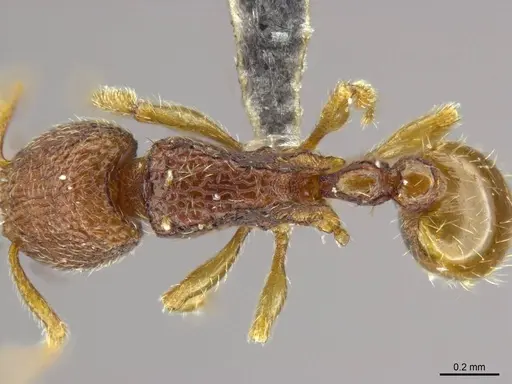
Literatur
Verbreitungskarte wird geladen...Produkte werden geladen...