
Tetramorium infraspinosum
- Wiss. Name
- Tetramorium infraspinosum
- Tribus
- Crematogastrini
- Unterfamilie
- Myrmicinae
- Autor
- Karavaiev, 1935
- Verbreitung
- In 0 Ländern gefunden
Einleitung
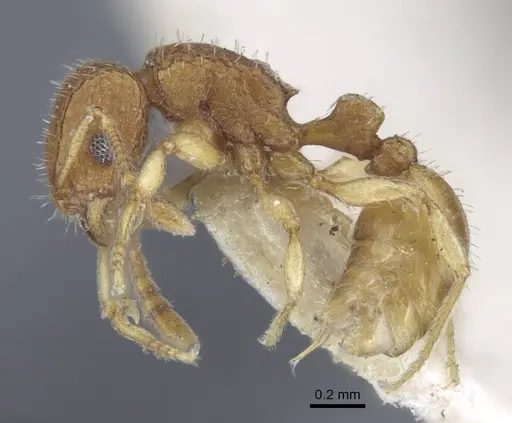
Tetramorium infraspinosum is an extremely small ant species from Vietnam, known only from a single worker specimen collected in 1930 . Workers measure about 2mm in total length , with a head slightly longer than broad, distinctive triangular propodeal spines, and a yellow-rust body color with a paler gaster and legs . This is one of the least studied ant species in existence - virtually nothing is known about its biology, colony structure, or behavior. The type locality is Cau Da in Vietnam, part of the Indomalaya region .
Quick Summary
- Difficulty: Unknown
- Origin & Habitat: Cau Da, Vietnam (Indomalaya region), tropical Southeast Asian habitat [1]
- Colony Type: Unknown, only a single worker has ever been documented
- Size & Growth:
- Antkeeping:
- Temperature: Unknown, likely tropical preferences based on Vietnam origin, but no specific data
- Humidity: Unknown, likely prefers humid conditions typical of tropical Vietnam
- Diapause: Unknown, likely no diapause given tropical origin, but unconfirmed
- Nesting: Unknown, no nesting observations have been documented
- Behavior: Behavior is completely unstudied, no behavioral observations exist. Based on genus patterns (Tetramorium), they are likely ground-nesting and may form small colonies. As a member of the Myrmicinae tribe Crematogastrini, they likely use a smear defense mechanism, applying venom with a modified spatulate stinger rather than piercing. Escape risk cannot be assessed but their tiny 2mm size suggests standard precautions for small ants should be taken.
- Common Issues: this species is virtually unknown in captivity, no established care protocols exist., only one specimen has ever been documented, making even basic identification uncertain., no information on queen morphology or colony founding., no data on diet, temperature tolerance, or humidity preferences., extremely rare, likely not available through ant dealers.
Species Status and Availability
Tetramorium infraspinosum is one of the most poorly documented ant species in the world. Only a single worker specimen has ever been collected, described by Karavaiev in 1930 from Cau Da, Vietnam [1][2]. The holotype appears to be lost, and no additional specimens have been documented since [2]. This means the species is essentially unknown to science and has never been kept in captivity. You will not find this species available from any ant dealer or breeder, it exists only in taxonomic literature. If you are interested in keeping Tetramorium species, consider more commonly available species like Tetramorium bicarinatum or Tetramorium caldarium which have established care protocols.
Identification Challenges
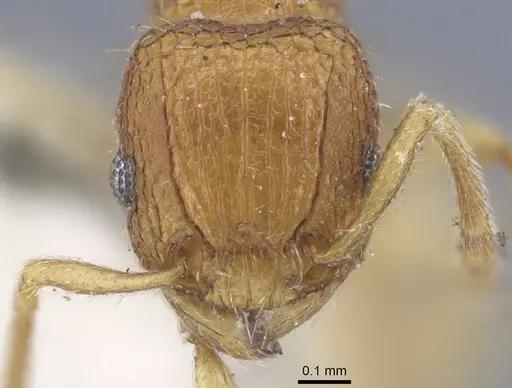
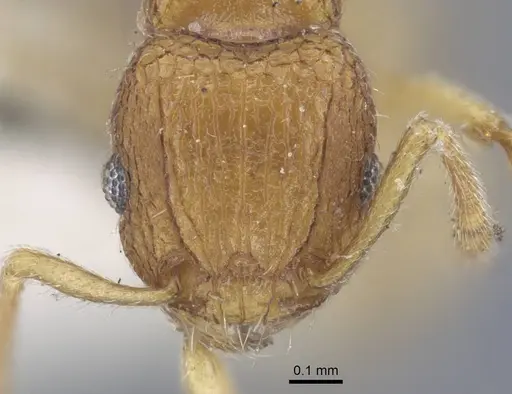
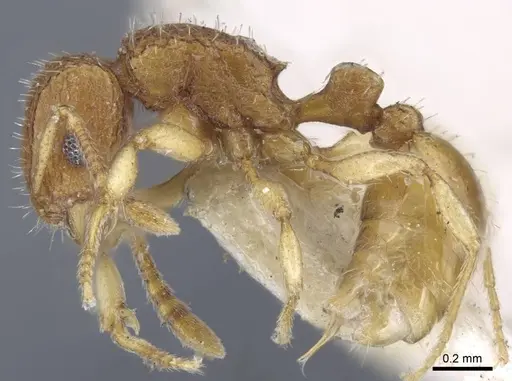
The original description provides basic measurements: workers are approximately 2mm total length, with a head that is about 1.16 times longer than broad. The propodeal spines are triangular and acute, somewhat elevated. The body is yellow-rust colored with a paler gaster and appendages. The head and alitrunk are sharply and extensively reticulate-rugose, with longitudinal rugae on the head dorsum [2]. Without a queen or colony to compare against, positive identification remains extremely difficult. If you somehow obtain what you believe to be this species, expert verification would be essential.
Defense Mechanism
While no direct observations exist for Tetramorium infraspinosum, it belongs to the Myrmicinae subfamily, tribe Crematogastrini, which typically uses a smear defense mechanism. Instead of piercing with a stinger, the ant uses a modified flattened spatulate stinger to wipe or smear venom onto attackers. This is a general trait of the tribe and may apply to this species.
Related Species and Care Speculation
While no specific care information exists for T. infraspinosum, other Tetramorium species from similar tropical regions may provide rough guidance. The genus Tetramorium typically consists of small ground-nesting ants that nest in soil, under stones, or in rotting wood. They generally prefer humid conditions and do not require hibernation. However, these are broad generalizations and may not apply to this specific species. Any attempt to keep this species would be entirely experimental and would require careful documentation to contribute to our knowledge.
Frequently Asked Questions
Can I keep Tetramorium infraspinosum as a pet ant?
No, this species is virtually impossible to obtain. Only a single worker specimen has ever been documented, collected in 1930. The species has never been observed in the wild since and is not available through any ant dealer or breeder.
What does Tetramorium infraspinosum look like?
Workers are extremely small at approximately 2mm total length. They have a yellow-rust body color with a paler gaster and legs. The head is slightly longer than broad, and they have distinctive triangular propodeal spines.
Where does Tetramorium infraspinosum live?
The only known specimen was collected from Cau Da, Vietnam in 1930. This is in the Indomalaya region of Southeast Asia.
How big do Tetramorium infraspinosum colonies get?
Unknown, no colony has ever been documented. Even the colony size of related species varies dramatically, so no estimate can be made.
Do Tetramorium infraspinosum ants sting?
Unknown, no behavioral observations exist. Based on its subfamily (Myrmicinae) and tribe (Crematogastrini), it likely uses a smear defense mechanism, applying venom with a modified stinger rather than piercing.
What do Tetramorium infraspinosum eat?
Unknown, no feeding observations exist. Related Tetramorium species typically eat small insects and honeydew, but this cannot be confirmed for this species.
What temperature do Tetramorium infraspinosum ants need?
Unknown, no temperature data exists. Based on the Vietnam origin, they likely prefer tropical warmth, but specific requirements are unconfirmed.
Do Tetramorium infraspinosum need hibernation?
Unknown, likely no hibernation given the tropical origin in Vietnam, but this is unconfirmed.
Is Tetramorium infraspinosum good for beginners?
This species is not suitable for beginners or any keeper. It has never been kept in captivity and virtually nothing is known about its biology. If you want to keep Tetramorium species, consider more commonly available species with established care protocols.
How long do Tetramorium infraspinosum workers live?
Unknown, no lifespan data exists for this species.
Can I find Tetramorium infraspinosum in the wild?
Extremely unlikely. The species has not been documented since the single specimen collected in 1930. Even locating the type locality at Cau Da, Vietnam would not guarantee finding this rare species.
Are there similar Tetramorium species I can keep instead?
Yes, several Tetramorium species are commonly available in the antkeeping hobby. Tetramorium bicarinatum and Tetramorium caldarium are more practical choices with established care requirements.
Report an Issue
The current care sheet is based fully on literature. See inconsistencies, or something that's incorrect? Please , it will be resolved after review from an admin. Contributing to the blogs tab also helps providing information, to make us be able to further improve the caresheets. Thank you for your support!
References

Dieses Caresheet ist lizenziert unter CC BY-SA 4.0 .
Community-Blogs
CASENT0917055
Auf AntWeb ansehen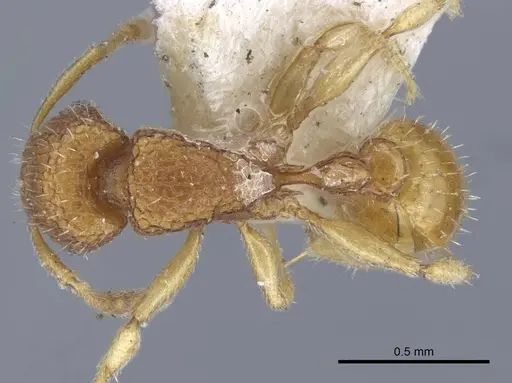
Literatur
Verbreitungskarte wird geladen...Produkte werden geladen...