
Tetramorium decamerum
- Wiss. Name
- Tetramorium decamerum
- Tribus
- Crematogastrini
- Unterfamilie
- Myrmicinae
- Autor
- Forel, 1902
- Verbreitung
- In 0 Ländern gefunden
Einleitung
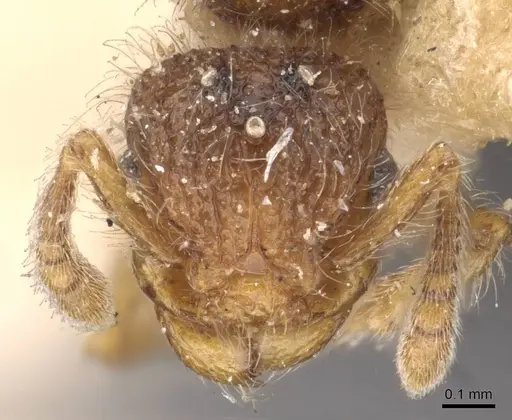
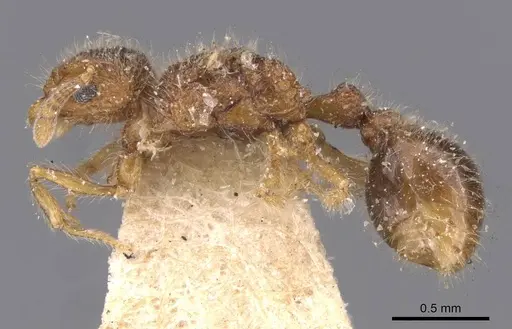
Tetramorium decamerum is a small ant species endemic to India, originally described by Forel in 1902 as Triglyphothrix decamera before being reclassified into the genus Tetramorium . It is recorded from Karnataka, Tamil Nadu, and West Bengal . Workers are small (estimated 3-5 mm, inferred from Tetramorium genus) and resemble other Tetramorium species with a 12-segmented antenna and two-segmented petiole. This species belongs to the obesum species group. Specific habitat preferences are not documented, but being Indian, they likely inhabit tropical and subtropical regions.
Quick Summary
- Difficulty: Medium
- Origin & Habitat: Endemic to India, recorded from Karnataka, Tamil Nadu, and West Bengal [2]. Habitat details are unknown, but presumably tropical/subtropical.
- Colony Type: Likely monogyne (single queen colonies) based on typical Tetramorium patterns, though unconfirmed.
- Size & Growth:
- Queen: ~6-8 mm, inferred from Tetramorium genus.
- Worker: ~3-5 mm, inferred from Tetramorium genus.
- Colony: Up to 500 workers (inferred from similar Tetramorium species).
- Growth: Moderate
- Development: Estimated 6-8 weeks (inferred from genus). (Species-specific data is unavailable, timeline is a rough estimate.)
- Antkeeping:
- Temperature: Keep at 22-26°C. As a tropical Indian species, they prefer warmth. Use a heating cable on one side to create a gradient. Avoid exceeding 30°C.
- Humidity: Keep the nest substrate moderately moist but not waterlogged. Allow the surface to dry partially between watering. Provide a gradient with a drier area where ants can escape moisture.
- Diapause: Unlikely required. As a tropical species, they probably do not need true hibernation. A slight seasonal cooldown to room temperature (18-20°C) is not harmful but not necessary.
- Nesting: Y-tong (AAC) nests with narrow chambers or test tubes work well. Provide dark, small founding chambers. Avoid acrylic nests.
- Behavior: Active foragers. Workers are small and can climb smooth surfaces, so escape prevention is critical. They have a stinger used to smear venom (typical of Myrmicinae, tribe Crematogastrini) rather than piercing. Not aggressive toward keepers, but may bite if provoked. Use fluon or similar barriers on all rims and connections.
- Common Issues: escape prevention is critical due to tiny size, they can squeeze through very small gaps., limited species-specific information makes care recommendations somewhat speculative., overheating can be fatal, avoid temperatures above 30°C.
Housing and Nest Setup
Due to their small size, Tetramorium decamerum works well in compact setups. A Y-tong (AAC) nest with narrow chambers is ideal, the tight spaces mimic natural crevices under stones or in soil. Test tubes with a dirt setup are also good for founding. Keep the nest substrate moderately moist but allow it to dry slightly between watering. Avoid over-wetting. A small outworld with obstacles for foraging completes the setup. Ensure all openings are sealed, as these tiny ants can escape through gaps less than 1 mm.
Feeding and Diet
Like other Tetramorium, these ants are generalist omnivores. Accept sugar sources (honey water, sugar water on a cotton ball) and protein in the form of small insects such as fruit flies, pinhead crickets, or mealworms. They may also scavenge seeds, though this is not a primary need. Provide constant access to a sugar source. Feed protein every 2-3 days, removing uneaten prey after 24 hours to prevent mold.
Temperature and Seasonal Care
As a tropical species from India, Tetramorium decamerum prefers warm conditions. Keep temperatures between 22-26°C. A heating cable on one side of the nest creates a gradient so ants can self-regulate. Avoid exceeding 30°C, which can be lethal. During winter, a slight reduction to room temperature (18-20°C) is acceptable, but true hibernation is not required. Healthy colonies will stay active year-round at stable warmth.
Colony Founding
Founding behavior is unconfirmed. Based on related Tetramorium species, queens may be claustral (sealing themselves in a chamber and raising first workers on body reserves), but this is not verified. Provide a dark, small founding chamber (test tube or small cavity). Do not feed the queen during founding. After the first workers (nanitics) emerge, usually within a few weeks, start offering tiny food. Founding success rates are unknown.
Behavior and Temperament
Workers are active, constantly patrolling the nest and foraging. They are not particularly aggressive and rarely sting keepers, but they have a functional stinger used to smear venom (typical of Myrmicinae, tribe Crematogastrini). Bites may occur if ants are handled. Their small size makes them excellent climbers, they can scale smooth surfaces like glass and plastic. Escape prevention is essential: apply fluon or petroleum jelly to all potential escape points. Colonies become more active in warmth and expand foraging range when well-established.
Frequently Asked Questions
How long does it take for Tetramorium decamerum to produce first workers?
Based on typical Tetramorium development, expect roughly 6-8 weeks from egg to first worker at around 24°C. This is an estimate since species-specific data is unavailable.
Can I keep Tetramorium decamerum in a test tube?
Yes, test tubes work well for founding. Use a standard setup with a water reservoir. Ensure excellent escape prevention, these tiny ants can squeeze through very small gaps.
What do Tetramorium decamerum ants eat?
They are omnivorous. Offer sugar water or honey as a constant energy source, and protein sources like small insects (fruit flies, pinhead crickets, mealworms) every few days.
Do Tetramorium decamerum ants need hibernation?
Probably not. As a tropical species from India, they do not require a true diapause. A slight temperature reduction during winter is acceptable but not necessary.
How big do Tetramorium decamerum colonies get?
Based on similar Tetramorium species, colonies likely reach up to 500 workers. This is an estimate as colony size has not been documented for this species.
Are Tetramorium decamerum ants good for beginners?
They are moderate difficulty. Their small size requires careful escape prevention, but their generalist diet and adaptable nature make them manageable for keepers with some experience.
Do Tetramorium decamerum ants sting?
As Myrmicinae, they have a functional stinger but typically use it to smear venom rather than pierce. They may sting if severely threatened, but the sting is mild and not dangerous to healthy humans.
When should I move my colony to a formicarium?
Move to a larger nest when the test tube becomes crowded, typically when the colony reaches around 20-30 workers. A Y-tong nest with small chambers works well for their size.
What temperature is best for Tetramorium decamerum?
Keep them at 22-26°C. Being from tropical India, they prefer warmth. A heating cable on part of the nest creates a gradient they can regulate themselves.
Why are my Tetramorium decamerum escaping?
Their small size makes them excellent escape artists. Apply fluon or petroleum jelly to all rims and connections. Check for any gaps as small as 1 mm, they can fit through remarkably small spaces.
Report an Issue
The current care sheet is based fully on literature. See inconsistencies, or something that's incorrect? Please , it will be resolved after review from an admin. Contributing to the blogs tab also helps providing information, to make us be able to further improve the caresheets. Thank you for your support!
References

Dieses Caresheet ist lizenziert unter CC BY-SA 4.0 .
Community-Blogs
CASENT0909097
Auf AntWeb ansehen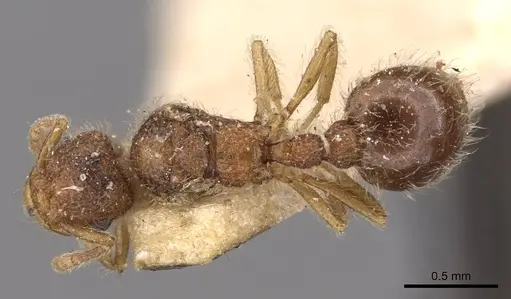
Literatur
Verbreitungskarte wird geladen...Produkte werden geladen...