
Temnothorax finzii
- Wiss. Name
- Temnothorax finzii
- Tribus
- Crematogastrini
- Unterfamilie
- Myrmicinae
- Autor
- Menozzi, 1925
- Verbreitung
- In 0 Ländern gefunden
Einleitung
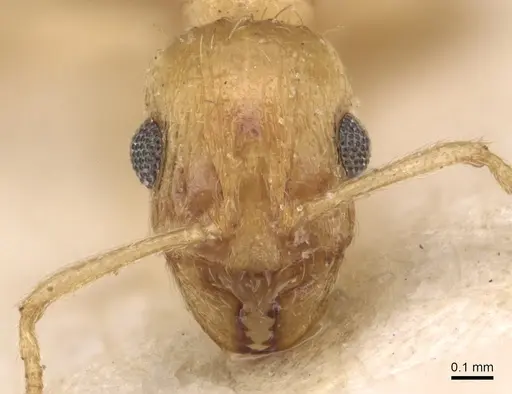
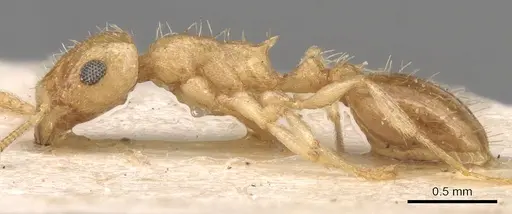
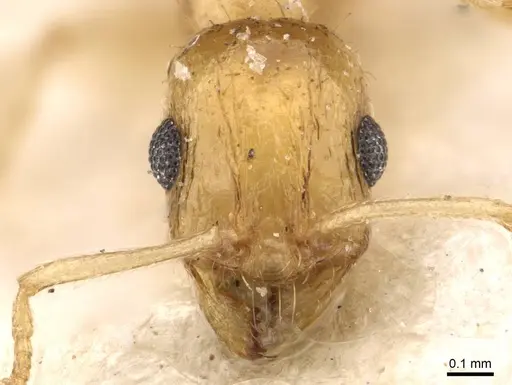
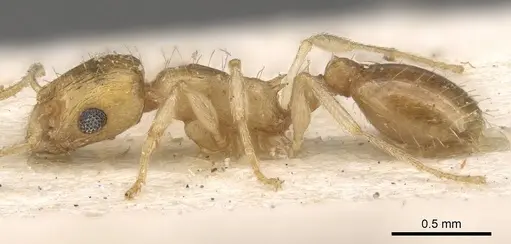
Temnothorax finzii is a tiny, bright yellow ant from the Temnothorax recedens group. Workers measure 3-3.5mm, queens 3.5-4mm . First described from Italy in 1925,it was originally placed in Leptothorax under the subgenus Myrmammophilus because the reproductives lack a discoidal cell in the forewing . This species has very long body hairs (pilosity) and relatively large eyes for a Temnothorax . Temnothorax finzii is one of the rarest European ants. Confirmed populations exist only in Italy, North Macedonia, and recently Bulgaria (first recorded in 2022) . It lives in dry, open habitats and nests deep in soil, usually under stones . For antkeepers, this is an uncommon species with very little published care information.
Quick Summary
- Difficulty: Medium
- Origin & Habitat: Southern Europe (Italy, North Macedonia, Bulgaria). Inhabit dry open habitats, nesting deep in soil under stones [4][3].
- Colony Type: Unconfirmed, likely single-queen (monogyne) based on typical Temnothorax patterns.
- Size & Growth:
- Antkeeping:
- Temperature: Room temperature (20-24°C) suits this species. Avoid extremes above 28°C. Mediterranean origin suggests stable, moderate conditions [4].
- Humidity: Moderate. Nest substrate should be slightly moist but not waterlogged, matches their natural dry habitat under stones [4].
- Diapause: Likely required. Reduce to 10-15°C for 2-3 months in winter (typical for European Temnothorax).
- Nesting: Y‑tong (AAC) or plaster nests with small chambers work well. A naturalistic setup with flat stones over soil mimics their natural nesting site [4].
- Behavior: Timid and non‑aggressive. As a member of Crematogastrini, Temnothorax finzii uses a modified spatulate stinger to smear venom onto enemies, they rarely sting and prefer to flee. Due to their tiny size (3mm), escape prevention is critical. They are harmless to keepers.
- Common Issues: tiny size makes escape likely without fine mesh or fluon barriers., rare species, limited care information and difficult to source., slow colony growth can frustrate beginners expecting fast results., winter diapause is essential, skipping it may weaken or kill the colony., small colony size means any losses have a larger impact.
Housing and Nest Preferences
Because workers are only 3mm long, Temnothorax finzii requires a nest with small chambers and tight passages [1]. Y‑tong (AAC) or plaster nests with chambers scaled to
Feeding and Diet
Like other small Myrmicinae, Temnothorax finzii likely eats insect prey (fruit flies, small crickets) and sugary liquids (honey water, sugar water). Offer small amounts 2-3 times per week and remove leftovers after 24 hours to prevent mold. There is no evidence they collect seeds, so stick to protein and sugar sources. The small worker size means even tiny prey items are substantial meals.
Temperature and Seasonal Care
Keep the colony at room temperature (20-24°C) during the active season. This Mediterranean species can tolerate slightly warmer conditions, but avoid sustained heat above 28°C [4]. Winter diapause is likely required, from November to February reduce temperatures to 10-15°C (a cool garage or basement works). Do not feed during diapause but keep the substrate slightly moist. Return to warm temperatures in spring to trigger normal activity and egg‑laying.
Behavior and Temperament
Temnothorax finzii is a timid, non‑aggressive species. Like other members of the tribe Crematogastrini, it has a modified stinger used to smear venom onto enemies rather than piercing. In practice, the ants prefer to flee from threats. They are harmless to humans. The biggest challenge is escape prevention, at 3mm they can squeeze through gaps under 1mm [1]. Use fluon on test tube rims, ensure all connections are tight, and cover ventilation with fine mesh.
Frequently Asked Questions
How long does it take for Temnothorax finzii to produce first workers?
Exact timing is unknown for this rare species. Based on typical Temnothorax development, expect 6-10 weeks from egg to first nanitic worker at 22-24°C. Patience is needed.
Can I keep multiple Temnothorax finzii queens together?
Not recommended. Colony structure is unconfirmed, but most Temnothorax are monogyne (single‑queen). Combining unrelated queens risks fighting and colony loss.
Do Temnothorax finzii ants sting?
They have a modified stinger used for smearing venom rather than piercing. They rarely sting keepers and are completely harmless to humans.
What do Temnothorax finzii eat?
They likely accept sugary liquids (honey water, sugar water) and small protein prey like fruit flies or pinhead crickets. Provide small amounts and remove leftovers.
Are Temnothorax finzii good for beginners?
This species is rated Medium difficulty. Their small size makes escape prevention critical, and their rarity means limited care information. They also require winter diapause. Not recommended for absolute beginners.
How big do Temnothorax finzii colonies get?
Based on typical recedens‑group size, colonies likely reach several dozen to a few hundred workers at maturity, small compared to many common ant species.
Do Temnothorax finzii need hibernation?
Yes, as a European species they likely require a winter rest period of 2-3 months at 10-15°C. Skipping diapause can weaken or kill the colony over time.
Why are my Temnothorax finzii escaping?
Their 3mm size lets them squeeze through tiny gaps. Use fluon on vertical surfaces, seal all connections, and fit fine mesh (≤0.5mm) over ventilation holes. Even a crack under 1mm is an escape route [1].
When should I move Temnothorax finzii to a formicarium?
Move from test tube to a proper nest once the colony reaches about 10-15 workers. Choose a nest with small chambers (Y‑tong or plaster) that matches their tiny size.
Where is Temnothorax finzii found in the wild?
This extremely rare species is confirmed only in Italy, North Macedonia, and Bulgaria (first recorded 2022). It lives in dry open habitats, nesting deep in soil under stones [3][4].
Report an Issue
The current care sheet is based fully on literature. See inconsistencies, or something that's incorrect? Please , it will be resolved after review from an admin. Contributing to the blogs tab also helps providing information, to make us be able to further improve the caresheets. Thank you for your support!
References

Dieses Caresheet ist lizenziert unter CC BY-SA 4.0 .
Community-Blogs
CASENT0904766
Auf AntWeb ansehen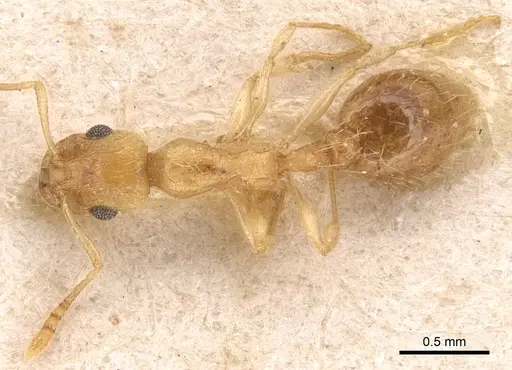
CASENT0909062
Auf AntWeb ansehen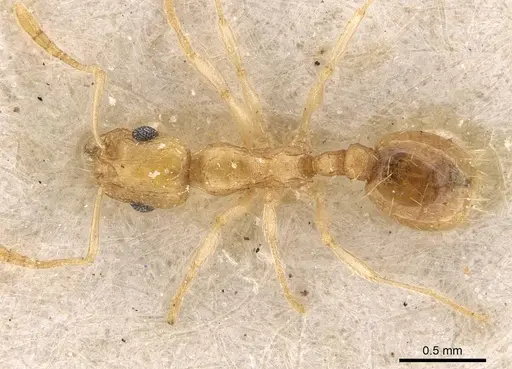
Literatur
Verbreitungskarte wird geladen...Produkte werden geladen...