
Temnothorax ditifet
- Wiss. Name
- Temnothorax ditifet
- Tribus
- Crematogastrini
- Unterfamilie
- Myrmicinae
- Autor
- Espadaler, 1997
- Verbreitung
- In 0 Ländern gefunden
Einleitung
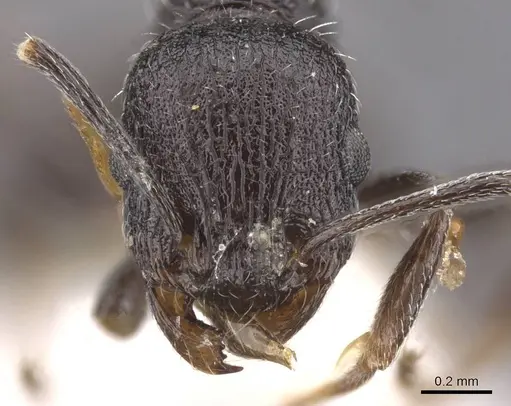
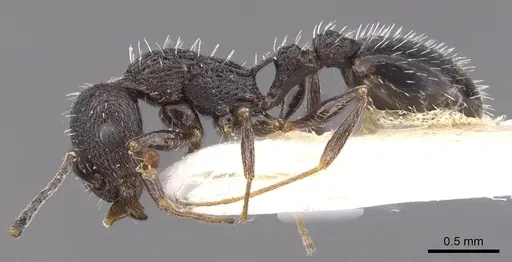
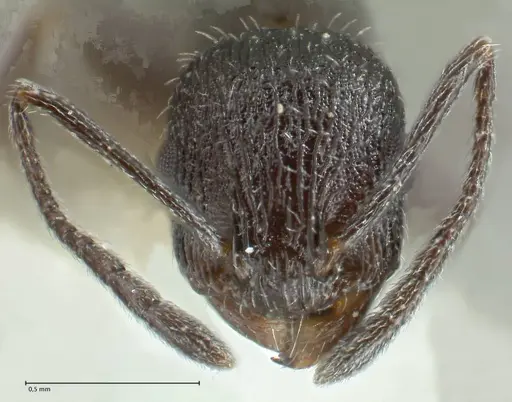
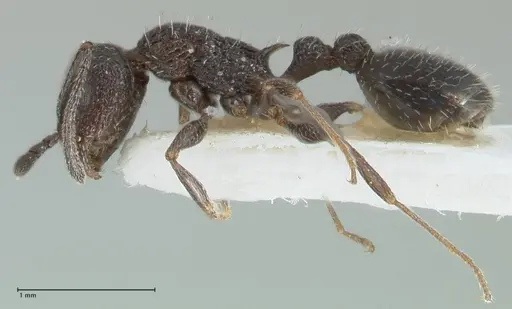
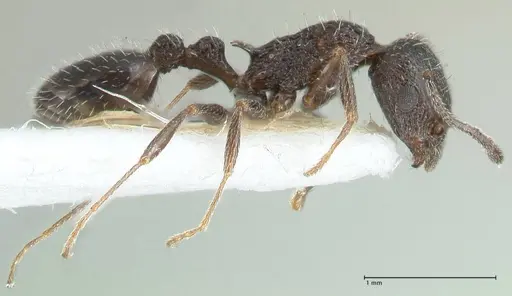
Temnothorax ditifet is a tiny ant species endemic to Morocco, found only in the High Atlas (Bab-n-Ouayad) and Anti-Atlas (Tizi-n-Tiskrine) regions . It was originally described in 1997 as a member of the *Leptothorax* genus, later moved to *Temnothorax* . The species has a pedunculate (stalked) petiole and dense body sculpture . Taxonomic work by Csősz et al. (2025) revealed that T. ditifet is an extreme case of convergent morphological evolution, it was placed in the *rottenbergii* group based on its physical features, but detailed examination of the frontal carinae and male genitalia show it belongs closer to the *T. nigritus* group .
Quick Summary
- Difficulty: Hard
- Origin & Habitat: Endemic to Morocco: central High Atlas (Bab-n-Ouayad) and eastern Anti-Atlas (Tizi-n-Tiskrine) [1]. This is a Mediterranean mountain species, likely inhabiting rocky slopes or forest clearings with seasonal climate.
- Colony Type: Likely monogyne (single queen) based on typical *Temnothorax* patterns, but not confirmed for this species.
- Size & Growth:
- Queen: Size data unavailable, not documented in research.
- Worker: Size data unavailable, not documented in research.
- Colony: Not documented. Based on typical *Temnothorax* species, likely modest (under a few hundred workers), but unconfirmed.
- Growth: Not documented. Likely slow to moderate based on related species.
- Development: Not documented. Typical *Temnothorax* species take 6-10 weeks at optimal temperatures, but this is unconfirmed for T. ditifet. (Specific data lacking, adjust expectations based on observation.)
- Antkeeping:
- Temperature: Unknown. As a Moroccan mountain species, itlikely prefers moderate temperatures (around 20-24°C). Provide a gradient for self-regulation.
- Humidity: Unknown. Typical *Temnothorax* prefer moderate to high humidity with moist nesting substrate, but not confirmed for this species.
- Diapause: Likely beneficial based on temperate mountain distribution. Typical duration for the region would be 2-3 months at 10-15°C. Observe colony response.
- Nesting: Small cavity nests (test tubes, Y‑tong, narrow chambers) recommended based on genus patterns. Not confirmed for this species.
- Behavior: Based on subfamily (Myrmicinae, tribe Crematogastrini): defense mechanism is venom smearing via a modified spatulate stinger. Generally non‑aggressive. Escape risk is high due to tiny size, use fine mesh and vigilance.
- Common Issues: tiny size makes escape likely without very fine mesh or tight seals., lack of species‑specific care data means trial‑and‑error may be required., wild‑caught colonies may carry parasites or be stressed from transport., over‑disturbing the nest can cause colony failure, especially during founding., improper humidity (too dry or waterlogged) is a common killer for cavity‑nesting ants.
Housing and Nest Setup
As a tiny cavity‑nesting ant, Temnothorax ditifet likely thrives in small, enclosed spaces. Test tubes with a water reservoir are ideal for founding. For larger colonies, Y‑tong or plaster nests with narrow chambers should work. Avoid large, open areas that may stress the ants. Provide a humidity gradient, one side slightly moist, the other drier. Escape prevention is critical: use very fine mesh (≤0.5mm) or PTFE barriers. These recommendations are based on typical Temnothorax care, not specifically confirmed for T. ditifet.
Feeding and Diet
Like most Temnothorax, this species is likely omnivorous. Offer small protein sources such as fruit flies, pinhead crickets, or tiny pieces of mealworm. Sugar water or honey water should be available constantly. Remove uneaten prey after 24-48 hours to prevent mold. Specific dietary preferences for T. ditifet are not documented.
Temperature and Seasonal Care
No precise temperature requirements are known for T. ditifet. Based on its Mediterranean mountain habitat, it likely prefers moderate temperatures around 20-24°C. A gentle gradient with a heating cable on one side can help. A winter diapause (cool rest period) may be beneficial, typical for the region is 2-3 months at 10-15°C. Monitor colony health and adjust accordingly.
Colony Development and Growth
The founding and growth of T. ditifet have not been studied in detail. Based on related Temnothorax species, a mated queen likely rears the first workers alone, but this is not confirmed. Development from egg to worker typically takes 6-10 weeks at optimal temperatures in similar species, but actual timing may differ. Expect slow colony growth, patience is essential.
Behavior and Observation
Temnothorax species are known for tandem running (a forager physically leading a nestmate to a resource), but this behavior is not confirmed for T. ditifet. The ants are generally docile. Their defense mechanism, based on subfamily, involves smearing venom with a modified stinger. Their small size makes them interesting to watch under magnification, but also requires careful handling to avoid escape.
Frequently Asked Questions
How long does it take for Temnothorax ditifet to produce first workers?
Not documented for this species. Typical Temnothorax species take 6-10 weeks at optimal temperatures, but this is unconfirmed for T. ditifet.
What do Temnothorax ditifet ants eat?
Specifics are unknown. Like most Temnothorax, they likely eat small live prey and sugary liquids. Offer fruit flies, tiny crickets, and honey water. Remove leftovers promptly.
Do Temnothorax ditifet ants sting?
They have a modified stinger (as a member of Crematogastrini) that smears venom rather than piercing. This is not dangerous to humans but may cause mild irritation if the venom contacts skin. They are not aggressive.
Can I keep Temnothorax ditifet in a test tube?
Yes, test tubes are recommended based on typical Temnothorax founding habits. Use a small tube with a water reservoir and cotton plug. For larger colonies, transition to a Y‑tong or plaster nest with narrow chambers.
Do Temnothorax ditifet need hibernation?
Likely yes, as a temperate mountain species. A winter rest period of 2-3 months at 10-15°C is recommended, but the exact requirement is not studied. Observe the colony and adjust.
How big do Temnothorax ditifet colonies get?
Colony size is not documented. Based on typical Temnothorax species, they likely remain small (under a few hundred workers) but this is unconfirmed.
Are Temnothorax ditifet good for beginners?
No. The lack of species‑specific care data, tiny size (escape risk), and likely slow growth make them unsuitable for beginners. They are best kept by experienced keepers willing to experiment.
When should I move my colony to a formicarium?
Move when the test tube becomes crowded or the water reservoir runs low. For tiny Temnothorax, this is typically when the colony reaches 20-30 workers (based on related species). Avoid moving too early into large enclosures.
Why are my Temnothorax ditifet dying?
Common causes for tiny cavity‑nesting ants include: improper humidity (too dry or waterlogged), temperature stress, excessive disturbance, starvation, or parasites from wild‑caught colonies. Ensure stable, moderate conditions and minimal disturbance.
Can I keep multiple queens together?
Not recommended. No data exists on pleometrosis for this species. In general, Temnothorax are often monogyne, so start with a single queen to avoid conflict.
What temperature range is ideal for Temnothorax ditifet?
Not known precisely. Based on its origin, aim for 20-24°C with a gradient. Avoid prolonged temperatures below 15°C or above 28°C unless for hibernation.
Is Temnothorax ditifet invasive?
No. This species is endemic to Morocco and has never been recorded elsewhere. Never release captive ants into non‑native environments.
Report an Issue
The current care sheet is based fully on literature. See inconsistencies, or something that's incorrect? Please , it will be resolved after review from an admin. Contributing to the blogs tab also helps providing information, to make us be able to further improve the caresheets. Thank you for your support!
References

Dieses Caresheet ist lizenziert unter CC BY-SA 4.0 .
Community-Blogs
CASENT0912924
Auf AntWeb ansehen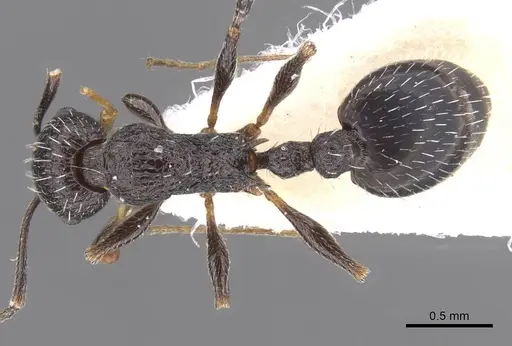
FOCOL1818
Auf AntWeb ansehen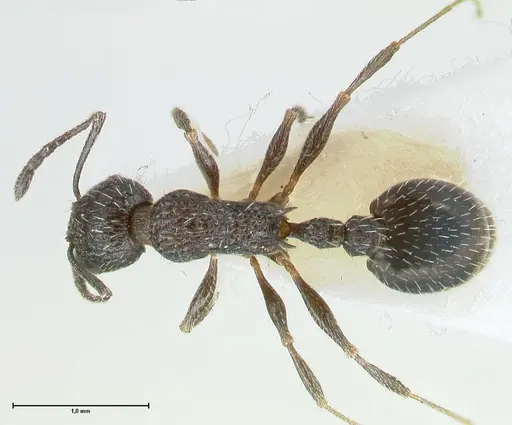
Literatur
Verbreitungskarte wird geladen...Produkte werden geladen...