
Temnothorax crepuscularis
- Wiss. Name
- Temnothorax crepuscularis
- Tribus
- Crematogastrini
- Unterfamilie
- Myrmicinae
- Autor
- Tinaut, 1995
- Verbreitung
- In 0 Ländern gefunden
Einleitung
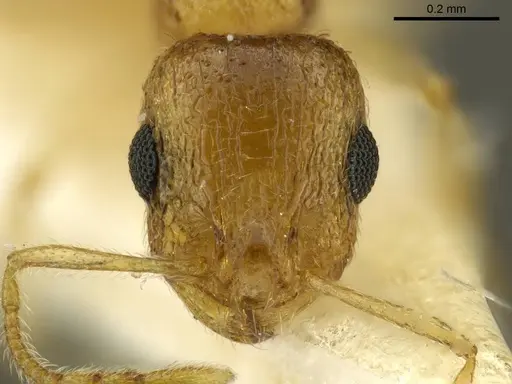
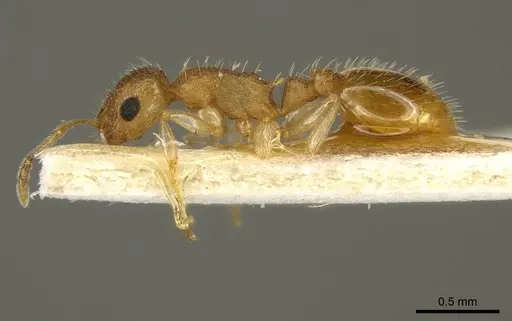
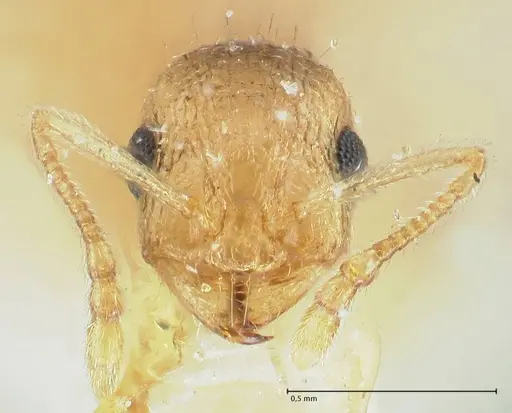
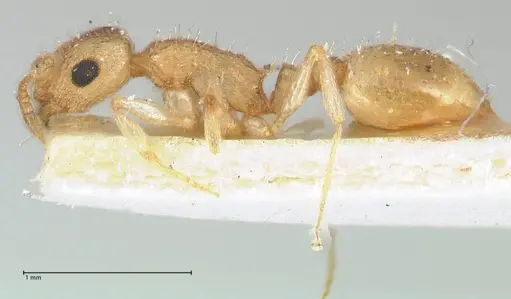
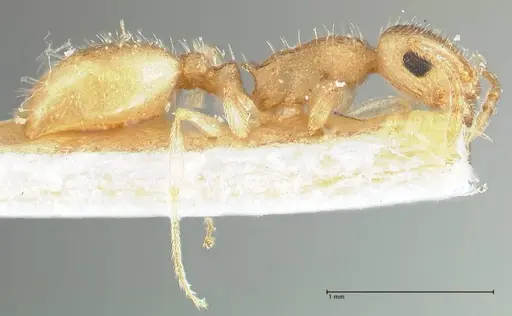
Temnothorax crepuscularis is a tiny, yellow to light brown ant belonging to the laurae species group . Workers are small (estimated 3-4 mm, based on typical Temnothorax sizes) with very developed body sculpture and longer, finer propodeal spines . The species was originally described in 1994 from the Sierra de la Almijara in Granada, Spain, at 1100 meters elevation . Queens and males were described with the workers. This species is endemic to the Iberian Peninsula, restricted to semiarid habitats with sparse vegetation at low altitudes in the Mediterranean refugium area .
Quick Summary
- Difficulty: Medium
- Origin & Habitat: Endemic to the Sierra de la Almijara, Granada, southern Spain, type locality Barranco de la Ermita at 1100m [3]. Found in semiarid habitats with scarce vegetation at low altitudes [4]. Known only from the Mediterranean refugium area [4].
- Colony Type: Single-queen colonies (monogyne) based on typical Temnothorax patterns. Not fully confirmed.
- Size & Growth:
- Queen: ~4-6 mm (estimated from typical Temnothorax queen sizes, no direct measurements)
- Worker: ~3-4 mm (estimated from typical Temnothorax worker sizes, no direct measurements)
- Colony: Likely up to 500 workers (estimated from genus patterns)
- Growth: Moderate, typical for small Myrmicinae
- Development: Estimated 6-10 weeks at 22-25°C based on related Temnothorax species, specific timing unconfirmed (Development time inferred from genus-level data, direct observation is lacking.)
- Antkeeping:
- Temperature: Keep at 20-24°C. Mediterranean origin suggests stable warm conditions, but not extreme heat. Room temperature within this range works well.
- Humidity: Moderate humidity, allow substrate to dry partially between waterings. Their semiarid habitat indicates tolerance for drier conditions. Avoid waterlogging.
- Diapause: Yes, temperate origin suggests a winter diapause is needed. Reduce to 10-15°C for 2-3 months.
- Nesting: Y-tong (AAC) nests with narrow chambers work well for their small size. Naturalistic setups with flat stones or small rock formations also suit their preference for confined, dry spaces.
- Behavior: Generally peaceful and non-aggressive. Workers are small but active foragers. Like other Temnothorax, they likely use tandem-running to recruit nestmates to food. Escape prevention is critical due to their tiny size, use fine mesh barriers and seal all gaps.
- Common Issues: tiny size means escapes are likely without fine mesh barriers, limited captive care data makes husbandry adjustments necessary, wild-caught colonies are hard to find because of the restricted range, overwatering easily kills the colony due to their semiarid origin, small colonies grow slowly, which can test keeper patience
Housing and Nest Preferences
Temnothorax crepuscularis is tiny and needs appropriately scaled housing. Y-tong (AAC) nests with narrow chambers are excellent because they mimic the tight, confined spaces this species prefers. Naturalistic setups with flat stones or small rock formations also work well, reflecting their semiarid habitat among rocky ground [3]. Test tubes are suitable for founding. Because workers are only 3-4 mm, escape prevention must be thorough: use fine mesh barriers and seal all connections. The species comes from dry, rocky areas with sparse vegetation in the Sierra de la Almijara [4].
Feeding and Diet
Like other Temnothorax, T. crepuscularis likely has an omnivorous diet. They probably accept small protein sources such as fruit flies, small spiders, and micro-arthropods (springtails). Sugar sources like diluted honey or sugar water should be available constantly. They may forage actively and use tandem-running to recruit nestmates to food. Offer protein 2-3 times per week and remove uneaten food promptly to prevent mold in their small nests.
Temperature and Seasonal Care
Keep colonies at 20-24°C, matching their Mediterranean origin [4]. They tolerate brief fluctuations but prefer stability. As a temperate species, they likely need a winter diapause: reduce temperature to 10-15°C for 2-3 months (typically November-February). This mimics the natural seasonal cycle in the Sierra de la Almijara. During the active season, room temperature within the range is usually enough. If workers cluster near heat sources, slightly increase temperature, if they avoid heat, reduce it.
Behavior and Colony Dynamics
Temnothorax crepuscularis shows typical Temnothorax behavior: peaceful colonies with active foragers. Workers are small (3-4 mm) but agile and likely use tandem-running to recruit nestmates to food [2]. Their body sculpture is very developed, giving a roughened appearance. Colonies remain small compared to larger Myrmicinae, reaching a few hundred workers at most. Queens probably found independently (claustral) like most Temnothorax, sealing themselves in a small chamber to raise the first brood.
Frequently Asked Questions
How long does it take for Temnothorax crepuscularis to produce first workers?
Based on related Temnothorax species, expect first workers (nanitics) in about 6-10 weeks at 22-25°C. This species has not been directly studied, so the timeline is an estimate.
Can I keep Temnothorax crepuscularis in a test tube?
Yes, test tubes work for founding. Use a small water reservoir and cover the tube to mimic a sealed chamber. Once the colony reaches about 20-30 workers, move them to a Y-tong or naturalistic nest with appropriately sized chambers.
Do Temnothorax crepuscularis ants sting?
As a myrmicine, they have a functional stinger. But due to their tiny size (3-4 mm), any sting is negligible to humans. They are not aggressive and flee rather than fight.
What do Temnothorax crepuscularis eat?
They accept small protein sources like fruit flies, small spiders, and springtails. Sugar water or diluted honey should always be available. Offer protein 2-3 times per week and remove leftovers promptly.
Do they need hibernation?
Yes, as a temperate species from southern Spain, a winter diapause is recommended. Reduce temperatures to 10-15°C for 2-3 months during winter (typically November-February in the Northern Hemisphere).
Are Temnothorax crepuscularis good for beginners?
They are moderate difficulty. Their tiny size requires careful escape prevention. The main challenge is limited captive care data, so some experimentation may be needed. Not as simple as common beginner species like Lasius niger.
How big do colonies get?
Based on typical Temnothorax colony sizes, colonies likely stay under 500 workers. This species is not known for large colonies.
When should I move them to a formicarium?
Move from test tube to a proper nest (Y-tong or naturalistic) when the colony reaches about 20-30 workers. Make sure the new nest has narrow chambers, tight spaces are preferred.
Why are my Temnothorax crepuscularis dying?
Common causes: overwatering (they prefer semiarid conditions), temperature stress outside 20-24°C, escape through tiny gaps, or poor nutrition. Check that the nest is not too wet and that all gaps are sealed.
Can I keep multiple queens together?
Not recommended. This species is likely monogyne (single queen). Combining unrelated queens has not been documented and would probably result in aggression.
Report an Issue
The current care sheet is based fully on literature. See inconsistencies, or something that's incorrect? Please , it will be resolved after review from an admin. Contributing to the blogs tab also helps providing information, to make us be able to further improve the caresheets. Thank you for your support!
References

Dieses Caresheet ist lizenziert unter CC BY-SA 4.0 .
Community-Blogs
CASENT0919740
Auf AntWeb ansehen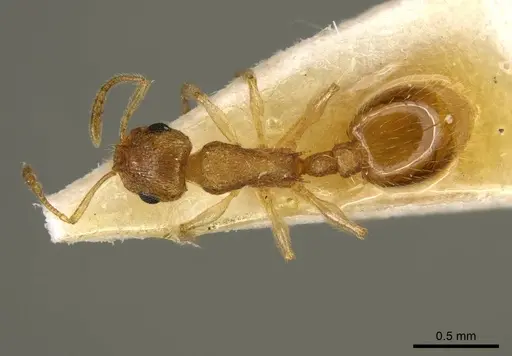
FOCOL1810
Auf AntWeb ansehen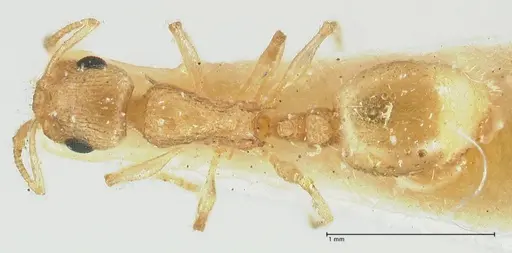
Literatur
Verbreitungskarte wird geladen...Produkte werden geladen...