
Temnothorax brevispinosus
- Wiss. Name
- Temnothorax brevispinosus
- Tribus
- Crematogastrini
- Unterfamilie
- Myrmicinae
- Autor
- Mackay, 2000
- Verbreitung
- In 0 Ländern gefunden
Einleitung
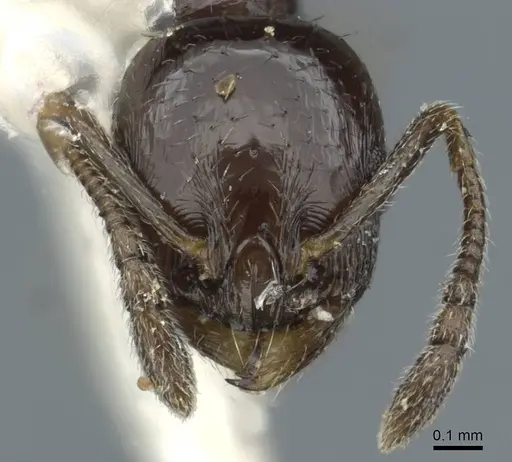
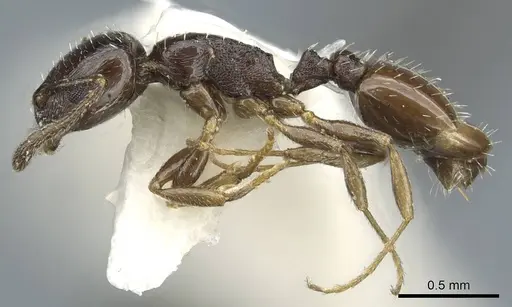
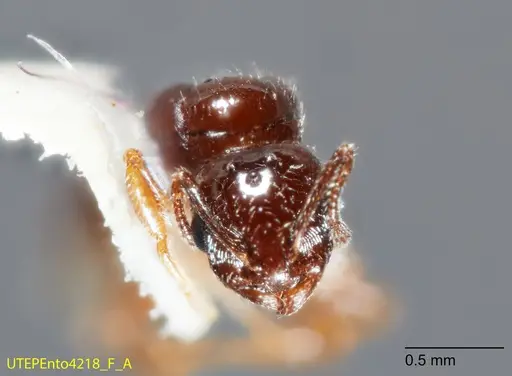
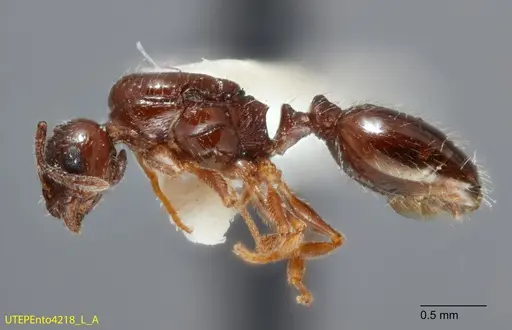
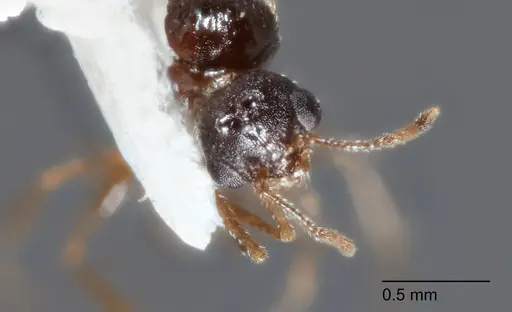
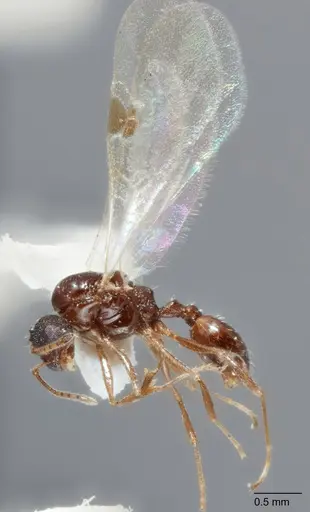
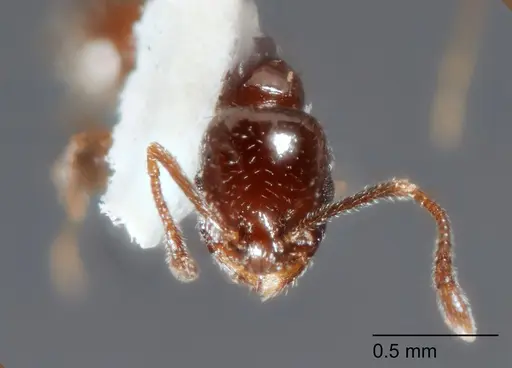
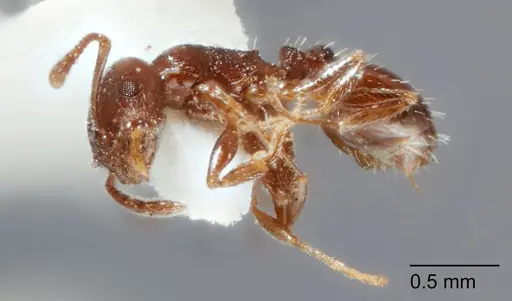
Temnothorax brevispinosus is a tiny brown ant from the sallei-clade, known only from the highlands of Michoacan, Mexico at about 2700 meters elevation . Its name comes from its reduced propodeal spines - small blunt bumps instead of longer spines . The head and most of the body are smooth and glossy, giving it a shiny look. This species is nearly identical to Temnothorax mexicanus but differs in the sculpturing of the head and pronotum . These ants nest in rocky soil among stones in open areas within pine-oak forest, a cool, high-elevation habitat . As a member of the acorn ant genus Temnothorax, they likely share the genus typical habit of nesting in small pre-existing cavities. The species is known only from its original collection, so published care information is extremely limited.
Quick Summary
- Difficulty: Hard
- Origin & Habitat: Michoacan, Mexico, highland pine-oak forest at approximately 2700 meters elevation, nesting in rocky soil amongst rocks in open areas [1][2][3].
- Colony Type: Unknown, no data on queen number. Based on typical Temnothorax patterns, likely single-queen (monogyne), but this is unconfirmed.
- Size & Growth:
- Queen: Size data unavailable (only head measurements recorded, ~0.77mm head length). This is a very small ant.
- Worker: Size data unavailable (only head measurements recorded, ~0.66mm head length). This is a very small ant.
- Colony: Unknown, no published data. Related species may reach 100-500 workers, but this is speculation.
- Growth: Unknown, likely moderate based on small Myrmicinae patterns.
- Development: Unknown, no published data. Inferred from related Temnothorax: possibly 6-10 weeks at optimal temperature. (Development time is guessed from related species. The cool highland habitat may slow development.)
- Antkeeping:
- Temperature: Based on highland habitat, keep cool (room temperature ~20°C). Avoid exceeding 25°C. Specific requirements unknown, observe colony for signs of stress [1].
- Humidity: Moderate, not wet. The species nests in rocky soil in open areas, so allow the nest substrate to dry partially between waterings. Overly wet conditions are more dangerous than dry [1].
- Diapause: Likely yes due to highland temperate origin, but unconfirmed. If attempted, provide a mild 2-3 month rest at 10-15°C during winter. Proceed with caution.
- Nesting: Prefers small cavities. Natural nest sites are among rocks in soil, so a test tube or a compact Y-tong/plaster nest with tight chambers suits them. Provide a dark, snug space [1].
- Behavior: This species is not aggressive. They have a modified stinger used to smear venom rather than sting (subfamily trait), but they are docile and will flee when disturbed. Their tiny size (head length ~0.66mm) makes escape prevention essential, use fine mesh. No specific behavioral data exists, so these are general myrmicine patterns.
- Common Issues: tiny size makes escape likely without fine mesh barriers, specific temperature and humidity needs are unknown, trial and error may be needed, wild-caught queens are very rare, almost impossible to find in trade, overheating is a bigger risk than cold, keep below 25°C, overly moist substrate can cause mold or drowning, allow partial drying
Housing and Nest Setup
Temnothorax brevispinosus is tiny (head length ~0.66mm), so start a new queen in a standard test tube setup. Place a test tube with a water reservoir and cotton plug in a dark, undisturbed spot. Once the colony has about 15-20 workers, you can move them to a small formicarium, use a Y-tong or plaster nest with compact chambers scaled to their size. Avoid large open spaces, these ants like snug cavities. A small outworld for foraging completes the setup. Escape prevention is critical: use fine mesh and check for gaps regularly [1].
Temperature and Seasonal Care
This species comes from a high elevation (2700m) in central Mexico, suggesting cool temperatures. Specific requirements are unknown. Keep the nest area at around 20°C (room temperature) and avoid exceeding 25°C, overheating may be fatal. Do not use a heating cable. For winter, a mild hibernation at 10-15°C for 2-3 months may be beneficial, but this is unconfirmed. Monitor your colony and adjust based on behavior [1].
Feeding and Diet
Like other Temnothorax, these ants are likely omnivorous. Offer small protein sources such as fruit flies, pinhead crickets, or tiny mealworms twice a week. They should also accept sugar water or diluted honey. Remove uneaten food after 24 hours to prevent mold. During founding, the queen does not need food. Once workers appear, observe their preferences and adjust. There is no published feeding data for this species.
Humidity and Water
The natural habitat is rocky soil in open pine-oak forest, so these ants are adapted to moderate, not high, humidity. Keep the nest substrate lightly moist but allow it to partially dry between waterings. Overly wet conditions are more dangerous than dry. A water tube or shallow dish in the outworld provides drinking water. No specific humidity data exists, start with a test tube gradient and adjust [1].
Colony Development and Growth
Since this species is known only from its original collection, no development data exists. Based on related Temnothorax, the queen likely raises her first workers in 6-10 weeks at 20°C (inferred). Colony growth is probably slow and steady, but the maximum size is unknown, related species may reach 100-500 workers over several years. Be patient and minimize disturbance during founding. Once established, growth should be steady.
Frequently Asked Questions
How long does it take for Temnothorax brevispinosus to raise first workers?
There is no published data. Based on related Temnothorax species, it may take 6-10 weeks at 20°C if the queen is claustral (unconfirmed). Cooler temperatures will slow development.
Can I keep multiple queens together?
Not recommended. Queen number is unconfirmed for this species, but most Temnothorax are monogyne. There is no evidence that multiple queens can coexist, so assume single-queen colonies and avoid combining.
What do Temnothorax brevispinosus ants eat?
No specific data, but related species are omnivorous. Offer small insects like fruit flies or pinhead crickets, plus sugar water. Remove uneaten food after 24 hours.
Do Temnothorax brevispinosus ants sting?
They have a modified stinger used for smearing venom, but they are not aggressive and their venom is not dangerous to humans. They will flee rather than attack.
What temperature do they need?
Based on their highland habitat, keep them cool, around 20°C room temperature. Avoid exceeding 25°C. Specific requirements are unknown, so observe and adjust.
Do they need hibernation?
Likely yes due to their temperate highland origin, but unconfirmed. If you want to try, give a mild rest at 10-15°C for 2-3 months during winter. Without it, the colony may still survive but with reduced lifespan.
How big do colonies get?
Colony size is unknown. Related species can reach 100-500 workers, but there is no data for this species. They will never become huge.
Are they good for beginners?
No. This species is very rare and virtually unknown in the hobby. Its care preferences are speculative, and acquiring a queen is almost impossible. Recommended for experienced keepers only.
When should I move them to a formicarium?
Keep them in a test tube until the colony reaches 15-20 workers. Temnothorax prefer tight spaces, so a small nest with compact chambers is ideal. Moving too early can cause stress.
Why are my ants dying?
Common causes: overheating (keep below 25°C), too high humidity, escape (use fine mesh), or disturbance. Since care data is unconfirmed, you may need to experiment with conditions. Start by checking temperature and moisture levels.
Report an Issue
The current care sheet is based fully on literature. See inconsistencies, or something that's incorrect? Please , it will be resolved after review from an admin. Contributing to the blogs tab also helps providing information, to make us be able to further improve the caresheets. Thank you for your support!
References

Dieses Caresheet ist lizenziert unter CC BY-SA 4.0 .
Community-Blogs
CASENT0911187
Auf AntWeb ansehen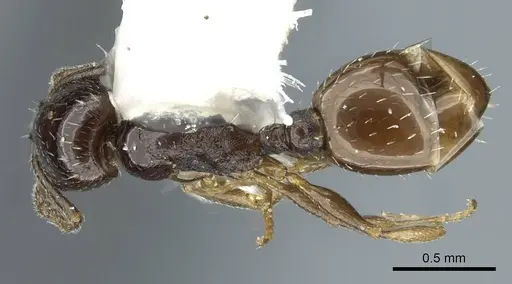
UTEPENTO4218-01
Auf AntWeb ansehen
UTEPENTO4218-02
Auf AntWeb ansehen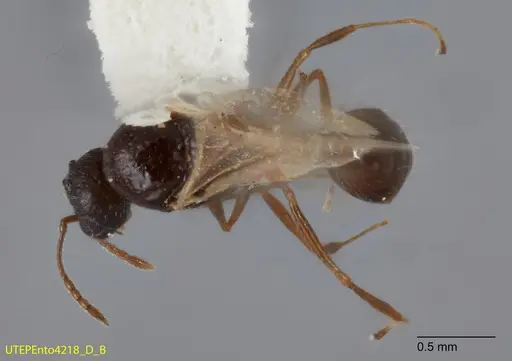
UTEPENTO4218-03
Auf AntWeb ansehen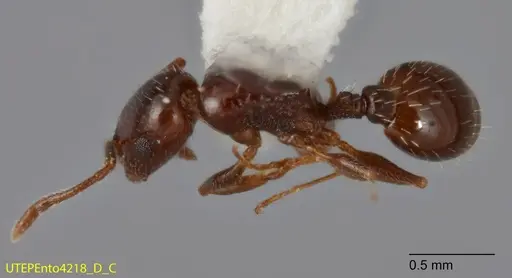
Literatur
Verbreitungskarte wird geladen...Produkte werden geladen...