
Syscia humicola
- Wiss. Name
- Syscia humicola
- Unterfamilie
- Dorylinae
- Autor
- Ogata, 1983
- Verbreitung
- In 0 Ländern gefunden
Einleitung
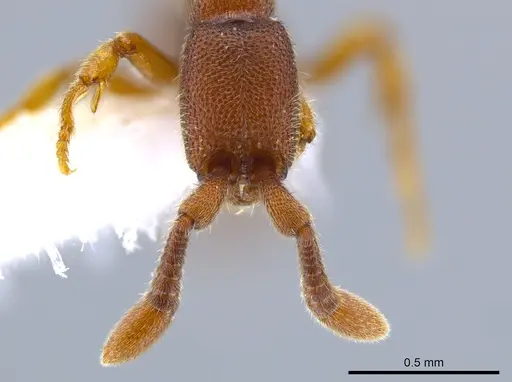
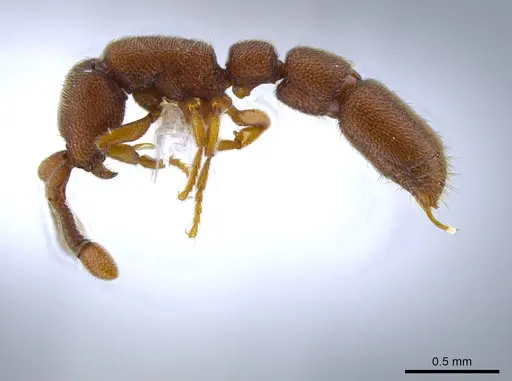
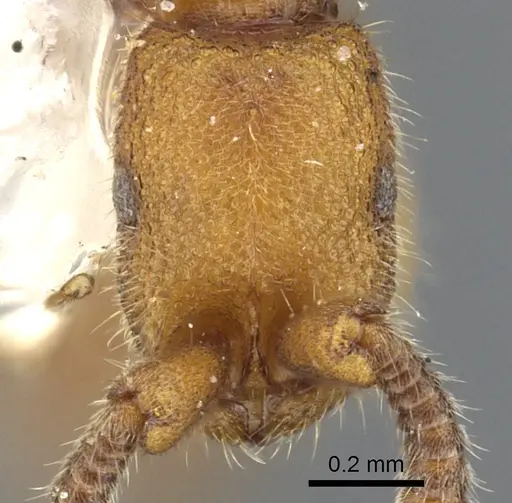
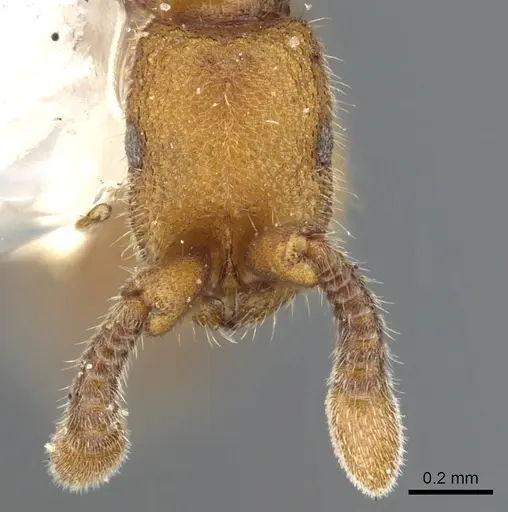
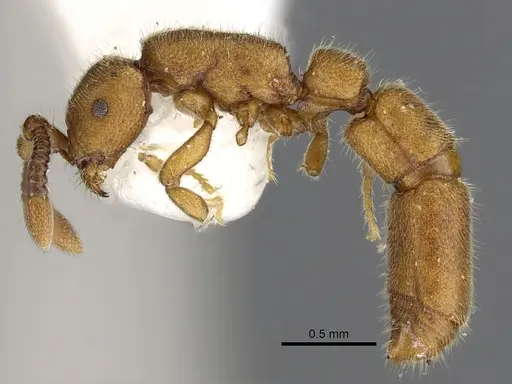
Syscia humicola is a tiny, rare ant species from Japan and South Korea. Workers are reddish-brown,2.79-3.10 mm long, with a rectangular head,11-segmented antennae, and no eyes . They belong to the Dorylinae subfamily but are not army ants. They are specialist predators that hunt the brood of other ant species on the forest floor . Colonies are small, containing several dozen workers, and have ergatoid queens (wingless queens that stay in the nest) instead of flying queens . This species is patchily distributed and hard to find .
Quick Summary
- Difficulty: Expert
- Origin & Habitat: Japan and South Korea, on the floor of broad-leaved evergreen forests [2][5]
- Colony Type: Colonies contain ergatoid (wingless) queens that never leave the nest. Based on related Cerapachys species, the colony may appear functionally monogynous, one queen lays most eggs even if multiple queens are present. Workers are blind, with no eyes. [1]
- Size & Growth:
- Queen: 3.13-3.53 mm (ergatoid queens) [1]
- Worker: 2.79-3.10 mm [1]
- Colony: Several tens of workers (typically fewer than 100) [2]
- Growth: Slow
- Development: Unknown, likely 8-12 weeks based on related Dorylinae species (No direct development data exists for this species. Related non-army Dorylinae show slow growth and small colony sizes.)
- Antkeeping:
- Temperature: Keep around 20-24°C. The species lives in temperate broadleaf forests, so aim for room temperature or slightly above. Do not let the nest go above 28°C.
- Humidity: High humidity is essential. Keep the nest substrate consistently moist but not waterlogged. This species lives on the forest floor where humidity is high.
- Diapause: Likely, a temperate species from Japan and South Korea probably needs a winter rest period of 2-3 months at 10-15°C.
- Nesting: Y-tong or plaster nests work well because they hold humidity. In nature they nest in soil and rotting wood, so provide a moist substrate they can tunnel into. Because workers are blind and small, use chambers that are tight and enclosed. Avoid open spaces.
- Behavior: Very docile and non-aggressive. Workers are blind and move slowly, searching leaf litter for ant brood and small prey [3]. They rarely sting and are easy to handle. Escape risk is moderate, they are tiny and can slip through small gaps, but they are not fast or strong climbers. Use fine mesh on ventilation.
- Common Issues: specialist diet, they only eat ant brood and small insects, will not accept sugar or protein feeders, small colony size means slow growth and vulnerability to stress, blind workers get confused in open, dry spaces, rare in the hobby and very hard to find, humidity must be kept high, too dry and they die quickly
Housing and Nest Setup
Syscia humicola needs a nest that stays dark and humid. Y-tong (AAC) or plaster nests work well. Make the chambers small and tight, these blind ants feel safe in snug spaces. Avoid large open areas where they may get lost. Connect a small outworld for feeding and waste. Keep the nest substrate consistently moist, it should feel damp but not drip water. Use fine mesh on any ventilation openings because the ants are tiny and can slip through small gaps.
Feeding and Diet
This is the hardest part of keeping Syscia humicola. They are specialist predators that eat only the brood of other ants [3]. You must provide live larvae and pupae from common feeder ants like Monomorium, Pheidole, or Tetramorium. They will not eat sugar water, honey, or normal ant food. Feed small prey items 2-3 times per week and remove leftovers after 24 hours to prevent mold. Some keepers say they also eat tiny insects like springtails, but ant brood is their main food. To keep them long-term, you may need to maintain a separate feeder ant colony. [3]
Temperature and Seasonal Care
This species comes from temperate Japan and South Korea. Keep the nest at 20-24°C during the active season. Like many temperate ants, they probably need a winter diapause. Gradually lower the temperature to 10-15°C for 2-3 months in winter, and reduce feeding. Do not cool them suddenly, transition over 1-2 weeks. In summer, keep the nest below 28°C, higher temperatures can be deadly. Room temperature (20-22°C) is usually ideal. Only use a heating cable if your room stays below 18°C, and always create a temperature gradient so the ants can choose.
Colony Structure and Reproduction
Syscia humicola has an unusual colony structure. Instead of flying queens, they have ergatoid queens, wingless females that develop from workers and stay in the nest [1]. These queens may have small, variable eyes (from a single pigmented spot to about 35 facets) and can reproduce without ever leaving the nest [1]. Based on related Cerapachys species, colonies are probably functionally monogynous, only one queen lays eggs, even if multiple queens are present. Mature colonies stay small, typically several dozen workers. If the primary queen dies, new ergatoids can replace her, making the colony resilient. [1][2]
Behavior and Handling
These ants are extremely docile and safe to handle. Workers are blind and rely on chemical cues and antennae to navigate. They move slowly and deliberately. They rarely sting or bite, their main defense is to run away or stay still. You can handle them without risk, but stress from too much handling can harm them. Their small size means they can fit through tiny gaps, so seal the enclosure well. They are fascinating to watch as they systematically search for ant brood.
Frequently Asked Questions
Can I keep Syscia humicola in a test tube?
Test tubes can work for starting a colony, but these ants need more room to hunt once they have workers. A small Y-tong or plaster nest is better long-term. If you use test tubes, connect several, one for the nest, one for hunting. Pack the cotton tightly so they cannot squeeze past it.
What do Syscia humicola eat?
They only eat the brood (larvae and pupae) of other ant species. They will not accept sugar water, honey, or regular ant food. You need a constant supply of live ant larvae and pupae from feeder colonies like Monomorium, Pheidole, or Tetramorium. Some keepers report they also take tiny live insects like springtails. [3]
How long until first workers in Syscia humicola?
The exact time is unknown. Based on related non-army Dorylinae, it probably takes 8-12 weeks from egg to worker at 20-22°C. Growth is slow and colonies stay small.
Are Syscia humicola good for beginners?
No. This is an expert-level species because of its specialized diet (live ant brood), small colony size, and high humidity needs. It is also very rare. Only experienced keepers who can provide live ant prey should try this species.
How big do Syscia humicola colonies get?
Colonies stay small, usually several dozen workers (typically fewer than 100). This is normal for the genus. They do not form large colonies. [2]
Do Syscia humicola need hibernation?
Probably yes. As a temperate species from Japan and South Korea, they likely need a winter rest. Cool them to 10-15°C for 2-3 months in winter. Lower the temperature gradually over 1-2 weeks.
Why are my Syscia humicola dying?
Common reasons: wrong food (they must have live ant brood, not standard ant food), too dry (they need high humidity), wrong temperature (above 28°C or below 15°C hurts them), or too much disturbance. They are sensitive to changes.
Can I keep multiple Syscia humicola queens together?
In the wild, colonies may have multiple ergatoid queens, but only one seems to lay eggs (functional monogyny). In captivity, it is safest to keep one queen per setup. Combining unrelated queens is not studied and might cause fighting. [1]
When should I move Syscia humicola to a formicarium?
Wait until the colony has at least 15-20 workers and the founding chamber feels crowded. These ants prefer tight spaces, so do not give them a big nest too early. The formicarium should have small chambers and high humidity.
Report an Issue
The current care sheet is based fully on literature. See inconsistencies, or something that's incorrect? Please , it will be resolved after review from an admin. Contributing to the blogs tab also helps providing information, to make us be able to further improve the caresheets. Thank you for your support!
References

Dieses Caresheet ist lizenziert unter CC BY-SA 4.0 .
Community-Blogs
CASENT0651061
Auf AntWeb ansehen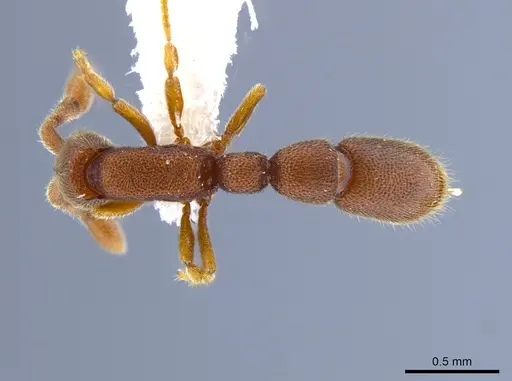
CASENT0902723
Auf AntWeb ansehen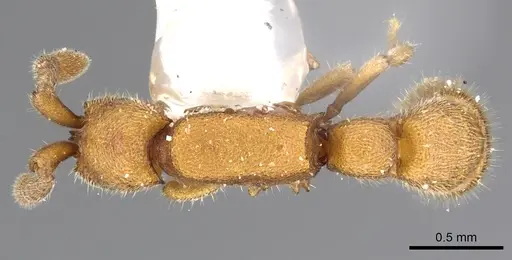
Literatur
Verbreitungskarte wird geladen...Produkte werden geladen...