
Syscia chaladthanyakiji
- Wiss. Name
- Syscia chaladthanyakiji
- Unterfamilie
- Dorylinae
- Autor
- Jaitrong <i>et al.</i>, 2020
- Verbreitung
- In 0 Ländern gefunden
Einleitung
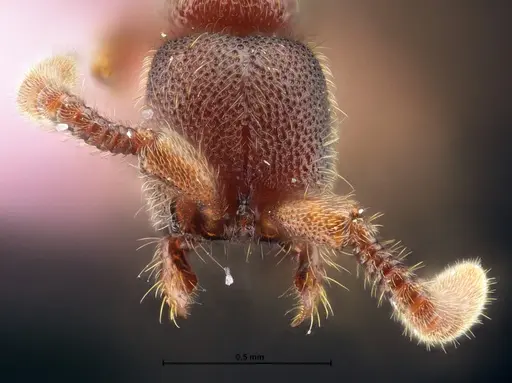
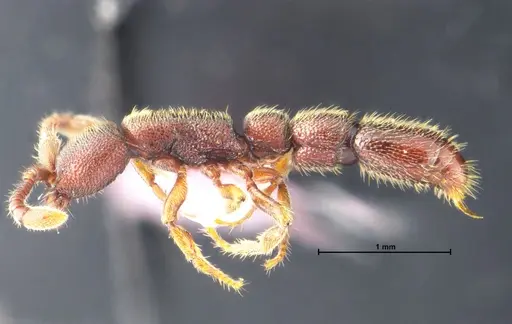
Syscia chaladthanyakiji is a newly discovered army ant from the Dorylinae subfamily, first described in Thailand in 2020. Workers are tiny and completely lack eyes and ocelli, relying entirely on chemical and tactile senses to navigate . Their body is reddish brown with yellowish-brown antennae and legs, and the 11-segmented antennae have a short scape that doesn't reach the midpoint of the head . This species inhabits primary forests in western and central Thailand at elevations between 250-1000 m, nesting in rotting wood on the forest floor . Queens are dealate (wings shed), larger than workers, and have small eyes and ocelli - the only caste with vision . Because so little is known about this species, keeping it is an experiment. There are no confirmed care guidelines, no colony structure data, and even basic details like founding type and growth rate remain a mystery. This makes the species suitable only for experienced keepers who enjoy working with oberservation and adaptation rather than following a manual. The most interesting trait is the complete blindness of workers - a clear adaptation for life deep in leaf litter and rotting wood.
Quick Summary
- Difficulty: Expert
- Origin & Habitat: Thailand (Tak and Nakhon Nayok provinces) in primary forests from 250-1000 m elevation, nesting in rotting wood on the forest floor [1]
- Colony Type: Unknown, a single dealate queen was collected, but colony structure (monogyny, polygyny, gamergate system) has not been studied [1]
- Size & Growth:
- Antkeeping:
- Temperature: Based on habitat (tropical primary forest 250-1000 m), likely 22-26 °C, start here and adjust by observing activity [1]
- Humidity: High, natural habitat is rotting wood on a moist forest floor. Keep nesting substrate consistently damp but not waterlogged [1]
- Diapause: Unknown, Thai winters are mild, so true diapause may not be required. A slight temperature drop (3-5 °C) during winter can be tried experimentally [1]
- Nesting: Rotting wood on the forest floor suggests Y‑tong (autoclaved aerated concrete) or plaster nests with narrow chambers. Dark, humid conditions are essential [1]
- Behavior: Workers are blind, so they rely on pheromone trails and likely forage only inside leaf litter or rotting wood, you won't see much open‑surface activity. Escape risk is high due to their tiny size, fine mesh (≤0.5 mm) and careful sealing are mandatory. Aggression level is unknown but likely low toward humans [1].
- Common Issues: tiny size makes escapes very likely without extremely fine mesh and sealed joints, no established husbandry, every aspect of care requires trial and error, colony structure unconfirmed, unexpected queen dynamics (e.g., polygyny or gamergates) are possible, predatory diet may be hard to provide consistently, live micro‑prey needed, blind workers stress easily if disturbed by vibrations or bright light
Housing and Nest Setup
In the wild, Syscia chaladthanyakiji nests in rotting wood on the forest floor [1][2]. The best captive nests mimic that dark, damp environment. A Y‑tong (autoclaved aerated concrete) or plaster nest with narrow chambers works well, the material holds humidity and allows the ants to dig/chew if needed. Avoid dry nests made of acrylic. A naturalistic setup with pieces of decaying hardwood can also be used, but it makes observation harder. Because workers are blind and navigate with chemical trails, provide a textured surface they can grip easily, avoid glass or smooth plastic without a layer of substrate. The outworld should be simple, with minimal vertical space, these ants are not climbers. Escape prevention is critical: use fine mesh (0.3-0.5 mm) on ventilation and seal all tube connections with PTFE tape or similar. Fluon on test‑tube rims and formicarium edges is a good extra barrier.
Feeding and Diet
No direct dietary studies exist for this species, but as a Dorylinae ant it is almost certainly predatory on small invertebrates [1]. In the wild it likely hunts springtails, mites, small insect larvae, and other micro‑arthropods found in leaf litter. In captivity, offer live prey such as flightless fruit flies (Drosophila), small pieces of mealworm or waxworm, and most importantly a steady supply of live springtails in the nest. Provide a small drop of diluted honey or sugar water once a week, it may or may not be accepted. Feed small prey every 2-3 days, adjusting portion size so that most is consumed within 24 hours. Remove uneaten food to prevent mold. Because the ants are tiny, a single fruit fly is a substantial meal for several workers.
Temperature and Seasonal Care
Syscia chaladthanyakiji comes from Thai primary forests at 250-1000 m elevation, so it probably prefers stable, warm temperatures [1]. Start with 22-26 °C and watch the colony: if workers huddle near the warm part of a gradient, raise it slightly, if they avoid it, lower it. Avoid temperatures below 18 °C or above 30 °C. A small heating cable on one side of the nest creates a useful gradient. Regarding diapause, nothing is published, Thailand's mild winters may not require a cold period. Some keepers reduce temperature by 3-5 °C and reduce feeding for two to three months in winter as a precaution, but this is purely experimental. There is no evidence that this species needs diapause.
Behavior and Observation
Workers have no eyes whatsoever, they are completely blind [1]. All navigation, hunting, and communication is done via pheromone trails and touch. Expect to see very little activity on the surface, these ants spend most of their time inside rotting wood or leaf litter. If you provide a naturalistic setup with a soil/wood layer, you may see them moving debris or tending brood when you open the nest. The only queen ever collected was dealate (wings shed), but it is unknown whether she can be replaced by ergatoid (wingless) queens, as occurs in many Dorylinae [1]. Colony size is completely unknown, there are no published observations of mature colonies. Patience is essential, this species will never be a showy display ant. All keepers should treat this as an ongoing research project.
Frequently Asked Questions
How long does it take for Syscia chaladthanyakiji to produce first workers?
Unknown, no developmental data has been published for this species [1].
Can I keep Syscia chaladthanyakiji in a test tube setup?
Yes, a test tube is fine for a small colony, but escape prevention is essential, use fluon on the cotton plug and ensure the cap has fine mesh. However, their natural preference for rotting wood suggests they will do better in a Y‑tong or plaster nest that can hold humidity [1].
Are Syscia chaladthanyakiji good for beginners?
No, this is an expert‑level species. There is almost no established husbandry, the ants are tiny and prone to escape, and their predatory diet requires a steady supply of live micro‑prey that beginners often find difficult.
What do Syscia chaladthanyakiji eat?
Based on Dorylinae patterns, they are predatory on small invertebrates. Offer live springtails, flightless fruit flies, and small pieces of mealworm. Sugar water may be occasionally accepted but should not be the main food [1].
How big do Syscia chaladthanyakiji colonies get?
Unknown, colony size has never been documented [1].
Do Syscia chaladthanyakiji need hibernation?
Unknown, no data exists. Thailand has mild winters, so true diapause may not be required. A slight temperature drop (3-5 °C) in winter can be tried experimentally, but it is not proven necessary [1].
Why are my Syscia chaladthanyakiji dying?
Without established care, causes are speculative. Common issues include: prey too large or dead, temperature extremes, humidity imbalance (too dry or waterlogged), and escape‑related losses. Their tiny size makes them vulnerable, ensure fine mesh, appropriate prey size, and stable conditions.
Can I keep multiple Syscia chaladthanyakiji queens together?
Unknown, colony structure has not been studied. The only dealate queen collected suggests possible monogyny, but polygyny or gamergate systems cannot be ruled out. Do not combine unrelated queens without data [1].
When should I move Syscia chaladthanyakiji to a formicarium?
Move when the test‑tube water reservoir is nearly empty and the colony is crowded (brood piling up near the entrance). For this species, a Y‑tong or plaster nest with good humidity is preferable to a dry formicarium.
Report an Issue
The current care sheet is based fully on literature. See inconsistencies, or something that's incorrect? Please , it will be resolved after review from an admin. Contributing to the blogs tab also helps providing information, to make us be able to further improve the caresheets. Thank you for your support!
References

Dieses Caresheet ist lizenziert unter CC BY-SA 4.0 .
Community-Blogs
THNHM-I-05483
Auf AntWeb ansehen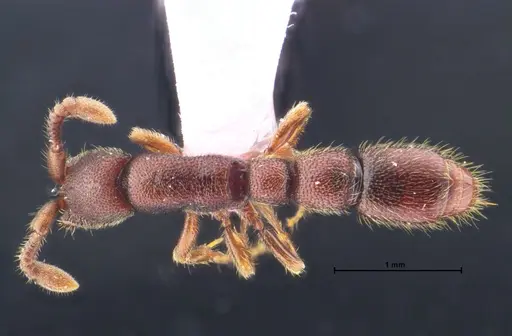
Literatur
Verbreitungskarte wird geladen...Produkte werden geladen...