
Strumigenys xenochelyna
- Wiss. Name
- Strumigenys xenochelyna
- Tribus
- Attini
- Unterfamilie
- Myrmicinae
- Autor
- Bolton, 2000
- Verbreitung
- In 0 Ländern gefunden
Einleitung
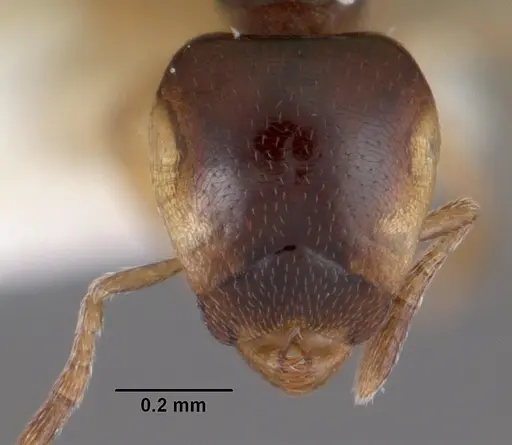
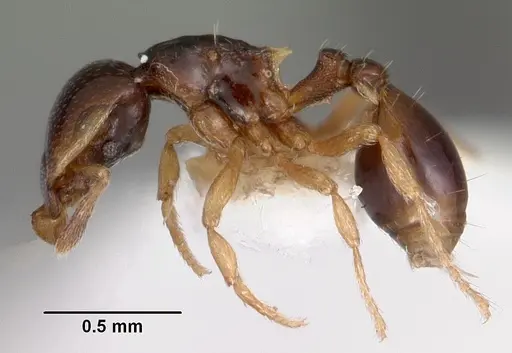
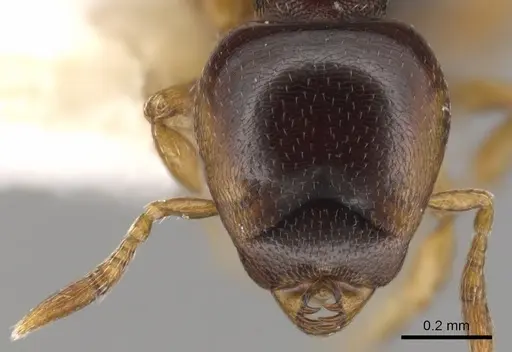
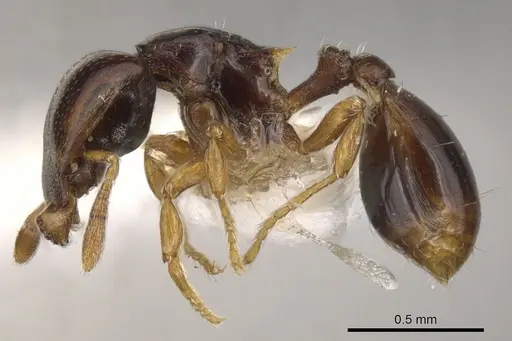
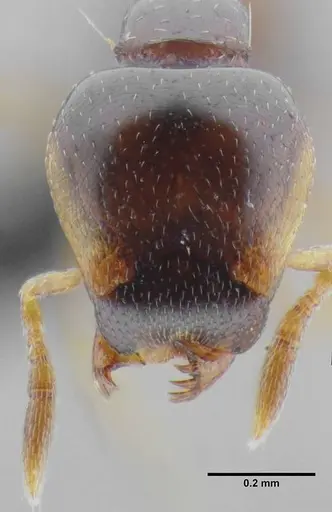
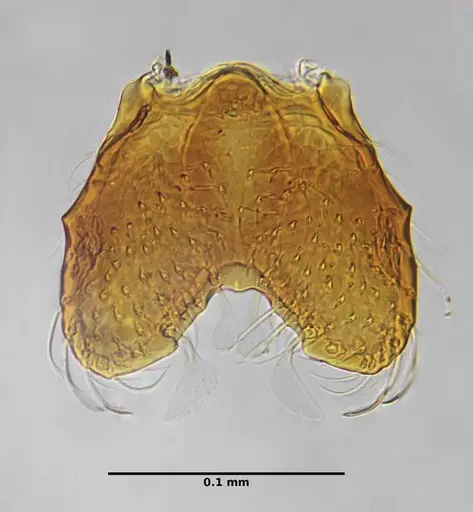
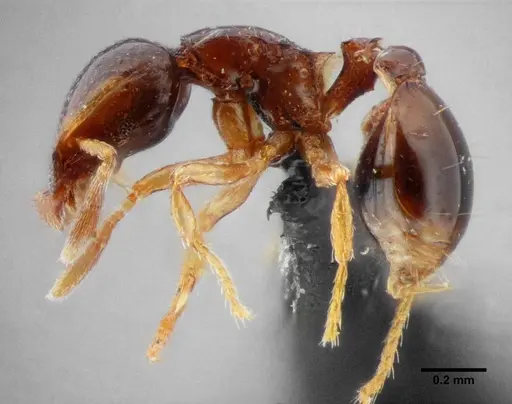
Strumigenys xenochelyna is a tiny predatory ant with worker body length of 2.0-2.3 mm . It belongs to the Strumigenys appretiata group and is found across the Neotropical region, specifically in Argentina, Brazil, and Paraguay . The species is characterized by a complete lack of a ventral spongiform lobe on the postpetiole, short straight hairs at the pronotal humeri, and a transversely rectangular petiole node with a concave anterior margin . This species is considered rare in sampled vegetation types, with few records . Specimens have been collected from tree pitfall traps 1.5-2 m from the ground, suggesting they inhabit elevated microhabitats in forests .
Quick Summary
- Difficulty: Expert
- Origin & Habitat: Neotropical region, Argentina, Brazil, and Paraguay. Specimens collected from tree pitfall traps 1.5-2 m above ground [1], indicating an arboreal or semi-arboreal microhabitat in forest environments. Considered rare [2].
- Colony Type: Unknown. Colony structure is not documented for this species, genus-level patterns are unconfirmed.
- Size & Growth:
- Queen: Unknown, no queen specimens have been described for this species.
- Worker: 2.0-2.3 mm [1]
- Colony: Unknown, based on related Strumigenys species, colonies are likely small (up to a few dozen workers).
- Growth: Unknown, likely slow, as typical for small dacetine ants.
- Development: Estimated 6-10 weeks based on related Strumigenys species and typical Myrmicinae development at warm temperatures. (No specific data for this species, estimate from genus.)
- Antkeeping:
- Temperature: Keep warm,22-26°C, based on its tropical distribution. Use a heat mat on the side of the nest to create a gentle gradient if room temperature is below this range.
- Humidity: High humidity needed, keep nest substrate consistently damp but not waterlogged. These ants come from humid forest habitats and require moisture.
- Diapause: No, tropical origin means no hibernation is needed, though activity may slow in cooler conditions.
- Nesting: Use a small Y-tong (AAC) or plaster nest with narrow chambers and tight passages. Avoid acrylic nests. Excellent escape prevention is critical due to their 2 mm size, use fine mesh (≤0.5 mm) on all openings.
- Behavior: These are tiny, secretive ants that are not aggressive toward humans. They have a functional stinger (as per tribe Attini), but it is weak and not medically significant. Workers move slowly and spend most of their time hidden. They are skittish and easily stressed by disturbance. Escape risk is very high due to their tiny size.
- Common Issues: escape prevention is critical due to their tiny 2 mm size, use fine mesh barriers and tight-fitting lids., colonies grow slowly and remain small, don't expect rapid population increase., high humidity requirements can lead to mold if ventilation is poor, provide gentle airflow., they are specialized predators and will not accept sugar or honey, only live small prey like springtails., wild-caught colonies may be stressed or carry parasites given their rarity.
Housing and Nest Setup
Because Strumigenys xenochelyna workers are only 2 mm long, you need a nest with very small chambers and narrow passages. Y-tong (AAC) or plaster nests work well, avoid acrylic nests. A test tube with cotton can work for a founding queen if the water reservoir is small and the tube is kept in a humid enclosure. The nest should have a water chamber to maintain high humidity. Escape prevention must be thorough, use fine mesh (0.5 mm or smaller) on any openings and ensure all lids fit tightly. Place the nest in a dark, quiet area because these ants are secretive and easily stressed by light and vibration [1].
Feeding and Diet
Strumigenys xenochelyna is a specialized predator. It will not accept sugar, honey, or other carbohydrates. Its diet consists entirely of live small prey. Offer springtails (Collembola), tiny mites, booklice (Psocoptera), and fruit fly larvae. Prey should be no larger than the ant's head. Feed every 2-3 days and remove uneaten prey after 24 hours. A well-fed colony will have workers with plump gasters. Do not offer larger prey like mealworms or crickets, they are too large and may stress the colony [1].
Temperature and Humidity
Maintain a temperature of 22-26°C, which matches the tropical climate these ants come from. Use a heat mat on the side of the nest to create a gradient, do not place it underneath, as that can dry out the nest too quickly. Humidity should be high, keep the nest substrate damp (but not waterlogged). Mist the outworld occasionally but avoid spraying directly into the nest. Good ventilation is important to prevent mold, but avoid strong drafts that will lower humidity. These conditions are inferred from the species' Neotropical distribution [1].
Behavior and Temperament
Strumigenys xenochelyna is not aggressive toward humans. Workers move slowly and spend most of their time hidden in the nest. They have a functional stinger (as is typical for the tribe Attini), but it is weak and poses no risk to people. These ants are easily stressed by vibrations, bright light, and frequent disturbance, so handle the nest minimally. Their trap-jaw mandibles are used for capturing tiny prey, not for defense. Due to their small size and secretive nature, they can be challenging to keep but are rewarding for experienced keepers [1].
Colony Establishment
Establishing a colony of this rare species is difficult. If you obtain a queen, she will likely rear her first brood claustrally (sealed in a chamber using stored reserves), but this is unconfirmed. The founding chamber should be very small and humid. First workers (nanitics) may take several months to develop. Do not disturb the queen during founding, stress can cause her to eat her eggs or abandon them. Once the first workers emerge, offer tiny live prey immediately. Growth will be slow, be patient and keep conditions stable. Colonies likely remain small even at maturity [1].
Frequently Asked Questions
How long does it take for Strumigenys xenochelyna to develop from egg to worker?
The exact development time is not documented. Based on related Strumigenys species and general Myrmicinae patterns, expect about 6-10 weeks from egg to first worker at optimal temperature (around 24-26°C). Growth is slow [1].
What do Strumigenys xenochelyna ants eat?
They are specialized predators and only eat live small prey. Feed them springtails, tiny mites, booklice, and fruit fly larvae. They do not accept sugar, honey, or other sweet substances. Prey must be no larger than the ant's head [1].
Can I keep Strumigenys xenochelyna in a test tube?
Yes, a test tube can work for a founding queen. Use a small tube with a compact water reservoir to avoid flooding. Keep the tube inside a humid container. Once the colony grows to a few workers, move them to a small Y-tong or plaster nest with tight chambers [1].
Are Strumigenys xenochelyna good for beginners?
No, this is an expert-level species. They are tiny (2 mm), require high humidity and live prey, grow slowly, and are rare in nature. They are easily stressed and need precise care. Beginners should start with easier species like Lasius, Tetramorium, or Camponotus. Additionally, this species is rare in its habitat [2].
How big do Strumigenys xenochelyna colonies get?
Colony size is not documented but is likely small, probably up to a few dozen workers at most. This is typical for Strumigenys species [1].
Do Strumigenys xenochelyna need hibernation?
No, because they come from tropical South America, they do not need a winter diapause. Keep warm temperatures (22-26°C) year-round [1].
Why are my Strumigenys xenochelyna dying?
Common causes include: stress from too much disturbance, low humidity, temperatures that are too cold, feeding inappropriate food (they need live prey), escape from the nest, or mold from poor ventilation. Review each parameter and adjust gradually [1].
When should I move my colony to a formicarium?
Move them when the test tube becomes crowded or the water reservoir needs frequent refilling. For this species, that might be when you have 20-30 workers. Use a small Y-tong or plaster nest with excellent escape prevention [1].
Can I keep multiple queens together?
This is not recommended. The colony structure is unknown for this species, but most Strumigenys are believed to be monogyne. Keeping multiple queens together could result in fighting [1].
Report an Issue
The current care sheet is based fully on literature. See inconsistencies, or something that's incorrect? Please , it will be resolved after review from an admin. Contributing to the blogs tab also helps providing information, to make us be able to further improve the caresheets. Thank you for your support!
References

Dieses Caresheet ist lizenziert unter CC BY-SA 4.0 .
Community-Blogs
CASENT0102594
Auf AntWeb ansehen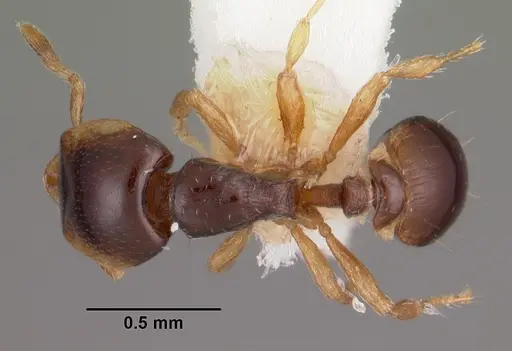
CASENT0900203
Auf AntWeb ansehen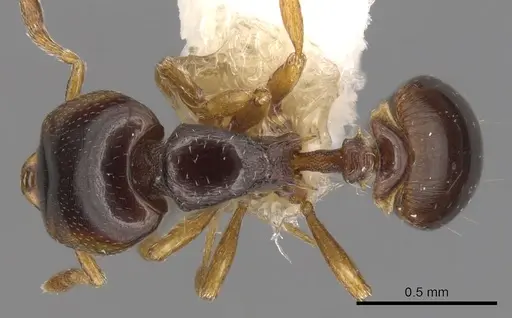
UFV-LABECOL-000091
Auf AntWeb ansehen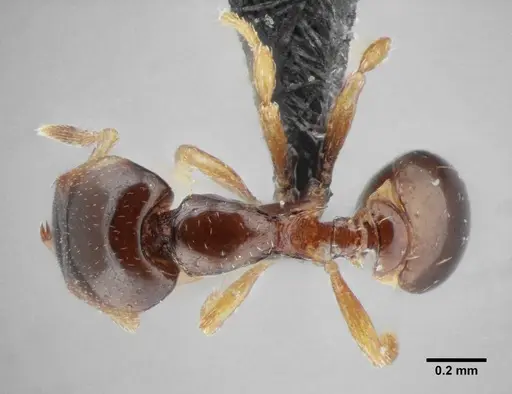
Literatur
Verbreitungskarte wird geladen...Produkte werden geladen...