
Strumigenys valefor
- Wiss. Name
- Strumigenys valefor
- Tribus
- Attini
- Unterfamilie
- Myrmicinae
- Autor
- Bolton, 2000
- Verbreitung
- In 0 Ländern gefunden
Einleitung
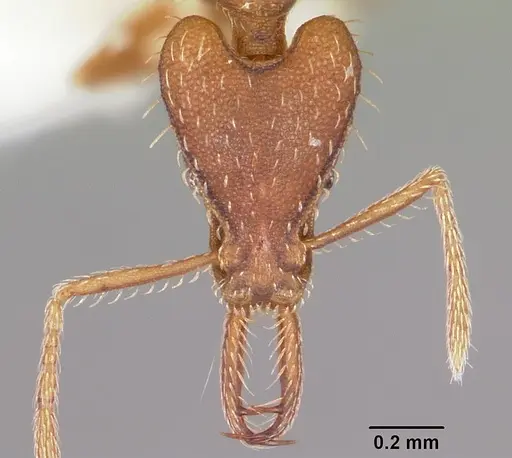
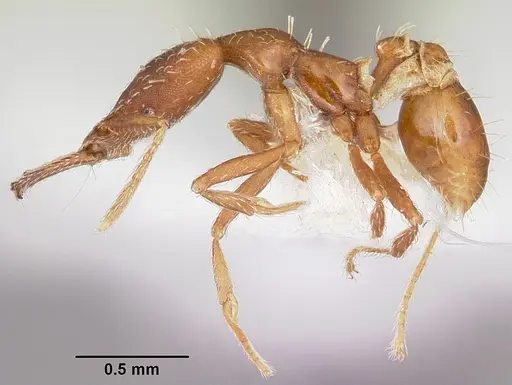
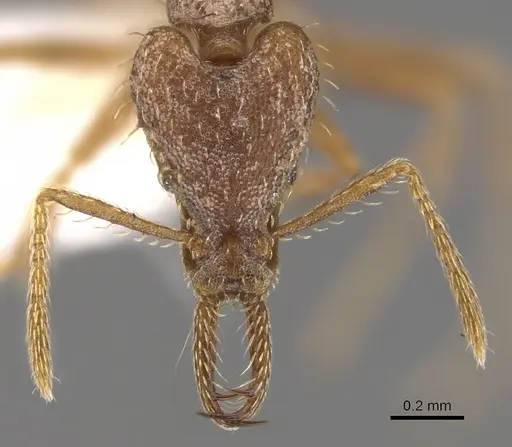
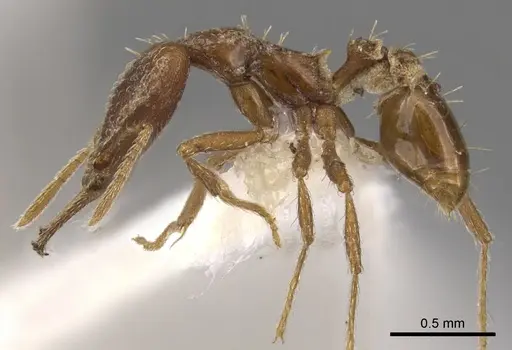
Strumigenys valefor is a minute predatory ant, with workers measuring 2.7-2.8mm . It belongs to the signeae complex within the Strumigenys godeffroyi group . Workers have distinctive erect hairs on the head and mesosoma, and the mandibles have a very narrow cuticular crest at the inner margin . This species is endemic to the lowland forests of West Sumatra, Indonesia, found at elevations between 130 and 250 meters . The known distribution is limited to the Anai Valley Nature Reserve and disturbed forest near Tiga Tingkat waterfall . Like other Strumigenys, this ant is a specialized predator that hunts tiny soil arthropods.
Quick Summary
- Difficulty: Medium
- Origin & Habitat: Endemic to West Sumatra Province, Indonesia, in lowland forest at 130-250m elevation [2]. Known from the Anai Valley Nature Reserve and disturbed forest near Tiga Tingkat waterfall [2].
- Colony Type: Colony structure is unconfirmed in the literature.
- Size & Growth:
- Queen: ~2.8mm [1]
- Worker: 2.7-2.8mm [1]
- Colony: Not documented, unknown in the wild or in captivity.
- Growth: Moderate
- Development: Estimated 6-8 weeks based on related Strumigenys species at tropical temperatures (Development timeline is inferred from genus-level data, not directly studied for this species.)
- Antkeeping:
- Temperature: Keep warm at 24-28°C, reflecting their lowland tropical origin. Avoid drops below 22°C. A small heating cable on one side can create a gradient.
- Humidity: Keep the nest substrate consistently moist but not waterlogged. These ants come from humid forest floor environments. Ventilate to prevent mold.
- Diapause: No formal diapause required. As a tropical species, it may slow down during cooler periods but should be kept warm year-round.
- Nesting: Natural nesting likely occurs in soil and rotting wood. In captivity, use a naturalistic terrarium with moist soil, leaf litter, and pieces of decaying wood. A test tube setup inside a humidified container can work for small colonies. Y-tong or plaster nests are not recommended due to high humidity needs, better to use a sealed container with substrate.
- Behavior: Workers are slow-moving and non-aggressive. They hunt individually, using specialized mandibles to capture springtails. They have a functional sting but it is too weak to penetrate human skin. Their tiny 2.7mm size makes them excellent escape artists, use fine mesh (0.5mm or smaller) on all ventilation.
- Common Issues: escape prevention is critical due to their tiny 2.7mm size, they can squeeze through standard mesh, specialized diet means they may refuse standard ant foods, live springtails are essential, high humidity requirements can lead to mold if ventilation is poor, slow growth can frustrate keepers who expect rapid colony development, wild-caught colonies may carry parasites that can devastate captive colonies
Housing and Nest Setup
Strumigenys valefor needs a setup that maintains high humidity while giving room for hunting. A naturalistic terrarium with a moist soil layer, leaf litter, and pieces of rotting wood works well [2]. For small colonies, a test tube inside a humidified container can work, but substrate is better for established colonies. Use fine mesh (0.5mm or smaller) on all ventilation points, standard ant mesh will not contain these tiny ants [1]. Keep the substrate moist but not waterlogged.
Feeding and Diet
Strumigenys valefor is a specialized predator that hunts tiny arthropods. Live springtails (Collembola) should be the main food [1]. Other small live prey like booklice, soil mites, and fruit flies may also be taken. Sugar sources are usually ignored, these ants are obligate predators, not honeydew feeders. Feed small amounts of live prey every 2-3 days and remove leftovers after 24 hours to prevent mold. Do not try to keep them on sugar water alone, they need live prey to survive.
Temperature and Humidity
Being a lowland tropical species from Sumatra, Strumigenys valefor needs warm, humid conditions. Keep temperatures between 24-28°C. Avoid drops below 22°C. A small heating cable on one side of the enclosure can help. Humidity should be high, keep the substrate consistently moist but not soggy. Balance humidity with good ventilation to stop mold. Use a hygrometer to monitor conditions. [2]
Colony Development
Colony growth is likely moderate, but the maximum colony size is unknown for this species. The queen is about 2.8mm, workers 2.7-2.8mm [1]. Based on related Strumigenys species, expect 6-8 weeks from egg to first worker at optimal temperatures. Keep conditions consistent and avoid rushing the colony. Colonies build slowly but steadily when given stable warmth and humidity.
Behavior and Temperament
These ants are slow-moving and non-aggressive. They hunt individually, not in groups, using their specialized mandibles to catch springtails. At 2.7mm, they are too small to sting humans effectively. The main challenge is escape prevention, they can fit through gaps you can't see. Always use 0.5mm or smaller mesh on all ventilation and barriers. Avoid vibrations that stress the colony. Watching them stalk and ambush prey is fascinating. [1]
Frequently Asked Questions
How long does it take for Strumigenys valefor to produce first workers?
Based on related Strumigenys species, expect about 6-8 weeks from egg to first worker at optimal tropical temperatures (26-28°C).
What do Strumigenys valefor ants eat?
They are specialized predators that need live springtails as their main food. Other tiny live prey like booklice, fruit flies, and soil mites may work. Sugar sources are usually ignored, they are obligate predators.
Can I keep Strumigenys valefor in a test tube?
A test tube setup can work for the founding colony, but a naturalistic setup with moist substrate is better for established colonies because of their high humidity needs and hunting behavior. If using test tubes, keep them inside a humidified container.
Are Strumigenys valefor good for beginners?
This species is rated medium difficulty. While not aggressive, they need live springtails, high humidity, and excellent escape prevention. Beginners may struggle with these specific requirements.
Do Strumigenys valefor need hibernation?
No, as a tropical lowland species from Sumatra they do not need hibernation. They may slow down in cooler months, but keep temperatures stable year-round.
Why are my Strumigenys valefor escaping?
Their tiny 2.7mm size lets them escape through gaps you can't see. Use fine mesh (0.5mm or smaller) on all ventilation and barrier points. Check all connections, lids, and tube junctions carefully.
How big do Strumigenys valefor colonies get?
Colony size is not documented for this species. It is unknown, so do not expect a specific number.
What temperature should I keep Strumigenys valefor at?
Keep them warm at 24-28°C. This matches their native lowland tropical habitat in Sumatra. Use a small heating cable if room temperature is lower.
Can I keep multiple queens together?
Colony structure is unconfirmed for this species. Combining unrelated queens is not recommended, it has not been documented and could cause aggression. Start with a single queen.
Report an Issue
The current care sheet is based fully on literature. See inconsistencies, or something that's incorrect? Please , it will be resolved after review from an admin. Contributing to the blogs tab also helps providing information, to make us be able to further improve the caresheets. Thank you for your support!
References

Dieses Caresheet ist lizenziert unter CC BY-SA 4.0 .
Community-Blogs
CASENT0102664
Auf AntWeb ansehen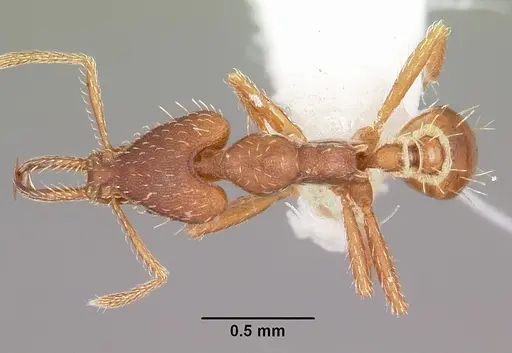
CASENT0900762
Auf AntWeb ansehen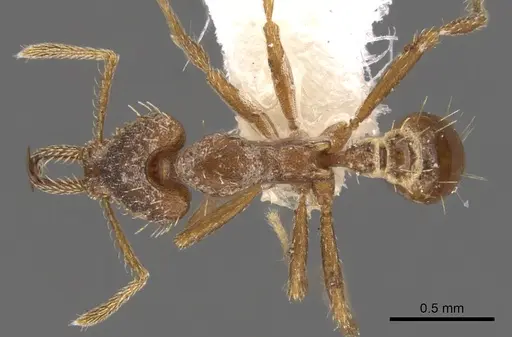
Literatur
Verbreitungskarte wird geladen...Produkte werden geladen...