
Strumigenys treptodens
- Wiss. Name
- Strumigenys treptodens
- Tribus
- Attini
- Unterfamilie
- Myrmicinae
- Autor
- Bolton, 2000
- Verbreitung
- In 0 Ländern gefunden
Einleitung
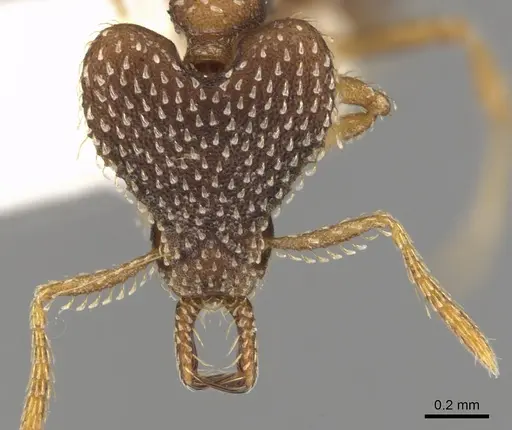
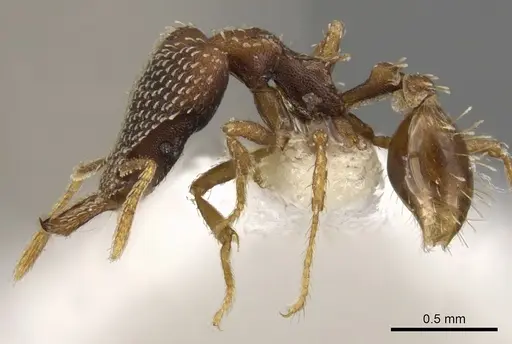
Strumigenys treptodens is a tiny predatory ant measuring 2.8mm in total length . It belongs to the tribe Attini within the subfamily Myrmicinae . This species was described from a worker collected in an alluvial forest in Borneo (Sarawak, Gunung Mulu National Park) and is known from the Indomalaya region including Borneo, Indonesia, Malaysia, and the Philippines . It is a member of the Strumigenys chapmani group, appearing as a smaller, more slender version of the related species Strumigenys rotogenys, with distinctive heavily sculptured body and long basigastral costulae . This specialized predator likely hunts tiny soil micro-arthropods like springtails, consistent with other Strumigenys. Field studies have documented colony sizes averaging around 10 workers with a maximum of 72 workers observed across 26 colonies, indicating small colonies typical of the genus .
Quick Summary
- Difficulty: Hard
- Origin & Habitat: Borneo, Indonesia, Malaysia, and Philippines, alluvial forests in tropical Southeast Asia [1]
- Colony Type: Small colonies averaging 10 workers, maximum around 72 workers per colony [2]. Colony structure (monogyne/polygyne) unconfirmed.
- Size & Growth:
- Queen: Size data unavailable, queen has not been described
- Worker: 2.8mm total length (TL) [1]
- Colony: Up to approximately 72 workers in wild colonies [2]
- Growth: Slow
- Development: Unknown, likely 8-12 weeks based on related Strumigenys species at warm temperatures (No specific development data available for this species, estimates based on genus patterns for small Myrmicinae)
- Antkeeping:
- Temperature: Keep at 24-28°C, warm tropical conditions. Use a heating gradient if possible [1].
- Humidity: High humidity, keep the substrate consistently moist but not waterlogged. A water tube helps maintain moisture [1].
- Diapause: No, being a tropical species, they likely do not require hibernation. Maintain warm conditions year-round.
- Nesting: Prefer humid, naturalistic setups with fine substrate. Y-tong or plaster nests with small chambers work well. Provide constant access to small live prey.
- Behavior: These are tiny, slow-moving ants that hunt using their specialized trap-jaw mandibles to capture small prey. Like other Attini, workers have a functional stinger, but they are not aggressive and its sting is mild. They pose no threat to humans. Due to their extremely small size (2.8mm), escape prevention is critical, they can squeeze through standard formicarium gaps. Workers likely forage individually or in small groups. They are docile and focused on hunting tiny prey.
- Common Issues: tiny size makes escape prevention difficult, use fine mesh and tight-fitting barriers, small colony size means slow growth and potential fragility during founding, specialized diet requires constant access to live micro-prey like springtails, high humidity needs can lead to mold issues if ventilation is poor, wild-caught colonies may have parasites that are difficult to treat
Housing and Nest Setup
Strumigenys treptodens requires a setup that maintains high humidity while providing space for hunting. A Y-tong (AAC) nest with small chambers or a plaster nest with a water reservoir works well. The key is maintaining consistent moisture without flooding. Because workers are extremely tiny (2.8mm [1]), standard formicarium connections must be narrow, and all gaps must be sealed with fine mesh or cotton. A naturalistic setup with a thin layer of moist soil or peat mix allows them to hunt through the substrate. The outworld should be small relative to the colony size, these ants do not travel far from their nest. Use a water test tube as a humidity source and consider covering part of the setup to reduce evaporation.
Feeding and Diet
Strumigenys treptodens is a specialized predator that requires live prey. In the wild, they likely hunt tiny soil micro-arthropods including springtails, mites, and other minute invertebrates. In captivity, their primary food should be live springtails, these are ideal size and provide natural hunting behavior. Other accepted prey may include fruit flies (Drosophila), tiny crickets, and other small insects. They are unlikely to accept sugar water or honey as they are obligate predators. Feed small prey items every 2-3 days, adjusting based on consumption. Remove uneaten prey after 24 hours to prevent mold. Do not attempt to feed them large prey, their tiny mandibles are designed for microscopic hunting.
Temperature and Humidity
As a tropical species from Southeast Asian alluvial forests [1], Strumigenys treptodens needs warm, humid conditions. Maintain temperatures between 24-28°C with a slight gradient if possible. Temperatures below 22°C may slow activity and potentially harm brood. Humidity should be high, the substrate should feel consistently moist but not waterlogged. A water tube connected to the nest helps maintain humidity. Avoid placing the setup near air conditioning or in drafty areas. If the substrate dries quickly, mist lightly but ensure good ventilation to prevent mold. The combination of warmth and humidity mimics their natural alluvial forest floor habitat.
Colony Dynamics and Growth
Field data shows Strumigenys treptodens forms small colonies with an average of 10 workers and a maximum of around 72 workers per colony [2]. This is typical of the genus, they do not produce massive colonies like some Myrmicinae. Growth is likely slow, with workers developing over several months. A founding queen will produce her first workers (nanitics) which will be smaller than mature workers. The colony should be allowed to grow at its own pace without interference. Do not combine this species with other ants in a shared setup, they are specialized predators and may be outcompeted. Their small colony size means they are sensitive to disturbance during the founding stage.
Escape Prevention
Due to their extremely small size (2.8mm [1]), excellent escape prevention is essential. These ants can squeeze through gaps that would hold back larger species. Apply Fluon or similar barrier to all tube connections and nest openings. Use fine mesh (at least 0.5mm) on any ventilation holes. When connecting tubes, use cotton or foam plugs in addition to any built-in barriers. Check the setup daily during the first weeks, especially after feeding. Keep the formicarium in a location without vibrations or disturbances that might trigger escape attempts. Even small gaps around water tubes can allow escapes.
Behavior and Temperament
Strumigenys treptodens is a docile, specialized predator. Workers move slowly and methodically, hunting through substrate and leaf litter. Like other Attini, they have a functional stinger but are not aggressive and its sting is mild, they pose no threat to humans. Their only defense is small size and cryptic behavior. They are not colony aggressive and can be observed hunting in the open on the nest surface. Workers likely use chemical trails to mark paths to prey items. They are not known for tandem running or other complex recruitment behaviors, instead, individual foragers find prey and return to recruit others. Their trap-jaw mandibles are specialized for catching tiny, fast-moving prey like springtails.
Frequently Asked Questions
How long does it take for Strumigenys treptodens to produce first workers?
The exact timeline is unknown, but based on related Strumigenys species, expect 8-12 weeks from egg to first worker at warm temperatures (26-28°C). Small colony size and slow growth are typical of this genus.
What do Strumigenys treptodens eat?
They are obligate predators that require live prey. Feed them live springtails as a primary food source. Other small live prey like fruit flies, tiny crickets, and micro-arthropods may also be accepted. They are unlikely to accept sugar water or honey.
Can I keep Strumigenys treptodens in a test tube?
A test tube can work for a founding queen, but due to their high humidity needs and small size, a more controlled setup like a Y-tong or plaster nest with moisture is better long-term. The tube must have excellent escape prevention.
Are Strumigenys treptodens good for beginners?
No. This species is considered difficult due to their specialized predatory diet, tiny size requiring excellent escape prevention, high humidity requirements, and slow growth. They are best suited for experienced antkeepers familiar with micro-ant husbandry.
How big do Strumigenys treptodens colonies get?
Based on field data, wild colonies reach up to approximately 72 workers [2]. This is typical of the genus, they remain small colonies rather than producing hundreds or thousands of workers.
Do Strumigenys treptodens need hibernation?
No. As a tropical species from Southeast Asia [1], they do not require hibernation. Maintain warm temperatures (24-28°C) year-round to support continuous activity and growth.
Why are my Strumigenys treptodens dying?
Common causes include: prey being too large (they need tiny springtails), low humidity causing desiccation, temperatures below 22°C, escape of workers through small gaps, or stress from excessive disturbance. Ensure high humidity, warm temperatures, appropriate-sized live prey, and excellent escape prevention.
Can I keep multiple queens together?
This has not been documented for this species. Strumigenys colony structure varies by species, but combining unrelated queens is generally not recommended without specific evidence they can coexist.
What temperature is best for Strumigenys treptodens?
Keep them at 24-28°C. Being from tropical alluvial forests in Borneo [1], they need warm, stable temperatures. A slight gradient allows workers to choose their preferred temperature zone.
Report an Issue
The current care sheet is based fully on literature. See inconsistencies, or something that's incorrect? Please , it will be resolved after review from an admin. Contributing to the blogs tab also helps providing information, to make us be able to further improve the caresheets. Thank you for your support!
References

Dieses Caresheet ist lizenziert unter CC BY-SA 4.0 .
Community-Blogs
CASENT0390595
Auf AntWeb ansehen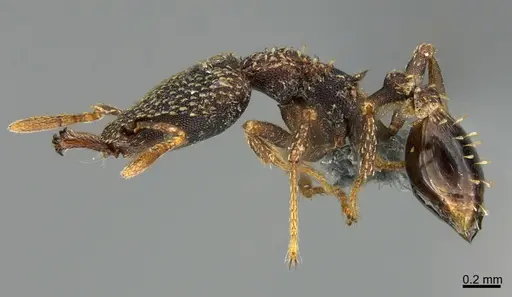
CASENT0900750
Auf AntWeb ansehen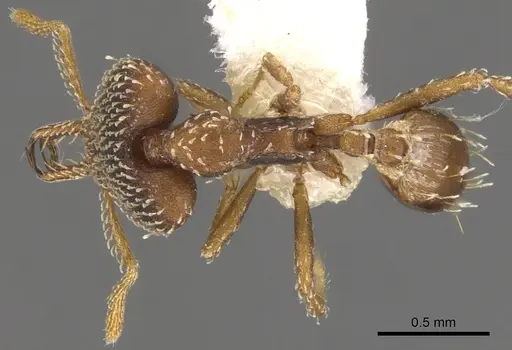
Literatur
Verbreitungskarte wird geladen...Produkte werden geladen...