
Strumigenys taphra
- Wiss. Name
- Strumigenys taphra
- Tribus
- Attini
- Unterfamilie
- Myrmicinae
- Autor
- Bolton, 2000
- Verbreitung
- In 0 Ländern gefunden
Einleitung
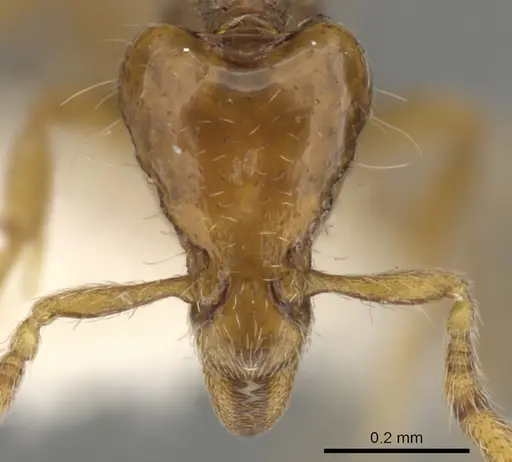
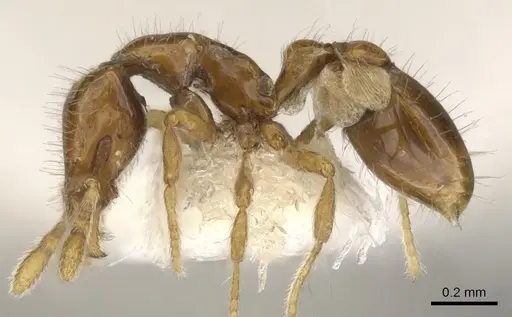
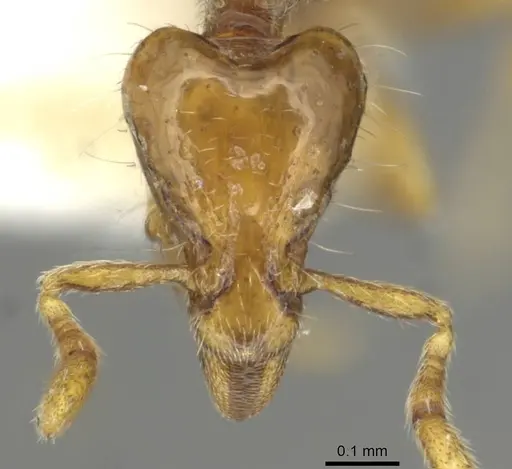
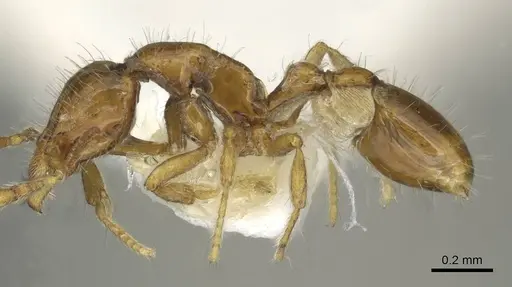
Strumigenys taphra is a tiny predatory ant belonging to the Myrmicinae subfamily and Attini tribe. Workers measure just 1.9-2.0mm in total length, making them the largest species in the Strumigenys mnemosyne group but still among the smallest ants you'll encounter . They feature distinctive diagnostic characters including standing hairs on the clypeus (the area just in front of the head), a deeply concave posterior head margin, and a long glandular groove extending beyond the eye . The head and body are smooth and shining with only weak scattered punctate vestiges . This species is only known from Chiang Mai Province, Thailand, specifically from Doi Inthanon at 1700m elevation in rainforest leaf litter . Like other Strumigenys, they are predators but are specialized micro-predators that hunt tiny soil invertebrates. What makes S. taphra special is its rarity and recent taxonomic history. It was originally described in 2000 as Pyramica taphra and later moved to Strumigenys in 2007 . A specimen previously thought to be this species from Yunnan, China was recently reassessed as a different species (S. liui) . Recent expeditions to Chiang Mai have failed to find additional specimens . This means S. taphra has one of the most restricted known distributions of any Strumigenys species - essentially a single mountain in northern Thailand.
Quick Summary
- Difficulty: Expert
- Origin & Habitat: Known only from Doi Inthanon in Chiang Mai Province, Thailand, at 1700m elevation in rainforest leaf litter and soil samples [1]. This is a highland tropical rainforest environment with consistent warmth and high humidity.
- Colony Type: Colony structure is unconfirmed. Based on other Strumigenys species, likely monogyne (single queen) but this has not been documented for this specific species.
- Size & Growth:
- Queen: Unknown, queen has not been described [1]
- Worker: 1.9-2.0mm total length [1]
- Colony: Unknown, no colony size data available
- Growth: Unknown, no development data available
- Development: Unknown, no direct measurements. Based on typical Strumigenys patterns, development likely takes several weeks, but no specific timeline is known. (No published development data exists for this species. Related Strumigenys species are slow-growing with small colony sizes.)
- Antkeeping:
- Temperature: Keep warm around 24-28°C, they come from a tropical rainforest where temperatures are consistently warm year-round. A gentle gradient allows workers to self-regulate.
- Humidity: High humidity is essential, think damp rainforest floor. Keep the nest substrate consistently moist but not waterlogged. These ants live in leaf litter and soil where humidity stays very high [1].
- Diapause: No, this is a tropical species from a region without cold winters. They do not require hibernation.
- Nesting: Natural nesting occurs in soil and leaf litter. In captivity, a naturalistic setup with moist substrate or a small plaster or soil nest works well. The key is maintaining high humidity while providing tiny passages scaled to their minute size.
- Behavior: These are extremely small, slow-moving predatory ants that hunt tiny soil invertebrates. They possess a functional stinger (typical of the Attini tribe) but are not aggressive and pose no threat to humans. Their tiny size (under 2mm) means escape prevention is critical, they can squeeze through gaps that seem impossibly small. Workers move deliberately and methodically when hunting. Their primary defense is their small size and cryptic lifestyle.
- Common Issues: escape prevention is critical due to their minute 2mm size, they can slip through the tiniest gaps in enclosures, no captive breeding data exists, this species has never been kept in captivity so all care is speculative, high humidity requirements can lead to mold problems if ventilation is inadequate, slow growth and tiny colony sizes mean these are not display ants, no established feeding protocols, you will need to experiment with appropriate live prey, extreme rarity makes obtaining this species nearly impossible
Why This Species Is So Challenging
Strumigenys taphra is not a species for beginners. In fact, it's probably not a species for anyone except researchers or extremely advanced antkeepers with specialized setups. Here's why: this ant has never been kept in captivity. There is zero captive care literature, no established protocols, and no one to ask for advice. The species is known from only about 15 museum specimens collected in 1991 [1]. Recent expeditions to Chiang Mai have failed to find additional specimens [1]. This means everything in this caresheet is inference from related species and general Strumigenys biology, not proven captive requirements.
Additionally, obtaining this species is essentially impossible. It's only known from a single location in Thailand, and no live colonies are in the antkeeping hobby. If you somehow acquired one, you'd be pioneering all aspects of its care. The combination of extreme rarity, unknown biology, tiny size, and specialized requirements puts this firmly in the expert category. [1]
Size and Identification
At 1.9-2.0mm total length, Strumigenys taphra is a tiny ant, about the size of a large springtail [1]. Despite being the largest member of the S. mnemosyne group, this is still a remarkably small ant. Workers have a distinctive appearance that helps identify them: standing hairs on the clypeus (unusual in the group where most species only have tiny appressed hairs), a deeply concave posterior head margin, and a long glandular groove extending beyond the eye [1]. The body is mostly smooth and shining with only very weak punctate sculpturing on the head [1].
For antkeepers who somehow obtain this species, magnification will be essential for observation and handling. These ants are small enough that you'll need a good loupe or stereomicroscope to see the diagnostic features and to handle them safely. [1]
Natural History and Habitat
S. taphra was collected from soil and leaf litter samples in a rainforest at 1700m elevation on Doi Inthanon, Thailand's highest mountain [1]. This highland tropical rainforest environment provides consistent warmth, high humidity, and abundant leaf litter. The ants were extracted using a Berlese funnel (a device that drives insects out of soil samples by gradually heating them). This collection method tells us they live deep in the litter layer, not on the surface or in trees.
Like other Strumigenys, they are predatory but specialize in hunting tiny soil invertebrates, likely springtails, mites, and other micro-arthropods too small for most ants to bother with. The Attini tribe includes fungus-growers, but Strumigenys are not fungus-cultivators, they're predators that have retained the morphological features of the tribe without the fungal symbiosis. [1]
Housing and Care Recommendations
Since no one has kept this species in captivity, all recommendations are educated guesses based on its natural habitat and what works for related Strumigenys. Housing should focus on replicating the highland rainforest leaf litter environment [1]: high humidity, warm temperatures, and tiny passages.
A small naturalistic setup with moist substrate (a mix of soil and leaf litter) would best approximate their natural environment. Alternatively, a small plaster or soil nest with chambers scaled to their tiny size could work, but maintaining high humidity without flooding would be challenging. Temperature should be kept in the 24-28°C range, warm but not hot. Escape prevention is absolutely critical given their 2mm size, even standard fine mesh may not be enough.
Feeding would require culturing appropriate tiny live prey, likely springtails, but this is speculative. The key point is that this species has no established captive protocols, so any keeper attempting it would be genuinely pioneering its care.
Legal and Ethical Considerations
Strumigenys taphra is known only from Thailand and has never been documented in the antkeeping hobby. If specimens were to become available, they would likely be subject to Thailand's export regulations and potentially CITES provisions. Antkeepers should never collect or import ants from the wild, wild populations of rare species should be left undisturbed.
Additionally, given that this species is known from perhaps 15 specimens total and recent surveys failed to find more [1], removing any individuals from the wild could potentially harm the entire known population. Ethical antkeeping means obtaining captive-bred colonies from responsible suppliers, not wild-collected specimens, especially for species this rare. [1]
Frequently Asked Questions
Can I keep Strumigenys taphra as a pet ant?
No. This species is not available in the antkeeping hobby and has never been kept in captivity. It is known from only about 15 museum specimens collected in 1991,and recent surveys have failed to find more in the wild. Even if you somehow obtained one, there are no established care protocols, you'd be pioneering everything through trial and error with an extremely rare species. This makes it completely unsuitable as a pet ant. [1]
How big do Strumigenys taphra colonies get?
Unknown. No colony size data exists for this species. Based on related Strumigenys species, colonies are likely small, but no specific size is known.
What do Strumigenys taphra ants eat?
Based on typical Strumigenys biology, they are micro-predators that hunt tiny soil invertebrates like springtails and mites. They are not fungus-cultivators despite being in the Attini tribe. No captive feeding data exists for this specific species.
Where does Strumigenys taphra live?
Only from Doi Inthanon in Chiang Mai Province, Thailand, at 1700m elevation. This is a highland tropical rainforest. The species was collected from soil and leaf litter samples. It has one of the most restricted distributions of any Strumigenys species. [1]
How long does it take for Strumigenys taphra to develop from egg to worker?
Unknown. No development data exists for this species. Based on typical Strumigenys patterns, development likely takes several weeks, but this is purely speculative.
Is Strumigenys taphra good for beginners?
Absolutely not. This is an expert-only species that has never been kept in captivity. There are no established care protocols, no available colonies, and no one to ask for advice. The combination of extreme rarity, unknown biology, tiny size, and specialized requirements makes it completely unsuitable for any keeper, beginner or experienced. [1]
Does Strumigenys taphra need hibernation?
No. This is a tropical species from Thailand where temperatures remain warm year-round. They do not require a diapause or hibernation period. Keep them warm consistently.
What is the best nest type for Strumigenys taphra?
No one knows, this species has never been kept in captivity. A naturalistic setup with moist leaf litter substrate would best approximate their natural environment. Any nest would need to be scaled to their tiny 2mm size with excellent escape prevention.
Can I keep multiple Strumigenys taphra queens together?
Unknown. Colony structure has not been documented for this species. While some Strumigenys can be polygynous, there's no data on whether S. taphra is single-queen or multi-queen. Given the species' extreme rarity and lack of captive specimens, this question cannot be answered. [1]
Report an Issue
The current care sheet is based fully on literature. See inconsistencies, or something that's incorrect? Please , it will be resolved after review from an admin. Contributing to the blogs tab also helps providing information, to make us be able to further improve the caresheets. Thank you for your support!
References

Dieses Caresheet ist lizenziert unter CC BY-SA 4.0 .
Community-Blogs
CASENT0900147
Auf AntWeb ansehen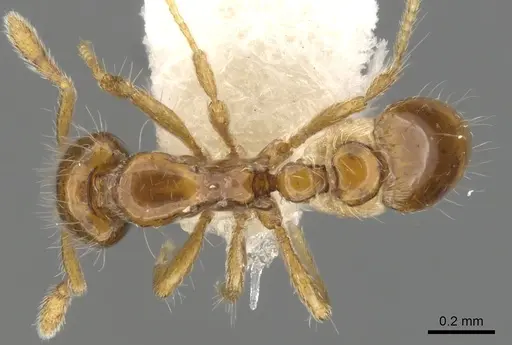
CASENT0915365
Auf AntWeb ansehen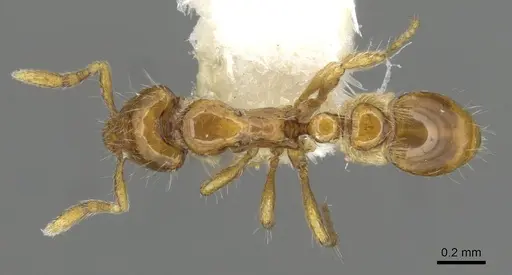
Literatur
Verbreitungskarte wird geladen...Produkte werden geladen...