
Strumigenys skia
- Wiss. Name
- Strumigenys skia
- Tribus
- Attini
- Unterfamilie
- Myrmicinae
- Autor
- Bolton, 2000
- Verbreitung
- In 0 Ländern gefunden
Einleitung
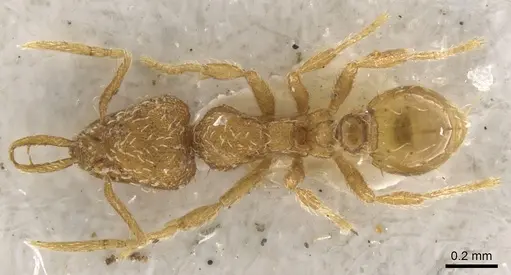
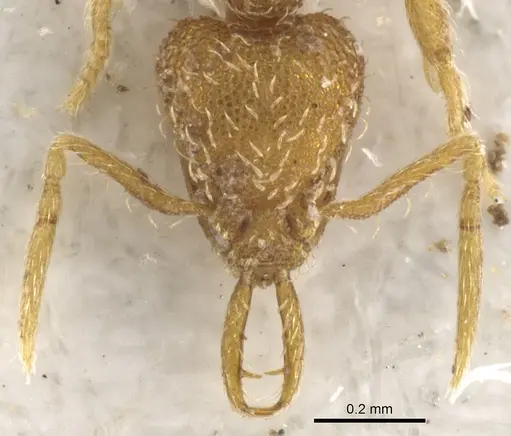
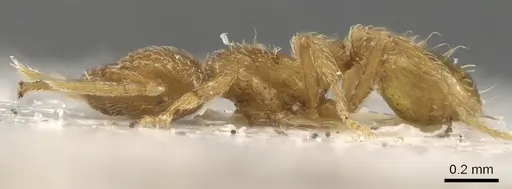
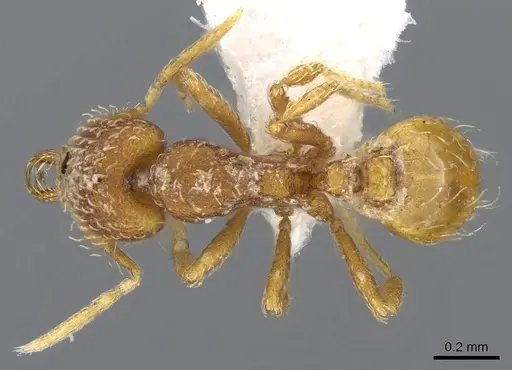
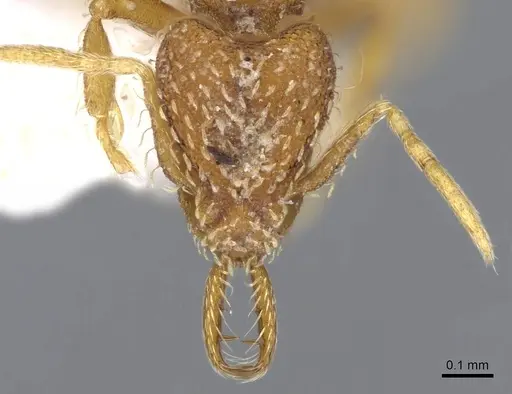
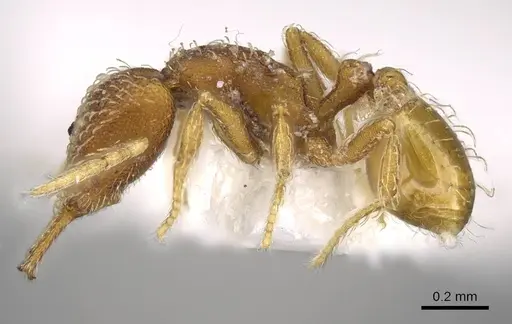
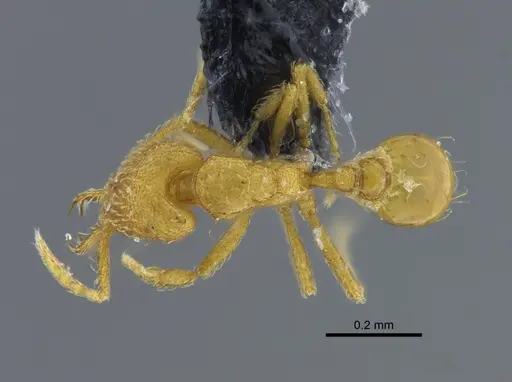
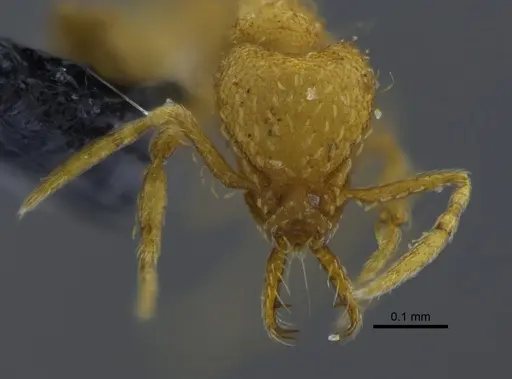
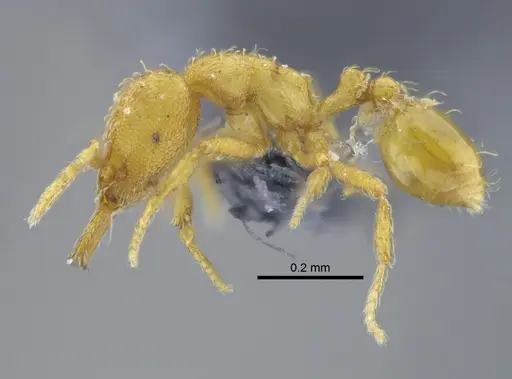
Strumigenys skia is a tiny predatory ant measuring 1.9mm in total length . It belongs to the Myrmicinae subfamily (tribe Attini) and is native to the Neotropical region, with documented distribution in Colombia, Ecuador, Panama, and Venezuela . In Colombia, specimens have been recorded in Antioquia, Magdalena, Meta, and Nariño . These ants are typically collected from leaf litter in forested habitats, indicating they thrive in humid, shaded environments with abundant micro-prey . Workers have distinctive features including flagellate (hair-like) hairs on the first gastral tergite and mesonotum, short mandibles, and a glassy smooth postpetiole disc .
Quick Summary
- Difficulty: Hard
- Origin & Habitat: Neotropical region, specifically Colombia, Ecuador, Panama, and Venezuela. Found in forested habitats at elevations around 1160m (recorded from Tungurahua, Ecuador). They live in leaf litter and soil environments in tropical and subtropical forests [2][3].
- Colony Type: Colony structure is unconfirmed. Like other Strumigenys, they likely have single-queen colonies, but this has not been directly documented.
- Size & Growth:
- Queen: Undescribed, queens have not been documented in scientific literature
- Worker: 1.9mm total length [1]
- Colony: Unknown, no colony size data available. Likely small colonies, probably under a few hundred workers based on related species.
- Growth: Unknown, expected to be slow
- Development: Unknown, estimated 6-10 weeks based on related Strumigenys species at tropical temperatures (No direct development data exists for this species. Estimates based on genus-level patterns for small tropical Myrmicinae.)
- Antkeeping:
- Temperature: Keep around 24-28°C, these are tropical ants from lowland and mid-elevation Neotropical forests. A gentle heat gradient allows them to regulate [1].
- Humidity: High humidity required, think damp forest floor. Keep the nest substrate consistently moist but not waterlogged. These ants live in leaf litter where humidity stays consistently high. Use a substrate that holds moisture well (e.g., plaster or soil) and vent adequately to prevent mold [1].
- Diapause: No, being tropical, they do not require hibernation. Keep temperatures stable year-round.
- Nesting: Best in naturalistic setups with moist substrate or tight Y-tong/plaster/3D-printed nests with very narrow chambers scaled to their tiny size. Their tiny size means escape prevention is critical. Y-tong nests with tight chambers work well.
- Behavior: These are specialist predators, using their trap-jaw mandibles to capture small micro-arthropods like springtails. They are very small and fragile, so excellent escape prevention is critical. They have a functional stinger but it is not medically significant to humans, they are not aggressive and will retreat if disturbed. Workers forage individually in the substrate rather than forming trails.
- Common Issues: escape prevention is critical, they are extremely small and can squeeze through tiny gaps, prey acceptance can be difficult, they are specialist predators and may refuse standard ant foods, live springtails are essential, high humidity requirements can lead to mold issues if ventilation is poor, slow colony growth means keepers may lose patience and overfeed, wild-caught colonies may have parasites that are difficult to detect
Housing and Nest Setup
Strumigenys skia are tiny ants that require carefully designed housing. Use nests with very narrow chambers and passages scaled to their 1.9mm size, standard ant nest chambers will be too large. Y-tong (AAC) nests with tight chambers, plaster nests, or 3D-printed nests work well. Alternatively, a naturalistic setup with moist soil and leaf litter can mimic their natural habitat. Regardless of nest type, escape prevention must be excellent, these ants can squeeze through gaps that seem impossible. Use fine mesh on any ventilation holes and ensure all connections are sealed. A small outworld area makes feeding easier without giving them too much open space to explore.
Feeding and Diet
Strumigenys skia are specialist predators of small micro-arthropods. Their primary food should be live springtails, these are the ideal size and are readily accepted by most Strumigenys species. Other small live prey like micro-arthropods, tiny mites, and collembola can also be offered. They typically do NOT accept sugar sources, seeds, or dead insect pieces, they are obligate predators that need moving prey to trigger their hunting response. Feed small prey items every 2-3 days, adjusting based on colony consumption. Never leave large prey items in the nest as they can attract mold.
Temperature and Humidity
These tropical ants need warm, humid conditions. Maintain temperatures between 24-28°C, this matches their native Neotropical forest habitat in Colombia and Ecuador [2][3]. A heating cable on one side of the nest creates a gentle gradient, allowing ants to move to their preferred temperature. Humidity should be high, the nest substrate should feel consistently damp but never waterlogged. These ants come from leaf litter environments where humidity stays stable and high. Use a water reservoir or regular misting to maintain moisture, but ensure adequate ventilation to prevent mold growth. Avoid placing the nest near direct sunlight or air conditioning vents that could cause temperature swings [1].
Colony Development
No specific development data exists for Strumigenys skia. Based on related Strumigenys species and small tropical Myrmicinae patterns, expect the first workers (nanitics) to emerge approximately 6-10 weeks after the queen lays eggs, assuming temperatures around 26°C. Initial colonies grow slowly, the queen will produce only a small number of workers before the colony expands. Be patient during the founding phase, disturbing the nest or checking too frequently can cause the queen to abandon or eat her brood. Colony size is unknown but likely stays relatively small compared to common ant species.
Behavior and Temperament
Strumigenys ants are not aggressive and pose no danger to humans, they have a functional stinger but it is too small to be medically significant. Workers forage individually through the substrate rather than forming visible foraging trails. Their most notable feature is their trap-jaw mandibles, which they use to capture prey. When threatened, they may simply retreat deeper into the nest rather than display defensive behavior. The main keeper concern is their tiny size making escape likely without proper barriers. They are fascinating to watch as they hunt springtails, using their quick mandibles to capture prey much larger than themselves.
Frequently Asked Questions
How long does it take for Strumigenys skia to produce first workers?
The exact timeline is unknown for this species, but based on related Strumigenys species, expect 6-10 weeks from egg to first worker at tropical temperatures around 26°C. Founding colonies grow slowly, so patience is essential during the first few months.
What do Strumigenys skia ants eat?
They are specialist predators that need live prey. Feed them live springtails as their primary food, these are the ideal size and readily trigger their hunting instincts. Other small micro-arthropods may also be accepted. They do not typically accept sugar water, honey, seeds, or dead insects.
Can I keep Strumigenys skia in a test tube?
A test tube can work for a founding queen, but the chambers must be very small given their tiny 1.9mm size. Standard test tube setups may have too much open space. Consider using a small Y-tong nest with narrow chambers or a carefully set up naturalistic tube setup with moist substrate.
Do Strumigenys skia ants need hibernation?
No, they are tropical ants from Colombia, Ecuador, Panama, and Venezuela. They do not require hibernation and should be kept at stable warm temperatures year-round (24-28°C).
Why are my Strumigenys skia dying?
Common causes include: escape (their tiny size makes escapes likely without excellent barriers), accepting the wrong food (they need live springtails, not sugar or dead insects), low humidity (they need consistently damp conditions), and temperature issues (they need warmth, not room temperature). Also check for parasites which are common in wild-caught colonies.
How big do Strumigenys skia colonies get?
The maximum colony size is unknown for this specific species. Based on related Strumigenys, colonies likely reach only a few hundred workers at most, and growth is very slow.
What is the best nest type for Strumigenys skia?
Nests with very narrow chambers scaled to their tiny 1.9mm size work best. Y-tong (AAC) nests with tight chambers, plaster nests, or naturalistic setups with moist soil and leaf litter are all suitable. The key is preventing escapes while maintaining high humidity.
Can I keep multiple Strumigenys skia queens together?
This has not been documented for this species. Based on typical Strumigenys behavior, they likely have single-queen colonies. Combining unrelated queens is not recommended as it has not been studied and could result in fighting.
Are Strumigenys skia good for beginners?
They are not recommended for beginners due to their specific dietary needs (live springtails), high humidity requirements, tiny size making escapes likely, and slow colony growth. Beginners should start with a more resilient and forgiving species.
Report an Issue
The current care sheet is based fully on literature. See inconsistencies, or something that's incorrect? Please , it will be resolved after review from an admin. Contributing to the blogs tab also helps providing information, to make us be able to further improve the caresheets. Thank you for your support!
References

Dieses Caresheet ist lizenziert unter CC BY-SA 4.0 .
Community-Blogs
Literatur
Verbreitungskarte wird geladen...Produkte werden geladen...