
Strumigenys incerta
- Wiss. Name
- Strumigenys incerta
- Tribus
- Attini
- Unterfamilie
- Myrmicinae
- Autor
- Brown, 1949
- Verbreitung
- In 0 Ländern gefunden
Einleitung
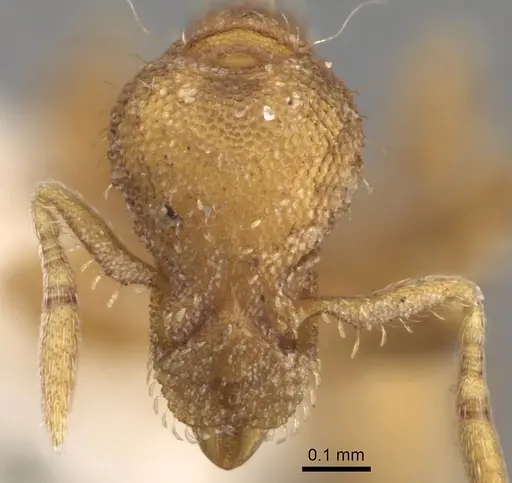
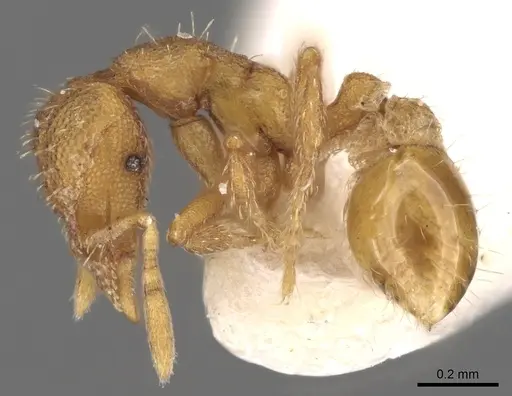
Strumigenys incerta is a tiny predatory ant native to East Asia, found across Japan, China, and South Korea. Workers measure roughly 2.15-2.20 mm and have a distinctive rusty yellow coloration with short mandibles and dense spatulate hairs covering their body and clypeus . This species belongs to the Strumigenys rostrata group and is closely related to Strumigenys rostrataeformis, distinguished by its concave anterior clypeal margin and mesosomal hair arrangement . They inhabit broadleaf forest floors, nesting in rotting wood and leaf litter where they hunt small prey . A notable ecological association exists with Cryptopone sauteri, with researchers observing potential social parasitism (xenobiosis) between these species .
Quick Summary
- Difficulty: Medium
- Origin & Habitat: Japan, China, and South Korea, broadleaf forest floors, nesting in rotting wood and leaf litter [1]
- Colony Type: Unknown, colony structure has not been formally studied. Likely single-queen based on typical Strumigenys patterns, but this is not confirmed
- Size & Growth:
- Queen: 2.36 mm [1]
- Worker: ~2.15-2.20 mm [1]
- Colony: Unknown, colony size is not documented. Typical for genus is small, likely well under 100 workers
- Growth: Slow, dacetine ants develop slowly
- Development: Estimated 8-12 weeks based on related Strumigenys species [1] (Development is slow, require patience during founding)
- Antkeeping:
- Temperature: Estimated 20-24°C, as a temperate species, they likely need moderate warmth [1]
- Humidity: High, keep nest substrate consistently moist, mimicking damp rotting wood and leaf litter. Ventilation must balance humidity to avoid mold [1]
- Diapause: Yes, temperate origin suggests a winter dormancy period (approx. November-March at 10-15°C). Details unknown, so observe colony cues
- Nesting: Prefers naturalistic setups with rotting wood, leaf litter, or moist soil. Y-tong (AAC) or plaster nests with a water reservoir work well. Small, snug chambers help them feel secure
- Behavior: Very docile. These tiny ants are specialized predators of springtails and other micro-arthropods. They possess a mild sting (typical of Myrmicinae) but are not aggressive to humans. Escape risk is high due to their tiny size, use fine mesh or PTFE barriers. Workers are slow-moving and rarely leave the nest area. They may exhibit 'body smearing behavior' seen in related Strumigenys [1].
- Common Issues: slow colony growth can frustrate beginners, avoid overfeeding or disturbing the nest, tiny size makes escape prevention challenging without fine mesh, high humidity needs can lead to mold if ventilation is poor, predatory diet requires constant access to live micro-prey (springtails, mites), wild-caught colonies may carry parasites, quarantine new findings
Housing and Nest Setup
Strumigenys incerta requires high-humidity housing that mimics their natural forest floor habitat. A naturalistic setup with moist rotting wood pieces, leaf litter, and damp soil works best [1]. You can also use Y-tong (AAC) nests or plaster nests with a water reservoir to maintain humidity. The nest chamber should be small and snug, these tiny ants feel secure in tight spaces. Add a shallow water dish for drinking and ensure the outworld has fine mesh barriers to prevent escapes. Avoid dry, open setups, these ants will not thrive in arid conditions.
Feeding and Diet
As specialized predators, Strumigenys incerta needs a diet of live micro-arthropods. Springtails are the ideal primary food, they are small enough for these tiny ants to capture and provide proper nutrition [1]. Other acceptable prey includes tiny soil mites, booklice (psocids), and fruit fly larvae. Feed prey 2-3 times per week, offering only what the colony can consume within a day. Remove uneaten prey to prevent mold. Sugar sources are generally not accepted by dacetine ants, they are obligate predators. Some keepers report success with tiny amounts of honey water offered occasionally, but live prey should form the bulk of their diet.
Temperature and Seasonal Care
Based on its temperate origin, keep Strumigenys incerta at an estimated 20-24°C for optimal colony health and development [1]. As a species from Japan and Korea, they experience seasonal temperature changes in the wild. During winter (roughly November to March in the Northern Hemisphere), reduce temperatures gradually to 10-15°C to provide a dormancy period. This mimics natural conditions and helps synchronize the colony's annual cycle. Do not cool suddenly, reduce temperature over 2-3 weeks. Keep humidity high year-round, but be careful not to let the nest become waterlogged during cooler months when evaporation is reduced.
Colony Development and Growth
Strumigenys colonies grow slowly, this is normal for the genus and not a cause for concern. A founding queen will lay a small batch of eggs and raise the first workers (nanitics) entirely on her own [1]. The first nanitics will be very small but will begin hunting to support further growth. Based on related species, expect roughly 8-12 weeks from egg to first worker at optimal temperature. After that, growth continues slowly with new workers hatching every few weeks. Colony size is not well-documented, but small colonies (likely well under 100 workers) are typical for the genus. Patience is essential, do not disturb the nest or try to speed up growth by heating aggressively, as this can stress or kill the colony.
Behavior and Temperament
These are among the most docile ants in the hobby. They possess a mild sting (typical of Myrmicinae) but are not aggressive to humans [1]. Workers are slow-moving and spend most of their time hunting within the nest and outworld. They do not show territorial or aggressive behavior toward each other. The species is known for 'body smearing behavior' where workers cover themselves with secretions, though the exact function is unclear (reported in related Strumigenys) [1]. Workers may form temporary trails to food sources but are not aggressive foragers. Their tiny size (2.15-2.20 mm) makes escape prevention challenging, always use fine mesh or barriers.
Frequently Asked Questions
How long does it take for Strumigenys incerta to raise first workers?
Based on related Strumigenys species, expect roughly 8-12 weeks from egg to first worker at optimal temperature (estimated 20-24°C). Dacetine ants develop slowly, so patience is essential during the founding stage.
What do Strumigenys incerta ants eat?
They are specialized predators that need live micro-arthropods. Springtails are the ideal food, offer them 2-3 times per week. Other acceptable prey includes tiny mites, booklice (psocids), and fruit fly larvae.
Can I keep Strumigenys incerta in a test tube?
Test tubes can work for founding colonies but are not ideal long-term. These ants need high humidity and a naturalistic setup with rotting wood or moist substrate to thrive. A small Y-tong (AAC) or plaster nest with a water reservoir is better.
Do Strumigenys incerta need hibernation?
Based on their temperate origin in Japan and Korea, they likely require a winter dormancy period. Reduce temperatures gradually to 10-15°C from roughly November to March to mimic natural seasonal cycles. Details are not well-studied, so observe your colony.
How big do Strumigenys incerta colonies get?
Colony size has not been formally documented. Small colonies are typical for the genus, likely well under 100 workers even in established nests.
Why is my Strumigenys incerta colony not growing?
Slow growth is normal for this species. Ensure they have constant access to live prey (springtails), high humidity, and stable temperatures around 20-24°C. Avoid disturbing the nest frequently, patience is key.
Are Strumigenys incerta good for beginners?
They are intermediate-level ants due to their specific humidity and dietary requirements. Beginners can succeed if they commit to providing live springtails and maintaining proper humidity levels.
When should I move Strumigenys incerta to a formicarium?
Wait until the colony has at least 20-30 workers before considering a move. They do well in naturalistic setups, add small pieces of rotting wood and maintain high humidity rather than switching to dry formicaria.
Can I keep multiple queens together?
Colony structure is unconfirmed for this species. It is best to assume single-queen colonies until more is known. Do not attempt to combine unrelated queens.
Report an Issue
The current care sheet is based fully on literature. See inconsistencies, or something that's incorrect? Please , it will be resolved after review from an admin. Contributing to the blogs tab also helps providing information, to make us be able to further improve the caresheets. Thank you for your support!
References

Dieses Caresheet ist lizenziert unter CC BY-SA 4.0 .
Community-Blogs
CASENT0280713
Auf AntWeb ansehen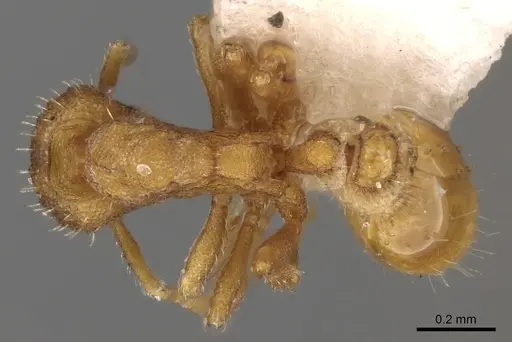
Literatur
Verbreitungskarte wird geladen...Produkte werden geladen...