
Strumigenys dayui
- Wiss. Name
- Strumigenys dayui
- Tribus
- Attini
- Unterfamilie
- Myrmicinae
- Autor
- Xu, 2000
- Verbreitung
- In 0 Ländern gefunden
Einleitung
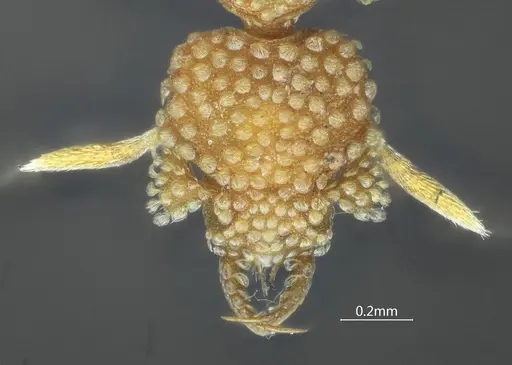
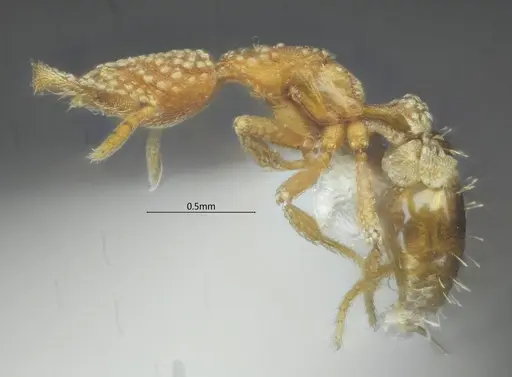
Strumigenys dayui is a tiny ant species endemic to Yunnan Province, China . Very little is known about its biology, so most care information comes from patterns seen in other Strumigenys species. Workers are estimated around 2-3 mm based on the genus, with a pale to amber coloration typical of leaf-litter ants. They are thought to be specialized predators that hunt small soil arthropods. This species is not recommended for beginners due to the uncertainty in care requirements and the high humidity needed.
Quick Summary
- Difficulty: Expert
- Origin & Habitat: Yunnan Province, China, found in the Xishuangbanna Nature Reserve [1]. Likely inhabits leaf litter and upper soil layers of subtropical forests.
- Colony Type: Based on typical Strumigenys patterns, colonies are likely monogyne (single queen) and remain small, often under 100 workers. This is inferred and not confirmed for this specific species.
- Size & Growth:
- Queen: Estimated 3-4 mm based on Strumigenys genus patterns (no direct data available).
- Worker: Estimated 2-3 mm based on Strumigenys genus patterns (no direct data available).
- Colony: Unknown, likely under 100 workers based on typical Strumigenys colony sizes.
- Growth: Slow
- Development: Unknown, based on related Strumigenys species, estimated 4-8 weeks at optimal temperature. (Development is likely slow due to small colony size, but no specific data exists for this species.)
- Antkeeping:
- Temperature: Unknown, based on subtropical origin, keep at 22-26°C as a starting guess. Observe and adjust.
- Humidity: Likely requires high humidity, typical of leaf-litter ants. Keep the nest substrate consistently moist but not waterlogged. A humidity gradient is recommended.
- Diapause: Probably not required, being from subtropical Yunnan, they may reduce activity in cooler months but likely do not need a full hibernation period.
- Nesting: Y-tong (AAC) or plaster nests with tight, humid chambers are likely suitable. Test tubes can work for founding but require careful moisture control.
- Behavior: Based on the genus, these ants are secretive and light-averse. They hide in leaf litter and hunt tiny prey. Their defense mechanism is a sting (subfamily Myrmicinae, tribe Attini), but it is not medically significant. Escape risk is moderate due to small size, use fine mesh and tight seals.
- Common Issues: high humidity maintenance is critical, the most common cause of failure, specialized diet likely needed, may require live micro-prey like springtails, slow growth tests patience, colonies remain small, light sensitivity causes stress, keep in darkness or use red film, tiny size makes escape prevention difficult, check for gaps constantly
Housing and Nest Setup
Since no specific housing data exists for Strumigenys dayui, we use recommendations from related Strumigenys. Y-tong (AAC) nests with narrow chambers work well to maintain high humidity. Plaster nests are another good option. For founding, a test tube setup can work but must be monitored daily for moisture. Keep the nest in complete darkness or use red film for observation. Avoid direct sunlight and vibrations. [1]
Feeding and Diet
Strumigenys are generally specialized predators of micro-arthropods. It is likely that Strumigenys dayui requires live prey such as springtails (Collembola) and soil mites. Sugar sources are unlikely to be accepted. Offer small amounts of live prey every 2-3 days, removing leftovers. This diet is challenging and a major reason the species is expert-level.
Temperature and Humidity
Based on the subtropical origin, maintain a temperature of 22-26°C as a starting point. Use a heat cable on the side to create a gradient, but avoid drying out the nest. Humidity is critical, aim for consistently moist substrate without waterlogging. A water reservoir or damp sand/soil mix helps stability. Check daily. [1]
Behavior and Observation
Like most Strumigenys, these ants are shy and prefer darkness. Workers hunt slowly in leaf litter, using their trap-jaw mandibles to capture prey. They are not aggressive and rarely sting. Observation is best done with red light. Do not expect active surface foraging, they spend most time within the nest or just below the substrate surface.
Colony Development
No species-specific data exists. Based on related species, a newly mated queen likely seals herself in and raises the first brood using stored reserves. The first workers (nanitics) appear after 4-8 weeks at optimal conditions. Colony growth remains slow and likely peaks under 100 workers. Patience is essential.
Frequently Asked Questions
Can I keep Strumigenys dayui in a test tube?
A test tube can work for founding, but humidity maintenance is difficult. A Y-tong or plaster nest with small chambers is better for established colonies.
What do Strumigenys dayui eat?
They are likely specialized predators that need live micro-prey such as springtails. They will not accept sugar water or dead protein.
How long until first workers appear?
Based on related Strumigenys, expect 4-8 weeks from egg to first worker at around 24°C. This is an estimate with no specific data.
Are Strumigenys dayui good for beginners?
No. This is an expert-level species due to unknown care requirements, specialized diet, and high humidity needs.
How big do Strumigenys dayui colonies get?
Unknown, but based on the genus, colonies likely stay under 100 workers even when mature.
Do Strumigenys dayui need hibernation?
Probably not, being from subtropical Yunnan, they likely do not require a true diapause, but may reduce activity in cooler months.
Why are my Strumigenys dying?
The most likely causes: low humidity (keep substrate moist), wrong food (they need live micro-prey), too much light (keep in darkness), or stress from disturbances.
When should I move Strumigenys dayui to a formicarium?
Wait until the colony has at least 10-15 workers and is actively feeding. A Y-tong nest is recommended over traditional formicariums.
Can I keep multiple queens together?
This has not been studied. Based on typical Strumigenys, single-queen colonies are most common. Combining queens is not recommended.
Report an Issue
The current care sheet is based fully on literature. See inconsistencies, or something that's incorrect? Please , it will be resolved after review from an admin. Contributing to the blogs tab also helps providing information, to make us be able to further improve the caresheets. Thank you for your support!
References

Dieses Caresheet ist lizenziert unter CC BY-SA 4.0 .
Community-Blogs
ANTWEB1060544
Auf AntWeb ansehen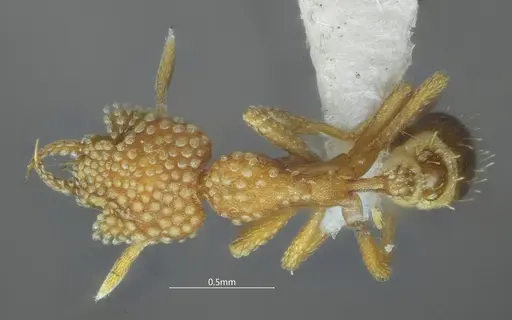
Literatur
Verbreitungskarte wird geladen...Produkte werden geladen...