
Strumigenys circothrix
- Wiss. Name
- Strumigenys circothrix
- Tribus
- Attini
- Unterfamilie
- Myrmicinae
- Autor
- Ogata & Onoyama, 1998
- Verbreitung
- In 0 Ländern gefunden
Einleitung
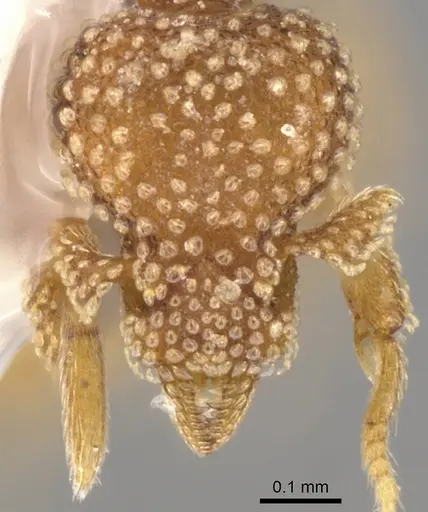
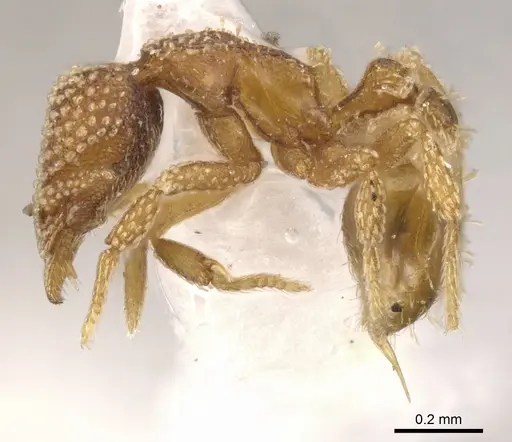
Strumigenys circothrix is a tiny ant from the Ryukyu Islands in Japan. Workers measure 1.0-1.2mm and queens 1.4mm, making them one of the smallest ants you can keep . They are yellow to reddish-brown and nest in soil on the forest floor of broadleaf forests . These ants have six-segmented antennae and distinctive spoon-shaped hairs on their bodies . Because they are so small and secretive, they are a challenging species for expert keepers who enjoy observing specialized predators.
Quick Summary
- Difficulty: Expert
- Origin & Habitat: Japan (Ryukyu Islands), broadleaf forest floor and forest margins, nesting in soil [1]
- Colony Type: Unknown, colony structure has not been documented in published research
- Size & Growth:
- Antkeeping:
- Temperature: Based on their forest floor origin, keep around 20-24°C. Avoid overheating [1]
- Humidity: High humidity needed to mimic damp forest floor. Keep substrate consistently moist but not waterlogged
- Diapause: Unknown, they come from a temperate region but diapause requirements have not been studied. Provide a cool resting period (around 10-15°C for 2-3 months) only if you observe winter slowing, otherwise, maintain stable conditions year-round.
- Nesting: Soil-nesting species. Use moist, fine-grained soil in a shallow container with small chambers [1]
- Behavior: Extremely cryptic and docile. These ants avoid confrontation and move slowly. Escape prevention is critical, they can fit through gaps as small as 0.1mm. Use fine mesh (0.5mm or smaller) and tight seals. They are not defensive and cannot sting.
- Common Issues: escape prevention is the top concern, at 1mm, they fit through nearly any gap, wild-caught colonies may carry parasites that kill them in captivity, overheating or drying out will kill them quickly, stress from frequent disturbance can cause colony failure
Housing and Nest Setup
These ants nest in soil, so a naturalistic setup with moist, fine-grained soil works best. Use a small container with 1-2cm of soil that you keep damp but not flooded. A small plaster or Y-tong nest with tiny chambers (2-3mm wide) also works. Since standard test tubes are too large, consider using small plastic containers or modifying a test tube with a narrow entrance. Keep the nest in a dark, low-light area. A water reservoir connected to the nest helps maintain moisture over time [1].
Feeding and Diet
The natural diet of Strumigenys circothrix is not documented, but related Strumigenys species are specialized predators of springtails and other micro-arthropods. Based on that, offer live springtails as a staple. You can also try tiny fruit flies or booklice. They likely reject sugar water and larger prey. Feed small amounts every few days and remove leftovers to prevent mold. If they do not accept these foods, experiment with other tiny live prey (e.g., microworms). Their exact dietary needs are unknown, so observe closely.
Temperature and Seasonal Care
Keep the nest area around 20-24°C. These ants come from a temperate climate and do not need high heat. Avoid direct sunlight or heat sources. Since their diapause requirements are unknown, observe their activity in winter. If they slow down, you can gradually reduce temperature to 10-15°C for 2-3 months as a precaution. If they remain active, keep conditions stable. Do not force hibernation if they are still foraging [1].
Escape Prevention
This is the most important part of keeping this species. Workers are only 1.0-1.2mm and can squeeze through any gap you might not notice. Use fine mesh (0.5mm or smaller) on ventilation holes. Apply Fluon or PTFE to the rim of containers. Seal all connections with tape or silicone. Check daily for gaps, especially around tubing or access points. Even a small crack can allow the entire colony to escape [1].
Handling and Observation
These ants are very docile and do not sting. They spend most of their time hidden in the soil or nest. Observe them with a red filter or in dim light to avoid disturbing them. Do not handle them directly, they are fragile and easily crushed. If you need to move them, use a gentle aspirator or a soft brush. Avoid frequent nest disturbance, as stress can cause colony decline.
Frequently Asked Questions
How long does it take for Strumigenys circothrix to produce first workers?
This is unknown, no published data exists on their development time. Expect it to be slow, possibly months, given their small size. Be patient and don't disturb the queen during founding.
What do Strumigenys circothrix eat?
Their specific diet is unknown, but related Strumigenys species eat tiny live prey like springtails. Offer live springtails as a starting point. They are unlikely to accept sugar water or large insects.
Can I keep Strumigenys circothrix in a test tube?
Standard test tubes may be too large. A small container with moist soil or a custom mini formicarium with small chambers works better. Keep the space small to help them feel secure.
Do they need hibernation?
This is unknown. Give a cool rest period (10-15°C for 2-3 months) if you see activity drop in winter. If they remain active, you can skip hibernation. There is no confirmed data on diapause for this species.
Are Strumigenys circothrix good for beginners?
No, this is an expert-level species. Their tiny size, unknown care requirements, and escape risk make them unsuitable for beginners.
How big do colonies get?
Unknown, no published data on colony sizes. Strumigenys colonies are generally small, but this is not confirmed for this species.
Why are my Strumigenys circothrix dying?
Common causes include: escape (check for gaps), drying out, overheating, starvation (try springtails), and stress from disturbance. Review each factor.
When should I move them to a formicarium?
Keep them in a simple setup for the first year or until you have 20+ workers. They do fine in a small container with soil. Move only when the current space is overcrowded.
Can I keep multiple queens together?
Not recommended, colony structure is unknown, but related Strumigenys are usually single-queen. Keeping multiple queens may lead to fighting.
Report an Issue
The current care sheet is based fully on literature. See inconsistencies, or something that's incorrect? Please , it will be resolved after review from an admin. Contributing to the blogs tab also helps providing information, to make us be able to further improve the caresheets. Thank you for your support!
References

Dieses Caresheet ist lizenziert unter CC BY-SA 4.0 .
Community-Blogs
CASENT0900151
Auf AntWeb ansehen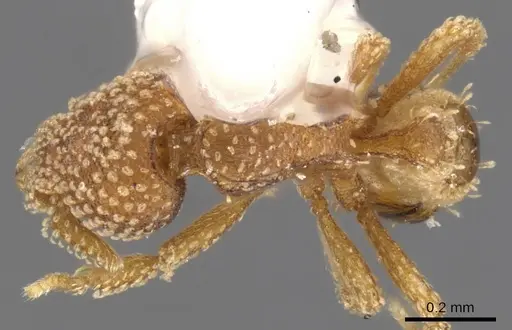
Literatur
Verbreitungskarte wird geladen...Produkte werden geladen...