
Strongylognathus rehbinderi
- Wiss. Name
- Strongylognathus rehbinderi
- Tribus
- Crematogastrini
- Unterfamilie
- Myrmicinae
- Autor
- Forel, 1904
- Verbreitung
- In 0 Ländern gefunden
Einleitung
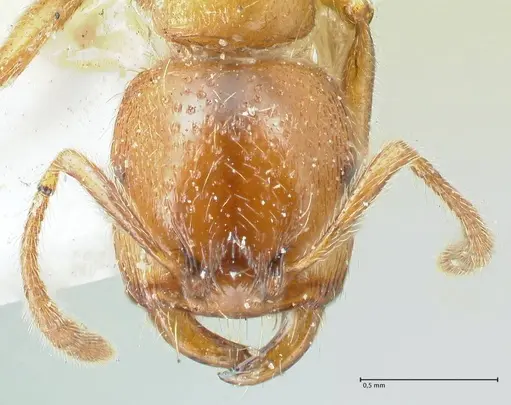
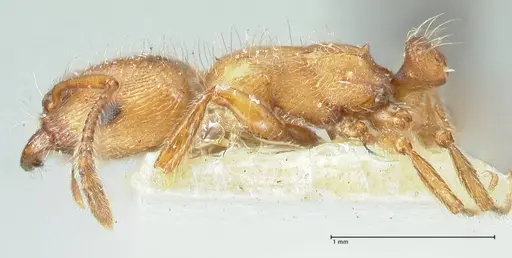
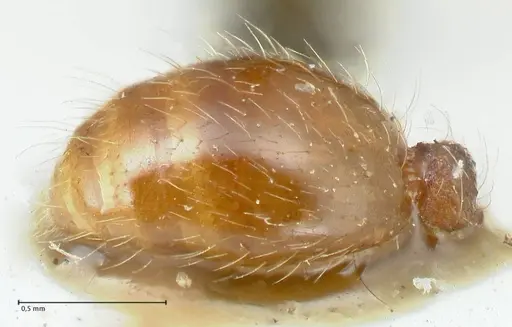
Strongylognathus rehbinderi is a small myrmicine ant native to the Caucasus region, including Armenia, Azerbaijan, Georgia, and southern Russia . It was originally described as a variety of S. christophi but later raised to full species status . Workers are about 3-5 mm long, based on typical Strongylognathus size. They have a compact body and a spatulate stinger used to smear venom onto enemies. This species is a social parasite - specifically a slavemaker (dulotic). It raids colonies of Tetramorium ants (from the T. chefketi group) and steals their pupae, which then hatch into host workers that serve the S. rehbinderi colony . In the wild, colonies have been found carrying pupae, confirming this raiding behavior . Because they cannot survive without a host colony, they are extremely challenging to keep in captivity.
Quick Summary
- Difficulty: Expert
- Origin & Habitat: Caucasus region, Armenia, Azerbaijan, Georgia, southern Russian Federation, and Abkhazia [1][4]. Found in dry meadows and forest edges, from sea level to higher elevations [5].
- Colony Type: Dulotic social parasite, requires a Tetramorium host colony to survive. The species cannot establish without host workers. Colonies are likely monogyne, but this is unconfirmed.
- Size & Growth:
- Queen: Size data unavailable, no measurements recorded.
- Worker: ~3-5 mm (inferred from Strongylognathus genus) [3]
- Colony: Unknown, no data on colony size.
- Growth: Slow, dependent on host colony growth.
- Development: Unknown, not directly studied. (Development unconfirmed due to parasitic dependence on host species.)
- Antkeeping:
- Temperature: Based on their dry, temperate origin, keep warm and stable, roughly 20-24°C. Avoid sharp drops.
- Humidity: Keep the nest substrate dry to slightly moist, they come from dry meadows and are not moisture-loving [5]. Provide a humidity gradient so they can choose.
- Diapause: Likely requires winter diapause given the Caucasus climate, 3-4 months at 10-15°C. This has not been confirmed in captivity.
- Nesting: You will need a dual setup: one nest for the parasite colony connected to a nest for the host Tetramorium colony. Test tubes, Y-tong, or plaster nests all work. The parasite colony cannot exist without access to host brood.
- Behavior: A slavemaker that raids Tetramorium colonies. Workers are aggressive during raids and will attack host ants to steal pupae. Outside of raiding, they are secretive and rarely seen [5]. Escape risk is moderate, they are small (~3-5 mm), so use standard barriers like fluon or PTFE. Their primary defense is a spatulate stinger used to smear venom (typical of the Crematogastrini tribe).
- Common Issues: dulotic species cannot survive without host Tetramorium colony, keeping both is essential., finding a compatible host colony (Tetramorium chefketi group) is difficult and expensive., colonies stay small and fragile, easy to lose if the host colony declines., raiding behavior can collapse the host colony if it's too small or not replenished., rare in the hobby and nearly impossible to acquire legally for most keepers.
Understanding Dulotic Ants
Strongylognathus rehbinderi is a dulotic (slavemaker) ant. Unlike free‑living ants, dulotic species cannot raise their own brood. Instead, they raid nearby colonies of Tetramorium ants and steal their pupae. These stolen pupae later hatch into host workers that forage, care for the brood, and maintain the nest, they never realize they belong to a different species [4]. In the wild, colonies of S. rehbinderi have been found together with Tetramorium workers from the T. chefketi group, confirming this host‑parasite relationship [5]. For antkeepers, you must maintain both the parasite colony and a healthy host colony. This makes S. rehbinderi one of the hardest ants to keep, suitable only for experts who already maintain Tetramorium colonies. Early observations by Forel (1904) noted S. rehbinderi workers carrying pupae in columns, classic raiding behavior [6].
Housing and Nest Requirements
Housing S. rehbinderi requires a dual‑colony setup. You need one nest for the parasite and another for the host Tetramorium colony, connected so the parasite workers can raid. This is fundamentally different from keeping typical ants. You can use test tubes, Y‑tong, or plaster nests for both colonies. The critical point is that the parasite colony must have reliable access to host brood, otherwise it will die. Some keepers connect two nests with tubing and allow regular raiding. Others manually introduce host pupae into the parasite nest. Because the species comes from dry meadows and forest edges in the Caucasus, keep the nest substrate dry to slightly moist, with moderate room temperatures (20-24 °C) [5]. Use standard escape prevention for ants this size: fluon or PTFE barriers on smooth surfaces.
Feeding and Nutrition
Strongylognathus rehbinderi relies almost entirely on its host colony for food. The host Tetramorium workers do the foraging and bring back food, which they share with the parasite workers through mouth‑to‑mouth feeding (trophallaxis). So your main job is to feed the host colony well. Give the host colony a standard diet: protein sources like mealworms, fruit flies, or small crickets, plus sugar water or honey as an energy source. The parasite colony will get its nutrition indirectly. Some keepers try offering food directly to S. rehbinderi, but they rarely accept it. Focus on keeping the host colony healthy, a well‑fed host means a well‑fed parasite. Avoid overfeeding to prevent mold.
Colony Establishment and Maintenance
Starting a dulotic colony is complex. You cannot simply catch a queen and raise a colony the normal way, you need an established Tetramorium colony ready to serve as host. The most reliable method is to collect a wild S. rehbinderi colony that already has host workers (but these are rare and secretive [5]). Alternatively, you can introduce a S. rehbinderi queen or a small group into a pre‑existing Tetramorium colony, but this requires careful monitoring, the host ants may kill the intruders. Once established, the parasite colony stays small and depends entirely on the host for daily tasks. Monitor the host colony regularly. If the host weakens or dies, the parasite colony will soon follow. Expect the combined colony to remain modest, likely under 100 parasite workers plus host workers.
Legal and Ethical Considerations
Before acquiring Strongylognathus rehbinderi, check your local laws. This species is endemic to the Caucasus region, and some range countries (e.g., Georgia, Russia) may require permits for collection or export. Because it is a slavemaker, keeping it involves maintaining two colonies, which means more time, space, and expense. If you obtain wild‑caught specimens, quarantine them separately from your other ants for several weeks to avoid introducing parasites or diseases. Never release this species outside its native range, it could harm local ant populations through raiding.
Frequently Asked Questions
Can I keep Strongylognathus rehbinderi without a host colony?
No. This ant is a dulotic social parasite that cannot survive without a Tetramorium host colony. The host workers do all the foraging, nest care, and brood tending. Without them, the parasite colony will die [4][5].
What species serves as host for Strongylognathus rehbinderi?
S. rehbinderi parasitizes Tetramorium ants, specifically species from the T. chefketi group. Observations of wild colonies confirm this association [5]. You will need to find and maintain a compatible Tetramorium colony.
How difficult is Strongylognathus rehbinderi to keep?
This is an expert‑level species. Dulotic ants require maintaining two colonies (parasite and host). They are rare in the hobby, hard to acquire, and require specific conditions. Not recommended for beginners.
Where does Strongylognathus rehbinderi live in the wild?
It is native to the Caucasus region, Armenia, Azerbaijan, Georgia, and southern Russia [1][4]. It inhabits dry meadows and forest edges from sea level up to mountain elevations [5][2].
Do Strongylognathus rehbinderi ants sting?
As a myrmicine ant, it has a functional stinger. However, it uses its stinger in a unique way, it smears venom onto enemies rather than piercing them (this is the 'smear' defense typical of the Crematogastrini tribe). For humans, the small size (≈3-5 mm) makes any sting barely noticeable. They are secretive and rarely sting when disturbed.
How big do Strongylognathus rehbinderi colonies get?
Colony sizes are not well documented. Based on the genus, they probably stay small, likely under 100 parasite workers plus their host workers. Host colony size is the main limit.
Does Strongylognathus rehbinderi need hibernation?
Given its temperate Caucasus origin, a winter diapause of 3-4 months at cooler temperatures (10-15 °C) is likely beneficial. This has not been tested in captivity, but mimicking the natural seasonal cycle is recommended for long‑term health.
Report an Issue
The current care sheet is based fully on literature. See inconsistencies, or something that's incorrect? Please , it will be resolved after review from an admin. Contributing to the blogs tab also helps providing information, to make us be able to further improve the caresheets. Thank you for your support!
References

Dieses Caresheet ist lizenziert unter CC BY-SA 4.0 .
Community-Blogs
CASENT0909179
Auf AntWeb ansehen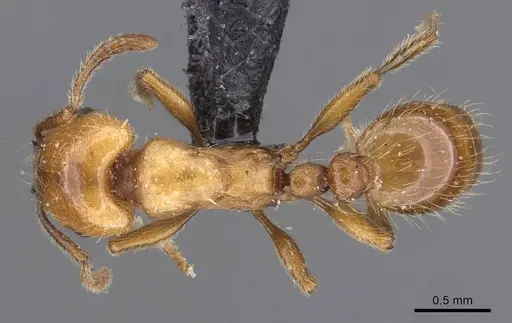
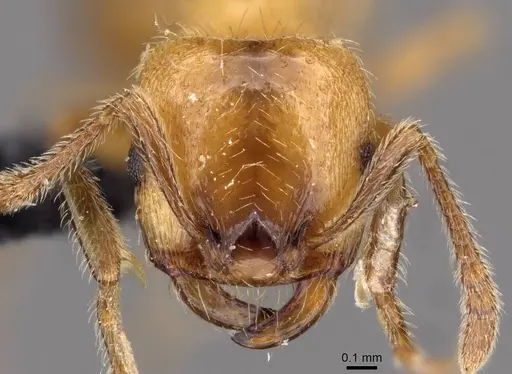
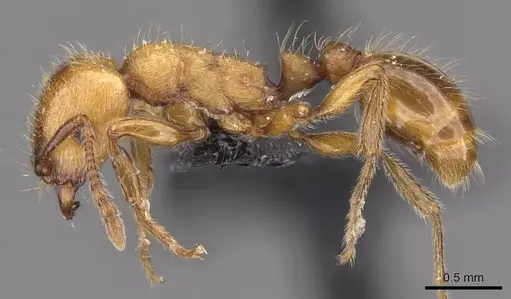
FOCOL2112
Auf AntWeb ansehen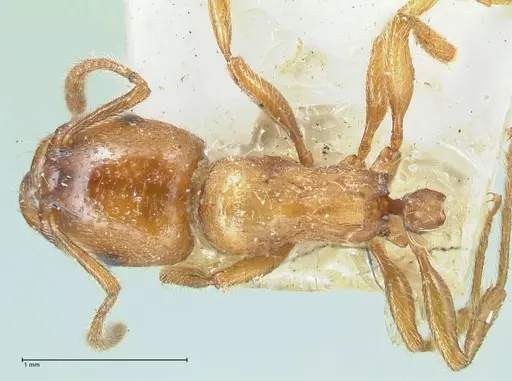
Literatur
Verbreitungskarte wird geladen...Produkte werden geladen...