
Strongylognathus bulgaricus
- Wiss. Name
- Strongylognathus bulgaricus
- Tribus
- Crematogastrini
- Unterfamilie
- Myrmicinae
- Autor
- Pisarski, 1966
- Verbreitung
- In 0 Ländern gefunden
Einleitung
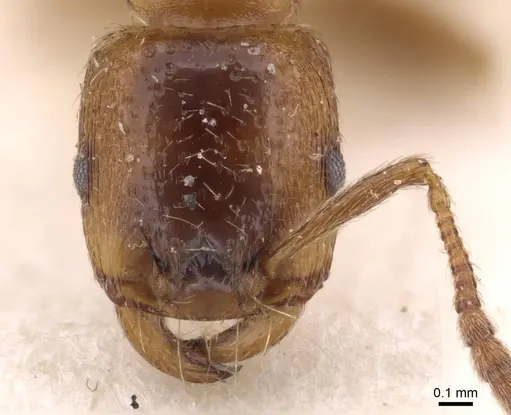
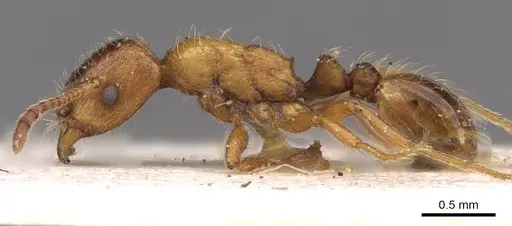
Strongylognathus bulgaricus is a small myrmicine ant, with worker body size not directly recorded but inferred from related species at roughly 3-4mm . It is native to Bulgaria and Greece, found in dry, warm grasslands with scattered stones . This species is a permanent social parasite - it lives entirely within nests of Tetramorium host ants and cannot survive on its own . Workers are smaller than their host workers and in established nests they can outnumber them, with hundreds of parasites found in a single Tetramorium hippocratis nest . The species is considered a Bulgarian endemic and is listed as Vulnerable on the IUCN Red List .
Quick Summary
- Difficulty: Expert
- Origin & Habitat: Bulgaria and Greece. Found in the Predbalkan region of northern Bulgaria (Veliko Tarnovo, Dryanovo, Veliki Preslav) at elevations around 360m, and in the Eastern Rhodopes. Also recorded in Greek Thrace near the border with Turkey. Inhabits xerothermic (dry, warm) grassland with scattered stones, typically nesting under stones close to forest edges [1][2].
- Colony Type: Permanent social parasite, lives exclusively in Tetramorium host colonies. Colony structure depends entirely on host colony. No independent colony founding has been documented [2][3].
- Size & Growth:
- Queen: Body size not recorded. Likely similar to workers or slightly larger.
- Worker: Body size not recorded in literature. Inferred from related Strongylognathus species as approximately 3-4mm.
- Colony: Hundreds of workers in established colonies [2].
- Growth: Unknown, dependent on host colony growth.
- Development: Unconfirmed, would develop alongside host brood. (As a social parasite, development is tied to host colony. No independent colony development occurs.)
- Antkeeping:
- Temperature: Aim for 22-26°C, matching typical Tetramorium care conditions. The natural habitat is Mediterranean, so stable warm conditions are appropriate.
- Humidity: Dry to moderate, natural habitat is xerothermic grassland [2]. Avoid overly damp conditions.
- Diapause: Likely requires winter rest period typical of temperate species, but specific duration is unconfirmed. The host Tetramorium species likely needs winter cooling.
- Nesting: This species cannot found independent colonies. In captivity, you would need to introduce parasites into an established Tetramorium host colony. Natural nests are found under stones in dry grassland [2].
- Behavior: Extremely specialized social parasite that cannot survive without a host Tetramorium colony [2]. Workers rely entirely on host workers for feeding, brood care, and colony maintenance. The species is not aggressive and cannot defend itself independently, as a myrmicine ant in the tribe Crematogastrini it uses a modified stinger to smear venom rather than sting, but in practice it depends on the host colony for defense. Escape risk is moderate: small workers but typically remain within host nest areas [2].
- Common Issues: this species cannot form independent colonies, you must establish a Tetramorium host colony first and then introduce the parasite., finding a legal source is extremely difficult due to its protected status and rarity., this species is listed as Vulnerable on the IUCN Red List and is endemic to Bulgaria, collecting wild specimens may be illegal and is strongly discouraged., host acceptance is uncertain, introducing parasites to a host colony may result in the host killing the intruders., no established captive breeding protocols exist for this species., keeping both species requires expertise in social parasite husbandry.
Species Overview and Legal Status
Strongylognathus bulgaricus is a highly specialized permanent social parasite belonging to the ant subfamily Myrmicinae [2]. It is listed as Vulnerable D2 on the IUCN Red List, indicating a restricted range and small number of known populations [1]. The species is endemic to Bulgaria with recent records from Greek Thrace, making it one of the rarest ants in Europe to keep [2]. Its conservation status means wild collection is both ethically questionable and likely legally restricted. The taxonomic history is complex, it was originally described in 1922 but the name was unavailable, later validated by Pisarski in 1966 [1]. There has been confusion with Strongylognathus kratochvili and S. christophi, though current research considers S. bulgaricus a valid species at least tentatively [1].
Host Species and Parasitic Relationship
This ant is an obligate social parasite of Tetramorium species [2]. In Greece, it has been documented living in nests of Tetramorium hippocrate, found under stones in dry, nutrient-poor grassland with scattered stones near forest edges [2]. The parasite workers are significantly smaller than their hosts and rely entirely on host workers for food and colony maintenance. Unlike some parasites that are killed by hosts, Strongylognathus species are accepted by their hosts and actually outnumber them in established nests, researchers found hundreds of S. bulgaricus workers clearly outnumbering their Tetramorium hosts [2]. This is a permanent social parasite arrangement, meaning the parasite species has lost the ability to function independently and requires the host colony for survival [3].
Housing and Care Requirements
Keeping Strongylognathus bulgaricus requires first establishing a healthy Tetramorium host colony, then introducing the parasite. This is significantly more challenging than keeping either species alone. The host colony (likely T. hippocratis or related Tetramorium species from the region) should be kept in standard Tetramorium-appropriate housing, test tubes for founding, then a formicarium with typical substrate. Temperature should be warm (22-26°C) and humidity moderate to dry, matching their natural xerothermic grassland habitat [2]. The parasite colony will integrate with the host, and you should not separate them. Success depends entirely on the host colony thriving. This species is not recommended for beginners due to the complexity of establishing the parasitic relationship and the extreme difficulty of obtaining the species legally.
Feeding and Nutrition
As a social parasite, S. bulgaricus does not forage independently [2]. It relies on trophallaxis (food sharing) from host workers and likely consumes the same food as the host colony. For the Tetramorium host, offer standard ant foods: sugar water or honey as an energy source, and protein sources like small insects (fruit flies, small mealworms). The host workers will feed the parasite workers and brood through trophallaxis. There is no specific dietary information for this species alone, it eats whatever the host colony consumes [2].
Ethical and Legal Considerations
This species is classified as Vulnerable and is a Bulgarian endemic [1][3]. Wild collection is strongly discouraged both for ethical reasons and likely legal restrictions under Bulgarian wildlife protection laws. There are no known commercial sources, and established antkeepers rarely work with this species due to its specialized requirements. If you are interested in keeping social parasites, consider more commonly available species first, or work with conservation-focused breeders who may have captive-propagated stock. The best approach is appreciating this species in the wild or through published research rather than attempting captive keeping [1][3].
Frequently Asked Questions
Can I keep Strongylognathus bulgaricus in a test tube?
No, this is a social parasite that cannot survive independently [2]. You would need a Tetramorium host colony first, then introduce the parasite. There is no established protocol for keeping this species in captivity, and it is not recommended due to its vulnerable conservation status and extreme rarity [2][3].
What do Strongylognathus bulgaricus eat?
They do not forage independently. As a permanent social parasite, they rely entirely on food sharing (trophallaxis) from their Tetramorium host workers [2]. The host colony eats standard ant foods, sugar water or honey and small insects [2].
How long until first workers in Strongylognathus bulgaricus?
This species cannot found independent colonies. As a social parasite, development is tied to the host colony's brood cycle. No specific development timeline has been documented for this species [2].
Are Strongylognathus bulgaricus good for beginners?
No, this species is rated Expert difficulty. It is a permanent social parasite that cannot form independent colonies, requires a specific Tetramorium host species, is extremely rare, has vulnerable conservation status, and has no established captive breeding protocols [2][3].
Do Strongylognathus bulgaricus ants sting?
As a myrmicine ant in the tribe Crematogastrini, it has a modified stinger used to smear venom rather than sting. However, due to its specialized parasitic lifestyle, it relies entirely on the host colony for defense and does not engage in independent aggression [2].
Can I keep multiple queens of Strongylognathus bulgaricus together?
This question does not apply, the species cannot form independent colonies. In natural conditions, parasitic queens would invade existing Tetramorium nests. There is no documented information about multi-queen arrangements for this species [2].
How big do Strongylognathus bulgaricus colonies get?
In established nests, they can reach hundreds of workers. In Greek populations, researchers found hundreds of S. bulgaricus workers in a single Tetramorium hippocrate nest, clearly outnumbering the host workers [2].
Do Strongylognathus bulgaricus need hibernation?
Likely yes, based on their temperate distribution in Bulgaria and Greece, they would experience seasonal temperature changes. However, specific diapause requirements are unconfirmed. The host Tetramorium species likely requires winter cooling, so you should plan for a rest period [1].
Why are my Strongylognathus bulgaricus dying?
If you somehow obtained this species, death would likely be due to lack of a host colony, they cannot survive independently [2]. Other causes could include host rejection, improper temperature or humidity, or stress from collection. This species has no established captive care protocols [2].
Report an Issue
The current care sheet is based fully on literature. See inconsistencies, or something that's incorrect? Please , it will be resolved after review from an admin. Contributing to the blogs tab also helps providing information, to make us be able to further improve the caresheets. Thank you for your support!
References

Dieses Caresheet ist lizenziert unter CC BY-SA 4.0 .
Community-Blogs
CASENT0909178
Auf AntWeb ansehen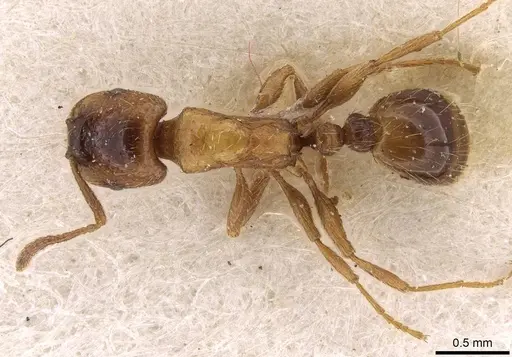
Literatur
Verbreitungskarte wird geladen...Produkte werden geladen...