
Stigmatomma meilianum
- Wiss. Name
- Stigmatomma meilianum
- Tribus
- Amblyoponini
- Unterfamilie
- Amblyoponinae
- Autor
- Xu & Chu, 2012
- Verbreitung
- In 0 Ländern gefunden
Einleitung
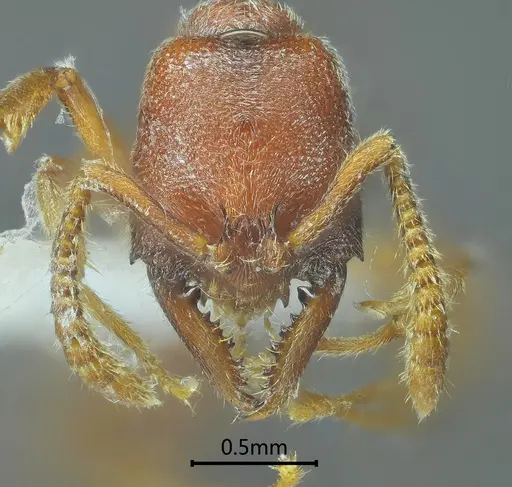
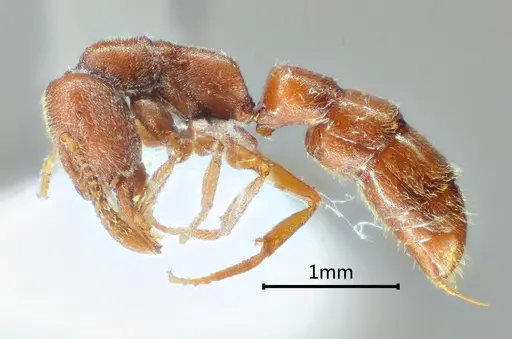
Stigmatomma meilianum is a rarely encountered amblyoponine ant from the high mountains of Yunnan, China. Workers measure 4.9mm total length and have a distinctive reddish-brown coloration with notably reduced eyes, each eye has only 5 facets, suggesting a subterranean or crepuscular lifestyle . The head is roughly trapezoidal with a concave occipital margin, and the mandibles bear multiple teeth adapted for capturing small prey . This species was described in 2012 from a single specimen collected at 3250m elevation in a conifer-broadleaf mixed forest on the eastern slope of Meili Snow Mountain, one of the highest peaks in Yunnan Province . The genus Stigmatomma belongs to the Amblyoponinae subfamily, which is known for having functional stingers, unlike many other ant groups that have lost this ability. This is one of the rarest ants in cultivation, with virtually no captive breeding history.
Quick Summary
- Difficulty: Expert
- Origin & Habitat: Yunnan Province, China at 3250m elevation in conifer-broadleaf mixed forest [1]. This is a high-altitude, Palaearctic species from the Snow Mountain Meili region.
- Colony Type: Unknown. Colony structure has not been documented for this species.
- Size & Growth:
- Queen: Undocumented, no queen has been described in scientific literature [1].
- Worker: 4.9mm total length [1].
- Colony: Unknown, only a single worker specimen has ever been collected [1].
- Growth: Unknown.
- Development: Unconfirmed, no development data exists for this species. Based on related Amblyoponinae, expect 6-10 weeks at optimal temperature, but this is a rough estimate. (No direct observations of colony development exist. Estimates based on genus-level patterns for Amblyoponinae.)
- Antkeeping:
- Temperature: Keep cool. Based on the high elevation (3250m) of the type locality, these ants likely prefer temperatures in the 15-22°C range. Avoid overheating, think mountain forest conditions. A room-temperature environment (18-21°C) is a good starting point.
- Humidity: Moderate to high. The conifer-broadleaf forest habitat suggests damp but not waterlogged conditions. Keep the nest substrate consistently moist but allow some drying between waterings. The soil at that elevation would experience seasonal variation.
- Diapause: Likely yes. High-elevation temperate ants typically require a winter dormancy period. Expect 2-3 months at 5-10°C during winter months, simulating the harsh conditions of their mountain habitat.
- Nesting: Use a naturalistic setup with soil or a plaster/Y-tong (AAC) nest with narrow chambers. The tiny worker size and reduced eyes suggest they prefer dark, enclosed spaces. A test tube setup may work for founding colonies, but mature colonies likely need more space.
- Behavior: Behavior is unstudied in captivity. In general, Amblyoponinae are specialized subterranean predators that use a potent sting to paralyze hard-bodied prey like centipedes. Workers are likely solitary foragers, hunting at night or in dark spaces. Their very small eyes (5 facets) suggest they rely more on chemical and tactile senses than vision. Escape prevention should be excellent given their small size, these tiny ants can squeeze through surprisingly small gaps. Handle with care as they can sting.
- Common Issues: this species has never been kept in captivity, there is no established husbandry knowledge, only one specimen has ever been collected, making even basic biology unknown, high-elevation requirements mean temperature management is critical, no captive breeding history means success is uncertain even for expert keepers, escape prevention must be excellent due to tiny worker size
Discovery and Distribution
Stigmatomma meilianum is known from a single worker collected in October 2004 from the eastern slope of Meili Snow Mountain in Yunnan Province, China [1]. The type locality sits at 3250 meters elevation, a harsh, high-altitude environment with cool temperatures and seasonal snow. This makes S. meilianum one of the highest-elevation Stigmatomma species known. The species was originally described as Stigmatomma meilianum in 2012 by Xu and Chu before being transferred to Stigmatomma by Yoshimura and Fisher in 2014 [1]. The species name honors its type locality, Meili Snow Mountain, which reaches over 6700m and is considered sacred by local Tibetan communities. This ant remains one of the rarest and most poorly known amblyoponine species in the world.
Identification and Morphology
Workers of Stigmatomma meilianum are tiny at just 4.9mm total length, with a reddish-brown body and blackish eyes [1]. The head is roughly trapezoidal when viewed from the front, longer than it is wide, with a distinctive concave occipital margin and rounded corners [1]. Most striking are the tiny eyes, each with only 5 facets, indicating very limited visual capability [1]. The mandibles are elongate with a long apical tooth, a short subapical tooth, and three pairs of curved teeth along the masticatory margin [1]. The clypeus has a broad middle lobe with four denticles at the apex [1]. Antennae are 12-segmented and relatively short, reaching only about two-thirds of the distance from the antennal sockets to the occipital corners [1]. The petiole is slightly broader than long, and the subpetiolar process is roughly triangular with a distinctive circular transparent fenestra [1]. This combination of features distinguishes it from related species like S. trilobum.
Habitat and Ecological Preferences
The type specimen was collected from a ground sample in a conifer-broadleaf mixed forest at 3250m elevation [1]. This is a cool, montane environment with dense vegetation and significant leaf litter, typical habitat for many Amblyoponinae species that prefer dark, humid microhabitats. The extremely reduced eyes (only 5 facets per eye) strongly suggest this species is subterranean or nocturnal, spending most of its time in dark spaces where vision is of little use [1]. The high elevation means this species experiences cool temperatures year-round and likely undergoes a winter dormancy period. The forest floor at this elevation would provide consistent moisture and protection from extreme temperatures. For captive care, recreating these cool, damp, dark conditions is essential.
Stinging and Defense
Stigmatomma belongs to the Amblyoponinae subfamily, which retains functional stingers, this is one of the few ant groups that can actually sting effectively. Unlike Formicinae (which spray formic acid) or Dolichoderinae (which use chemical defenses), Amblyoponinae can deliver a painful sting with their modified ovipositor. While the sting of this tiny species is unlikely to be dangerous to humans, it can cause brief pain and irritation. The venom of Amblyoponinae is not medically significant in most species, but individual reactions vary. When handling these ants, use gentle techniques and avoid provoking defensive responses. Their small size means they are not aggressive toward humans, but they will use their sting if threatened or handled roughly.
Keeping This Species in Captivity
Keeping Stigmatomma meilianum in captivity represents an extreme challenge, this is arguably one of the most difficult ant species to maintain, as no established husbandry protocols exist. Only a single specimen has ever been collected [1], meaning there is no captive breeding history to draw from. If you obtain a colony, your primary goals should be maintaining cool temperatures (15-22°C), providing consistently moist but not waterlogged substrate, and offering appropriate small live prey. Feed small live insects like springtails, fruit flies, or tiny crickets. The nest should be dark and enclosed, use test tubes for founding colonies or naturalistic setups with deep soil. Expect a long adjustment period as the colony adapts to captive conditions. Document your observations carefully, as any captive records would contribute significantly to our knowledge of this species.
Frequently Asked Questions
Can I keep Stigmatomma meilianum in a test tube?
A test tube setup can work for a founding colony, but mature colonies will likely need more space. The key is maintaining cool temperatures and high humidity while providing darkness. Use a test tube with a water reservoir, but ensure the cotton is packed firmly so the ants cannot access standing water.
Do Stigmatomma meilianum ants sting?
Yes. Stigmatomma belongs to the Amblyoponinae subfamily, which retains functional stingers. However, given their tiny size (4.9mm), the sting is mild and causes only brief irritation in most people. They are not aggressive toward humans and will only sting if provoked or handled roughly.
What do Stigmatomma meilianum eat?
Diet is unconfirmed for this species, but based on related Amblyoponinae, they are predatory and likely hunt small arthropods. Offer small live prey like springtails, fruit flies, tiny crickets, or other micro-arthropods. Feed protein-rich prey regularly and remove uneaten food to prevent mold.
Are Stigmatomma meilianum good for beginners?
No. This species is extremely difficult to keep and is not recommended for any keeper. There is no captive breeding history, no established husbandry protocols, and only a single specimen has ever been collected [1]. This is an expert-only species that should only be attempted by those with extensive experience and the ability to maintain precise conditions.
What temperature do Stigmatomma meilianum need?
Keep them cool, around 15-22°C. The high elevation (3250m) of their native habitat indicates they prefer mountain-forest conditions. Avoid overheating. Room temperature (18-21°C) is likely appropriate. Do not use heating cables or mats unless the colony is struggling and you can carefully monitor the temperature.
Do Stigmatomma meilianum need hibernation?
Likely yes. High-elevation temperate ants typically require a winter dormancy period. Provide 2-3 months at 5-10°C during winter months, simulating the harsh conditions of their Meili Snow Mountain habitat. Reduce feeding during this period and keep the nest slightly cooler.
How big do Stigmatomma meilianum colonies get?
Unknown. Only a single worker has ever been collected [1], so colony size in the wild is unconfirmed. Based on related Amblyoponinae, colonies may reach several hundred workers at most, but this is purely speculative.
Why are Stigmatomma meilianum so rare in the antkeeping hobby?
This species is known from only a single specimen collected in 2004 [1]. It has never been found again, and no queen has ever been described. The extreme elevation and remote location of the type locality make additional field collection extremely difficult. There are simply no captive colonies available, and no one has successfully bred this species.
Can I keep multiple queens together?
Unknown. Colony structure is unconfirmed for this species. There is no data on whether they accept multiple queens, so do not attempt combining unrelated queens, doing so would likely result in fighting.
How long does it take for eggs to develop into workers?
Unconfirmed. No development data exists for this species. Based on genus-level patterns for related Amblyoponinae, expect 6-10 weeks from egg to worker at optimal temperature, but this is a rough estimate with low confidence.
Report an Issue
The current care sheet is based fully on literature. See inconsistencies, or something that's incorrect? Please , it will be resolved after review from an admin. Contributing to the blogs tab also helps providing information, to make us be able to further improve the caresheets. Thank you for your support!
References

Dieses Caresheet ist lizenziert unter CC BY-SA 4.0 .
Community-Blogs
ANTWEB1060490
Auf AntWeb ansehen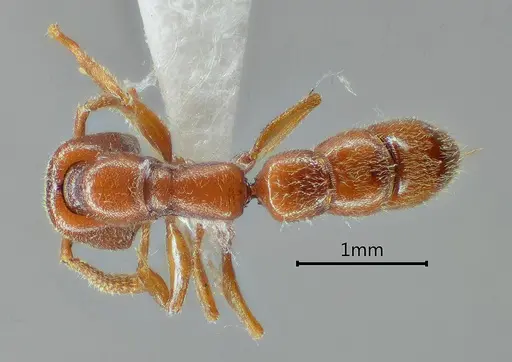
Literatur
Verbreitungskarte wird geladen...Produkte werden geladen...