
Stictoponera nanlingensis
- Wiss. Name
- Stictoponera nanlingensis
- Tribus
- Ectatommini
- Unterfamilie
- Ectatomminae
- Autor
- Chen <i>et al.</i>, 2017
- Verbreitung
- In 0 Ländern gefunden
Einleitung
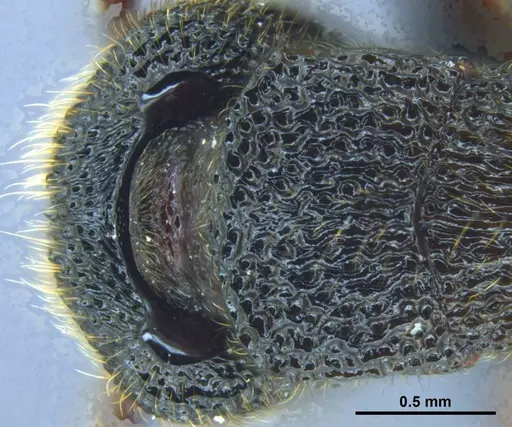
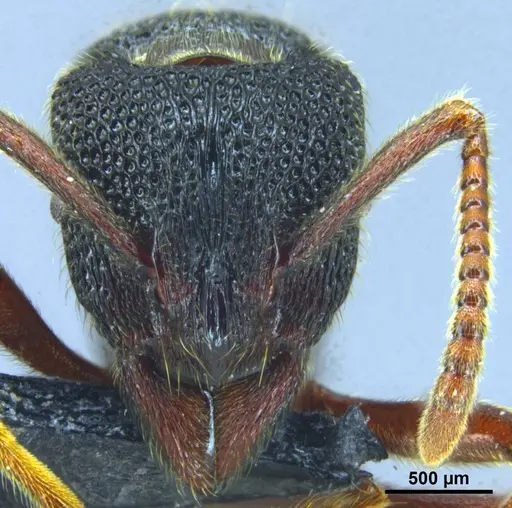
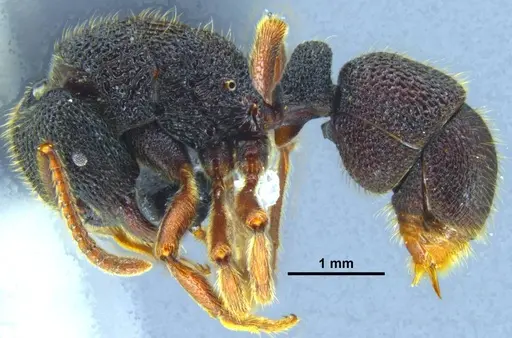
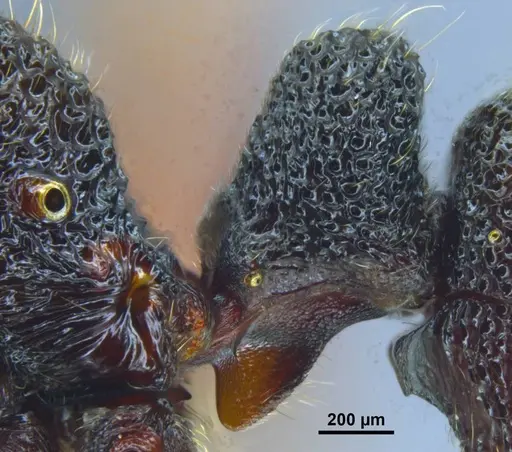
Stictoponera nanlingensis is a medium-sized predatory ant from southern China, known only from the Nanling National Nature Reserve in Guangdong Province. Workers measure about 5.3-5.4 mm in total length and are black with reddish-brown mandibles, antennae, and legs . They have a well-developed pronotal humeral angle, a rounded propodeum without denticles, and an extruded stinger . The species was first described in 2017 as Gnamptogenys nanlingensis before being moved to Stictoponera in 2022 . Queen and male have not been described, so colony structure and reproduction are unknown .
Quick Summary
- Difficulty: Medium
- Origin & Habitat: Nanling National Nature Reserve, Guangdong Province, China, at 1075 m altitude in subtropical evergreen broad-leaved forest. Nests in dead wood on the ground [1].
- Colony Type: Unknown, only workers have been described. Queen and male are unknown [1]. Based on related Ectatomminae, single-queen colonies are likely, but this is unconfirmed.
- Size & Growth:
- Queen: Unknown, queen not yet described [1]
- Worker: ~5.3-5.4 mm [1]
- Colony: Unknown, no colony size data available
- Growth: Unknown, development has not been studied
- Development: Unknown, no species-specific data exists. Based on related subtropical Ectatomminae, estimate 6-10 weeks at warm temperatures (24-26°C) (Development timeline is unconfirmed and based on related species.)
- Antkeeping:
- Temperature: Estimated based on their subtropical forest habitat at 1075 m: keep at 22-26°C and watch your colony's behavior. Provide a gentle gradient so they can choose their preferred spot [1].
- Humidity: Moderate to high humidity is needed, think damp forest floor. Keep the nest substrate moist but not waterlogged. They nest in dead wood, so they need stable moisture without drying out [1].
- Diapause: Not confirmed. Given their subtropical location, they likely become less active in winter but may not require true hibernation. If your colony slows down, you can provide a cooler period (around 15-18°C) for a few months, but avoid big temperature drops.
- Nesting: In nature they nest in dead wood on the forest floor [1]. In captivity, a naturalistic setup with rotting wood pieces or a moist plaster, soil, or 3D-printed nest works well. They prefer tight, enclosed spaces that hold humidity. Avoid dry, airy setups.
- Behavior: Stictoponera nanlingensis is a predatory ant with an extruded stinger [1]. They are likely docile toward humans but will sting if strongly provoked. Workers seem to hunt individually and are probably most active in dim light. Their medium size makes escape prevention straightforward.
- Common Issues: queen and colony structure are unknown, starting from wild colonies may be tricky since queens haven't been described., development timeline is unconfirmed, slow growth might frustrate keepers expecting fast results., humidity management is critical, too dry kills brood, too wet leads to mold., predatory diet requires live prey, which demands more maintenance than just sugar water., stinging ability, they're not aggressive but will sting if handled, so be careful., limited scientific data available, most advice comes from related species, not this one.
Housing and Nest Setup
Stictoponera nanlingensis naturally nests in dead wood on the forest floor in a subtropical environment [1]. For captive care, a naturalistic setup works best, use a container with moist substrate (like a mix of soil and rotting wood pieces) that mimics their natural deadwood habitat. Alternatively, a moist plaster nest or a 3D-printed nest with a water reservoir can maintain the humidity they need. The nest should have tight chambers rather than big open spaces, as this helps keep moisture stable. Provide an outworld area for foraging where you can offer live prey. Make sure the setup allows easy maintenance without disturbing the colony too much.
Feeding and Diet
As a predatory ant in the Ectatomminae subfamily, Stictoponera nanlingensis needs live protein prey. Feed them small insects like fruit flies, pinhead crickets, mealworms, or other appropriately sized arthropods. They are likely active hunters that pursue prey, so offering live prey encourages natural foraging behavior. Sugar sources may be accepted occasionally, but protein should make up the bulk of their diet. Feed prey 2-3 times per week, adjusting based on colony size and consumption. Remove uneaten prey after 24-48 hours to prevent mold issues. A varied diet helps ensure proper nutrition for brood development.
Temperature and Seasonal Care
Maintain temperatures between 22-26°C, based on their subtropical forest habitat at 1075 m altitude in Guangdong, China [1]. Provide a slight temperature gradient so the ants can self-regulate. During winter, if your colony shows reduced activity, you can provide a cooler period around 15-18°C for a few months, this mimics natural seasonal changes, even though true diapause is not confirmed. Avoid temperatures below 15°C or above 30°C. Heating cables or mats can help in colder rooms, but always give unheated areas so ants can escape if it gets too warm.
Humidity Management
These ants need moderate to high humidity, like their forest floor home. Keep the nest substrate consistently moist, it should feel damp to the touch but not be waterlogged. Their preference for dead wood means they need stable moisture without drying out. Watch for condensation on nest walls as a sign of good humidity. However, avoid standing water, which promotes mold. If the substrate dries too quickly, mist lightly or add a larger water reservoir. Good ventilation helps prevent mold while keeping humidity up [1].
Behavior and Defense
Workers have an extruded stinger, meaning Stictoponera nanlingensis can sting if threatened [1]. They are not especially aggressive toward humans but will defend the nest if disturbed. The sting is likely painful but not dangerous for healthy people. Handle the colony gently and avoid provoking defensive responses. Foraging behavior is probably individual, workers hunt small prey on their own. They are most active during dusk and night hours, typical for forest floor ants.
Obtaining and Starting a Colony
This is a challenging species to get hold of. It has only been described from a small area in southern China, and queens have not been documented. Wild colonies would need to be located in the Nanling National Nature Reserve area. Since colony structure is unknown, assume single-queen colonies based on related Ectatomminae. Starting a colony requires patience because there is very little species-specific care information. Begin with standard Ectatomminae husbandry and adjust based on how the colony responds [1].
Frequently Asked Questions
How long does it take for Stictoponera nanlingensis to develop from egg to worker?
The development timeline has not been scientifically documented for this species. Based on related subtropical Ectatomminae, estimate roughly 6-10 weeks from egg to first worker at optimal temperatures (around 24-26°C). This is an educated guess, actual times may vary.
Can I keep Stictoponera nanlingensis in a test tube setup?
Test tubes are not ideal for this species. They naturally nest in dead wood on the forest floor and need higher humidity than test tubes usually provide. A naturalistic setup with moist substrate or a moist plaster nest works much better. If you use test tubes for founding, watch humidity carefully and move them to a more suitable nest once the colony grows.
Do Stictoponera nanlingensis ants sting?
Yes, they can sting. Workers have an extruded stinger [1]. They are not aggressive toward humans but will sting if threatened or handled roughly. The sting is likely painful but not dangerous for healthy people. Handle gently and avoid provoking them.
What do Stictoponera nanlingensis eat?
They are predatory ants that need live protein prey. Feed them small insects like fruit flies, pinhead crickets, small mealworms, or other appropriately sized arthropods. They may take sugar water or honey occasionally as a supplement, but protein should be the main food. Live prey encourages natural hunting behavior.
Are Stictoponera nanlingensis good for beginners?
No, this species is not recommended for beginners. The queen has not been described, colony structure is unknown, and there is very little care information available. They also need specific humidity and temperature conditions plus live prey. This species is best left to experienced antkeepers who can adapt care based on colony response and are comfortable with poorly documented species.
Do Stictoponera nanlingensis need hibernation?
True hibernation is not confirmed for this species. Given their subtropical location in Guangdong, China, they likely become less active during cooler months but may not need a full cold period. If your colony shows reduced activity in winter, you can provide a cooler period around 15-18°C for a few months. Avoid temperatures below 15°C.
How big do Stictoponera nanlingensis colonies get?
Colony size data is not available for this species. Based on related Ectatomminae, colonies probably reach dozens to a few hundred workers. The maximum size is unknown because no mature colonies have been documented in the scientific literature.
When will queens be available for Stictoponera nanlingensis?
Queens have not yet been scientifically described for this species, which was only described in 2017 [1]. It may take years before captive-bred queens become available. This species remains rare in the antkeeping hobby due to its limited distribution and recent description.
Can I keep multiple queens together?
Colony structure is unconfirmed for this species. Without documented information on whether they are single-queen or multi-queen, combining unrelated queens is not recommended. Wait for scientific documentation of their natural colony structure before trying multi-queen setups.
What temperature should I keep Stictoponera nanlingensis at?
Keep them at 22-26°C based on their subtropical forest habitat at 1075 m altitude in Guangdong, China [1]. A temperature gradient that allows self-regulation is ideal. Avoid temperatures below 15°C or above 30°C.
Report an Issue
The current care sheet is based fully on literature. See inconsistencies, or something that's incorrect? Please , it will be resolved after review from an admin. Contributing to the blogs tab also helps providing information, to make us be able to further improve the caresheets. Thank you for your support!
References

Dieses Caresheet ist lizenziert unter CC BY-SA 4.0 .
Community-Blogs
GXNU150025
Auf AntWeb ansehen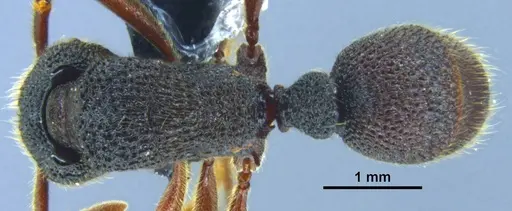
Literatur
Verbreitungskarte wird geladen...Produkte werden geladen...