
Stictoponera dentihumera
- Wiss. Name
- Stictoponera dentihumera
- Tribus
- Ectatommini
- Unterfamilie
- Ectatomminae
- Autor
- Chen <i>et al.</i>, 2017
- Verbreitung
- In 0 Ländern gefunden
Einleitung
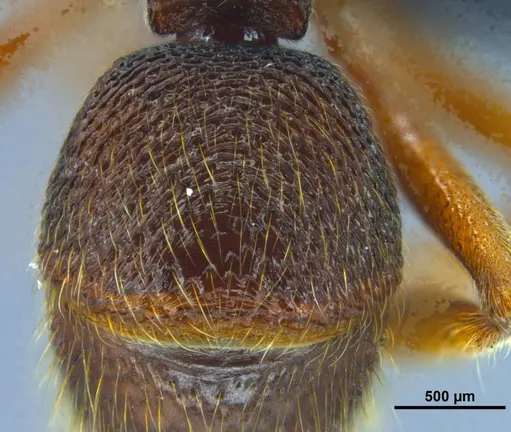
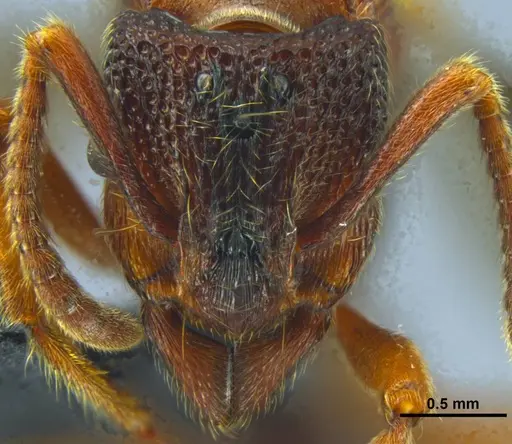
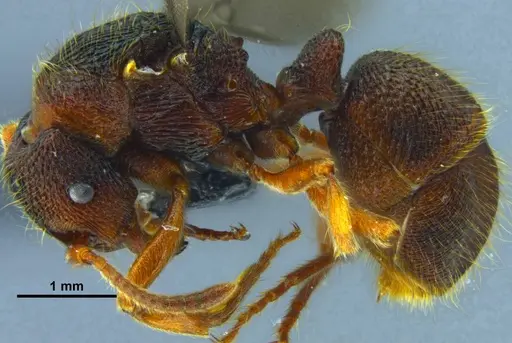
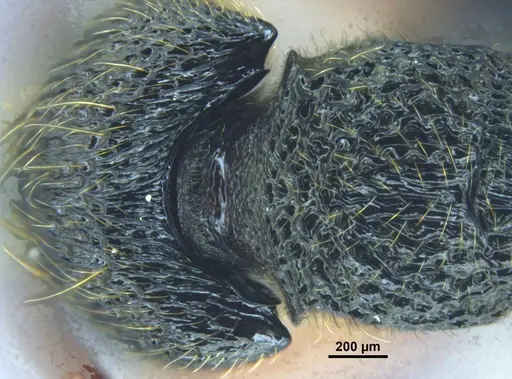
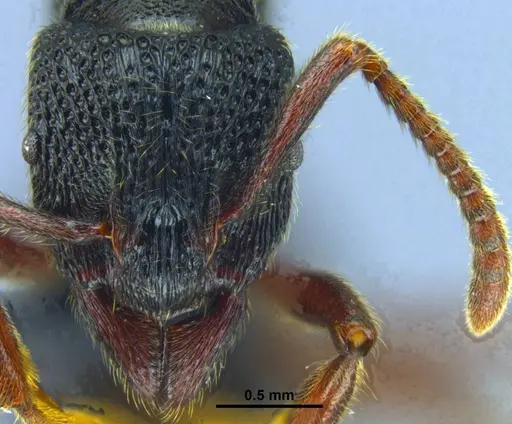
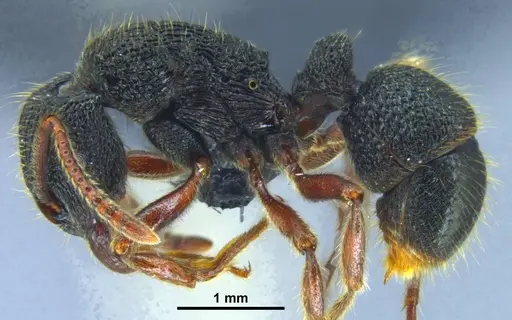
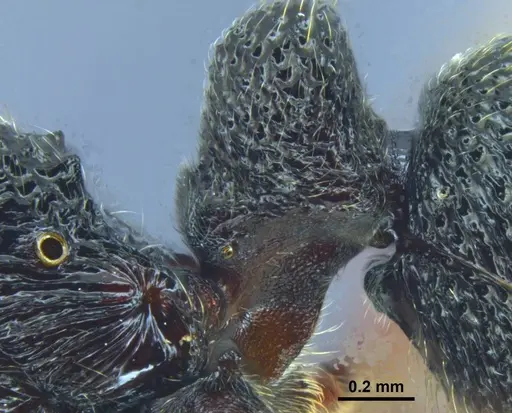
Stictoponera dentihumera is a medium-sized predatory ant from the subtropical forests of Guangxi, China. Workers measure 4.56-4.65 mm in total length and have a black body with reddish-brown mandibles, antennae, and legs. Queens are larger at 6.42 mm and are entirely reddish-brown. The species gets its name from the pointed denticles on its pronotum (shoulder area), which help tell it apart from similar species like Stictoponera panda and Stictoponera sinensis . This ant was only described in 2017 and is known from just a single nest collection, so it is extremely rare in captivity . In the wild, they nest in dead wood on the forest floor at around 925 meters elevation . They are hunters that likely prey on small invertebrates like springtails and have a functional stinger for defense .
Quick Summary
- Difficulty: Expert
- Origin & Habitat: Guangxi, China, subtropical evergreen broad‑leaved forest at 925 m altitude, nesting in dead wood of a branch on the ground [1][2]
- Colony Type: Single-queen colonies (monogyne), confirmed from the type series, which included one queen and multiple workers from the same nest [1].
- Size & Growth:
- Queen: 6.42 mm [1]
- Worker: 4.56-4.65 mm [1]
- Colony: Unknown, only known from a single nest collection of approximately 13 workers plus queen [1]
- Growth: Unknown
- Development: Unknown, no published data. Related Ectatomminae species typically take 6-10 weeks at optimal temperature (No captive breeding data exists for this species.)
- Antkeeping:
- Temperature: Keep around 22-26°C, mimicking their subtropical forest habitat. A slight temperature gradient is ideal
- Humidity: High humidity (70-85%), their natural habitat is a damp forest floor. Keep the nest substrate consistently moist but not waterlogged
- Diapause: Unknown, this subtropical species may not need true hibernation, but a slight winter cool-down (15-18°C) might be beneficial
- Nesting: Prefers dark, humid nest chambers that mimic dead wood. Y‑tong (AAC) or plaster nests with wood inclusions work well
- Behavior: Workers have a functional stinger [1] and can deliver a painful sting if the nest is threatened. They are not naturally aggressive toward humans but will defend vigorously. Their eyes are small (about 10 ommatidia), so they rely more on chemical and vibrational cues. They likely forage individually rather than in groups [1].
- Common Issues: very limited availability, this species is rarely kept and has almost no captive breeding history, no established care protocols, keepers must adapt from related species and be prepared to experiment, predatory diet requirements, they need live small prey like springtails, which can be hard to culture consistently, humidity control is critical, drying out can be fatal as they come from damp forest environments, single-queen colonies mean colony loss is permanent, no replacement queen system is known
Housing and Nest Setup
Stictoponera dentihumera nests in dead wood on the forest floor [1]. In captivity, you can mimic this with a Y‑tong (AAC) nest, a plaster nest, or a naturalistic wood-based setup. Include dark, humid nest chambers with consistent moisture. A water reservoir connected to the nest helps maintain humidity without constant misting. The outworld should be simple with room for foraging and hunting. Escape prevention is important, although medium-sized, they can squeeze through small gaps, so use standard barriers.
Feeding and Diet
These ants are predatory and need live small invertebrates as their main food. Springtails are an ideal staple, workers can easily tackle them and you can culture springtails at home. Other suitable prey includes fruit flies, small crickets, and various micro-arthropods. Offer prey items about 1/3 to 1/2 the worker length. Sugar sources like honey water may be accepted occasionally but should not replace protein, which is essential for brood development. Feed prey 2-3 times per week, adjusting based on colony size and consumption.
Temperature and Seasonal Care
Maintain temperatures around 22-26°C to match their subtropical habitat. Provide a slight temperature gradient so the ants can choose their preferred spot. During winter, a slight drop to 18-22°C may be beneficial, but avoid anything below 15°C. They come from 925 m elevation in Guangxi, which has mild winters compared to northern China. Avoid sudden temperature changes. Use a heating cable on one side of the nest with unheated areas for cooling off. [1]
Behavior and Defense
Workers have a visible, functional stinger that they use to inject venom [1]. They are not typically aggressive but will sting if you disturb the nest. Because their eyes are tiny (just 10 ommatidia along the maximum diameter), they navigated mostly by chemical and vibratory cues. They forage alone rather than in coordinated raids. This means food discovery may not trigger an immediate colony-wide response. Handle with care and use protection if you are sensitive to stings [1].
Colony Establishment
Stictoponera dentihumera was only described in 2017 and is almost never available in the antkeeping hobby. Most keepers start with wild-caught queens or founding colonies, but the founding behavior itself is unconfirmed. The type series (one queen and about 13 workers) came from a single nest, suggesting monogyne colonies [1]. Expect the first workers to take several months to appear, and growth will be slow, a healthy colony may take 1-2 years to reach 20-30 workers. Patience is essential.
Frequently Asked Questions
How long does it take for Stictoponera dentihumera to produce first workers?
The egg-to-worker timeline is not published for this species. Based on related Ectatomminae ants, expect 6-10 weeks at optimal temperatures (roughly 24°C). Founding colonies may take several months before the first nanitic workers appear, as the queen raises the initial brood alone.
Do Stictoponera dentihumera ants sting?
Yes, workers and queens have a visible, functional stinger [1]. They will sting if provoked or if their nest is disturbed. The sting is reportedly painful, so handle with care.
What do Stictoponera dentihumera eat?
They are predatory ants that mainly eat live small invertebrates. Springtails are ideal. Other suitable prey includes fruit flies, small crickets, and micro-arthropods. They may occasionally take sugar water or honey, but protein from live prey is critical for colony health and brood development.
Are Stictoponera dentihumera good for beginners?
No. This species was only described in 2017 and is extremely rare in captivity. There are almost no established care protocols, and they require high humidity, a predatory diet, and careful temperature control. Beginners should start with a common species [1].
What temperature do Stictoponera dentihumera need?
Keep them at 22-26°C to mimic their subtropical habitat. A slight temperature gradient is ideal. In winter a gentle drop to 18-22°C may help, but avoid going below 15°C or above 30°C.
How big do Stictoponera dentihumera colonies get?
The maximum colony size is unknown. The only known nest (the type series) contained one queen and about 13 workers. Based on related species, mature colonies might reach several hundred workers, but this is speculative [1].
Can I keep multiple Stictoponera dentihumera queens together?
This species is confirmed as monogyne, only one queen per colony. Multiple unrelated queens would likely fight. There is no evidence of pleometrosis (joint founding) for this species, so do not attempt it [1].
Do Stictoponera dentihumera need hibernation?
True hibernation is probably not necessary because they come from subtropical southern China. However, a slight winter cool-down (18-22°C instead of 22-26°C) may be beneficial. Avoid temperatures below 15°C.
What type of nest is best for Stictoponera dentihumera?
They naturally nest in dead wood, so Y‑tong (AAC) nests, plaster nests, or wood-based setups work well. Provide dark, humid chambers and keep the substrate consistently moist. Avoid dry or brightly-lit nests.
Why are my Stictoponera dentihumera dying?
Common causes: the nest dried out (they need high humidity), wrong temperature (too cold or too hot), lack of appropriate live prey (not just sugar), or too much disturbance. Check each parameter, stable humidity,22-26°C, and regular live prey are essential.
Report an Issue
The current care sheet is based fully on literature. See inconsistencies, or something that's incorrect? Please , it will be resolved after review from an admin. Contributing to the blogs tab also helps providing information, to make us be able to further improve the caresheets. Thank you for your support!
References

Dieses Caresheet ist lizenziert unter CC BY-SA 4.0 .
Community-Blogs
ANTWEB1033002
Auf AntWeb ansehen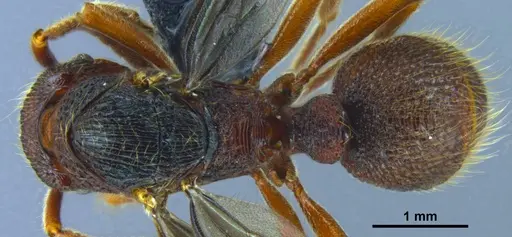
GXNU150067
Auf AntWeb ansehen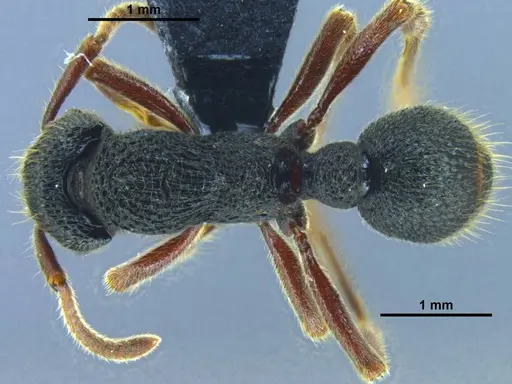
Literatur
Verbreitungskarte wird geladen...Produkte werden geladen...