
Solenopsis omana
- Wiss. Name
- Solenopsis omana
- Tribus
- Solenopsidini
- Unterfamilie
- Myrmicinae
- Autor
- Collingwood & Agosti, 1996
- Verbreitung
- In 0 Ländern gefunden
Einleitung
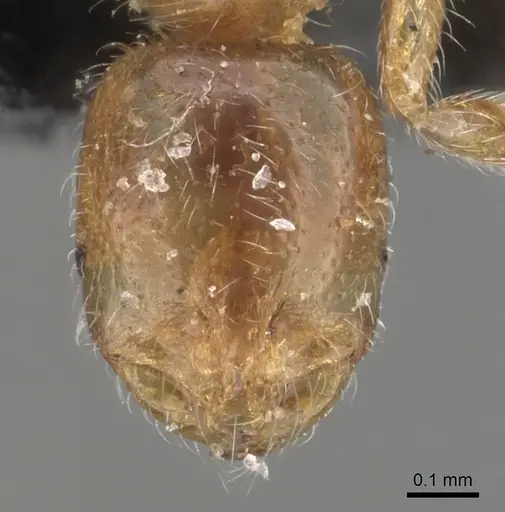
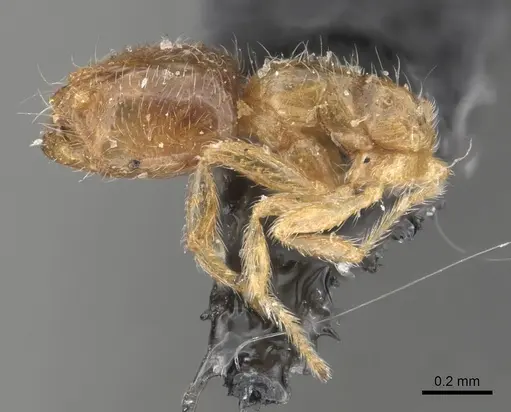
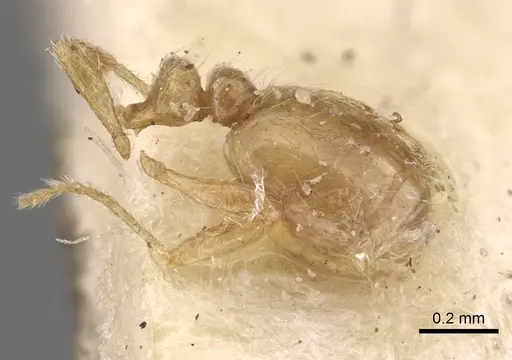
Solenopsis omana is a tiny desert ant from the Arabian Peninsula, found only in Oman and the United Arab Emirates . Workers are just 2.0 mm long and dirty yellow with a yellowish-brown tint on the head, while queens reach 4.5 mm and are brown with yellow legs and mandibles. It can be told apart from its close relative Solenopsis elhawagryi by its eyes: S. omana has seven ommatidia (S. elhawagryi has only four or five) . This species was first described in 1996,and almost nothing is known about its wild biology or captive husbandry.
Quick Summary
- Difficulty: Unknown
- Origin & Habitat: Desert regions of Oman and the United Arab Emirates, specifically Ruwi (Oman), Suneira and Ruwais (UAE) [1][2]. The habitat is hot and arid, but no microhabitat details are documented.
- Colony Type: Unconfirmed. No data exists on social structure.
- Size & Growth:
- Antkeeping:
- Temperature: Inferred from desert origin: keep warm, around 26-30°C, with a gradient. No confirmed range.
- Humidity: Inferred from desert origin: low to moderate humidity (30-50%). Allow substrate to dry partially between waterings.
- Diapause: Unlikely, the species lives in a region without true winters. No cold period needed.
- Nesting: Inferred: likely nests in sandy or soil substrates. In captivity, provide dry, sandy substrate in test tubes or plaster nests. Avoid damp conditions.
- Behavior: Inferred from subfamily and tribe (Myrmicinae, Solenopsidini): this ant likely has a sting, but its potency is unknown. Workers are small (2 mm) so escape prevention is critical, use fine mesh. No specific foraging or aggression data is available.
- Common Issues: no captive husbandry data exists, everything must be guessed from genus patterns., small worker size (2 mm) makes escape prevention essential, use tight barriers., unknown sting pain level, treat as capable of stinging until proven otherwise., lack of founding information means colony establishment is uncertain., desert species may die if kept too wet, avoid overwatering.
Species Identification and Distribution
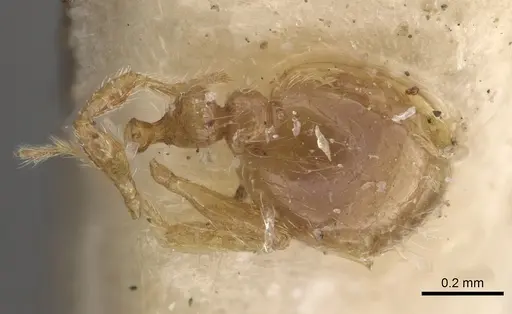
Solenopsis omana was described in 1996 by Collingwood and Agosti from workers collected in Oman and the UAE [1]. The type locality is Ruwi, Oman, with additional records from Suneira (UAE) and later from Ruwais (UAE) [2][1]. Workers are distinguished from the similar Solenopsis elhawagryi by their eyes: S. omana has 7 ommatidia, while S. elhawagryi has only 4-5 [1]. The queen is known from a single dealated specimen found in the Hayma Desert, Oman [1]. Its identification as S. omana is provisional, pending collection of queens together with workers.
Natural Habitat
No specific habitat data is recorded for this species. The known locations are in arid desert regions of Oman and the United Arab Emirates [2][1]. Temperatures in these areas can be extreme, with very hot summers and mild winters. The ants likely nest in sandy or soil substrates, but this is unconfirmed.
Care Recommendations (Inferred from Genus and Region)
Because no captive data exists for Solenopsis omana, all care advice is inferred from its desert origin and general Solenopsis biology. Keep the colony warm (26-30°C) and provide a temperature gradient. Humidity should be low to moderate, let the substrate dry out between waterings. A test tube with a cotton water reservoir works, but limit the wet area to avoid creating damp conditions. Feed small live prey appropriate for 2 mm workers, such as fruit flies or pinhead crickets, and offer sugar water or honey occasionally. Use fine mesh for escape prevention. These are educated guesses, expect trial and error.
Behavior and Temperament
As a member of the subfamily Myrmicinae and tribe Solenopsidini, Solenopsis omana almost certainly has a sting and uses venom. However, no behavioral observations are published for this species. Treat it as a sting-capable ant and handle with caution. Workers are very small (2 mm), so they can squeeze through tiny gaps, secure your setup thoroughly.
Known Distribution Records
Solenopsis omana has been recorded from only three locations: Ruwi (Oman), Suneira (UAE), and Ruwais (UAE) [1][2][3]. All records are from the eastern Arabian Peninsula. The species may be endemic to this region and appears to be rare or undercollected.
Frequently Asked Questions
How difficult is Solenopsis omana to keep?
Unknown. There is no documented captive history. As a desert Solenopsis with unknown biology, it would likely be challenging. Not recommended for beginners.
What do Solenopsis omana ants eat?
Unconfirmed. Based on the genus, they likely accept small live prey (fruit flies, small crickets) and sugar water. Offer tiny protein sources appropriate for their 2 mm workers.
What temperature do Solenopsis omana ants need?
Not directly studied. Inferred from desert origin: aim for 26-30°C, with a gradient. This is a guess, observe the colony and adjust.
How big do Solenopsis omana colonies get?
Unknown. No colony size data exists. Any number would be pure speculation.
Can I keep multiple queens together?
Unconfirmed. Social structure is unknown. Do not attempt co-founding without evidence of polygyny.
How long does it take for the first workers to emerge?
No data exists. Development time for any Solenopsis is unstudied for this species. If you try, document it!
Do Solenopsis omana need hibernation?
No, the species lives in a desert with no true winter. Keep temperatures stable year-round.
What size formicarium do I need?
Start with a test tube. For an established colony, a small nest with chambers sized for 2 mm ants will work. Avoid large chambers that these tiny ants cannot easily patrol.
Is Solenopsis omana a good species for beginners?
No. The lack of any husbandry information makes it unsuitable for beginners. Choose a well-documented species instead.
Report an Issue
The current care sheet is based fully on literature. See inconsistencies, or something that's incorrect? Please , it will be resolved after review from an admin. Contributing to the blogs tab also helps providing information, to make us be able to further improve the caresheets. Thank you for your support!
References

Dieses Caresheet ist lizenziert unter CC BY-SA 4.0 .
Community-Blogs
CASENT0281023
Auf AntWeb ansehen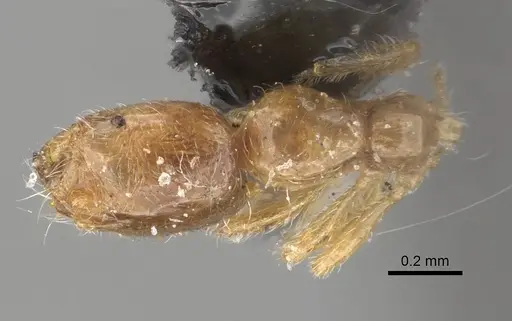
Literatur
Verbreitungskarte wird geladen...Produkte werden geladen...