
Simopelta breviscapa
- Wiss. Name
- Simopelta breviscapa
- Tribus
- Ponerini
- Unterfamilie
- Ponerinae
- Autor
- Mackay & Mackay, 2008
- Verbreitung
- In 0 Ländern gefunden
Einleitung
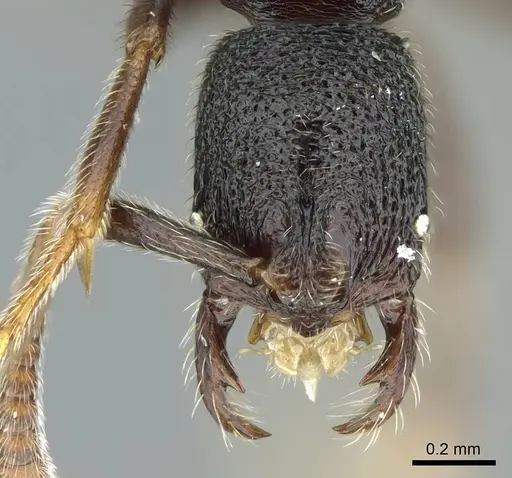
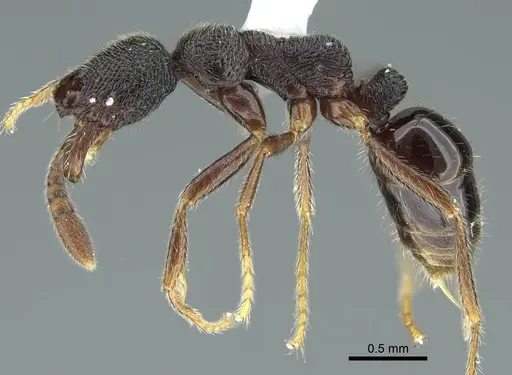
Simopelta breviscapa is a small predatory ant species native only to the cloud forests of Chiriquí, Panama. Workers measure about 3.5mm in total length and are primarily black with brownish mandibles, antennae, and legs . This species is distinguished by its notably short antennal scapes that barely extend beyond the back of the head - the feature that gives it its name ('breviscapa' means 'short staff' in Latin) . The head is covered with granulated sculpture, and the body has a mix of short erect hairs and longer sparse hairs primarily on the mandibles and underside . As a Ponerinae ant, this species possesses a functional stinger, which it uses to subdue prey. These ants live in upper montane cloud forests at elevations between 700-1520 meters, where the climate is cool and consistently moist . Most specimens have been collected from leaf litter, indicating they forage on the forest floor in the dark, humid microhabitat beneath the canopy .
Quick Summary
- Difficulty: Medium
- Origin & Habitat: Upper montane cloud forest in Chiriquí, Panama, at 700-1520m elevation [1]
- Colony Type: Unknown colony structure, only worker caste has been described, with no documented queen or reproductive caste [1]
- Size & Growth:
- Queen: Unknown, queen caste has not been described [1]
- Worker: About 3.5mm total length [1]
- Colony: Unknown, no colony size data available
- Growth: Unknown, growth rate has not been documented
- Development: Unknown, development timeline has not been studied for this species (Based on related Simopelta species and Ponerinae general patterns, expect development of several months at optimal temperature)
- Antkeeping:
- Temperature: Keep cool, around 18-22°C. These cloud forest ants prefer temperatures significantly below typical room temperature. Avoid overheating, they are adapted to the cool, stable conditions of high-elevation tropical forest [1]
- Humidity: High humidity required, around 70-85%. These forest floor ants need consistently moist substrate that mimics the damp leaf litter of their cloud forest home. Provide a water reservoir in the nest and keep the substrate damp but not waterlogged
- Diapause: Likely minimal or no diapause, Panama is near the equator with year-round warm temperatures. However, seasonal activity changes may occur during drier periods [1]
- Nesting: Naturalistic setup with moist substrate works best. They are leaf litter dwellers, so a setup with multiple layers of substrate, leaf litter, and small hiding spots mimics their natural environment. Test tubes can work but may need modification to maintain humidity
- Behavior: This is a predatory ant that forages in leaf litter. As a Ponerinae species, they are equipped with a functional stinger and can deliver a painful sting if handled roughly. They are small but active hunters, likely preying on small arthropods in the substrate. Their small size (3.5mm) means they can escape through very small gaps, excellent escape prevention is essential. They are not aggressive toward humans when undisturbed but will sting defensively if threatened. Activity level is likely moderate, with workers foraging individually or in small groups through the substrate.
- Common Issues: escape prevention is critical due to their small 3.5mm size, they can squeeze through tiny gaps that larger ants cannot, high humidity requirements can lead to mold problems if ventilation is inadequate, limited data means many care requirements are inferred, be prepared to adjust based on colony behavior, cool temperature needs may conflict with keeping them in warm rooms, climate control may be necessary, predatory diet means they require live prey, they cannot survive on sugar alone like many ant species
Housing and Nest Setup
Simopelta breviscapa is a leaf litter dwelling species [1], so a naturalistic setup works best for keeping them healthy. Use a shallow container with several centimeters of moist substrate (like a soil and sand mix) covered with leaf litter and small pieces of bark or wood to create the dark, humid microhabitats they naturally inhabit. The substrate should remain consistently damp but never waterlogged, standing water will drown them. A water tube attached to the nest area helps maintain humidity. Because they are tiny (3.5mm), even small gaps in the setup can allow escapes, so ensure all seams and edges are sealed with fluon or similar barrier. A small test tube setup can work for founding colonies, but monitor humidity closely as test tubes dry out quickly.
Feeding and Diet
As a Ponerinae ant, Simopelta breviscapa is predatory and needs a protein-rich diet of live small invertebrates. In captivity, they will likely accept small live prey such as fruit flies, pinhead crickets, small mealworms, and other tiny arthropods. Springtails are an excellent staple food for these small ants. Unlike many ants that readily accept sugar water or honey, Ponerinae ants are primarily predatory and may not show interest in sugar sources, focus on providing varied protein prey. Feed small amounts every few days, removing uneaten prey after 24-48 hours to prevent mold. The small worker size means prey items should be appropriately sized, no larger than the ant itself. [1]
Temperature Requirements
These cloud forest ants require cool temperatures compared to most commonly kept ants. Maintain the nest area at 18-22°C, this is significantly cooler than typical room temperature. In the wild, they live at 700-1520m elevation in Panama's Chiriquí highlands, where temperatures are much cooler than the lowlands [1]. Avoid placing their setup near heat sources or in warm rooms. If your room temperature runs higher than this range, you may need to use a small cooling method or keep them in a cooler part of your home. Watch for signs of heat stress, such as workers clustering away from heated areas or appearing sluggish. Consistent, cool temperatures are more important than temperature gradients for this species.
Humidity and Moisture
High humidity is essential for keeping Simopelta breviscapa healthy. These ants are adapted to the constantly moist conditions of cloud forest leaf litter [1], where humidity rarely drops below 70%. Keep the substrate consistently damp, it should feel moist to the touch but not have standing water. A water tube or small reservoir connected to the nest helps maintain humidity through evaporation. However, you also need adequate ventilation to prevent mold growth, which can be deadly to ant colonies. Strike a balance: damp substrate, some ventilation, and remove uneaten prey promptly to prevent mold. If you see excessive condensation or mold, increase ventilation slightly.
Defense and Sting
As a member of the subfamily Ponerinae, Simopelta breviscapa possesses a functional stinger and can deliver a painful sting when threatened. While they are small and unlikely to cause serious harm, the sting can be uncomfortable. Handle these ants gently and avoid provoking them. When working with the colony, use gentle movements and consider using a soft brush to coax them rather than picking them up directly. If you need to move them, use test tube transfer methods rather than direct handling. The sting is primarily a defense mechanism, they are not aggressive toward humans and will only sting if they feel threatened. Keep this in mind when placing the colony in your home, especially if curious children or pets might investigate. [1]
Understanding the Limited Data
It is important to understand that Simopelta breviscapa is a poorly studied species with significant gaps in our knowledge. Only the worker caste has been described, and we have no information about queens, males, colony size, or founding behavior [1]. All distribution records come from a single region in Panama [1]. This means many care recommendations are inferences based on what we know about their habitat (cloud forest) and their taxonomic position (Ponerinae genus Simopelta). Be prepared to adjust your care based on your observations of the colony. What works for related species or general Ponerinae care may need modification for this specific species. Keep detailed notes on your colony's preferences and share findings with the antkeeping community to help build knowledge about this rare ant.
Frequently Asked Questions
How long does it take for Simopelta breviscapa to develop from egg to worker?
The development timeline for this species has not been documented. Based on typical Ponerinae development patterns and similar species, expect several months (likely 3-6 months) from egg to first worker at optimal cool temperatures. The cool temperature requirements of this cloud forest species may slow development compared to warmer-climate ants.
What temperature do Simopelta breviscapa need?
Keep them cool at 18-22°C. These cloud forest ants from Panama's Chiriquí highlands are adapted to much cooler conditions than typical room temperature. Avoid heat sources and warm rooms. If your home runs warm, you may need to use cooling methods or place them in a cooler location.
Can I keep Simopelta breviscapa in a test tube?
Yes, test tubes can work for founding colonies, but you must monitor humidity closely as test tubes dry out quickly. These leaf litter ants need consistently moist conditions. Consider using a test tube setup with a water reservoir and place it in a naturalistic container with damp substrate to help maintain humidity. Watch for mold and ensure excellent escape prevention due to their tiny 3.5mm size.
What do Simopelta breviscapa eat?
They are predatory ants that need live small invertebrates. Feed them appropriately sized prey such as fruit flies, pinhead crickets, small mealworms, and springtails. Remove uneaten prey after 24-48 hours to prevent mold. They are primarily protein feeders and may not accept sugar sources like honey or sugar water.
How big do Simopelta breviscapa colonies get?
Colony size for this species is unknown, no data exists on maximum colony size. Based on related Simopelta species and their small worker size (3.5mm), colonies are likely moderate in size, possibly reaching a few hundred workers at most. More research is needed on this species.
Are Simopelta breviscapa good for beginners?
This species is rated as Medium difficulty and is not ideal for complete beginners. The challenges include their high humidity needs, cool temperature requirements, predatory diet requiring live prey, and the fact that they can sting. Additionally, limited care information exists since this is a rarely kept species. However, experienced antkeepers familiar with Ponerinae species should find them manageable.
Do Simopelta breviscapa need hibernation?
Likely no true hibernation is needed. These ants come from Panama near the equator, where temperatures remain relatively stable year-round. However, they may show reduced activity during drier seasonal periods. There is no documented diapause requirement for this species.
Why are my Simopelta breviscapa escaping?
Their small 3.5mm size means they can escape through the tiniest gaps. Ensure all enclosure seams are sealed with fluon or similar barrier. Check for gaps around lid edges, between connected tubes, and any cracks in the setup. Even a millimeter gap is enough for them to squeeze through. Excellent escape prevention is essential for this species.
Can I keep multiple Simopelta breviscapa queens together?
We do not know the colony structure for this species, only workers have been documented, with no information about queen number or behavior [1]. Without data on whether they are single-queen or multi-queen colonies, combining unrelated queens is not recommended. Start with a single colony and focus on establishing it before considering any colony combinations.
Report an Issue
The current care sheet is based fully on literature. See inconsistencies, or something that's incorrect? Please , it will be resolved after review from an admin. Contributing to the blogs tab also helps providing information, to make us be able to further improve the caresheets. Thank you for your support!
References

Dieses Caresheet ist lizenziert unter CC BY-SA 4.0 .
Community-Blogs
CASENT0914501
Auf AntWeb ansehen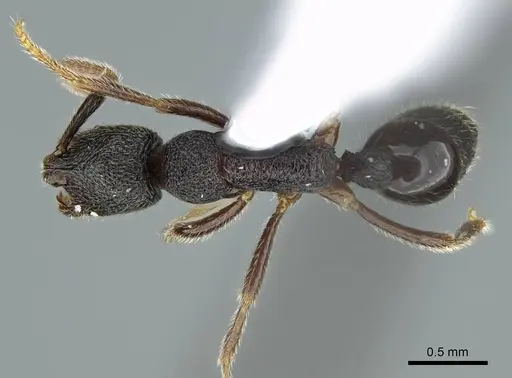
Literatur
Verbreitungskarte wird geladen...Produkte werden geladen...