
Romblonella coryae
- Wiss. Name
- Romblonella coryae
- Tribus
- Crematogastrini
- Unterfamilie
- Myrmicinae
- Autor
- General & Buenavente, 2015
- Verbreitung
- In 0 Ländern gefunden
Einleitung
Romblonella coryae is a small ant species discovered in 2015 in Palawan, Philippines. Workers measure 4.6-4.9 mm and have a striking appearance with a dark brown head and gaster contrasting against a dark orange mesosoma, petiole, and postpetiole. The species is named after former Philippine President Corazon Aquino. These ants were collected from low vegetation, tarpaulin shelters, and leaf litter in primary lowland rainforest at about 200 m elevation. The collection notes suggest this species may be arboreal - living in trees - since specimens were found on vegetation and may have simply blown down from the canopy above. Only two Romblonella species are known from the Philippines, and the biology of this genus remains completely unstudied. The male and queen castes have never been observed .
Quick Summary
- Difficulty: Unknown
- Origin & Habitat: Palawan Island, Philippines, primary lowland rainforest at 200 m elevation [1]
- Colony Type: Unknown, colony structure has not been documented. Only workers have been collected.
- Size & Growth:
- Queen: Unknown, queen caste has not been described [1]
- Worker: 4.6-4.9 mm [1]
- Colony: Unknown, colony size has not been documented
- Growth: Unknown
- Development: Unknown, development has not been studied (No data available on development. Related tropical Myrmicinae suggest 4-8 weeks at warm temperatures, but this is purely speculative.)
- Antkeeping:
- Temperature: Likely 24-28°C based on Palawan lowland rainforest origin, provide a warm enclosure and monitor colony activity [1]
- Humidity: High humidity likely required, think tropical forest floor. Keep substrate consistently moist but not waterlogged.
- Diapause: Unlikely, Palawan has no cold season. These ants probably remain active year-round.
- Nesting: Possibly arboreal or semi-arboreal based on collection notes. A naturalistic setup with moist substrate, leaf litter, and small chambers would be a reasonable starting point. Test tubes may work for founding colonies.
- Behavior: Not documented. Like other members of Crematogastrini, Romblonella coryae likely uses a modified flattened stinger to smear venom rather than injecting it, but this has not been directly observed. Workers are under 5 mm, so escape prevention should be taken seriously regardless of their actual behavior.
- Common Issues: biology is completely unknown, this is one of the least-studied ant species in the hobby, queen and male castes have never been described, finding a mated queen may be impossible, colony size and structure are unconfirmed, you may not know what a healthy colony looks like, wild-caught colonies may have parasites or diseases with no documented treatment, very small size means escapes are possible without fine mesh barriers
Discovery and Identification
Romblonella coryae was only described in 2015,making it one of the newest ant species in the hobby. It was discovered in Palawan, Philippines, an island known for its unique biodiversity and status as a global biodiversity hotspot. The species was named in honor of Corazon Aquino, the former president of the Philippines who led the country out of the dictatorship era [1].
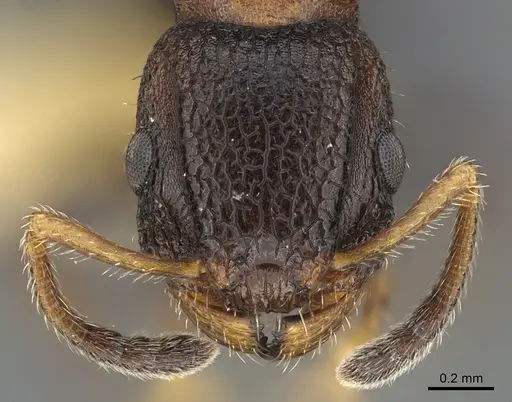
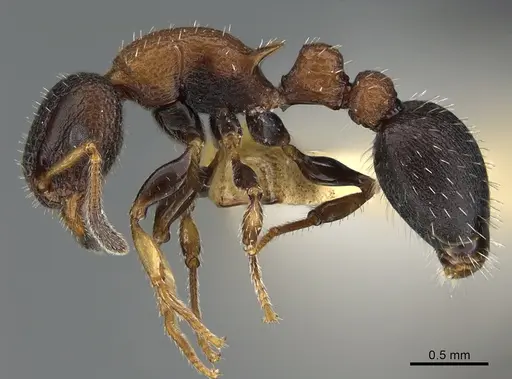
Workers are distinctive and relatively easy to identify under magnification. They have a longitudinally costulate (ridged) first gastral tergite, a longer-than-wide head (cephalic index 84-89), and a strikingly bicolored mesosoma that is dark orange and brown in lateral view. The only other Romblonella species in the Philippines, Romblonella opaca, lacks the ridged gaster and has a wider head and entirely dark brown mesosoma [1].
The holotype worker was collected in February 2014 from Camp Palaka in Tanabag Village, Puerto Princesa City, Palawan. The species is known only from this single location.
Natural History and Habitat
The natural history of Romblonella coryae is essentially unknown, this is one of the least-studied ant species in existence. What we know comes entirely from collection notes made during the species' discovery. Workers were opportunistically collected from low vegetation along a 15 km trail, from tarpaulin shelters at the research camp, and from sifted leaf litter [1].
The fact that specimens were found on vegetation and tarpaulins, rather than in soil or rotting wood, suggests these ants may be arboreal or semi-arboreal, living in trees rather than on the ground. They may have been blown down from the canopy during collection. This implies that finding a wild nest might require arboreal sampling techniques like canopy fogging or examining tree hollows [1].
The species was found in primary lowland rainforest at approximately 200 meters above sea level. Palawan has a tropical climate with high year-round humidity and temperatures. There is no winter, only wet and dry seasons. Based on its subfamily and tribe (Myrmicinae, Crematogastrini), Romblonella coryae likely uses a modified flattened stinger to smear venom rather than inject it, though this has not been directly observed.
Keeping Romblonella coryae in Captivity
Keeping Romblonella coryae presents a unique challenge: almost nothing is known about their care requirements. They are one of the rarest species in the ant hobby, and no established protocols exist. You will essentially be pioneering their husbandry.
Based on their origin in Palawan lowland rainforest, start with warm temperatures around 24-28°C and high humidity. Keep the nest substrate consistently moist but not waterlogged, think damp forest floor. A naturalistic setup with moist soil, leaf litter, and small chambers may work better than a bare test tube, especially if they prove to be arboreal.
For feeding, start with standard ant foods: sugar water or honey for energy, and small protein sources like fruit flies, pinhead crickets, or other tiny insects. Since they belong to Myrmicinae, they likely have functional stingers used for smearing venom, though no one has documented their defensive behaviors.
Because workers are under 5 mm, use fine mesh and tight-fitting barriers to prevent escapes. Watch your colony closely and adjust conditions based on their behavior, you are the first to document how this species thrives in captivity. [1]
What We Don't Know
It is critical to understand how little is known about Romblonella coryae. The scientific literature provides almost no information beyond the original species description. We do not know: how many queens a colony has, whether the queen seals herself in during founding, how long it takes for eggs to become workers, what these ants eat in the wild, when nuptial flights occur, or how colonies develop over time [1].
The male and queen castes have never been described, they are entirely unknown to science. This means finding a mated queen to start a colony may be effectively impossible unless someone discovers a nest in the wild. Even then, identifying a queen would be difficult without reference material.
If you obtain a colony, your observations could contribute genuinely new knowledge to antkeeping. Document everything: feeding behaviors, growth rates, activity patterns, and any unusual traits. This species represents a genuine frontier in ant husbandry.
Frequently Asked Questions
How do I keep Romblonella coryae ants?
No established care protocol exists because this species was only described in 2015 and its biology is completely unknown. Start with warm temperatures (24-28°C), high humidity, and moist substrate. A naturalistic setup may work better than test tubes if they prove to be arboreal. Feed sugar water and small insects. You will likely be pioneering their husbandry, observe closely and adjust based on colony behavior [1].
What do Romblonella coryae ants eat?
Their diet is unconfirmed. Based on their small size and Myrmicinae classification, they likely accept small insects, honeydew, and sugar sources. Start with sugar water or honey and tiny prey like fruit flies or springtails. Adjust based on what your colony actually accepts [1].
How big do Romblonella coryae colonies get?
Unknown. Colony size has never been documented. The largest known collection was just a handful of workers found scattered across vegetation and leaf litter. Related tropical Myrmicinae often reach several hundred workers, but this is purely speculative for this species [1].
Can I keep multiple Romblonella coryae queens together?
Unknown. Colony structure has not been studied. There is no data on whether they are single-queen or multi-queen species. Do not attempt combining unrelated queens without understanding their social structure, this could result in aggression [1].
Do Romblonella coryae ants sting?
They belong to Myrmicinae and specifically to tribe Crematogastrini, which have a modified flattened stinger used to smear venom rather than inject it. This defensive behavior has not been documented for this species, but it is likely similar. Given their tiny size, any sting would likely be mild [1].
Where is Romblonella coryae found?
Only known from Palawan Island, Philippines, specifically in Puerto Princesa City at around 200 m elevation in primary lowland rainforest. The species has not been found anywhere else [1].
How long do Romblonella coryae workers live?
Unknown. Development and lifespan have not been studied for this or any Romblonella species. Related Myrmicinae workers typically live several months to a few years, but this is just an estimate [1].
Are Romblonella coryae good for beginners?
No. This species is not recommended for beginners. Its biology is completely unknown, no care protocols exist, and the queen caste has never been described. This is an expert-level species for advanced antkeepers interested in pioneering new husbandry techniques [1].
Do Romblonella coryae need hibernation?
Unlikely. Palawan has no cold season, temperatures remain warm year-round. These ants probably remain active throughout the year. Do not attempt hibernation unless your colony clearly becomes dormant on its own [1].
How do I identify Romblonella coryae workers?
Under magnification, look for: a longitudinally ridged (costulate) first gastral tergite, a head that is longer than wide (cephalic index 84-89), a narrow median clypeus only as wide as the frontal lobe, and a strikingly bicolored mesosoma that is dark orange and brown in lateral view. These features distinguish them from the only other Philippine Romblonella, R. opaca [1].
Report an Issue
The current care sheet is based fully on literature. See inconsistencies, or something that's incorrect? Please , it will be resolved after review from an admin. Contributing to the blogs tab also helps providing information, to make us be able to further improve the caresheets. Thank you for your support!
References

Dieses Caresheet ist lizenziert unter CC BY-SA 4.0 .
Community-Blogs
CASENT0923700
Auf AntWeb ansehen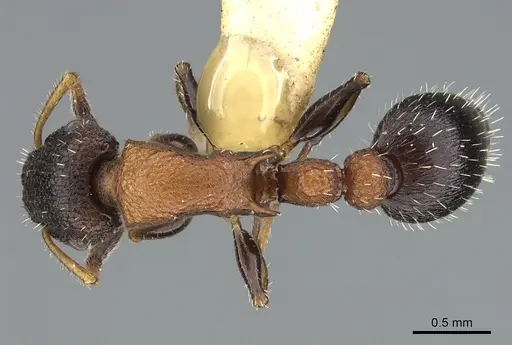
Literatur
Verbreitungskarte wird geladen...Produkte werden geladen...