
Proceratium sali
- Wiss. Name
- Proceratium sali
- Tribus
- Proceratiini
- Unterfamilie
- Proceratiinae
- Autor
- Hita Garcia <i>et al.</i>, 2014
- Verbreitung
- In 0 Ländern gefunden
Einleitung
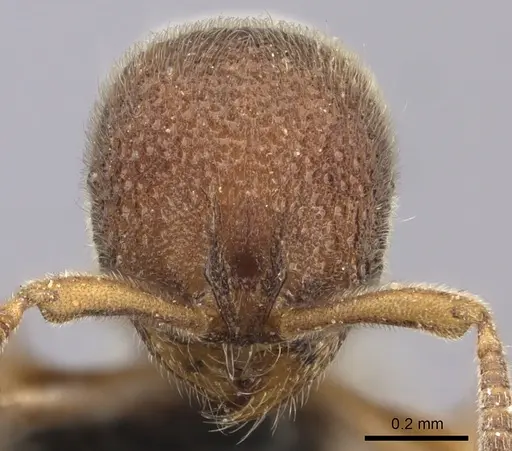
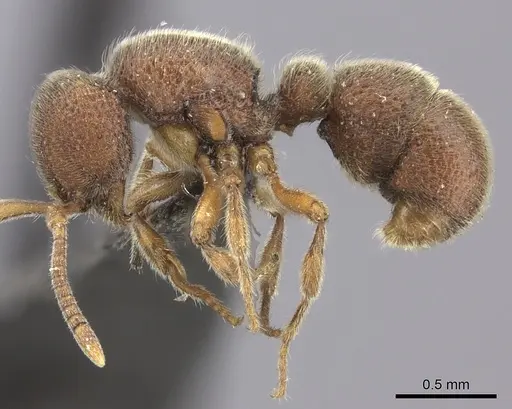
Proceratium sali is known from a single worker specimen collected in the Sali Forest Reserve in south-central Tanzania. Workers are 3.35mm in total length, with a brown body, yellowish mandibles and legs, and very small eyes consisting of only 3-4 ommatidia. The species has a high, blocky nodiform petiolar node and dense body pubescence with longer standing hairs. It inhabits mountain primary forest at 1150-1480m elevation with 80-90% canopy cover, and the soil is moist sandy clay loam covered by a 2-3cm layer of leaf litter . The queen, colony structure, and basic biology of Proceratium sali remain completely undocumented, as only a single worker has ever been collected .
Quick Summary
- Difficulty: Expert
- Origin & Habitat: Sali Forest Reserve in the Morogoro region of south-central Tanzania. This is a mountain primary forest at 1150-1480m elevation with 80-90% canopy cover. The soil is moist sandy clay loam with a 2-3cm leaf litter layer [1][2].
- Colony Type: Unknown, only a single worker has ever been documented. Colony structure (monogyne/polygyne) is completely unconfirmed.
- Size & Growth:
- Queen: Unknown, queen has never been documented [1]
- Worker: 3.35mm (holotype worker) [1]
- Colony: Unknown, no colony data exists [1]
- Growth: Unknown, no development data exists
- Development: Unknown, no development data exists for this species. Based on typical Proceratium patterns, expect 8-12 weeks at optimal temperature, but this is purely estimated. (No brood development data exists for this species. All estimates are based on genus-level patterns from related species.)
- Antkeeping:
- Temperature: Temperature requirements are unknown, but based on the mountain forest habitat at 1150-1480m elevation, a range of 20-24°C might be suitable [1][2].
- Humidity: Keep the nest substrate consistently damp but not waterlogged, based on the moist sandy clay loam habitat [1].
- Diapause: Unknown, no seasonal data exists. The collection date (October) suggests possible activity year-round in this equatorial mountain location.
- Nesting: No direct data exists, but Proceratium species are typically cryptic floor-dwellers that nest in soil or rotting wood. A naturalistic setup with moist substrate and leaf litter would likely suit them [1].
- Behavior: No behavioral observations exist for this species. Based on genus patterns, Proceratium ants are typically cryptic, slow-moving, and shy. They are likely predatory on small soil micro-arthropods. Their tiny size (3.35mm) and very small eyes suggest a subterranean or leaf-litter dwelling lifestyle. Escape prevention should be excellent given their small size, they can likely squeeze through standard gaps.
- Common Issues: this species is virtually unknown in captivity, no established care protocols exist, only a single worker specimen has ever been collected, meaning no queen or colony data is available, escape prevention is critical due to their tiny 3.35mm size, no dietary information exists, feeding success is entirely uncertain, no hibernation or seasonal requirements have been documented, wild-caught colonies may be extremely difficult to obtain given their rarity
Why Proceratium sali Is an Extreme Rarity
Proceratium sali represents one of the most poorly known ant species in the world. The entire scientific knowledge of this species rests on a single worker specimen collected in 2007 from the Sali Forest Reserve in Tanzania. No queen has ever been described, no colony has ever been observed, and no biological data exists beyond the physical description of one worker. This means that for antkeepers, there is no established care protocol, no documented feeding preferences, no known development timeline, and no confirmed housing requirements. Everything in this caresheet represents informed estimates based on genus-level patterns rather than species-specific research. This makes P. sali an expert-only species that should only be attempted by those with extensive experience and the ability to document their observations carefully for potential scientific contribution. [1]
Natural Habitat and Inference
The single P. sali specimen was collected from the Sali Forest Reserve, a 1072-hectare protected area in the Mahenge mountain range of south-central Tanzania. The forest is largely undisturbed with dense canopy cover estimated at 80-90%. Altitude at the collection site was approximately 1150m, with soil described as moist sandy clay loam covered by a 2-3cm layer of leaf litter. This mountain forest environment suggests this species prefers cooler, more humid conditions than typical lowland tropical ants. The pitfall trap collection method indicates these ants are ground-dwelling and likely active on the forest floor or within the leaf litter layer. The October collection date (southern hemisphere spring) suggests year-round activity in this equatorial region. [1][2]
Physical Characteristics and Identification
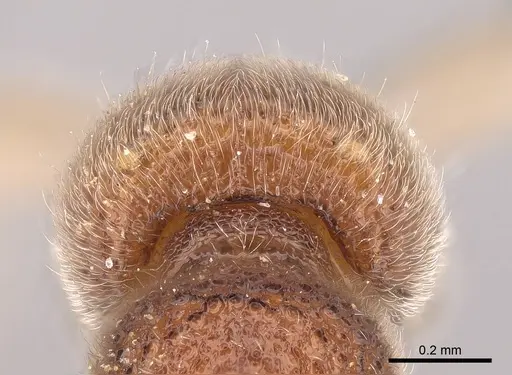
Workers measure 3.35mm in total length, making P. sali a tiny ant species. The body is brown with yellowish to light brown mandibles and legs. The most distinctive features include extremely small eyes with only 3-4 ommatidia, a high nodiform petiolar node that is anteroposteriorly compressed, and a body covered in dense decumbent pubescence with numerous longer suberect to erect hairs. The propodeum has very small pointed teeth, and abdominal segment IV is strongly recurved with a large semitransparent bulla. These morphological features suggest a cryptic, leaf-litter dwelling lifestyle similar to other Proceratium species. [1]
Estimated Care Requirements
Temperature requirements are unknown, but based on the mountain forest habitat at 1150-1480m elevation, a range of 20-24°C might be suitable [1][2]. Humidity should be maintained with moist substrate, as the natural habitat has moist sandy clay loam [1]. Proceratium species are typically predatory on small soil invertebrates, but no confirmed dietary data exists for P. sali [1]. Given their tiny 3.35mm size, escape prevention must be excellent, fine mesh and tight-fitting barriers are essential [1].
The Challenge of Keeping Extremely Rare Species
Keeping species like P. sali carries significant ethical considerations. Since only a single wild specimen has ever been collected, any captive colony would represent a significant discovery that could contribute to scientific knowledge. However, the extreme rarity makes wild collection nearly impossible and potentially harmful to already tiny populations. Prospective keepers should consider whether their goals align with conservation, documenting captive behavior, establishing breeding colonies, and contributing observations to the scientific community. The lack of any established protocol means keepers become pioneers, and every successful observation could represent new knowledge for this poorly understood species. [1]
Frequently Asked Questions
Is Proceratium sali available for purchase in the antkeeping hobby?
No. This species is virtually unknown in the antkeeping hobby. Only a single worker specimen has ever been collected by scientists, and no colonies have ever been documented. It is extremely unlikely to be available from any commercial supplier.
How long do Proceratium sali workers live?
Unknown, no lifecycle data exists for this species. Worker longevity has not been studied.
What do Proceratium sali ants eat?
Unconfirmed, but based on genus patterns, they are likely predatory on small soil micro-arthropods like springtails, mites, and tiny insects. No documented feeding observations exist for this species.
Can I keep Proceratium sali in a test tube setup?
Possibly, but no established protocol exists. The naturalistic habitat data (moist sandy clay loam with leaf litter at 1150m elevation) suggests they need more complex housing than a simple test tube. A naturalistic setup with moist substrate is likely more appropriate.
Do Proceratium sali ants sting?
Unknown for this specific species. Proceratium ants are not known for painful stings, and their tiny size (3.35mm) would make any sting negligible to humans even if present.
How big do Proceratium sali colonies get?
Unknown, no colony data exists. Proceratium colonies are typically small, often under 100 workers, but this is not confirmed for P. sali.
Do Proceratium sali queens need to hibernate?
Unknown. The mountain forest habitat at 1150m elevation in Tanzania (near the equator) suggests minimal seasonal temperature variation. No hibernation data exists for this or most other Proceratium species.
Is Proceratium sali aggressive?
Unknown, no behavioral observations exist. Based on genus patterns, Proceratium ants are typically shy, cryptic, and non-aggressive. They are likely to flee rather than engage when threatened.
What temperature should I keep Proceratium sali at?
No confirmed data exists. Based on the mountain forest habitat at 1150-1480m elevation, an estimated range of 20-24°C is reasonable. Start around 22°C and adjust based on colony activity if a colony is ever established.
Are Proceratium sali good for beginners?
No. This species is completely unsuitable for beginners. No care protocol exists, no colony has ever been kept, and basic biology remains undocumented. This is an expert-only species for experienced antkeepers interested in contributing to scientific knowledge.
When do Proceratium sali have nuptial flights?
Unknown, no reproductive data exists. The single known specimen was collected in October, but this is insufficient to determine flight timing.
How fast do Proceratium sali colonies grow?
Unknown, no development data exists. Proceratium species typically grow slowly, but no specific timeline exists for P. sali.
Report an Issue
The current care sheet is based fully on literature. See inconsistencies, or something that's incorrect? Please , it will be resolved after review from an admin. Contributing to the blogs tab also helps providing information, to make us be able to further improve the caresheets. Thank you for your support!
References

Dieses Caresheet ist lizenziert unter CC BY-SA 4.0 .
Community-Blogs
CASENT0235689
Auf AntWeb ansehen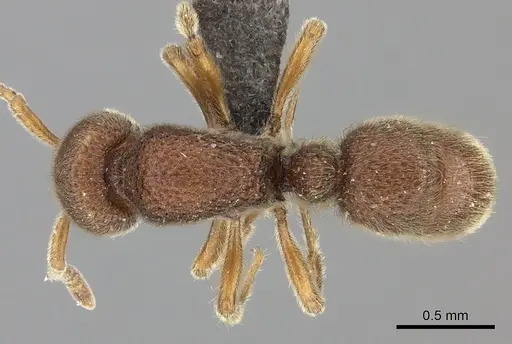
Literatur
Verbreitungskarte wird geladen...Produkte werden geladen...