
Proceratium longmenense
- Wiss. Name
- Proceratium longmenense
- Tribus
- Proceratiini
- Unterfamilie
- Proceratiinae
- Autor
- Xu, 2006
- Verbreitung
- In 0 Ländern gefunden
Einleitung
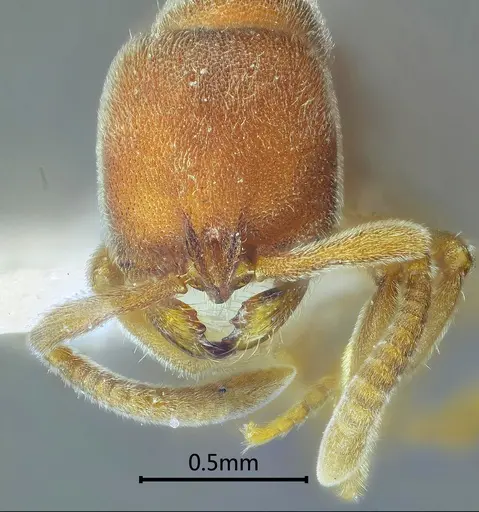
Proceratium longmenense is a tiny, cryptic ant from the subtropical forests of Yunnan, China. Workers measure about 3.2 mm in total length, with yellowish-brown coloration and brownish-yellow legs and antennae. This species belongs to the Proceratium itoi clade and is only known from a single specimen collected at 2050 meters elevation in Xishan Mountain Forest Park. They have reduced eyes with only one facet, typical for subterranean ants, and are distinguished by long scapes, a narrow head, and sparse erect hairs . This species is very rare in captivity with no established husbandry history. Proceratium ants are cryptic, subterranean dwellers that typically nest in rotting wood or deep soil. Their genus is known for specialized hunting behaviors, but specific prey preferences for this species are unconfirmed.
Quick Summary
- Difficulty: Expert
- Origin & Habitat: Yunnan Province, China, subtropical evergreen broadleaf forest at 2050 m elevation [1][3]. This is a high-altitude, cool forest habitat in southwestern China.
- Colony Type: Unconfirmed, only known from a single worker specimen. Based on genus patterns, likely single-queen colonies.
- Size & Growth:
- Queen: Unknown, no queen described
- Worker: 3.2 mm total length [1][2]
- Colony: Unknown, only a single specimen has been collected [2]
- Growth: Unknown
- Development: Estimated 8-12 weeks based on similar Proceratium species, but unconfirmed for this species. (No direct development data exists. Related Proceratium species typically take 2-3 months from egg to worker.)
- Antkeeping:
- Temperature: Unconfirmed for this species. Based on the high-altitude (2050m) subtropical forest habitat, aim for cool to moderate temperatures around 18-22°C. Avoid overheating [1][3].
- Humidity: High humidity is likely required, these are forest floor inhabitants. Keep nest substrate consistently moist but not waterlogged [1].
- Diapause: Unknown, no seasonal data exists. High-altitude Yunnan likely experiences cool winters, so a brief hibernation period may be beneficial.
- Nesting: Nesting preferences unconfirmed for this species. Based on genus patterns, they likely prefer dark, humid environments in rotting wood or soil. A naturalistic setup with moist substrate or a Y-tong/plaster nest works well for Proceratium species.
- Behavior: Behavior is unstudied for this species. Based on genus patterns, they are typically slow-moving, cryptic ants that forage underground. Their extremely reduced eyes (single facet) suggest they rely more on chemical cues than vision. Escape risk is low given their small size but limited activity. No sting data available for this specific species.
- Common Issues: this species is virtually unknown in captivity, no established husbandry protocols exist., only a single specimen has ever been collected, making wild colony structure uncertain., no information on founding behavior or queen requirements., high-altitude origin means temperature sensitivity is likely., without proper escape prevention, tiny workers could slip through standard barriers.
Discovery and Identification
Proceratium longmenense was described in 2006 by Zhenghui Xu from a single worker collected in Xishan Mountain Forest Park near Kunming, Yunnan Province, China. The specimen was found at 2050 meters elevation in a subtropical evergreen broadleaf forest on May 5,2001. This species is part of the Proceratium itoi clade, a group of closely related species found primarily in East and Southeast Asia. The species name comes from the type locality 'Longmen' in the Xishan Mountain Forest Park [1][3].
The species can be identified by its relatively long scapes (SI 68) combined with a narrow head (CI 85), and sparse erect hairs on the body. It is most similar to Proceratium zhaoi and Proceratium itoi, but differs in having a wide triangular clypeal projection and propodeal teeth that point outward rather than downward [1][2].
Appearance and Morphology
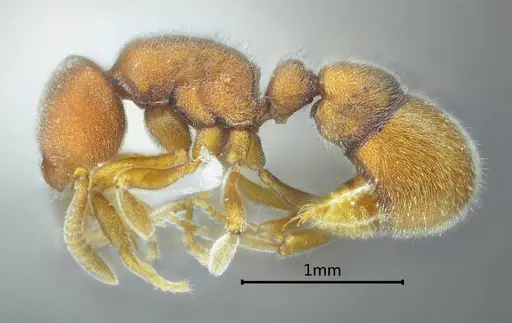
Workers measure just 3.2 mm in total length, making Proceratium longmenense a small to medium-sized ant. The head is nearly square, slightly longer than broad, with weakly convex lateral sides. The most distinctive feature is the extremely reduced eyes, each eye has only a single facet, suggesting a subterranean lifestyle with minimal visual dependence. The mandibles have 4 teeth, reducing in size from apex to base. The antennae are thick with 12 segments, and the scapes reach about 4/5 of the distance from the antennal socket to the occipital corner [1].
The body is yellowish-brown overall, with brownish-yellow mandibles, antennae, legs, and the apex of the gaster. The dorsum has sparse short erect hairs mixed with dense decumbent pubescence. The propodeum has posterodorsal corners that form right-angled teeth. The petiole is roughly triangular and inclined backward. The subpetiolar process is small and nearly rectangular [1][2].
Habitat and Distribution
This species is known only from Yunnan Province in southwestern China, specifically from Xishan Mountain Forest Park near Kunming City at an elevation of 2050 meters. The habitat is subtropical evergreen broadleaf forest, which in this region features mild temperatures year-round with high humidity. The high elevation suggests the species experiences cooler conditions than typical lowland tropical ants [1][3].
A single additional specimen has been recorded from the Gaoligong Shan mountains in Yunnan, also at high elevation [4]. This suggests the species may have a limited distribution in the high-altitude forests of western Yunnan. The genus Proceratium as a whole is known for cryptic, subterranean lifestyles, often found in rotting wood, under stones, or in deep leaf litter [3].
Keeping Proceratium longmenense
This is one of the most poorly documented ant species in the hobby. No established husbandry protocols exist because the species has never been kept in captivity. What we know comes from a single collected specimen and genus-level patterns from related species. You should expect a challenging keep with experimental conditions [1][2].
Based on the habitat data and genus patterns, provide cool to moderate temperatures around 18-22°C with high humidity. Use a naturalistic setup with moist substrate or a Y-tong/plaster nest that maintains humidity. The extremely reduced eyes suggest they are adapted to darkness and may be stress-sensitive to bright conditions. Feed small live prey like springtails or fruit flies, as Proceratium species are typically predators. Sugar acceptance is uncertain, offer honey or sugar water occasionally but do not rely on it as a primary food source [1].
Start with a small colony if available, and monitor carefully for stress responses. The high-altitude origin suggests sensitivity to overheating. Use excellent escape prevention despite their small size, tiny ants can slip through standard barriers. Be prepared to experiment with conditions since no captive breeding data exists.
Frequently Asked Questions
How do I keep Proceratium longmenense ants?
This species has never been kept in captivity, so no established protocols exist. Based on genus patterns and habitat data, provide a naturalistic setup with moist substrate, keep temperatures cool (18-22°C), and maintain high humidity. Feed small live prey like springtails. Expect an experimental keep with trial and error required.
What do Proceratium longmenense ants eat?
Diet is unconfirmed for this species. Based on genus patterns, they are likely predators of small invertebrates. Offer small live prey such as springtails, fruit flies, or other micro-arthropods. Sugar acceptance is uncertain, occasionally offer honey or sugar water but do not rely on sweets as a primary food source.
What temperature do Proceratium longmenense ants need?
Temperature requirements are unconfirmed. Based on the high-altitude (2050m) subtropical forest origin, aim for cool to moderate temperatures around 18-22°C. Avoid overheating. A heating cable on one side of the nest can create a gentle gradient if room temperature is too low.
How big do Proceratium longmenense colonies get?
Colony size is unknown, only a single worker has ever been collected. Based on related Proceratium species, colonies likely reach dozens to a few hundred workers. Do not expect large colonies.
Do Proceratium longmenense ants sting?
Sting data is not available for this specific species. Proceratium ants have a functional sting but are typically too small to penetrate human skin effectively. Their genus is not known for painful stings.
How long does it take for Proceratium longmenense to develop from egg to worker?
Development timeline is unconfirmed, no breeding data exists for this species. Based on similar Proceratium species, estimate 8-12 weeks from egg to first worker at optimal temperature.
Are Proceratium longmenense ants good for beginners?
No. This is an expert-level species with no established husbandry history. Only a single specimen has ever been collected, and no captive breeding data exists. You should have significant antkeeping experience before attempting this species.
Can I keep multiple Proceratium longmenense queens together?
Colony structure is unconfirmed. Based on genus patterns, they likely form single-queen colonies. Combining unrelated queens has not been documented and is not recommended.
What is the best nest type for Proceratium longmenense?
Nesting preferences are unconfirmed for this species. Based on genus patterns, a naturalistic setup with moist substrate or a Y-tong/plaster nest that maintains high humidity works well. These are cryptic, subterranean ants that prefer dark, humid conditions.
Do Proceratium longmenense ants need hibernation?
Diapause requirements are unknown. The high-altitude Yunnan habitat experiences cool winters, so a brief hibernation period at reduced temperatures (around 10-15°C) for 2-3 months may be beneficial. Monitor colony response and adjust accordingly.
Where does Proceratium longmenense live in the wild?
This species is known only from Yunnan Province, China, specifically from Xishan Mountain Forest Park near Kunming at 2050 meters elevation. The habitat is subtropical evergreen broadleaf forest, a cool, humid high-altitude forest environment.
Why is Proceratium longmenense so rare?
This species is known from only a single collected specimen. This could reflect genuine rarity, limited distribution, or the cryptic subterranean lifestyle of Proceratium ants making them difficult to find. They likely live in deep rotting wood or soil where they are rarely encountered by collectors.
Report an Issue
The current care sheet is based fully on literature. See inconsistencies, or something that's incorrect? Please , it will be resolved after review from an admin. Contributing to the blogs tab also helps providing information, to make us be able to further improve the caresheets. Thank you for your support!
References

Dieses Caresheet ist lizenziert unter CC BY-SA 4.0 .
Community-Blogs
ANTWEB1060497
Auf AntWeb ansehen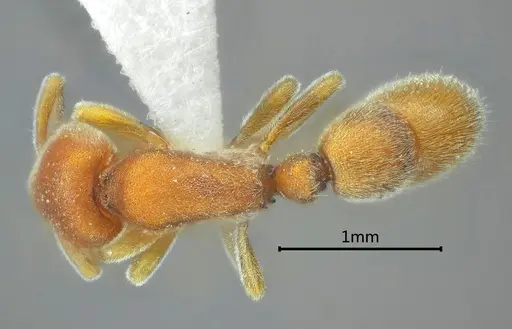
Literatur
Verbreitungskarte wird geladen...Produkte werden geladen...