
Pristomyrmex distinguendus
- Wiss. Name
- Pristomyrmex distinguendus
- Tribus
- Crematogastrini
- Unterfamilie
- Myrmicinae
- Autor
- Zettel, 2006
- Verbreitung
- In 0 Ländern gefunden
Einleitung
Pristomyrmex distinguendus is a small ant species endemic to the Philippines, found only on Luzon and Leyte islands . Workers measure 2.84-3.41 mm in total length and have reddish-brown coloration with a smooth, polished body covered in many long erect hairs . The species is characterized by a prominent tooth on the ventral surface of the clypeus, short pronotal teeth, and longer propodeal spines . The antennal scrobes are well-developed and laterally delimited by a ridge reaching to the level of the eye center . This species was described in 2006,and little is known about its biology in the wild or in captivity . As a tropical island endemic, it is expected to prefer warm, humid conditions, but specific requirements are unstudied.
Quick Summary
- Difficulty: Medium
- Origin & Habitat: Endemic to the Philippines, specifically found in Luzon and Leyte islands [1]. Type specimens were collected from various elevations (50-1144 m) in forested areas including Mt. Isarog, Mt. Makiling, and Quezon National Park [1].
- Colony Type: Unconfirmed, colony structure has not been studied
- Size & Growth:
- Antkeeping:
- Temperature: Keep at 24-28°C, based on Philippines tropical habitat [1].
- Humidity: Keep substrate consistently moist but not waterlogged, as tropical forests are humid [1].
- Diapause: No diapause required, as this is a tropical species [1].
- Nesting: No specific data, based on genus Pristomyrmex, likely nests in soil or rotting wood. In captivity, use test tube setup or small nest with moisture.
- Behavior: Behavior is unstudied. Based on genus Pristomyrmex patterns, these are likely ground-nesting ants with moderate activity levels. Defense mechanism: Based on subfamily Myrmicinae, they have a modified stinger used to smear venom onto enemies. Escape prevention should be adequate for their small size (under 4mm), but ensure secure barriers due to high escape risk.
- Common Issues: uncertain care requirements due to lack of biological data, proceed with conservative husbandry, humidity control is critical due to tropical forest habitat, temperature stability matters, avoid cold drafts or AC exposure, small size means standard escape prevention should work, but test tube connections should be secure, no known major pests or diseases documented for this species
Discovery and Description
Pristomyrmex distinguendus was formally described by Herbert Zettel in 2006 based on worker specimens collected from multiple locations in the Philippines [1]. The species name 'distinguendus' means 'to be distinguished' in Latin, reflecting its distinguishing features from related species like Pristomyrmex collinus [1]. The type specimens were collected from Luzon (Camarines Sur, Laguna, Quezon provinces) and Leyte island between 1993 and 2005 [1]. The original description includes detailed morphological measurements, but no biological observations are published.
Identification and Morphology
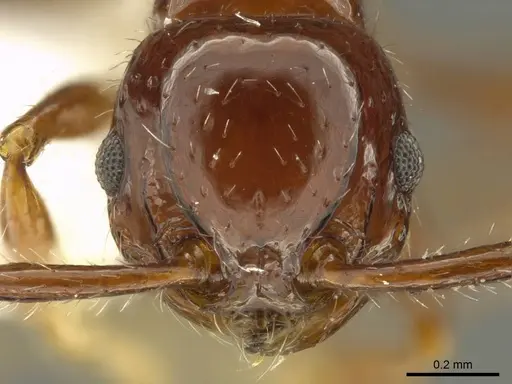
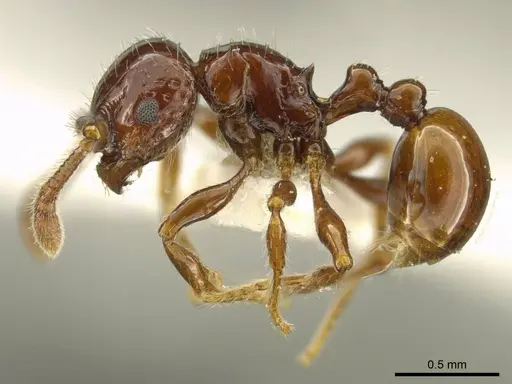
This species can be identified by several distinctive morphological features. The ventral surface of the clypeus has a strongly prominent tooth at the center [1]. The pronotum bears a pair of short teeth that are distinctly shorter than the propodeal spines [1]. The dorsum of the head and alitrunk is smooth and polished, with many long erect or suberect hairs [1]. The antennal scrobes are present and laterally delimited by a ridge that reaches caudally at least to the level of the center of the eye [1]. The petiolar node has two or three pairs of hairs on its dorsal surface [1]. Workers are reddish-brown in color and measure 2.84-3.41 mm in total length [1].
Distribution and Habitat
Pristomyrmex distinguendus is endemic to the Philippines, known only from the islands of Luzon and Leyte [1]. The type series was collected from multiple localities: Mt. Isarog in Camarines Sur (Luzon), Mt. Makiling in Laguna (Luzon), Quezon National Park in Quezon province (Luzon), and the Baybay area in Leyte [1]. Collection elevations ranged from near sea level (50-100 m) to over 1100 m altitude [1]. This distribution pattern suggests the species inhabits tropical forest environments across different elevations on these islands.
Keeping Pristomyrmex distinguendus in Captivity
Since little is known about the biology of this species, captive care must be based on reasonable estimates from its geographic origin and genus-level knowledge. Keep these ants at warm tropical temperatures, ideally 24-28°C, which matches the climate of its Philippines habitat [1]. Humidity should be kept moderate to high, typical for tropical forest ants [1]. A test tube setup works well for founding colonies, with the ability to move to a small plaster or soil nest once the colony grows. Feed a varied diet including sugar sources (honey or sugar water) and protein (small insects like fruit flies or pinhead crickets). Since workers are only 2.84-3.41 mm, ensure escape prevention is adequate, though standard barriers should suffice for their size. Monitor colony behavior closely and adjust conditions based on activity levels and brood development.
Similar Species and Related Pristomyrmex
Pristomyrmex distinguendus is similar to Pristomyrmex collinus, another Philippine species, but can be distinguished by several characteristics. P. distinguendus has many long setae on the dorsal surface of the head and alitrunk, distinctly shorter pronotal spines compared to propodeal spines, and well-developed antennal scrobes with lateral ridges reaching at least to the eye center [1]. The clypeus has three teeth with the median tooth being longest [1]. Another related species, Pristomyrmex pangantihoni, was described from Mindoro island in 2015 and can be distinguished from P. distinguendus by its brown color, smaller size, long frontal carinae, distinct antennal scrobes, and very short pronotal and propodeal teeth [2].
Frequently Asked Questions
How long does it take for Pristomyrmex distinguendus to go from egg to worker?
This is unknown, the development timeline has not been studied for this species. Based on related Pristomyrmex species in tropical conditions, it may take 4-8 weeks, but this is only an estimate.
What do Pristomyrmex distinguendus ants eat?
Diet is unconfirmed for this species. Based on genus patterns, they likely accept sugar sources (honey, sugar water) and small protein items (fruit flies, small insects). Start with a varied diet and observe what they accept.
Do Pristomyrmex distinguendus ants sting?
Sting capability is not documented. As a Myrmicinae species, they likely have a stinger but it may be too small to penetrate human skin effectively. Handle with care regardless.
Are Pristomyrmex distinguendus good for beginners?
Difficulty level is medium due to lack of biological data. Given the absence of captive care information, this species may be challenging for beginners. Consider starting with better-documented species.
What temperature should I keep Pristomyrmex distinguendus at?
Based on their Philippines tropical origin, aim for 24-28°C [1]. Start in this range and adjust based on colony behavior.
Do Pristomyrmex distinguendus need hibernation?
No, diapause is not required as this is a tropical species [1]. Maintain warm temperatures year-round.
How big do Pristomyrmex distinguendus colonies get?
Maximum colony size is unknown. No colony size data has been published for this species.
Can I keep multiple Pristomyrmex distinguendus queens together?
This is unknown, colony structure has not been studied. Do not attempt combining unrelated queens without documented evidence that they will not fight.
What type of nest should I use for Pristomyrmex distinguendus?
No specific data exists. A test tube setup is appropriate for founding colonies. Once established, a small plaster or soil nest with moisture provision would likely work well.
Where is Pristomyrmex distinguendus found in the wild?
This species is endemic to the Philippines, known only from Luzon and Leyte islands [1].
Report an Issue
The current care sheet is based fully on literature. See inconsistencies, or something that's incorrect? Please , it will be resolved after review from an admin. Contributing to the blogs tab also helps providing information, to make us be able to further improve the caresheets. Thank you for your support!
References

Dieses Caresheet ist lizenziert unter CC BY-SA 4.0 .
Community-Blogs
CASENT0919749
Auf AntWeb ansehen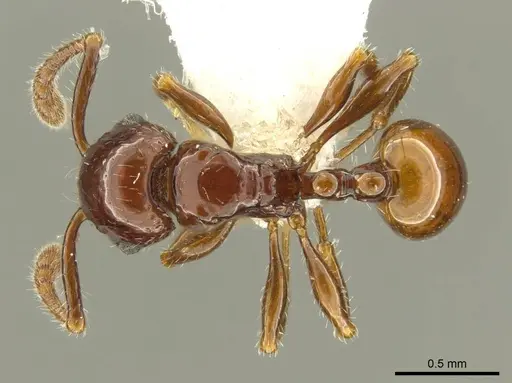
Literatur
Verbreitungskarte wird geladen...Produkte werden geladen...