
Polyrhachis vanachterbergi
- Wiss. Name
- Polyrhachis vanachterbergi
- Untergattung
- Myrma
- Tribus
- Camponotini
- Unterfamilie
- Formicinae
- Autor
- Kohout, 2008
- Verbreitung
- In 0 Ländern gefunden
Einleitung
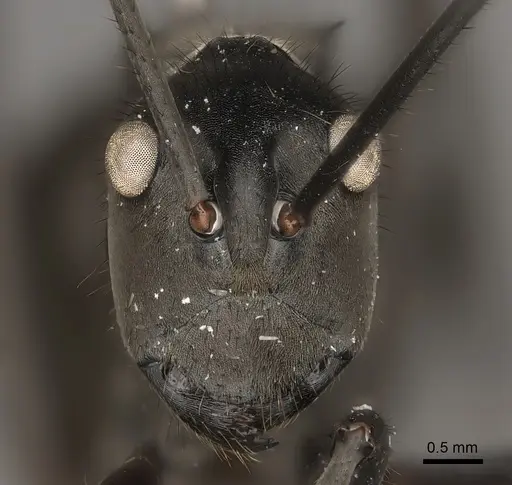
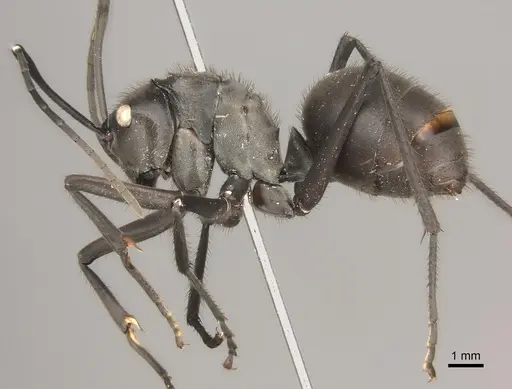
Polyrhachis vanachterbergi is a large ant species from Sulawesi, Indonesia. Workers measure 12.85-14.51 mm in total length . They have a black body covered in rusty-red and black hairs, giving a fuzzy appearance . This species belongs to the vestita-group and has very short pronotal spines and a propodeal dorsum marginally longer than wide . Only workers are described; queens, males, and immature stages remain unknown .
Quick Summary
- Difficulty: Hard
- Origin & Habitat: Central Sulawesi, Indonesia, near Luwuk at approximately 400 meters elevation [1][2]. The region has a tropical climate with high humidity.
- Colony Type: Unknown, only workers have been collected, with no data on queen number or colony structure [1].
- Size & Growth:
- Queen: Unknown, no queens have been described [1]
- Worker: 12.85-14.51 mm total length [1]
- Colony: Unknown, no colony size data available
- Growth: Unknown
- Development: Unknown, no direct measurements exist. Based on typical Polyrhachis patterns, estimate 6-10 weeks at tropical temperatures, but this is inferred [1]. (All development data is inferred from genus-level patterns due to lack of species-specific studies.)
- Antkeeping:
- Temperature: Keep at tropical temperatures, roughly 24-28°C, based on native habitat [2].
- Humidity: High humidity is essential, keep substrate consistently moist but not waterlogged [2].
- Diapause: No, as a tropical species, they likely remain active year-round.
- Nesting: Based on Polyrhachis patterns, provide arboreal-style nests with high humidity, such as cork bark or plaster nests [2].
- Behavior: Behavior is unstudied. Based on genus patterns, Polyrhachis ants are typically moderate in temperament and active foragers. They lack a sting and use formic acid spray for defense, as typical for Formicinae.
- Common Issues: no species-specific data exists, care is based on inference rather than direct observation [1], queens are unknown, making colony founding difficult [1], humidity requirements are critical, dry conditions may kill colonies, tropical temperatures needed, cannot tolerate cool rooms, complete lack of biological data means unexpected problems are likely
Appearance and Identification
Polyrhachis vanachterbergi workers are large, measuring 12.85-14.51 mm in total length [1]. They have a black body with dense rusty-red and black hairs, giving a fuzzy look [1]. Key features include very short pronotal spines and a propodeal dorsum marginally longer than wide, distinguishing them from similar species [1]. This species is part of the vestita-group and is related to P. cognata and P. ogatai [1].
Distribution and Habitat
This species is only known from Central Sulawesi, Indonesia, near Luwuk at about 400 meters elevation [1][2]. The area has a tropical climate with high humidity. While specific microhabitat is unknown, Polyrhachis species often nest in arboreal locations like vegetation or bark [2].
Current State of Knowledge
This is one of the least studied ant species in the hobby. The original description only covers workers, no queens, males, or immature stages have been documented [1]. All care recommendations must be inferred from related Polyrhachis species and general Formicinae biology, making this a challenging species for keepers [1].
Housing and Nesting
Provide a naturalistic setup with high humidity, such as a plaster or Y-tong nest [2]. Include cork bark or twigs to mimic arboreal preferences. Keep the nest substrate moist but not waterlogged. Ensure escape prevention, as these large ants can climb smooth surfaces.
Temperature and Humidity Requirements
Keep temperatures between 24-28°C year-round, matching their tropical habitat [2]. High humidity is critical, aim for consistently moist substrate without standing water [2]. A temperature gradient can help them self-regulate.
Feeding and Diet
Diet is unconfirmed, but based on Polyrhachis patterns, they likely accept sugar sources like honey water and protein from insects. Offer varied food and remove uneaten prey to prevent mold.
Frequently Asked Questions
How long does it take for Polyrhachis vanachterbergi to go from egg to worker?
Unknown, no development data exists for this species [1]. Based on typical Polyrhachis patterns, estimate 6-10 weeks at tropical temperatures, but this is inferred.
What do Polyrhachis vanachterbergi ants eat?
Diet is unconfirmed. Based on genus patterns, they likely accept sugar sources and protein from insects. Offer a varied diet and observe acceptance.
Are Polyrhachis vanachterbergi good for beginners?
No. This species is poorly studied, with only workers described, making colony founding difficult [1]. Only experienced keepers should attempt it.
What temperature do Polyrhachis vanachterbergi need?
Keep them at 24-28°C, based on their tropical habitat [2].
Can I keep multiple queens together?
Unknown, no queens have been documented, so colony structure is unconfirmed [1]. Do not attempt without data.
Do Polyrhachis vanachterbergi need hibernation?
No, as a tropical species, they likely remain active year-round.
How big do Polyrhachis vanachterbergi colonies get?
Unknown, no colony size data exists [1].
What is the best nest type for Polyrhachis vanachterbergi?
A naturalistic setup with high humidity, such as plaster or Y-tong nests with arboreal elements like cork bark [2].
Where can I get Polyrhachis vanachterbergi queens?
This species is extremely rare, queens have never been described scientifically [1]. Wild colonies in Sulawesi would be needed, which is challenging and may have legal issues.
Report an Issue
The current care sheet is based fully on literature. See inconsistencies, or something that's incorrect? Please , it will be resolved after review from an admin. Contributing to the blogs tab also helps providing information, to make us be able to further improve the caresheets. Thank you for your support!
References

Dieses Caresheet ist lizenziert unter CC BY-SA 4.0 .
Community-Blogs
CASENT0217441
Auf AntWeb ansehen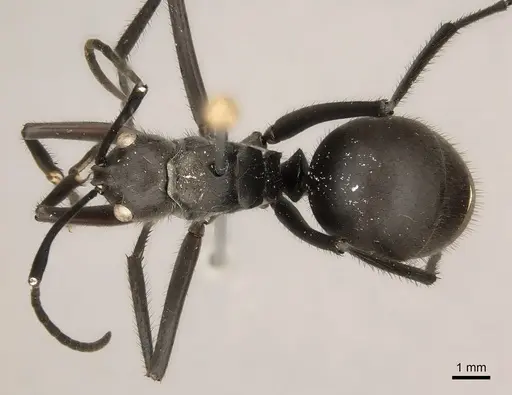
Literatur
Verbreitungskarte wird geladen...Produkte werden geladen...