
Polyrhachis orsylla
- Wiss. Name
- Polyrhachis orsylla
- Untergattung
- Myrma
- Tribus
- Camponotini
- Unterfamilie
- Formicinae
- Autor
- Smith, 1861
- Verbreitung
- In 0 Ländern gefunden
Einleitung
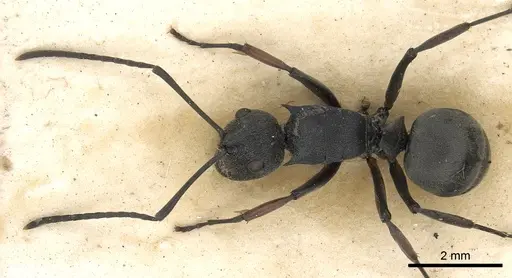
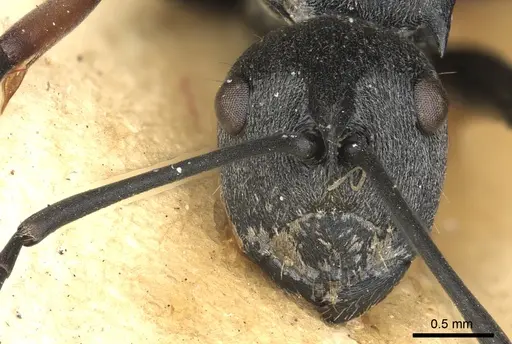
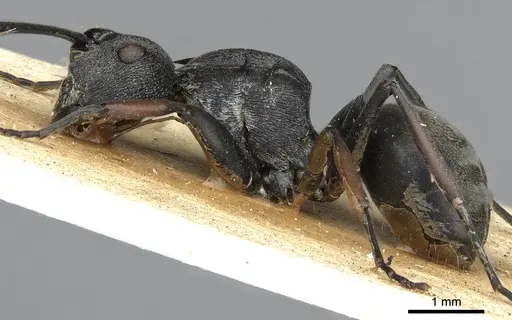
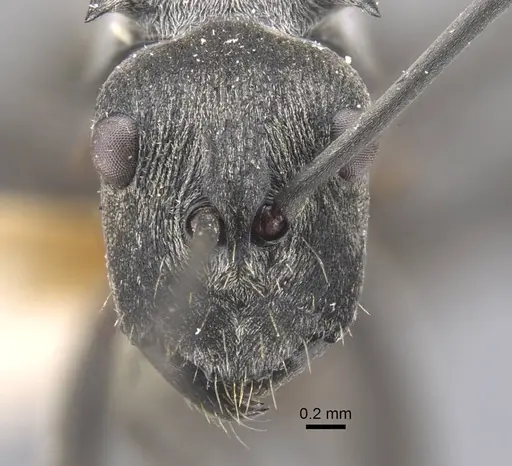
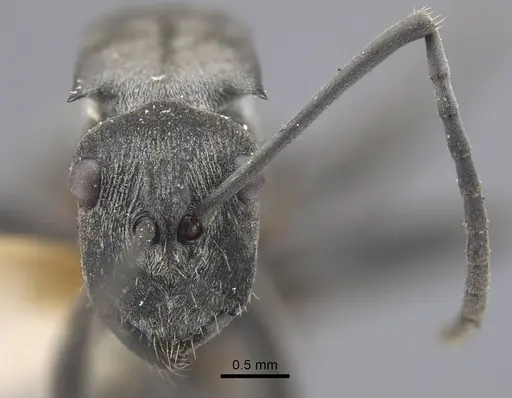
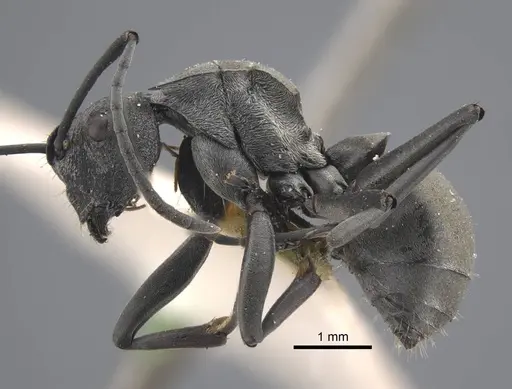
Polyrhachis orsylla is a medium-sized ant native to Southeast Asia, found in Indonesia, Singapore, and Sulawesi . Workers are black throughout with reddish-brown tibiae, while the rest of the legs are darker, distinguishing them from Polyrhachis inermis . This species belongs to the inermis species-group within the Myrma subgenus, with pronotal spines shorter than their basal widths, unlike the related Polyrhachis vindex where spines are about twice as long . Polyrhachis orsylla is part of the Formicinae subfamily and exhibits typical Polyrhachis behavior, such as active foraging. Its tropical origin suggests a preference for warm, humid environments, but specific care data is limited.
Quick Summary
- Difficulty: Medium
- Origin & Habitat: Native to the Indomalaya region, including Indonesia, Singapore, Sulawesi (Celebes) [1][2], and the Moluccas islands [3]. They inhabit lowland tropical environments [1].
- Colony Type: Colony structure is unconfirmed, no specific literature on queen number for this species.
- Size & Growth:
- Queen: Size data unavailable, no total length measurements in research context.
- Worker: Size data unavailable, no total length measurements in research context.
- Colony: Unconfirmed, no specific colony size data available.
- Growth: Moderate, inferred from tropical ant patterns.
- Development: Estimated 6-10 weeks at 25-28°C, based on typical Polyrhachis development. (Development time is estimated, specific data for P. orsylla is not available.)
- Antkeeping:
- Temperature: Keep warm, roughly 24-28°C, as this species is adapted to tropical conditions. Avoid temperatures below 22°C.
- Humidity: Keep nest substrate consistently moist but not waterlogged, reflecting humid tropical environments.
- Diapause: No, tropical species do not require hibernation.
- Nesting: Use Y-tong, plaster, or soil nests with moist substrate. Provide enclosed chambers scaled to worker size.
- Behavior: Workers are active foragers with a generally calm temperament. Escape risk is moderate due to their size and agility, standard barriers are effective.
- Common Issues: low humidity can cause colony decline, maintain moist substrate., temperature drops below 22°C can stress ants and slow brood development., colonies may establish slowly, patience is needed during founding., wild-caught colonies may carry parasites, monitor for health issues., limited care data requires keepers to adjust based on colony response.
Housing and Nest Setup
Provide a warm, humid environment using Y-tong, plaster, or naturalistic nests with moist substrate. Nest chambers should be appropriately sized for workers. For founding colonies, start with a test tube setup, but transfer to a proper formicarium as the colony grows. Include a water source and an outworld for foraging [1].
Feeding and Diet
Offer a balanced diet of protein (e.g., small insects) and carbohydrates (e.g., sugar water). Feed protein 2-3 times per week and maintain constant sugar access. Remove uneaten prey to prevent mold.
Temperature and Seasonal Care
Maintain temperatures around 24-28°C year-round. Use a heating cable if needed, but avoid sudden drops. No diapause required due to tropical origin.
Behavior and Colony Dynamics
Workers forage actively and communicate via chemical signals. Colonies grow moderately with clear roles for queen and workers. Observe trails to food sources.
Frequently Asked Questions
How long does it take for Polyrhachis orsylla to produce first workers?
Estimated 6-10 weeks at optimal temperatures, based on typical Polyrhachis development.
What temperature do Polyrhachis orsylla ants need?
Keep them at 24-28°C, avoiding below 22°C, as they are adapted to warm tropical conditions.
Can I keep Polyrhachis orsylla in a test tube setup?
Yes, for founding colonies, but transfer to a formicarium once the colony reaches 20-30 workers for space and humidity control.
What do Polyrhachis orsylla ants eat?
They are omnivorous, offer small insects for protein and sugar water for carbohydrates.
How big do Polyrhachis orsylla colonies get?
Colony size is unconfirmed, no specific data available.
Do Polyrhachis orsylla need hibernation?
No, hibernation is not required for this tropical species.
Is Polyrhachis orsylla good for beginners?
Rated Medium difficulty due to need for warm, humid conditions, some experience is helpful.
Why are my Polyrhachis orsylla dying?
Common causes include low humidity, temperatures below 22°C, or poor nutrition, check for escapes or parasites.
When should I move my colony to a formicarium?
Transfer when the colony reaches 20-30 workers or the test tube becomes cramped.
Report an Issue
The current care sheet is based fully on literature. See inconsistencies, or something that's incorrect? Please , it will be resolved after review from an admin. Contributing to the blogs tab also helps providing information, to make us be able to further improve the caresheets. Thank you for your support!
References

Dieses Caresheet ist lizenziert unter CC BY-SA 4.0 .
Community-Blogs
CASENT0901861
Auf AntWeb ansehen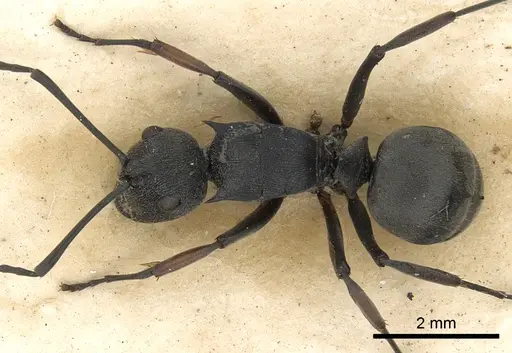
CASENT0917289
Auf AntWeb ansehen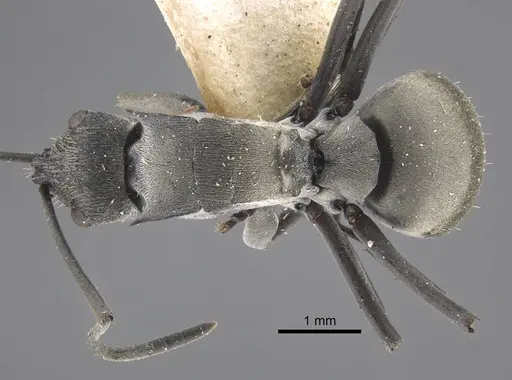
Literatur
Verbreitungskarte wird geladen...Produkte werden geladen...