
Polyrhachis hoffmanni
- Wiss. Name
- Polyrhachis hoffmanni
- Untergattung
- Hagiomyrma
- Tribus
- Camponotini
- Unterfamilie
- Formicinae
- Autor
- Kohout, 2013
- Verbreitung
- In 0 Ländern gefunden
Einleitung
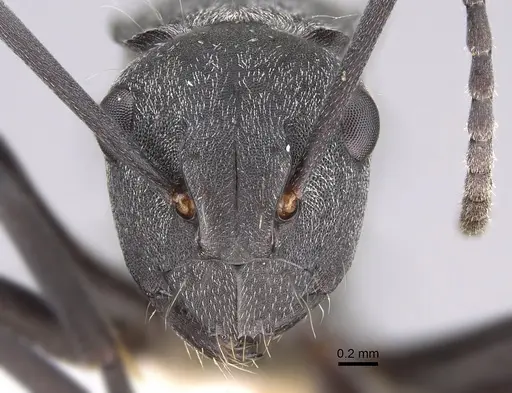
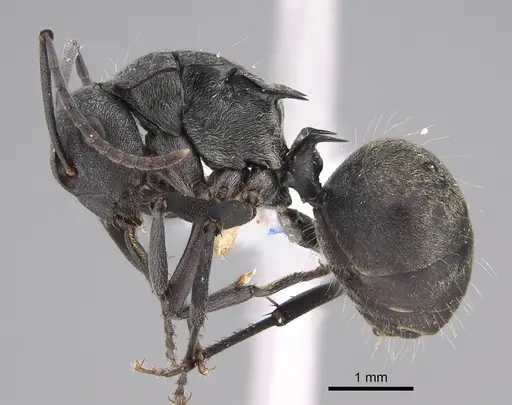
Polyrhachis hoffmanni is a medium-sized ant native to Australia, found in Queensland at Riversleigh and Lawn Hill. Workers are 5.81-6.69 mm long, and queens are about 8.01 mm . This species has long hairs on most body surfaces, distinguishing it from similar species . It belongs to the penelope group in the Hagiomyrma subgenus and is a ground-nesting species .
Quick Summary
- Difficulty: Medium
- Origin & Habitat: Australia, Queensland (Riversleigh and Lawn Hill). Ground-nesting species found in arid to semi-arid regions of northern Australia [1].
- Colony Type: Unknown colony structure. No data on whether they are single-queen (monogyne) or multi-queen (polygyne).
- Size & Growth:
- Queen: ~8.01 mm [1]
- Worker: 5.81-6.69 mm [1]
- Colony: Unknown, no colony size data available
- Growth: Unknown, no development data available
- Development: Unknown, no direct measurements. Based on typical Polyrhachis patterns, estimated 6-10 weeks at optimal temperature. (Development timeline has not been studied. Estimates based on genus-level patterns for medium-sized tropical ants.)
- Antkeeping:
- Temperature: Keep warm, roughly 24-28°C, based on Queensland climate. A heating cable on one side of the nest creates a gradient for self-regulation.
- Humidity: Keep substrate lightly moist but allow it to partially dry between waterings. Ground-nesting in arid regions suggests avoiding overly damp conditions.
- Diapause: Likely minimal or no true diapause. Queensland has mild winters, so a brief cooling period (2-4 weeks at 15-18°C) may be beneficial but is not required.
- Nesting: Ground-nesting species [1]. Use a naturalistic setup with soil or a Y-tong (AAC) nest. Provide a decent outworld space for foraging.
- Behavior: Generally calm and non-aggressive foragers. As a Formicine ant, they lack a stinger but may spray formic acid as a defense. They are moderate-sized ants that handle well in captivity. Escape prevention should be good with standard barriers like Fluon or vaseline. Activity level is moderate, they forage individually.
- Common Issues: founding behavior is unconfirmed, so improper setup may prevent colony establishment, diet preferences unknown, so malnutrition risk if not offered varied food, hibernation requirements unclear, so improper cooling may harm colony, growth rate unknown, so patience needed during colony development
Nest Preferences and Housing
Polyrhachis hoffmanni is a ground-nesting species [1], so your setup should reflect their natural habitat. A naturalistic terrarium with soil substrate works well, or you can use a Y-tong (AAC) nest with a dirt chamber. Since they come from Queensland's relatively arid regions, provide a nest area with moderate moisture that can partially dry out between waterings. The outworld should be spacious enough for foraging, these are moderately active ants. Use standard escape prevention on rim edges.
Feeding and Diet
Diet preferences have not been documented for this species, but based on typical Polyrhachis behavior, they are likely omnivorous. Offer sugar water or honey as a constant energy source. For protein, provide small insects like fruit flies or mealworms 2-3 times per week. Remove uneaten prey after 24-48 hours to prevent mold.
Temperature and Seasonal Care
As an Australian species from Queensland, Polyrhachis hoffmanni prefers warm conditions. Aim for temperatures around 24-28°C during the active season. A heating cable on part of the nest can create a gentle gradient. During mild winters, a brief cooling period to 15-18°C for 2-4 weeks may simulate seasonal slowdown but is not required. Avoid prolonged cold exposure.
Colony Establishment and Growth
Founding behavior is unconfirmed for this species. Provide a founding queen with a small test tube setup with water reservoir, kept in darkness at around 24-26°C. Do not disturb the queen during this period. Once workers emerge, begin offering small amounts of food. Growth rate is unknown, so expect moderate development.
Behavior and Handling
Polyrhachis hoffmanni workers are moderately sized (5.81-6.69 mm) and manageable in captivity [1]. They are not particularly aggressive, Formicine ants typically spray formic acid rather than sting. Workers forage individually and handle disturbance reasonably well once established.
Frequently Asked Questions
How long does it take for Polyrhachis hoffmanni to produce first workers?
The exact timeline is unknown. Based on typical Polyrhachis genus patterns, expect around 6-10 weeks from egg to worker at optimal temperature (24-26°C).
What do Polyrhachis hoffmanni ants eat?
Diet has not been documented. Based on typical behavior, they are likely omnivorous. Offer sugar water or honey, and protein such as small insects 2-3 times per week.
Are Polyrhachis hoffmanni ants good for beginners?
This species is rated as Medium difficulty. The lack of species-specific data means relying on genus-level care patterns. It is reasonable for keepers with ant experience.
What temperature do Polyrhachis hoffmanni ants need?
Keep them warm at 24-28°C. As a Queensland species, they are adapted to tropical conditions. A heating cable on part of the nest creates a gradient.
Do Polyrhachis hoffmanni ants need hibernation?
Probably not. Queensland has mild winters, and this species is from relatively arid regions. A brief cooling period may be beneficial but is not required.
How big do Polyrhachis hoffmanni colonies get?
Colony size is unknown, no research has documented maximum sizes. Based on worker size, expect moderate colony sizes over time.
Can I keep multiple Polyrhachis hoffmanni queens together?
Colony structure has not been documented. Without data, combining unrelated queens is not recommended as it may result in aggression.
What type of nest should I use for Polyrhachis hoffmanni?
A naturalistic setup with soil substrate or a Y-tong (AAC) nest works well. This is a ground-nesting species that prefers moderate humidity.
Why is so little known about Polyrhachis hoffmanni biology?
This species was described in 2013 and has a limited distribution in remote Queensland areas. Scientific focus has been on taxonomy rather than detailed biology.
Report an Issue
The current care sheet is based fully on literature. See inconsistencies, or something that's incorrect? Please , it will be resolved after review from an admin. Contributing to the blogs tab also helps providing information, to make us be able to further improve the caresheets. Thank you for your support!
References

Dieses Caresheet ist lizenziert unter CC BY-SA 4.0 .
Community-Blogs
CASENT0887786
Auf AntWeb ansehen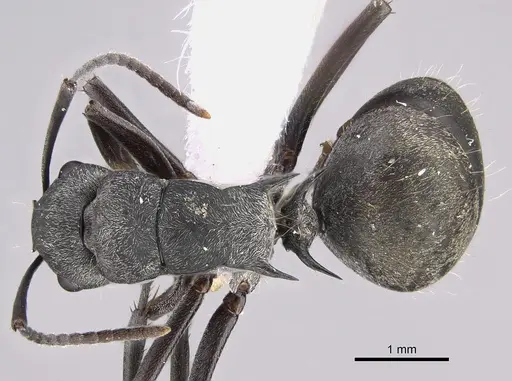
Literatur
Verbreitungskarte wird geladen...Produkte werden geladen...