
Polyrhachis emeryana
- Wiss. Name
- Polyrhachis emeryana
- Untergattung
- Cyrtomyrma
- Tribus
- Camponotini
- Unterfamilie
- Formicinae
- Autor
- Mann, 1919
- Verbreitung
- In 0 Ländern gefunden
Einleitung
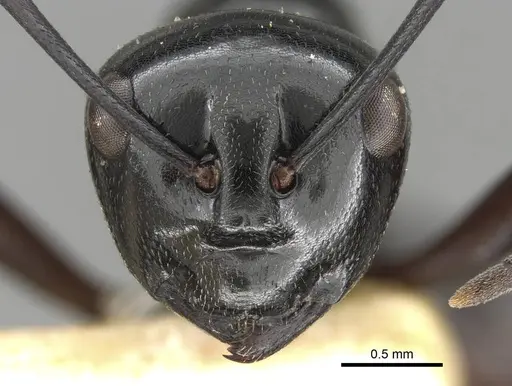
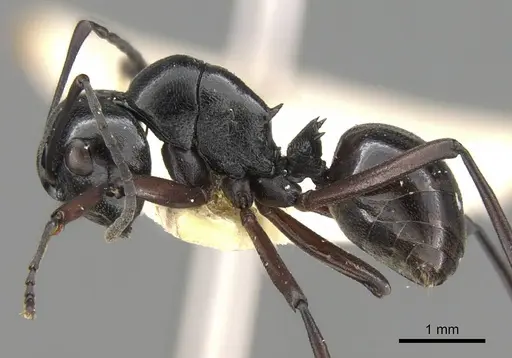
Polyrhachis emeryana is a small ant found only in the Solomon Islands. Workers are about 5 mm long, completely black, and moderately shiny. They have short, triangular propodeal spines and four spines on the petiolar node - two short inner ones and two longer outer ones. The species looks similar to *Polyrhachis expressa*, but has coarser sculpturing, a less convex pronotum, and longer, more noticeable pubescence . It’s rare and restricted to a few islands, making it a special find for advanced keepers interested in Pacific ants.
Quick Summary
- Difficulty: Expert
- Origin & Habitat: Solomon Islands (Makira, Guadalcanal, Malaita), tropical island environment [2][3]
- Colony Type: Nothing is known about its colony structure. Most *Polyrhachis* species have a single queen (monogyne), but that’s unconfirmed here.
- Size & Growth:
- Queen: Unknown, likely around 6-8 mm based on *Polyrhachis* patterns (inferred from related species)
- Worker: 5 mm [1], based on total length from descriptions
- Colony: Unknown, typical *Polyrhachis* colonies can reach several hundred workers
- Growth: Unknown, likely moderate like related species
- Development: Unconfirmed, an educated guess is 6-10 weeks at tropical temperatures, based on typical Formicinae development (No specific data exists for this species. All timelines are estimates from genus patterns.)
- Antkeeping:
- Temperature: Keep warm at 24-28 °C, these are tropical ants from the Solomon Islands. A gentle heat gradient helps them self-regulate.
- Humidity: Keep the nest moderately to highly humid, with the substrate damp but not wet. Provide a drier area to avoid mold.
- Diapause: No, Solomon Islands have year-round warmth, so no hibernation period is expected.
- Nesting: Polyrhachis (Cyrtomyrma) species typically nest in vegetation, under bark, or in hollow twigs (arboreal or semi‑arboreal). Provide vertical surfaces like cork bark, branches, or a Y‑tong/plaster nest with climbing structures.
- Behavior: Like most *Polyrhachis*, they are not aggressive and forage actively. Workers may use their spines in defense but do not sting, instead, they spray formic acid (subfamily trait). At 5 mm, they pose a normal escape risk, but good barriers are still needed.
- Common Issues: no specific biological data exists, all care advice is inferred from genus patterns, extreme rarity makes this species almost impossible to find in the hobby, tropical requirements demand stable warmth year‑round, arboreal nesting needs a setup with climbing structures, not just a flat nest, wild-caught colonies from remote islands may have parasites or stress‑related problems
Species Overview and Identification
Polyrhachis emeryana was first described by Mann in 1919 from Malaita, Solomon Islands. Workers are about 5 mm long, all black, and moderately shiny. They have short, triangular propodeal spines and a petiolar node with four spines, two inner short triangular ones and two outer elongated acute ones. The pronotum is strongly convex, and the body has fine recumbent pubescence that’s more obvious than in the similar Polyrhachis expressa [1]. It has been recorded only on Malaita, Guadalcanal, and Makira [2][3].
Natural History and Habitat
Polyrhachis emeryana is endemic to the Solomon Islands. Nothing is documented about its biology, nesting, foraging, or colony structure [1]. Most Polyrhachis in the subgenus Cyrtomyrma are arboreal or semi‑arboreal, nesting in vegetation or under bark in forest. The Solomon Islands have a tropical climate with year‑round warmth and high humidity, which should guide your care.
Housing and Nesting Preferences
Based on typical Polyrhachis (Cyrtomyrma) behavior, this species likely nests above ground. Provide a naturalistic setup with vertical climbing surfaces, cork bark, branches, or artificial plants. A Y‑tong (AAC) or plaster nest with narrow chambers works, but don’t forget climbing structures. Avoid deep substrate, they are not ground‑nesters. Keep ventilation adequate to prevent mold.
Temperature and Humidity Requirements
As a tropical ant, keep the nest at 24-28 °C. Use a heat mat on one side to create a gradient, or room temperature if that’s warm enough. Humidity should be moderate to high, keep the nest substrate damp but not waterlogged, and provide a drier area. Mist occasionally, but avoid standing water. No winter cooling needed.
Feeding and Diet
While unstudied, most Polyrhachis are omnivorous. Offer sugar water or honey as a constant energy source, and protein 2-3 times per week (small insects like fruit flies, small crickets, or mealworms). Some accept fruit or nectar. Remove uneaten prey after 24-48 hours to prevent mold.
Behavior and Temperament
Polyrhachis ants are generally non‑aggressive and cautious. Workers forage actively. They do not sting, instead they spray formic acid when threatened (trait of Formicinae subfamily). The spines on the petiole may be used in defense. Escape risk is moderate at 5 mm, so use fluon or tight lids.
Frequently Asked Questions
How long does it take for Polyrhachis emeryana to produce first workers?
Unconfirmed. Based on typical Formicinae development at 24-28 °C, roughly 6-10 weeks from egg to worker, but no specific data exists.
What do Polyrhachis emeryana eat?
Not studied, but likely omnivorous like most Polyrhachis. Offer sugar water or honey and small insects 2-3 times per week. Some accept fruit.
Can I keep Polyrhachis emeryana in a test tube?
A test tube can work for founding, but they prefer vertical spaces. Add a twig or piece of bark for climbing. For established colonies, use a naturalistic setup with cork bark.
Do Polyrhachis emeryana need hibernation?
No. They come from a tropical climate with stable warmth year‑round, so keep them at 24-28 °C all year. No cooling period needed.
How big do Polyrhachis emeryana colonies get?
Unknown, but typical Polyrhachis colonies reach several hundred workers. This species is rare in the wild, so large colonies may be uncommon.
Are Polyrhachis emeryana good for beginners?
No. This species is extremely rare, has almost no captive care data, and requires stable tropical conditions. It’s only for expert keepers.
Where is Polyrhachis emeryana found?
Only a few islands in the Solomons: Malaita, Guadalcanal, and Makira. It is rare and restricted [2][3].
How do I set up a nest for Polyrhachis emeryana?
Provide vertical climbing structures like cork bark or branches. Use a Y‑tong (AAC) or plaster nest. Keep nest warm (24-28 °C) and moderately humid. Avoid deep soil.
Is Polyrhachis emeryana available in the antkeeping hobby?
No. It is not known from any commercial suppliers. Wild specimens would be extremely difficult to obtain legally from the Solomon Islands [1].
Report an Issue
The current care sheet is based fully on literature. See inconsistencies, or something that's incorrect? Please , it will be resolved after review from an admin. Contributing to the blogs tab also helps providing information, to make us be able to further improve the caresheets. Thank you for your support!
References

Dieses Caresheet ist lizenziert unter CC BY-SA 4.0 .
Community-Blogs
CASENT0906791
Auf AntWeb ansehen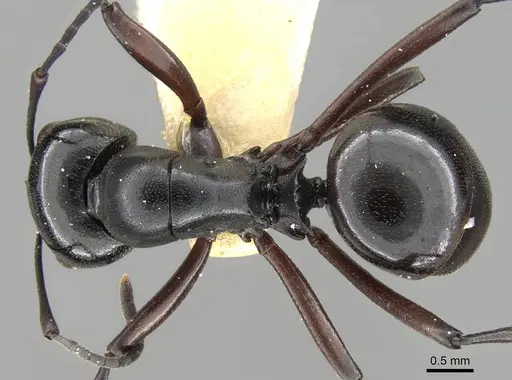
Literatur
Verbreitungskarte wird geladen...Produkte werden geladen...