
Polyrhachis decellei
- Wiss. Name
- Polyrhachis decellei
- Untergattung
- Myrma
- Tribus
- Camponotini
- Unterfamilie
- Formicinae
- Autor
- Bolton, 1973
- Verbreitung
- In 0 Ländern gefunden
Einleitung
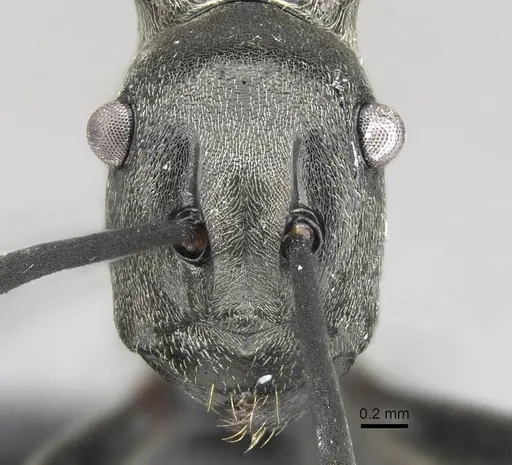
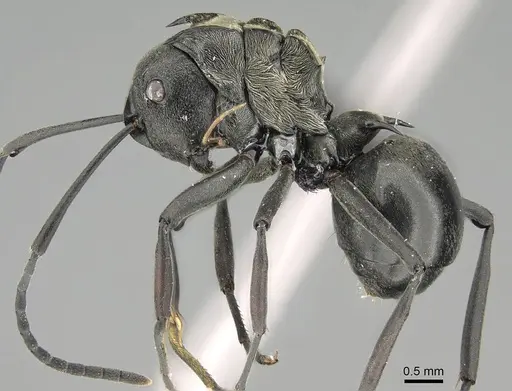
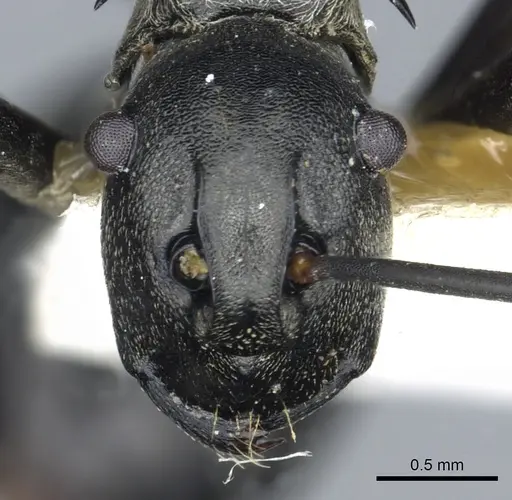
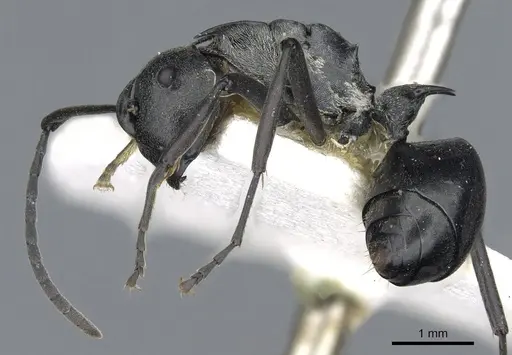
Polyrhachis decellei is a medium-sized spiny ant from the militaris species group, found in Ghana and the Central African Republic. Workers are 7.4-7.8 mm long, black with dark brown-black legs, and have dense golden-yellow pubescence that is longer on the mesosoma than on the head or gaster. They have spines on the pronotum and propodeum, long dorsal spines on the petiole, and a pair of erect hairs on the head vertex . The biology of this species is unstudied, so care guidance is based on general Polyrhachis patterns .
Quick Summary
- Difficulty: Unknown
- Origin & Habitat: Ghana and the Central African Republic in forest zones [2].
- Colony Type: Unconfirmed, no species-specific data on queen number or social structure.
- Size & Growth:
- Antkeeping:
- Temperature: Aim for 24-28°C as a starting point, based on tropical forest habitat [2].
- Humidity: Keep substrate moderately moist with a gradient for self-regulation [2].
- Diapause: Unlikely, tropical species typically do not require hibernation [2].
- Nesting: Based on genus patterns, they likely nest in rotting wood or soil, use Y-tong (AAC) nests or formicaria with substrate.
- Behavior: Behavior unstudied. Based on genus patterns, they are docile and forage individually. Defense includes spines and formic acid spray from an acidopore, as typical for Formicinae. Escape risk is moderate due to medium size, standard barriers work well.
- Common Issues: temperature stress, keep above 20°C to avoid cold sensitivity., humidity issues, maintain moist substrate to prevent drying or mold., escape risk, medium-sized ants may explore gaps, ensure secure barriers.
Appearance and Identification
Polyrhachis decellei workers are 7.4-7.8 mm long, black with dark legs, and have dense golden pubescence longer on the mesosoma. They have spines on the pronotum and propodeum, long dorsal spines on the petiole, and a pair of erect hairs on the head vertex [1]. The eyes are small and round, helping distinguish them from similar species.
Natural Distribution and Habitat
This species is known from Ghana and the Central African Republic in forest zones [2]. Type specimens were collected in June and July, during the wet season in Ghana.
Nest Preferences and Housing
Specific nesting habits are unknown, but Polyrhachis ants generally nest in rotting wood, under bark, or in soil cavities. For captivity, use Y-tong (AAC) nests or formicaria with soil or plaster substrates that can hold moisture. Provide chambers scaled to their 7-8 mm size with good ventilation. [2]
Feeding and Diet
The diet is unstudied, but Polyrhachis ants are omnivorous. Offer sugar sources like honeydew or sugar water, and protein from small insects. Remove uneaten food promptly to prevent mold.
Temperature and Seasonal Care
As a tropical species, maintain warm temperatures around 24-28°C year-round. Provide a temperature gradient for self-regulation. Avoid temperatures below 20°C.
Behavior and Temperament
Behavior is unstudied, but genus patterns suggest docility and individual foraging. Defense includes spines and formic acid spray. Escape risk is moderate, use standard barriers for medium-sized ants.
Frequently Asked Questions
How long does it take for Polyrhachis decellei to produce first workers?
The egg-to-worker timeline is unconfirmed. Based on typical Formicinae development at 24-28°C, estimate 6-10 weeks, but no species-specific data exists.
What do Polyrhachis decellei ants eat?
Specific diet is unstudied. Offer sugar sources and protein like small insects, and observe colony preferences.
Can I keep Polyrhachis decellei in a test tube?
A test tube setup can work for founding colonies, but upgrade to a formicarium as the colony grows due to their medium size.
What temperature do Polyrhachis decellei need?
Aim for 24-28°C as a starting point, based on their tropical forest habitat [2].
Do Polyrhachis decellei need hibernation?
No, as a tropical species, they do not require hibernation [2].
How big do Polyrhachis decellei colonies get?
Colony size is unknown for this species.
Is Polyrhachis decellei good for beginners?
Difficulty is unknown due to lack of biological data. Beginners may find it challenging without established care requirements.
Where is Polyrhachis decellei found?
This species is found in Ghana and the Central African Republic in forest zones [2].
Why are my Polyrhachis decellei dying?
Common issues include temperature stress, humidity problems, or escape risks. Ensure warm, humid conditions and secure housing.
Report an Issue
The current care sheet is based fully on literature. See inconsistencies, or something that's incorrect? Please , it will be resolved after review from an admin. Contributing to the blogs tab also helps providing information, to make us be able to further improve the caresheets. Thank you for your support!
References

Dieses Caresheet ist lizenziert unter CC BY-SA 4.0 .
Community-Blogs
CASENT0092432
Auf AntWeb ansehen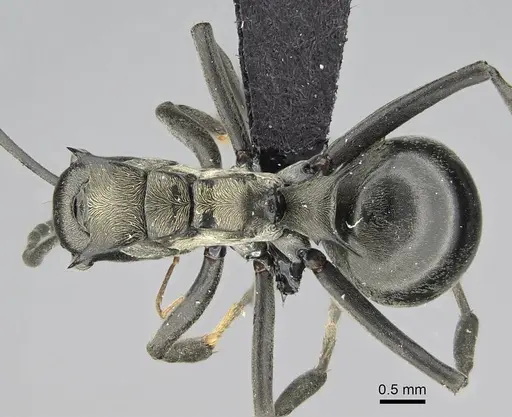
CASENT0903456
Auf AntWeb ansehen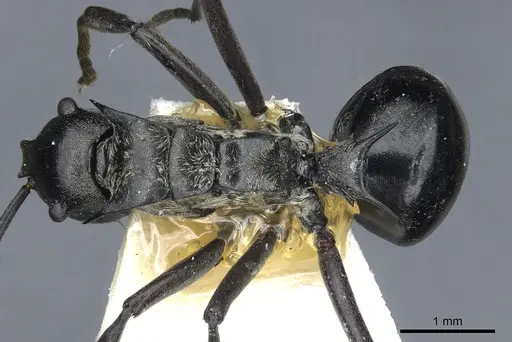
Literatur
Verbreitungskarte wird geladen...Produkte werden geladen...