
Polyrhachis amana
- Wiss. Name
- Polyrhachis amana
- Untergattung
- Myrmhopla
- Tribus
- Camponotini
- Unterfamilie
- Formicinae
- Autor
- Smith, 1861
- Verbreitung
- In 0 Ländern gefunden
Einleitung
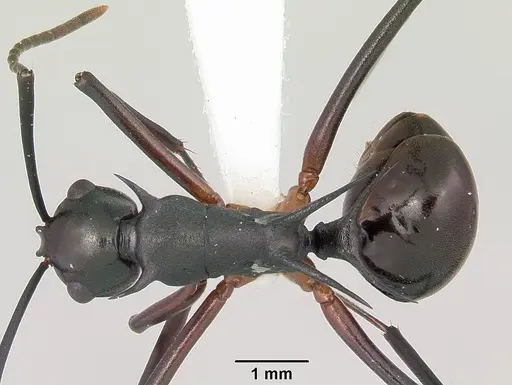
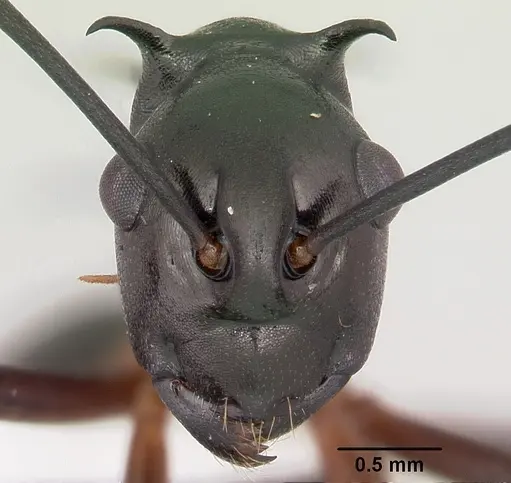
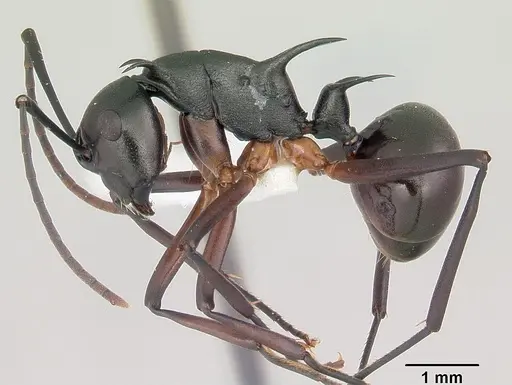
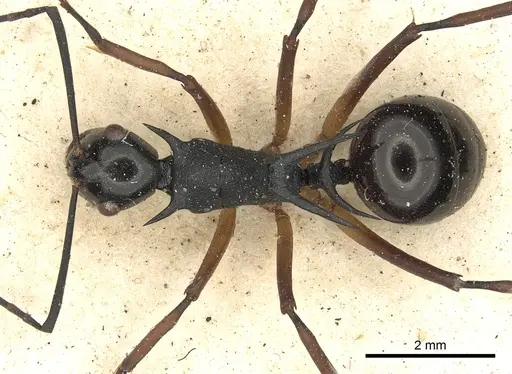
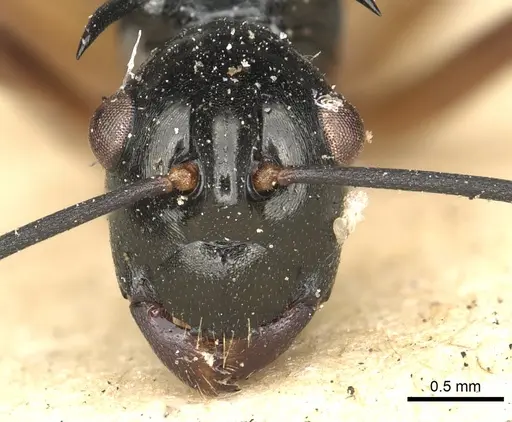
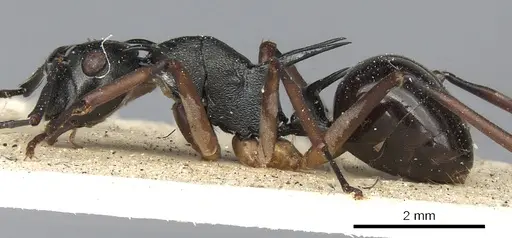
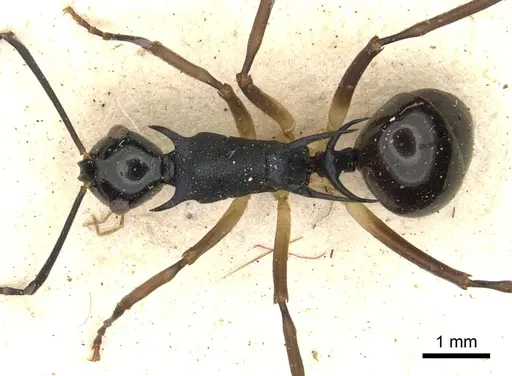
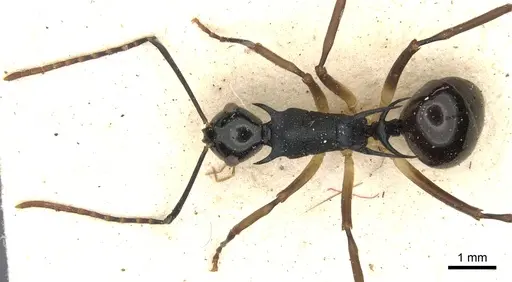
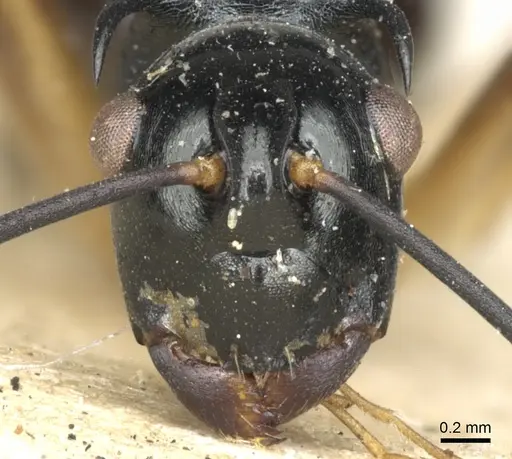
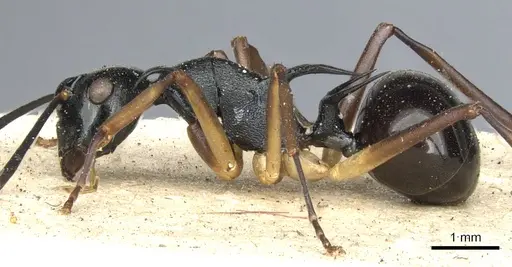
Polyrhachis amana is a small ant species native to Sulawesi, Indonesia, found in natural forest habitats . Workers are predominantly black with reddish-brown coloration on the coxae and base of femora, and they belong to the Polyrhachis mucronata species-group . This species was originally described in 1861 and is part of the subgenus Myrmhopla .
Quick Summary
- Difficulty: Medium
- Origin & Habitat: Sulawesi, Indonesia, found in natural forest habitats [1][2][3]
- Colony Type: Colony structure is unconfirmed, no specific data on queen number
- Size & Growth:
- Queen: size data unavailable
- Worker: size data unavailable
- Colony: Unknown
- Growth: Unknown
- Development: Unknown (No specific development data available)
- Antkeeping:
- Temperature: Keep warm, as Sulawesi is tropical [1][2]. Specific temperatures are unknown.
- Humidity: Keep humid, as it is a forest species [3].
- Diapause: No, as tropical [1][2].
- Nesting: Based on forest habitat, likely arboreal or in vegetation. Provide a nest with vertical space and climbing structures [3].
- Behavior: Likely docile based on genus patterns. Small size means escape risk is moderate, ensure secure barriers. Defense mechanism is spraying formic acid, as typical for Formicinae.
- Common Issues: limited availability makes this species hard to acquire, maintaining consistent humidity can be challenging, temperature drops may harm the colony, wild-caught colonies may have parasites, limited breeding information complicates captive propagation
Housing and Nest Setup
Polyrhachis amana is from Sulawesi's natural forests [3]. In captivity, provide a nest suitable for arboreal species, with vertical space and climbing structures. Keep humidity moderate to high based on forest habitat [3]. Ensure all connections are secure to prevent escapes due to small worker size.
Feeding and Diet
Like most Polyrhachis species, these ants are likely omnivorous. Offer sugar sources such as honey or sugar water, and small protein prey like fruit flies. Provide protein regularly and keep sugar water available [3].
Temperature and Humidity
As a tropical species from Sulawesi, keep conditions warm and humid. Maintain temperatures warm, roughly low-to-mid 20s°C, and humidity high based on forest habitat [1][2][3]. Avoid temperature swings.
Colony Development
Colony structure and development are unconfirmed for this species. Based on typical Polyrhachis patterns, colonies may grow slowly, but specific data is lacking [3].
Frequently Asked Questions
How long does it take for Polyrhachis amana to produce first workers?
The exact timeline is unknown for this species. No specific development data is available.
What do Polyrhachis amana ants eat?
They likely accept sugar sources and small protein prey, as typical for Polyrhachis species [3].
What temperature should I keep Polyrhachis amana at?
Keep them warm, as Sulawesi is tropical [1][2]. Specific temperatures are unknown.
Can I keep multiple Polyrhachis amana queens together?
Colony structure is unconfirmed for this species. It is not recommended to combine unrelated queens due to potential aggression.
Is Polyrhachis amana a good species for beginners?
This is not an ideal beginner species due to limited availability and specific tropical requirements.
Do Polyrhachis amana need hibernation?
No, as Sulawesi has a tropical climate with minimal seasonal variation [1][2].
What size colony does Polyrhachis amana reach?
Colony size is undocumented for this specific species.
How often should I feed Polyrhachis amana?
Offer protein prey a few times per week and keep sugar water available continuously, adjusting based on consumption.
When should I move Polyrhachis amana to a formicarium?
Keep new colonies in a test tube setup until established, then move to a nest with proper space. No specific timeline is known.
Report an Issue
The current care sheet is based fully on literature. See inconsistencies, or something that's incorrect? Please , it will be resolved after review from an admin. Contributing to the blogs tab also helps providing information, to make us be able to further improve the caresheets. Thank you for your support!
References

Dieses Caresheet ist lizenziert unter CC BY-SA 4.0 .
Community-Blogs
Literatur
Verbreitungskarte wird geladen...Produkte werden geladen...