
Platythyrea clypeata
- Wiss. Name
- Platythyrea clypeata
- Tribus
- Platythyreini
- Unterfamilie
- Ponerinae
- Autor
- Forel, 1911
- Verbreitung
- In 0 Ländern gefunden
Einleitung
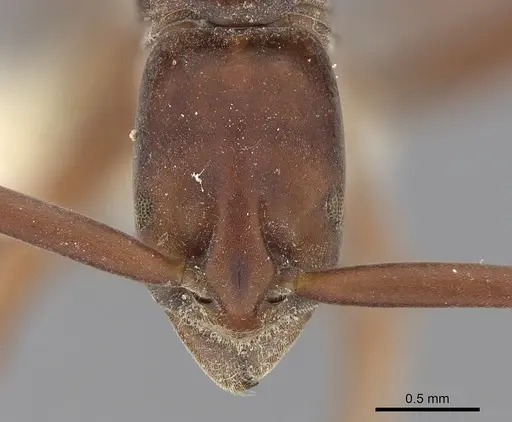
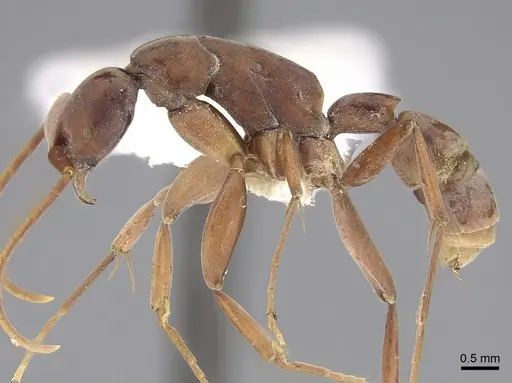
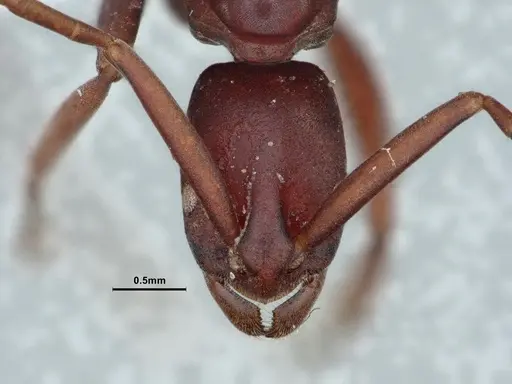
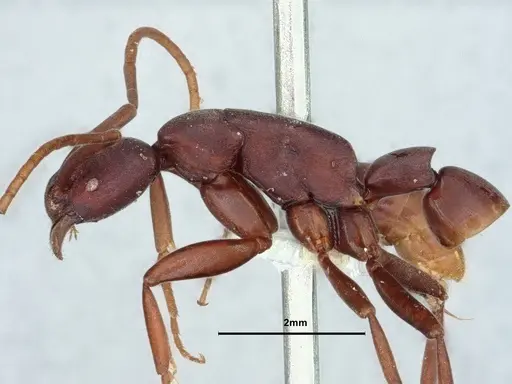
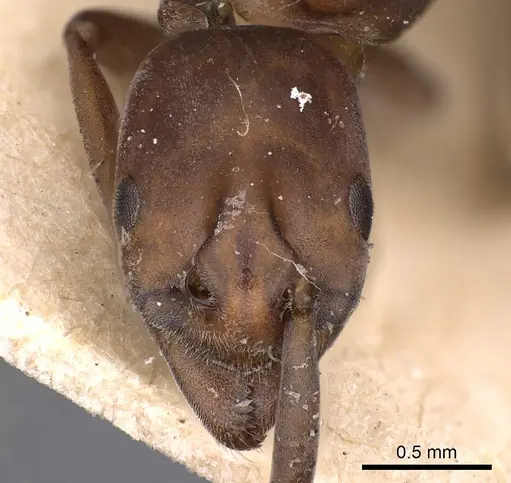
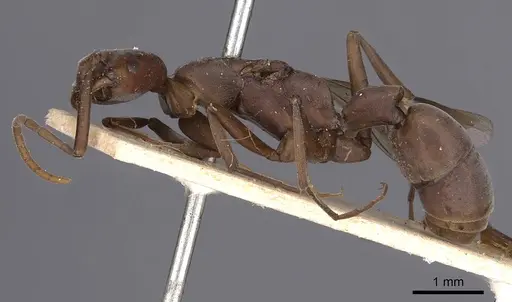
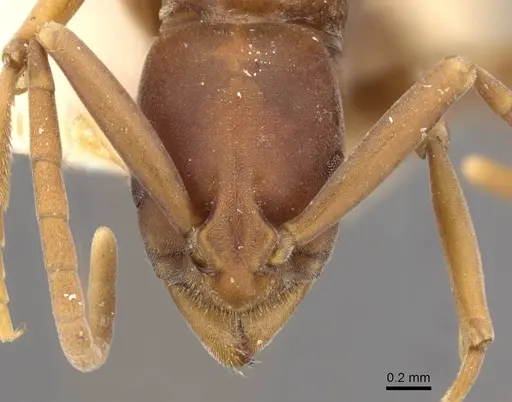
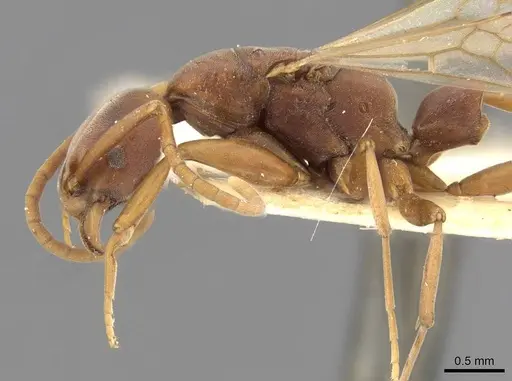
Platythyrea clypeata is a small ponerine ant found in Southeast Asia, including Sri Lanka, Vietnam, Laos, Thailand, and southern China. Workers measure 5.74-6.20 mm in total length and have a reddish-brown to dark brown body with a yellowish tip on the gaster. They have very small, flat eyes and a narrow, convex clypeus. This species is a habitat specialist restricted to primary lowland forests at 200-300 m altitude, where colonies nest in dead wood on the forest floor in advanced decomposition . Queens are slightly larger at 7.49 mm . The species is distinguished by its extremely small eye size compared to related species .
Quick Summary
- Difficulty: Medium
- Origin & Habitat: Southeast Asia, Sri Lanka, Vietnam, Laos, Thailand, and southern China. Found in primary and disturbed lowland forests at 200-300 m altitude, nesting in dead wood on the forest floor in advanced decomposition [1][2].
- Colony Type: Unconfirmed, likely monogyne based on typical ponerine patterns [3].
- Size & Growth:
- Antkeeping:
- Temperature: Temperature needs are unclear, start around 24-26°C and observe. Based on their lowland tropical habitat [1].
- Humidity: Keep nest substrate consistently moist but not waterlogged. Based on their nesting in dead wood in advanced decomposition [1][2].
- Diapause: Unknown, being a tropical lowland species, they likely do not require hibernation [1].
- Nesting: Natural nesting is in dead wood on the forest floor. In captivity, they do well in naturalistic setups with rotting wood or cork, or in plaster nests with high humidity. Y-tong nests with moist substrate also work well [1][2].
- Behavior: Ponerine ants are generally more primitive and can be defensive when disturbed. Workers are moderately active foragers. Their very small eyes suggest they may rely more on chemical cues than visual navigation. Escape prevention should be moderate, they are medium-sized ants but active climbers [3].
- Common Issues: low humidity can cause colony decline, disturbance can stress the colony and lead to failure, wild-caught colonies may struggle to adapt to captive conditions
Natural History and Distribution
Platythyrea clypeata is a Southeast Asian species documented across Sri Lanka, Vietnam, Laos, Thailand, and southern China. They are strict primary forest specialists, research in Xishuangbanna, China found them only in primary forest habitats, completely absent from secondary forest or rubber plantations [4]. This makes them one of the more specialized ants in the region.
The species inhabits lowland areas at 200-300 m altitude, typically in primary dry evergreen forest and disturbed forest zones. Colonies are always found in dead wood on the forest floor that has reached an advanced stage of decomposition, this provides the damp, stable microhabitat they require [1][2]. The workers are reddish-brown to dark brown with a distinctive yellowish tip on the gaster, and their most notable morphological feature is the extremely small, flat eye.
Nest Preferences and Housing
In the wild, P. clypeata exclusively nests in rotting wood on the forest floor. This means they need high humidity and dark, secure spaces in captivity. Naturalistic setups with pieces of decaying wood or cork work well, you can collect partially rotted wood from forests or purchase cork bark. The wood should be moist but not actively decaying (which could grow mold).
For a more controlled setup, plaster nests with built-in water chambers work well, provided you maintain high humidity. A Y-tong style nest with narrow chambers and a moist cotton reservoir can also work, though you'll need to monitor for mold. The key is replicating their natural microhabitat: damp, dark, and within decaying organic material. Avoid dry setups or nests with poor humidity control.
Because they are primary forest specialists, adding leaf litter, small twigs, and other forest floor debris to the outworld helps them feel more at home. They are moderate climbers, so standard escape barriers (like fluon on container rims) are sufficient [1][2].
Feeding and Diet
Diet is unconfirmed, but as ponerine ants, they are likely predatory and may accept small live prey such as fruit flies, pinhead crickets, or small mealworms. They may also collect honeydew and accept sugar water or honey. Offer protein-rich prey 2-3 times per week and keep a constant sugar source available. Remove uneaten prey after 24-48 hours to prevent mold [3].
Temperature and Humidity Requirements
Being a lowland tropical species from primary forests, P. clypeata needs warm, humid conditions. Keep temperatures around 24-26°C, which matches their natural habitat [1]. Humidity is critical, they naturally live in damp rotting wood, so the nest should be consistently moist. Mist the nest regularly or use a water reservoir system. The outworld should also have some humidity, perhaps with a small water dish [1][2].
Behavior and Temperament
As ponerine ants, P. clypeata can be defensive when disturbed. Workers are moderately active and forage on the forest floor. Their extremely small eyes suggest reduced visual capability, so they likely rely heavily on chemical pheromone trails for navigation. When keeping them, minimize vibrations and disturbances to the nest, as this can stress the colony. They are medium-sized ants and are decent climbers, so standard escape prevention measures are adequate [3].
Colony Development and Growth
There is no published data on colony development for P. clypeata specifically. Based on typical ponerine biology, expect claustral founding where the queen seals herself in a chamber and raises the first brood alone. Development from egg to worker likely takes 6-10 weeks at optimal temperatures, similar to other ponerine species [3]. Queens measure 7.49 mm while workers are 5.74-6.20 mm, so there is moderate size dimorphism [1]. The colony growth rate is unknown but is likely moderate, ponerine colonies typically grow more slowly than more derived ant subfamilies.
Frequently Asked Questions
How long does it take for Platythyrea clypeata to produce first workers?
The exact timeline is unconfirmed for this species, but based on typical ponerine development, expect 6-10 weeks from egg to worker at optimal temperatures (24-26°C) [3]. Founding colonies may take several months before the first nanitics emerge. Be patient and do not disturb the queen during founding.
What do Platythyrea clypeata ants eat?
Like most ponerine ants, they are predatory and will accept small live prey such as fruit flies, pinhead crickets, or small mealworms. They may also collect honeydew and accept sugar water or honey [3].
Are Platythyrea clypeata good for beginners?
This species is rated as Medium difficulty. They require specific conditions, high humidity and warm temperatures, that may be challenging for complete beginners. They are also primary forest specialists, meaning wild-caught colonies may struggle in captivity [4]. If you have experience with Ponerines or other humidity-demanding species, this can be a rewarding species to keep.
What temperature should I keep Platythyrea clypeata at?
Keep them warm at 24-26°C. They are a lowland tropical species from Southeast Asia and do not tolerate cool temperatures [1].
How big do Platythyrea clypeata colonies get?
The maximum colony size is unknown, no published data exists on colony size limits for this species. Based on their small worker size and nesting in rotting wood, colonies are likely moderate rather than large.
Can I keep multiple Platythyrea clypeata queens together?
The colony structure is unconfirmed for this species. Based on typical ponerine patterns, they are likely monogyne (single queen). Combining unrelated queens has not been documented and is not recommended. If you catch a founding queen, house her alone until workers emerge [3].
What type of nest is best for Platythyrea clypeata?
They naturally nest in dead wood on the forest floor in advanced decomposition. In captivity, naturalistic setups with rotting wood or cork work well. Alternatively, plaster nests with high humidity and a built-in water reservoir are suitable. Avoid dry setups [1][2].
Do Platythyrea clypeata need hibernation?
Diapause requirements are unknown. As a tropical lowland species from Southeast Asia, they likely do not require hibernation [1]. However, they may experience reduced activity during cooler months.
Why are my Platythyrea clypeata dying?
The most common causes are: low humidity (they need consistently damp conditions), dry nest substrate, temperatures too cool (below 20°C), or stress from disturbance. Being primary forest specialists, wild-caught colonies may also carry parasites or struggle to adapt to captive conditions. Ensure high humidity, warm temperatures, and minimal nest disturbance [4].
Report an Issue
The current care sheet is based fully on literature. See inconsistencies, or something that's incorrect? Please , it will be resolved after review from an admin. Contributing to the blogs tab also helps providing information, to make us be able to further improve the caresheets. Thank you for your support!
References

Dieses Caresheet ist lizenziert unter CC BY-SA 4.0 .
Community-Blogs
CASENT0281866
Auf AntWeb ansehen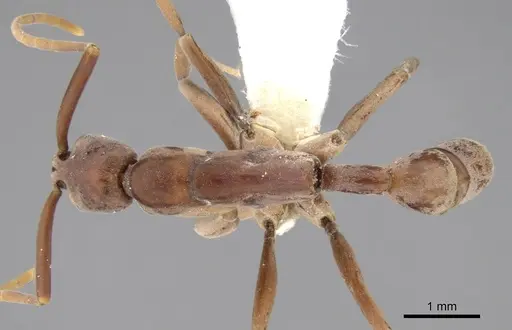
CASENT0882081
Auf AntWeb ansehen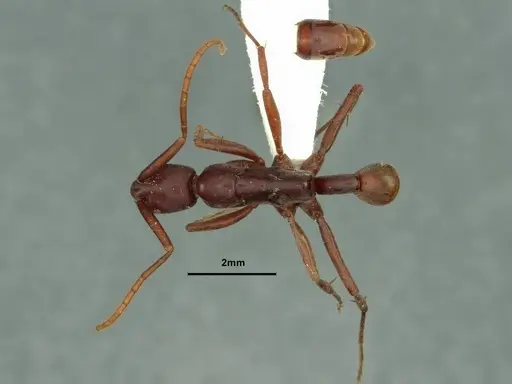
CASENT0900568
Auf AntWeb ansehen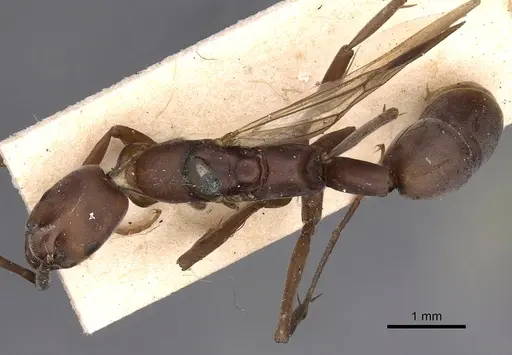
CASENT0907112
Auf AntWeb ansehen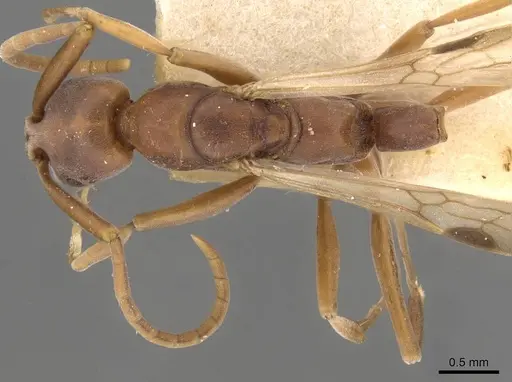
Literatur
Verbreitungskarte wird geladen...Produkte werden geladen...