
Pheidole quadrispinosa
- Wiss. Name
- Pheidole quadrispinosa
- Tribus
- Attini
- Unterfamilie
- Myrmicinae
- Autor
- Smith, 1865
- Verbreitung
- In 0 Ländern gefunden
Einleitung
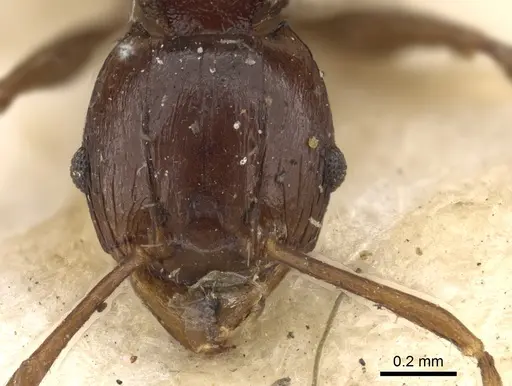
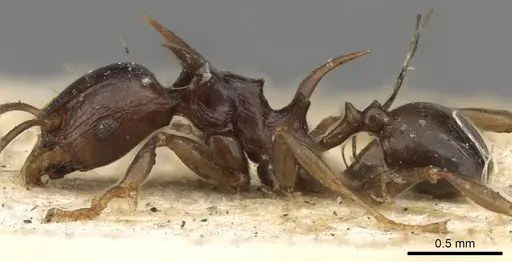
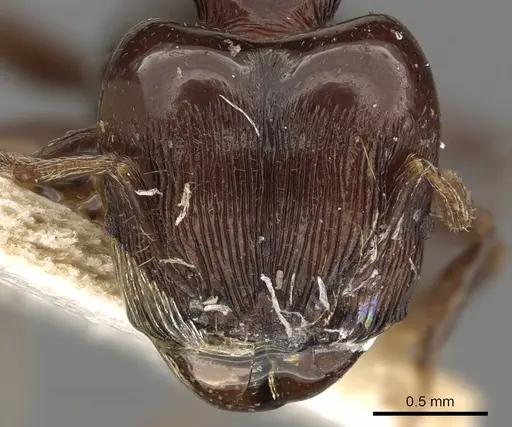
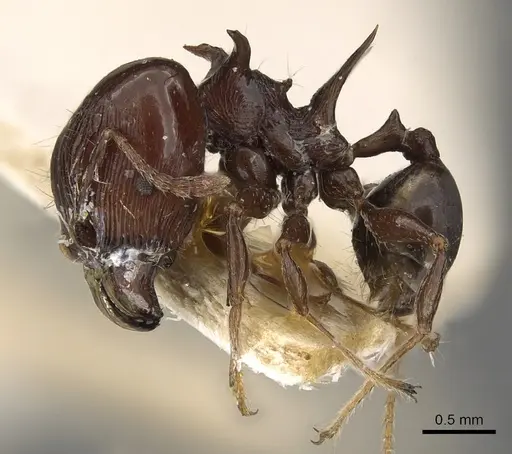
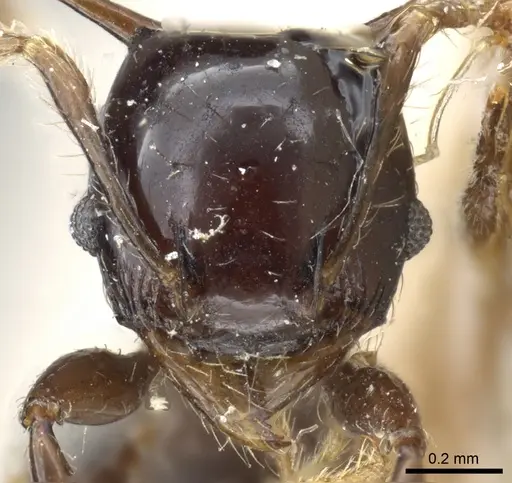
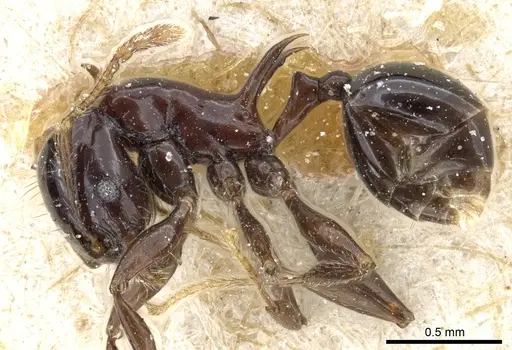
Pheidole quadrispinosa is a spiny ant from the subgenus Pheidolacanthinus, found in New Guinea, Indonesia, and northern Australia . Workers have minor and major castes, with majors having enlarged heads and spines on the pronotum and propodeum . The species associates with lycaenid butterfly larvae in a mutualistic relationship . Size data is unavailable, but workers are typically small, as common in Pheidole genus.
Quick Summary
- Difficulty: Easy
- Origin & Habitat: New Guinea, Indonesia (Salwatty Island), and northern Queensland, Australia, in tropical forests where they nest in soil and rotting wood [1][2].
- Colony Type: Unconfirmed, no specific data on queen number.
- Size & Growth:
- Queen: Size data unavailable, inferred from Pheidole genus (~5-7 mm)
- Worker: Size data unavailable, inferred from Pheidole genus (~2-5 mm)
- Colony: Unknown for this species, but typical Pheidole colonies reach several hundred workers
- Growth: Moderate, inferred from genus patterns
- Development: 6-10 weeks at optimal temperature, inferred from Pheidole genus patterns (Development is temperature-dependent, warmer conditions accelerate development)
- Antkeeping:
- Temperature: Keep at 24-28°C for optimal conditions [2].
- Humidity: Keep nest substrate consistently moist but not waterlogged, with a water tube available [2].
- Diapause: No, tropical species, no hibernation needed [2].
- Nesting: AAC nests (e.g., Y-tong) work well for visibility and humidity control. Test tube setups are suitable for founding colonies. Provide damp substrate for brood chambers [2].
- Behavior: Generally peaceful. They possess a sting as typical for Myrmicinae, but it is not dangerous to humans. Major workers use spines for defense [1]. Foraging occurs primarily at night. Standard escape prevention with Fluon is recommended.
- Common Issues: colonies may fail if temperature drops below 20°C for extended periods, overfeeding can lead to mold in nest setups, major workers are defensive but not aggressive toward keepers, wild-caught colonies may contain parasites that affect captive health, seed-eating requires providing appropriate grain sizes for major workers to process
Nest Preferences
Pheidole quadrispinosa naturally nests in soil and rotting wood in tropical forests [1][2]. In captivity, they adapt to AAC nests (e.g., Y-tong) for visibility and humidity control, or test tube setups for founding. Provide damp substrate in brood chambers and allow some drier areas for food storage [2].
Feeding and Diet
As members of the tribe Attini, Pheidole quadrispinosa has an omnivorous diet with emphasis on seeds and protein. Major workers process seeds with their large mandibles. Feed a mix of small seeds, protein sources like fruit flies, and sugar water [2].
Temperature and Care
Maintain temperatures between 24-28°C for optimal brood development [2]. Use a heating mat to create a gentle gradient. Humidity should be kept moist but not waterlogged [2].
Behavior and Temperament
Pheidole quadrispinosa is peaceful toward keepers. They have a sting but it is not dangerous. Major workers use spines for defense [1]. Workers are active foragers, with majors staying near the nest [2].
Colony Development
Colonies start with a founding queen who raises the first brood alone. Once workers emerge, the colony grows through minor and major worker production. Growth is moderate, with colonies reaching several hundred workers within a year under optimal conditions [2].
Frequently Asked Questions
How long does it take for Pheidole quadrispinosa to produce first workers?
First workers typically emerge 6-10 weeks after egg-laying, assuming optimal temperature (24-28°C). This is inferred from Pheidole genus patterns [2].
What do I feed Pheidole quadrispinosa?
They are omnivorous with a preference for seeds and protein. Offer small seeds, fruit flies, and sugar water [2].
Can I keep multiple queens together?
This species is typically monogyne, but no specific data is available. Combining unrelated queens is not recommended as they may fight.
Do they need hibernation?
No, as a tropical species, they do not require diapause [2].
What size colony do they reach?
Colony size is not specifically documented, but typical Pheidole colonies reach several hundred workers.
Are Pheidole quadrispinosa good for beginners?
Yes, they are considered easy to keep due to their peaceful nature and straightforward care [2].
When should I move them to a formicarium?
Move from a test tube to a formicarium once the colony reaches 50-100 workers and the test tube becomes crowded.
Why do they have spines?
The spines are a characteristic of the quadrispinosa group and serve for defense and substrate manipulation [1].
What makes Pheidole quadrispinosa different from other Pheidole?
They belong to the subgenus Pheidolacanthinus, with spinescent morphology, and form a distinct clade with the quadricuspis group. They also associate with lycaenid butterfly larvae [1][3][4].
Report an Issue
The current care sheet is based fully on literature. See inconsistencies, or something that's incorrect? Please , it will be resolved after review from an admin. Contributing to the blogs tab also helps providing information, to make us be able to further improve the caresheets. Thank you for your support!
References

Dieses Caresheet ist lizenziert unter CC BY-SA 4.0 .
Community-Blogs
CASENT0901320
Auf AntWeb ansehen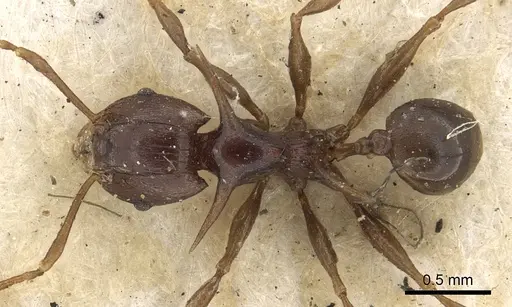
CASENT0901321
Auf AntWeb ansehen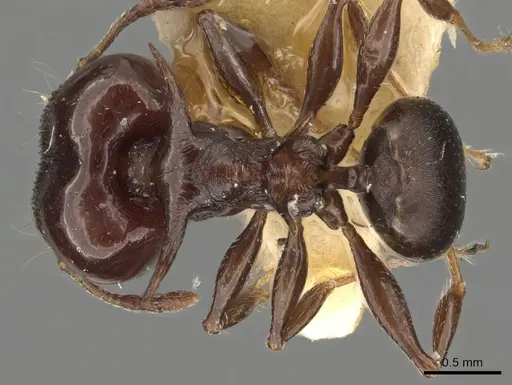
CASENT0901399
Auf AntWeb ansehen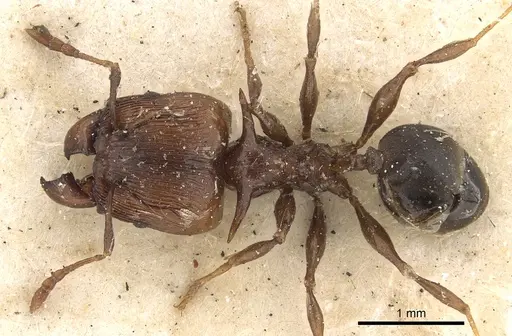
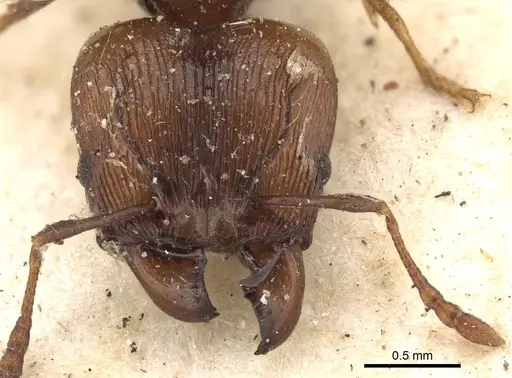
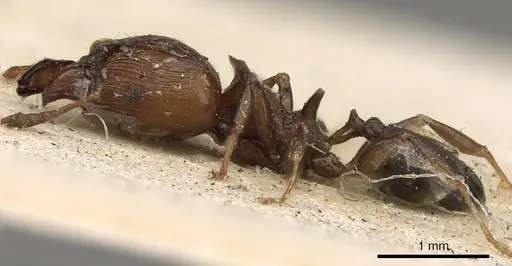
CASENT0904308
Auf AntWeb ansehen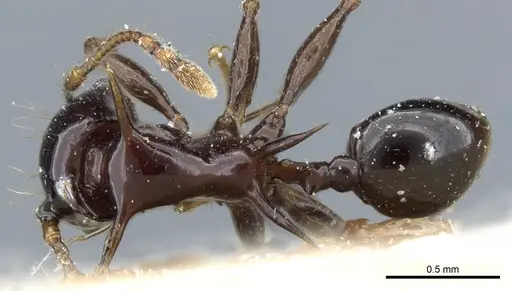
Literatur
Verbreitungskarte wird geladen...Produkte werden geladen...