
Pheidole nodifera
- Wiss. Name
- Pheidole nodifera
- Tribus
- Attini
- Unterfamilie
- Myrmicinae
- Autor
- Smith, 1858
- Verbreitung
- In 0 Ländern gefunden
Einleitung
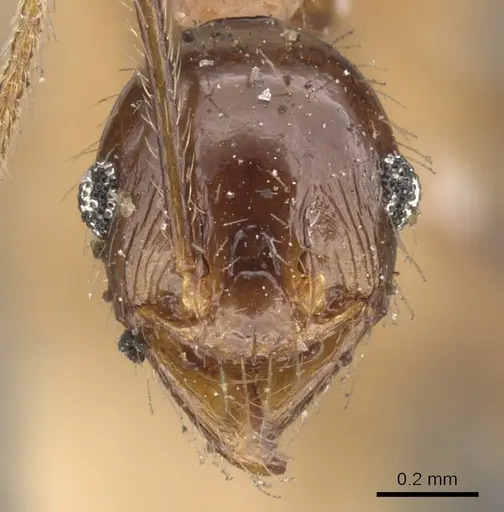
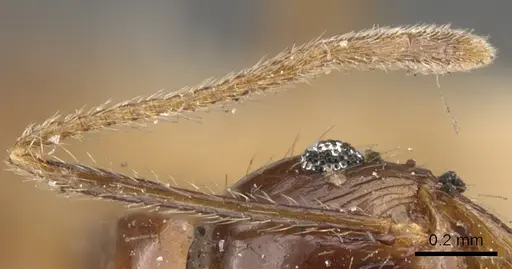
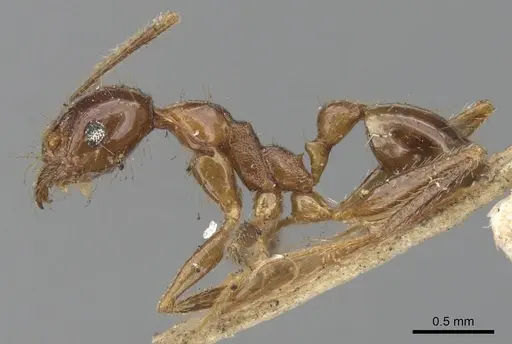
Pheidole nodifera is a small ant species with minor workers and larger major workers (soldiers). Size data for full body length is unavailable, but based on genus patterns, workers are typically 2-4 mm in total length. Coloration is dark reddish-brown to brown. The species is found in southern China, Thailand, and Vietnam, nesting in ground under leaf litter in mixed deciduous forests . It was originally described from China in 1858 and is known for its ground-nesting habits in forest floor microhabitats.
Quick Summary
- Difficulty: Easy
- Origin & Habitat: Native to southern China, Thailand, and Vietnam, nesting in ground under leaf litter in mixed deciduous forests [1][2].
- Colony Type: Unconfirmed, likely monogyne (single queen colonies) based on typical Pheidole patterns, but no species-specific data exists.
- Size & Growth:
- Queen: Size data unavailable, inferred from Pheidole genus (~5-7 mm)
- Worker: Minor workers: ~2-3 mm, major workers: ~3-4 mm (inferred from genus)
- Colony: Up to several hundred workers (inferred)
- Growth: Moderate
- Development: Estimated 6-8 weeks at warm temperatures (inferred) (Development time is temperature-dependent, warmer conditions speed development)
- Antkeeping:
- Temperature: Maintain warm temperatures, roughly 22-26°C, based on genus patterns for temperate Pheidole species.
- Humidity: Keep substrate moderately moist but not waterlogged, mimicking forest floor conditions [1].
- Diapause: Likely requires winter diapause of 2-3 months at cooler temperatures (10-15°C) based on northern distribution [2].
- Nesting: Ground-nesting species, use test tubes initially, then transition to Y-tong or plaster nests with substrate [1].
- Behavior: Generally peaceful but will defend the nest aggressively if threatened. Major workers use large heads for defense and seed processing. Escape risk is moderate due to small size, use standard barrier methods. Defense mechanism: possesses a functional stinger (subfamily Myrmicinae, tribe Attini).
- Common Issues: colonies may decline if kept too dry, they prefer forest-floor moisture conditions., slow founding phase can cause beginners to abandon colonies before workers arrive., major workers can appear alarming to new keepers but are normal and not a sign of aggression., wild-caught colonies may contain parasites that can devastate captive colonies., test tube setups must have proper water reservoir management to avoid flooding the colony.
Housing and Nest Setup
You can start Pheidole nodifera in a standard test tube setup for the founding stage. Once the colony has 20-30 workers, move them to a formicarium. These ants prefer enclosed nests with tight chambers scaled to their small size. Use Y-tong or plaster nests with substrate to mimic their natural ground-nesting habitat [1]. Add leaf litter to the outworld for a natural foraging environment.
Feeding and Diet
You should offer a varied diet: protein sources like small insects 2-3 times per week, and constant sugar water or honey. Major workers process seeds, so provide small seeds or grains. Remove uneaten prey after 24-48 hours to prevent mold. Fresh water should always be available.
Temperature and Seasonal Care
Keep temperatures between 22-26°C for optimal growth. During winter, provide a diapause period of 2-3 months at 10-15°C to mimic natural cycles, especially for colonies from northern areas [2]. Many keepers maintain active colonies year-round at room temperature, but growth may slow in winter.
Behavior and Colony Structure
This species produces minor workers for daily tasks and major workers for defense and seed processing. Colonies are likely founded by a single queen, but founding behavior is unconfirmed. Majors appear as the colony matures. The species is not aggressive toward keepers but will defend the nest vigorously.
Frequently Asked Questions
How long does it take for Pheidole nodifera to have first workers?
First workers typically appear within 6-8 weeks after queen lays eggs, assuming temperatures around 24-26°C. Be patient during the founding phase and avoid disturbing the queen.
Are Pheidole nodifera good for beginners?
Yes, this species is beginner-friendly due to hardiness and straightforward care. Main challenges are humidity and patience during founding.
What do I feed Pheidole nodifera?
Offer small insects for protein 2-3 times per week and constant sugar water. They also appreciate small seeds due to major workers' seed-processing ability.
When should I move Pheidole nodifera to a formicarium?
Move them once the colony reaches 20-30 workers or when the test tube is crowded. Use Y-tong, plaster, or soil nests with appropriately sized chambers.
Do Pheidole nodifera need hibernation?
Yes, a winter rest period is recommended based on their northern distribution. Provide 2-3 months of cooler temperatures (10-15°C) during winter [2].
How big do Pheidole nodifera colonies get?
Colonies likely reach up to several hundred workers over 1-2 years, with majors becoming more common as the colony matures.
Can I keep multiple Pheidole nodifera queens together?
This species is likely monogyne, so combining queens is not recommended as they may fight. Only keep one queen per colony unless evidence shows multi-queen tolerance.
Why are my Pheidole nodifera dying?
Common causes include too-dry conditions, disturbance during founding, mold from overfeeding, or parasites in wild-caught colonies. Ensure proper humidity and minimal disturbance.
What makes Pheidole nodifera different from other ants?
It produces distinct major workers with enlarged heads for defense and seed processing, a characteristic of the Pheidole genus. Its distribution across tropical and temperate zones shows adaptability.
Report an Issue
The current care sheet is based fully on literature. See inconsistencies, or something that's incorrect? Please , it will be resolved after review from an admin. Contributing to the blogs tab also helps providing information, to make us be able to further improve the caresheets. Thank you for your support!
References

Dieses Caresheet ist lizenziert unter CC BY-SA 4.0 .
Community-Blogs
CASENT0901537
Auf AntWeb ansehen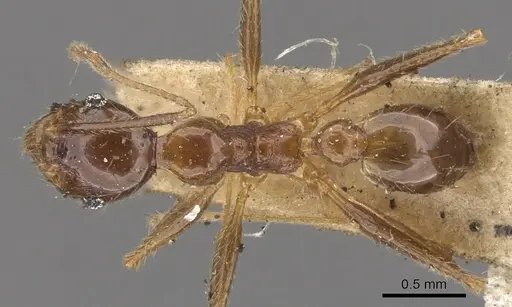
Literatur
Verbreitungskarte wird geladen...Produkte werden geladen...