
Pheidole geraesensis
- Wiss. Name
- Pheidole geraesensis
- Tribus
- Attini
- Unterfamilie
- Myrmicinae
- Autor
- Santschi, 1929
- Verbreitung
- In 0 Ländern gefunden
Einleitung
Pheidole geraesensis is a small Neotropical ant species native to Brazil, known from Minas Gerais and Piauí . It belongs to the diligens species group and features dimorphic workers typical of Pheidole, with large majors and smaller minor workers. Size data is unavailable in the literature . The species was originally described as a variety of Pheidole semilaevis in 1929 and raised to full species status by Wilson in 2003 . This ant is part of the Attini tribe, though Pheidole species are primarily seed-harvesters and predators rather than fungus-growers . A notable aspect is its recent recording in Piauí state, expanding its known range in Brazil .
Quick Summary
- Difficulty: Hard
- Origin & Habitat: Brazil (Minas Gerais type locality), with additional records from Piauí in northeastern Brazil [1]. Natural habitat preferences are unconfirmed [2].
- Colony Type: Unconfirmed, based on typical Pheidole patterns, likely monogyne [2].
- Size & Growth:
- Queen: Size unknown, inferred from Pheidole genus (~6-8 mm) [2]
- Worker: Size unknown, inferred from Pheidole genus (~2-5 mm) [2]
- Colony: Unknown, typical Pheidole colonies reach hundreds to low thousands of workers [2]
- Growth: Unknown, estimated moderate based on genus patterns [2]
- Development: Unknown, estimated 6-10 weeks based on typical Pheidole development [2] (Estimates based on genus-level patterns for Neotropical Pheidole.)
- Antkeeping:
- Temperature: Estimated 22-28°C based on Neotropical distribution [1]. Start in this range and observe colony activity.
- Humidity: Moderate to high, typical of forest-floor species in Brazil. Keep substrate moist but not waterlogged [2].
- Diapause: Unknown, Neotropical species may have reduced activity in cooler months but true diapause is not well-documented [2].
- Nesting: Natural nesting is unconfirmed, but most Pheidole are ground-nesting [2]. Test tubes work well for colonies.
- Behavior: Behavior is unstudied. Based on typical Pheidole, majors defend the colony and process seeds while minors handle foraging and brood care [2]. They likely show moderate aggression when disturbed. Escape risk is moderate due to small worker size, standard barriers recommended.
- Common Issues: no biological data exists, all care recommendations are estimates based on genus patterns [2], colony may fail if temperature is outside their natural range since we don't know their preferences, wild-caught colonies could have parasites or diseases with no documented treatment, growth rate is unknown so beginners may overfeed or underfeed without guidance, nuptial flight timing is completely unknown making colony establishment difficult
Species Identification and Taxonomy
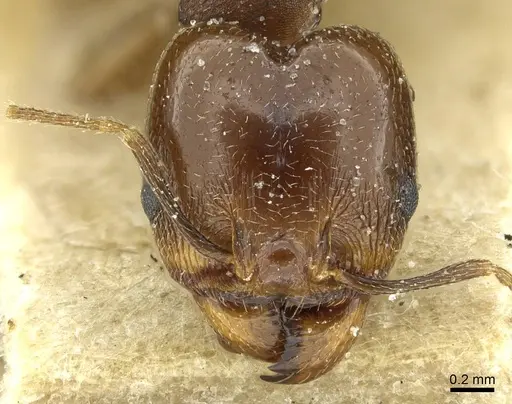
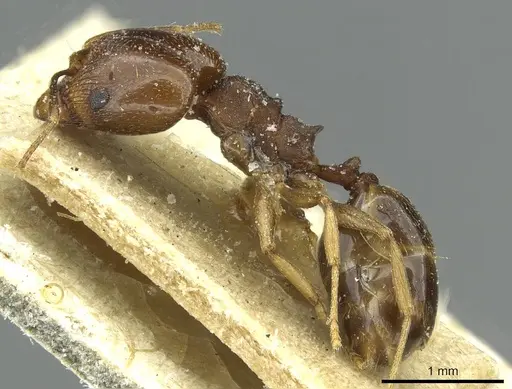
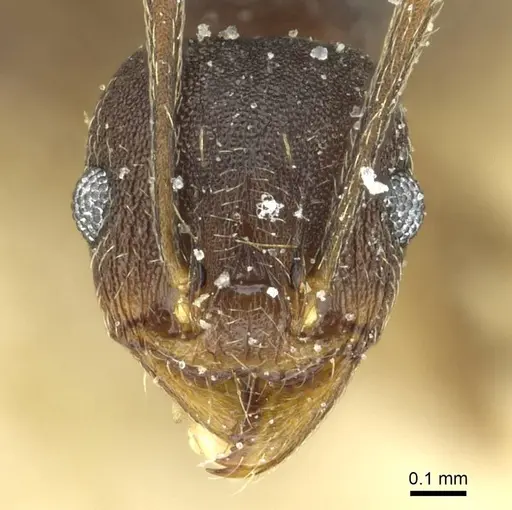
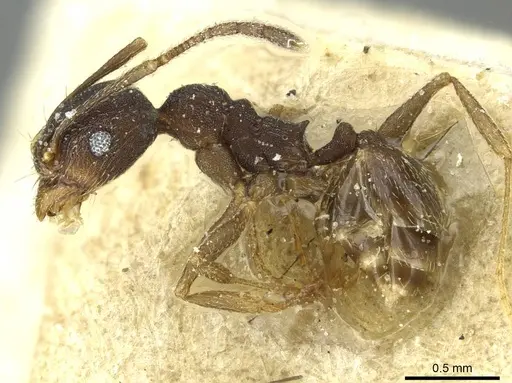
Pheidole geraesensis is a member of the diligens species group, characterized by specific morphological features in both major and minor workers. The major worker has a distinctive bicolorous head with the posterior three-quarters reddish brown and the anterior quarter plus mandibles reddish yellow. The body is plain light brown with dark yellow appendages. Major workers have a smooth and shiny dorsum on the head posterior to eye level, with a very small patch of rugoreticulum present posterior to each antennal fossa. The pronotum shows broken transverse rugulae. Minor workers have a bilobous pronotum in dorsal-oblique view and both castes lack significant pilosity on the mesosoma and waist. The species was originally described by Santschi in 1929 as a variety of Pheidole semilaevis and was elevated to full species status by Edward O. Wilson in 2003 [2].
Distribution and Records
This species is known primarily from its type locality in Minas Gerais, Brazil. A 2020 survey of ant diversity in Piauí state recorded Pheidole geraesensis in the Serra da Capivara and Serra das Confusões National Parks, representing a new record for the Brazilian Northeast region [1]. The species was collected using epigeic pitfall traps, indicating it is a ground-active ant. The full extent of its distribution in Brazil remains poorly documented, as this is only the second published record of the species.
Nest Preferences and Housing
Natural nesting behavior is completely undocumented for this species. However, most Pheidole species are ground-nesting ants that excavate chambers in soil or use existing cavities [2]. For captive care, standard test tube setups work well for founding colonies. Once established with 50+ workers, you can transition to a small nest or formicarium. The key is providing moist substrate and keeping the nest dark and undisturbed during the founding stage. Since we don't know their exact preferences, observe how your colony responds to adjust humidity.
Feeding and Diet
The diet of Pheidole geraesensis has not been studied. Pheidole species are typically omnivorous with a preference for seeds and small insects [2]. In captivity, offer a varied diet including small seeds, protein sources like mealworms, and occasional sugar water. Start with small amounts and remove uneaten food within 24-48 hours to prevent mold. Observe when your colony is most active to determine their peak foraging times.
Temperature and Seasonal Care
No specific temperature data exists for this species. Based on its Brazilian distribution, it likely prefers warm conditions in the range of 22-28°C [1]. Neotropical ants from these regions don't typically experience true hibernation but may reduce activity during cooler months. Start with room temperature and observe colony behavior. If workers become sluggish, a slight temperature increase may help. Avoid temperatures below 18°C or above 32°C until you understand their preferences.
Colony Development and Growth
The complete development timeline from egg to worker is unknown for this species. Based on typical Pheidole development patterns, expect approximately 6-10 weeks from egg to first worker at optimal warm temperatures [2]. Major workers develop from larger pupae and may take slightly longer than minors. Colony growth will likely be moderate, faster than slow-growing species like some Camponotus, but not as rapid as tropical fire ants. The presence of major workers typically appears once the colony reaches 100+ workers, as the colony invests in defense once it has sufficient foragers.
Frequently Asked Questions
How long does it take for Pheidole geraesensis to produce first workers?
The exact timeline is unknown, but based on typical Pheidole development, expect 6-10 weeks from egg to first worker at warm temperatures (around 24-28°C) [2]. The founding stage is slow, the queen lays a small batch of eggs and tends them alone until the first nanitic workers emerge.
What do Pheidole geraesensis ants eat?
Diet is unconfirmed for this species, but based on typical Pheidole behavior, they likely accept small seeds, insects, and sugar sources [2]. Offer a varied diet and remove uneaten food promptly to prevent mold.
Can I keep multiple queens together?
This is unknown for Pheidole geraesensis. Most Pheidole are monogyne (single queen), but some species can be polygynous [2]. Do not attempt to combine unrelated queens without research on this specific species.
What temperature should I keep Pheidole geraesensis at?
No specific data exists, but based on their Brazilian distribution, aim for 22-28°C [1]. Start around 24°C and adjust based on colony activity. A temperature gradient allows the ants to self-regulate.
Does Pheidole geraesensis need hibernation?
Diapause requirements are unknown. Neotropical ants from Brazil typically don't require true hibernation but may reduce activity in cooler conditions [2]. If your colony slows in winter, reduce feeding and keep them slightly cooler rather than forcing dormancy.
How big do Pheidole geraesensis colonies get?
Maximum colony size is unknown. Most Pheidole colonies reach hundreds to low thousands of workers [2]. Major workers typically appear once the colony exceeds 100 workers.
Is Pheidole geraesensis good for beginners?
This species cannot be recommended for beginners due to the complete lack of biological data. All care recommendations are estimates based on genus patterns [2]. Choose a better-documented species if you're new to antkeeping.
When should I move my colony to a formicarium?
Move to a formicarium once the test tube setup becomes crowded (typically 50+ workers) or the water reservoir is depleted. Ensure the formicarium has appropriate chamber sizes for their small minor workers.
Why is my colony not growing?
Without species-specific data, causes could include incorrect temperature, humidity, feeding issues, or disease. Review basic parameters: ensure warmth (22-28°C), adequate moisture, and appropriate protein foods. If problems persist, the colony may have come from an unhealthy wild source.
Report an Issue
The current care sheet is based fully on literature. See inconsistencies, or something that's incorrect? Please , it will be resolved after review from an admin. Contributing to the blogs tab also helps providing information, to make us be able to further improve the caresheets. Thank you for your support!
References

Dieses Caresheet ist lizenziert unter CC BY-SA 4.0 .
Community-Blogs
CASENT0913441
Auf AntWeb ansehen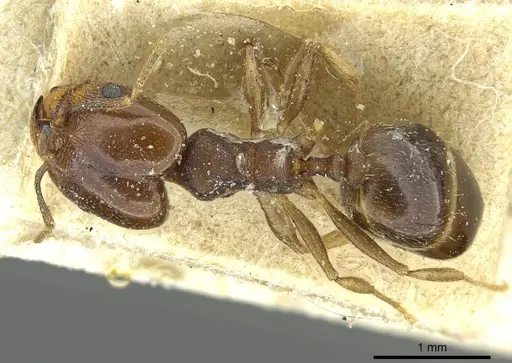
CASENT0913442
Auf AntWeb ansehen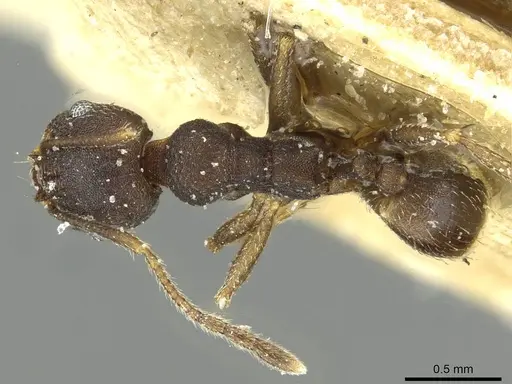
Literatur
Verbreitungskarte wird geladen...Produkte werden geladen...