
Pheidole fera
- Wiss. Name
- Pheidole fera
- Tribus
- Attini
- Unterfamilie
- Myrmicinae
- Autor
- Santschi, 1925
- Verbreitung
- In 0 Ländern gefunden
Einleitung
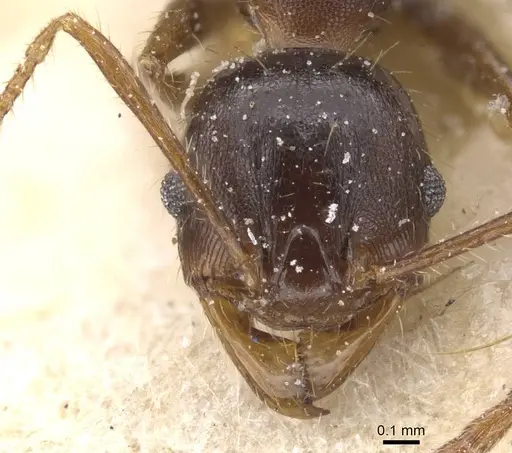
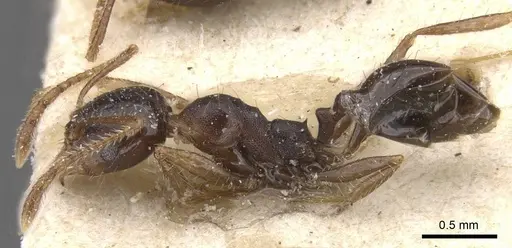
Pheidole fera is a Neotropical ant species native to Minas Gerais, Brazil, with recent records from Colombia (Meta and Leticia regions) . The species features two distinct worker castes: smaller minor workers and larger major workers (soldiers) with reddish-brown heads and dark brown bodies . The specific name fera means wild or untamed in Latin . While the Attini tribe includes leafcutter ants, Pheidole species are generally generalist foragers . Nothing is currently known about the natural biology of this species .
Quick Summary
- Difficulty: Medium
- Origin & Habitat: Minas Gerais, Brazil, and recently documented in Colombia (Meta and Leticia) [1][2].
- Colony Type: Unconfirmed. Based on typical Pheidole patterns, colonies are likely monogyne (single-queen colonies where one queen rules).
- Size & Growth:
- Queen: size data unavailable, inferred from Pheidole genus (~8-12mm)
- Worker: size data unavailable, inferred from Pheidole genus (~3-6mm)
- Colony: Unknown, likely moderate based on Pheidole patterns
- Growth: Moderate
- Development: Estimated 6-8 weeks at 24-26°C [2] (Timeline inferred from related Pheidole species, specific data for P. fera is unavailable.)
- Antkeeping:
- Temperature: Keep warm and stable, roughly 24-28°C [2]. Inferred from tropical Neotropical range.
- Humidity: Provide a humidity gradient, mostly dry nest chamber with one small moist area [2]. Match their forest floor habitat.
- Diapause: Unknown. As a tropical species, they likely do not require true winter diapause, but a slight seasonal cooling may help.
- Nesting: Plaster, soil, or 3D-printed nests work best. Provide tight chambers [2]. Avoid acrylic nests.
- Behavior: Moderately aggressive when disturbed. Majors use powerful mandibles to bite. Escape risk is high due to small minor workers. Use fine mesh barriers.
- Common Issues: small minor workers can escape through standard barriers, use fine mesh and check all seams, unknown biology means care relies on genus patterns, monitor closely, tropical habitat requires consistent warmth, avoid cold drafts, limited specific data means you should avoid over-disturbing the nest
Housing and Nest Setup
Pheidole fera needs a secure nest that matches their small size. Use plaster, soil, or 3D-printed nests instead of acrylic [2]. Provide tight chambers to keep them secure [2]. Start with a simple test tube setup for founding queens. Transition to a larger nest when you see steady worker production. Always seal all tube connections with petroleum jelly or silicone to prevent escapes [2].
Feeding and Diet
Pheidole species eat a varied diet. Offer small insects like fruit flies or pinhead crickets for protein [2]. Provide sugar water, honey, or commercial ant nectar for carbohydrates [2]. They may also collect seeds if you offer them [2]. Feed protein twice a week and keep sugar water available. Remove leftover food after 24 hours to stop mold [2].
Temperature and Humidity
Keep the nest warm and stable, roughly 24-28°C [2]. Inferred from their tropical range [1]. Place a heating mat on one side of the nest to create a gradient [2]. Maintain moderate humidity by keeping the substrate damp but not soaked [2]. Mist the outworld lightly if needed, but never spray the nest directly [2]. Good airflow prevents mold while keeping moisture levels steady [2].
Caste System and Development
Pheidole fera produces two worker types [2]. Minor workers handle daily tasks like foraging and brood care [2]. Major workers (soldiers) defend the nest and process larger food items [2]. Development from egg to worker takes about 6-8 weeks at 24-26°C [2]. The first workers are usually smaller than mature workers [2]. Colony growth stays moderate as they build up their workforce [2].
Behavior and Defense
Pheidole fera bites when threatened [2]. Major workers use strong mandibles to defend the nest [2]. Minor workers evacuate brood to deeper chambers while majors engage intruders [2]. Workers forage actively on the ground [2]. Escape risk is high due to tiny minor workers [2]. Use fine mesh barriers and check all seams before opening the outworld [2].
Frequently Asked Questions
How long does it take for Pheidole fera to produce first workers?
Expect first workers in about 6-8 weeks at 24-26°C [2]. Development time depends on temperature and colony health [2].
Can I keep multiple Pheidole fera queens together?
Pheidole species are typically monogyne (single-queen) [2]. Combining unrelated queens will likely cause fighting [2]. House queens alone until workers emerge [2].
What do Pheidole fera ants eat?
Offer small insects for protein and sugar water or honey for carbohydrates [2]. They may also accept seeds [2]. Remove uneaten food after 24 hours to prevent mold [2].
What temperature is best for Pheidole fera?
Keep them at 24-28°C [2]. Provide a temperature gradient so workers can move to their preferred zone [2]. Avoid temperatures below 20°C or above 32°C [2].
Are Pheidole fera good for beginners?
This species sits at medium difficulty [2]. Limited biology data means you should rely on genus patterns and monitor closely [2]. Basic antkeeping experience helps [2].
Report an Issue
The current care sheet is based fully on literature. See inconsistencies, or something that's incorrect? Please , it will be resolved after review from an admin. Contributing to the blogs tab also helps providing information, to make us be able to further improve the caresheets. Thank you for your support!
References

Dieses Caresheet ist lizenziert unter CC BY-SA 4.0 .
Community-Blogs
CASENT0913328
Auf AntWeb ansehen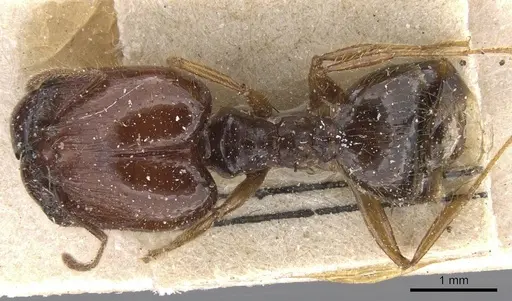
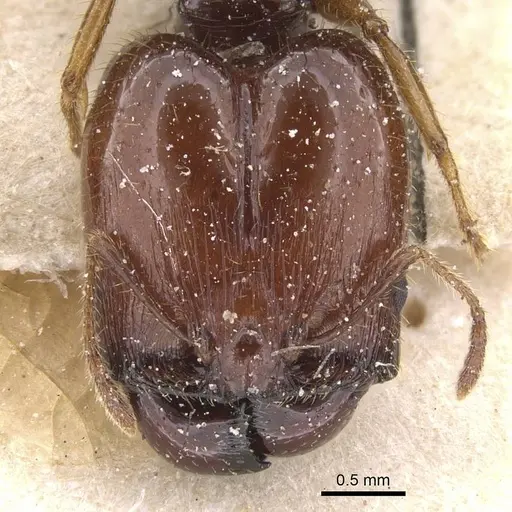
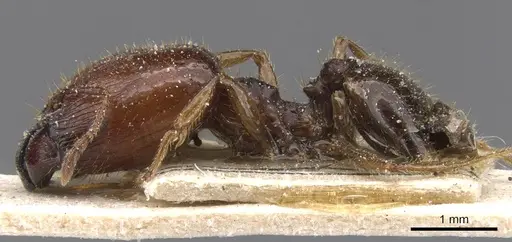
CASENT0913329
Auf AntWeb ansehen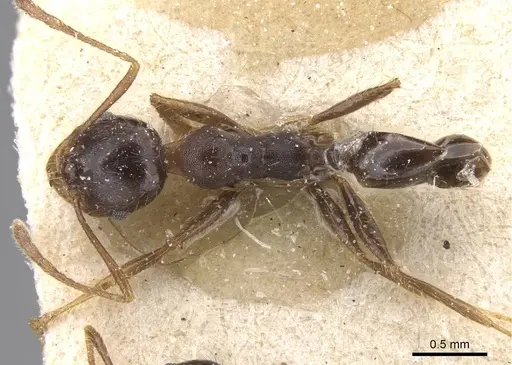
Literatur
Verbreitungskarte wird geladen...Produkte werden geladen...