
Pheidole anosyenne
- Wiss. Name
- Pheidole anosyenne
- Tribus
- Attini
- Unterfamilie
- Myrmicinae
- Autor
- Salata & Fisher, 2020
- Verbreitung
- In 0 Ländern gefunden
Einleitung
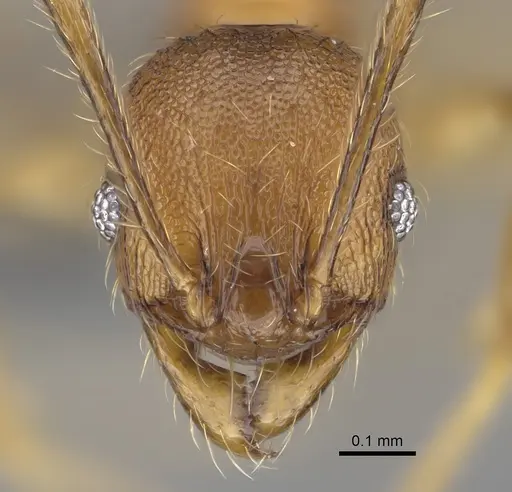
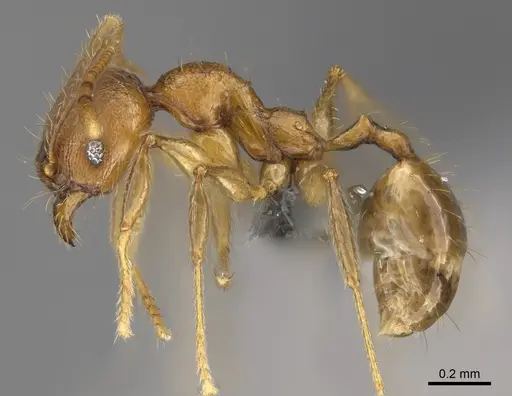
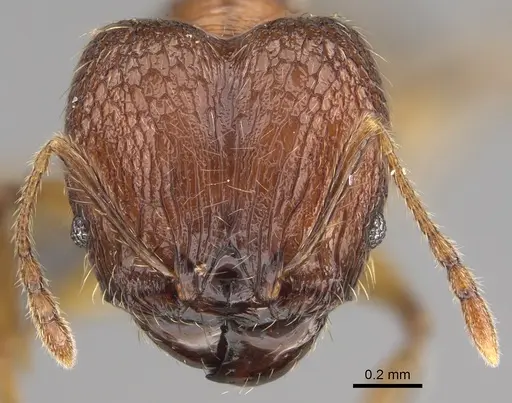
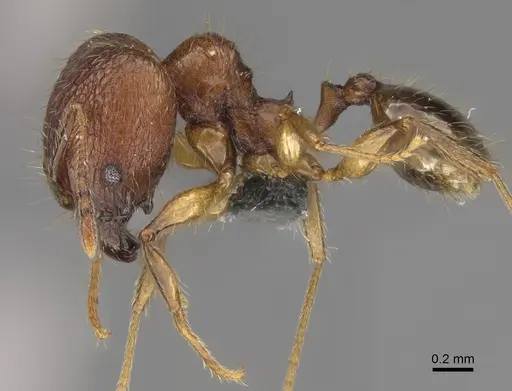
Pheidole anosyenne is a recently described ant in the Pheidole sikorae group, known only from the Anosyenne Mountains in southern Madagascar . The species was collected at 1125 m elevation in rainforest, nesting in a rotten log . Major workers are moderately large for the genus, with body colour ochreous (yellowish-brown); minor workers are dark orange, but total body lengths are not recorded in the original description . Like other Pheidole, it has a two‑caste system of majors and minors, but almost nothing is known about its behavior or colony cycle in the wild or in captivity. This is a very rarely kept species with no established care protocols.
Quick Summary
- Difficulty: Medium
- Origin & Habitat: Endemic to the Anosyenne Mountains, Toliara region, Madagascar. Found in rainforest at 1125 m elevation, nesting in a rotten log [1].
- Colony Type: Unconfirmed. Most Pheidole species are monogyne, but no data exist for P. anosyenne.
- Size & Growth:
- Queen: Size data unavailable, the queen has not been described [1].
- Worker: Size data unavailable, the original description gives only head measurements, not total body length [1].
- Colony: Unknown, no colony size data exist [1].
- Growth: Unknown, no documented growth rate for this species.
- Development: Unknown, no documented development time for this species [1]. (Estimates from related Pheidole are speculative and not based on P. anosyenne data.)
- Antkeeping:
- Temperature: Likely 20‑25 °C based on high‑elevation rainforest habitat. Provide a stable, warm environment, avoid extremes.
- Humidity: Moderate to high. Keep the nest substrate consistently damp but not waterlogged, reflecting its rotten‑log microhabitat. A water tube helps.
- Diapause: Unknown. Madagascar’s latitude suggests little seasonal cold, so true hibernation is unlikely, but no data exist. Monitor colony activity.
- Nesting: Natural nest sites are rotten wood [1]. In captivity, offer Y‑tong or plaster nests with cork or wood fragments. Maintain humidity near the nesting area.
- Behavior: Behavior not documented in the original description [1]. Based on its rainforest habitat and typical Pheidole traits, it is probably not aggressive toward humans. Escape risk is moderate due to small size, use standard barriers (fluon/PTFE).
- Common Issues: limited data, this is a very newly described species with no captive care records, humidity must be carefully balanced, too dry kills the colony, too wet promotes mold, wild‑caught colonies may carry parasites or diseases with no known treatment, the queen is undescribed, making species verification difficult for purchased colonies
Housing and Nest Setup
Because the wild colony was found in a rotten log [1], an artificial nest that mimics that microhabitat is recommended. Start colonies in a standard test tube setup with a water reservoir. Once the colony outgrows the tube, move them to a Y‑tong or plaster nest that includes small pieces of cork or soft wood. Keep the nest area humid but not soaked. An outworld attached to the nest gives them room to forage without disturbing the queen.
Feeding and Diet
No dietary data exist for P. anosyenne. Based on the genus, they are likely omnivorous. Offer small protein sources (e.g., fruit flies, pinhead crickets) and a constant supply of sugar water or honey. Remove uneaten fresh food after 24 h to prevent mold. Because the species is undescribed in terms of feeding, start with small amounts and observe acceptance. [1]
Temperature and Humidity Management
The species was collected at 1125 m in a rainforest [1], so it likely prefers stable, moderately warm conditions. Aim for 20‑25 °C and avoid sudden drops. Humidity should be high, keep the nest substrate consistently moist (not waterlogged) and consider enclosing part of the nest to retain moisture. A water tube in the outworld provides drinking water.
Colony Growth and Development
No growth or development data are published for this species. The queen has not been described, and no founding observations exist [1]. Be prepared for an unknown timeline, patience is essential. If you obtain a wild‑caught queen, record your observations to help future keepers.
Handling and Observation
There are no records of aggression from this species. Given its small size and rainforest habits, it is probably non‑aggressive toward humans. Avoid disturbing the queen, especially during early colony stages. Once established, you can watch the majors and minors work, but no specific behavior has been documented. Use a red filter or low light to minimize stress. [1]
Frequently Asked Questions
How long does it take for Pheidole anosyenne to have first workers?
Unknown, no documented development time exists for this species [1].
What do Pheidole anosyenne ants eat?
Not recorded. Based on the genus, try offering small insects and sugar water. There is no species‑specific dietary data [1].
Can I keep multiple Pheidole anosyenne queens together?
Unknown. Most Pheidole are monogyne, so housing unrelated queens together is not recommended. No data exist for this species [1].
What temperature do Pheidole anosyenne need?
Based on its high‑elevation rainforest habitat, aim for 20‑25 °C. No exact requirements have been tested [1].
Are Pheidole anosyenne good for beginners?
This species is rated as expert difficulty because almost nothing is known about its captive care. Only experienced keepers with a strong interest in rare species should attempt it.
How big do Pheidole anosyenne colonies get?
Unknown, no colony size data exist for this species [1].
Do Pheidole anosyenne need hibernation?
Unknown. As a species from southern Madagascar, true winter diapause is unlikely, but no data are available. Monitor the colony and adjust feeding accordingly [1].
When should I move Pheidole anosyenne to a formicarium?
Keep them in a test tube until the colony outgrows it. Because natural growth rates are unknown, watch for signs of overcrowding (e.g., workers piling up in the tube). A Y‑tong or plaster nest with wood elements is recommended.
Why is my Pheidole anosyenne colony dying?
Likely causes include unsuitable humidity (too dry or too wet), temperature stress, mold from uneaten food, or parasites from wild‑caught stock. Check conditions, improve ventilation, and remove waste promptly. No species‑specific disease information is available [1].
Report an Issue
The current care sheet is based fully on literature. See inconsistencies, or something that's incorrect? Please , it will be resolved after review from an admin. Contributing to the blogs tab also helps providing information, to make us be able to further improve the caresheets. Thank you for your support!
References

Dieses Caresheet ist lizenziert unter CC BY-SA 4.0 .
Community-Blogs
CASENT0704255
Auf AntWeb ansehen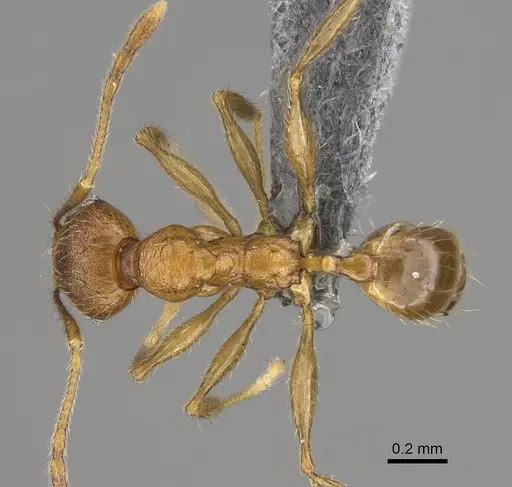
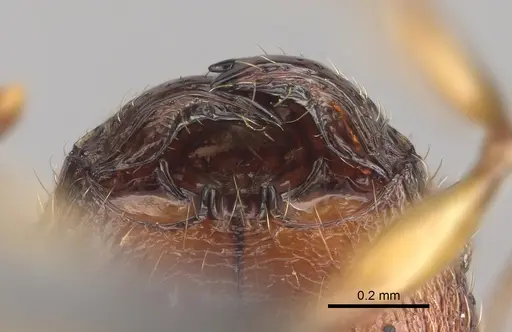
CASENT0923297
Auf AntWeb ansehen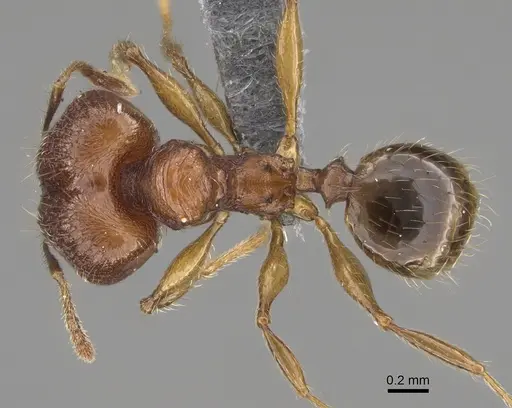
Literatur
Verbreitungskarte wird geladen...Produkte werden geladen...