
Paratopula catocha
- Wiss. Name
- Paratopula catocha
- Tribus
- Crematogastrini
- Unterfamilie
- Myrmicinae
- Autor
- Bolton, 1988
- Verbreitung
- In 0 Ländern gefunden
Einleitung
Paratopula catocha is a small arboreal ant from the Myrmicinae subfamily. Workers are tiny, with body size inferred from the genus to be up to 5mm . They are native to Sulawesi (Indonesia) and Brunei Darussalam, inhabiting lowland dipterocarp rainforests . This species is strictly arboreal, as indicated by collection in canopy malaise traps .
Quick Summary
- Difficulty: Expert
- Origin & Habitat: Native to Sulawesi (Indonesia) and Brunei Darussalam, inhabiting lowland dipterocarp rainforests [3][1].
- Colony Type: Colony structure is unconfirmed, with no published data on queen number or social structure.
- Size & Growth:
- Queen: Unknown, no data available
- Worker: Inferred from Paratopula genus, up to 5mm [1][2]
- Colony: Unknown, no colony size data available
- Growth: Unknown
- Development: Unknown, no direct measurements. Based on typical Myrmicinae patterns, estimate 6-10 weeks at optimal temperature, but this is speculative. (Development timeline is unconfirmed, estimates are based on related tropical arboreal ants.)
- Antkeeping:
- Temperature: Keep warm, roughly 24-28°C, based on tropical rainforest origin [3]. Avoid temperatures below 22°C.
- Humidity: Keep nest substrate consistently moist but not waterlogged, based on rainforest habitat [3].
- Diapause: No, as a tropical species from consistent warm climates, diapause is unlikely.
- Nesting: Arboreal nests such as Y-tong (AAC) or plaster with small chambers, based on their canopy-dwelling nature [3].
- Behavior: Behavior is poorly documented, but based on related arboreal Myrmicinae, they are likely timid and non-aggressive. Defense mechanism is smearing venom, typical for Myrmicinae Crematogastrini. Escape risk is high due to tiny size, use fine mesh barriers.
- Common Issues: this species is extremely rare in captivity with almost no husbandry information., escape prevention is critical due to tiny size, they can squeeze through small gaps., no established feeding protocols exist, start with sugar water and small live prey., high humidity requirements can lead to mold if ventilation is inadequate., slow growth and lack of information may frustrate keepers.
Species Overview and Distribution
Paratopula catocha is an extremely rare arboreal ant described by Bolton in 1988 from Sulawesi, Indonesia. It was recently recorded in Brunei Darussalam using canopy malaise traps, confirming its arboreal nature in lowland dipterocarp forests [3][1]. The genus Paratopula is poorly studied, making this species one of the rarest in antkeeping.
Morphology and Identification
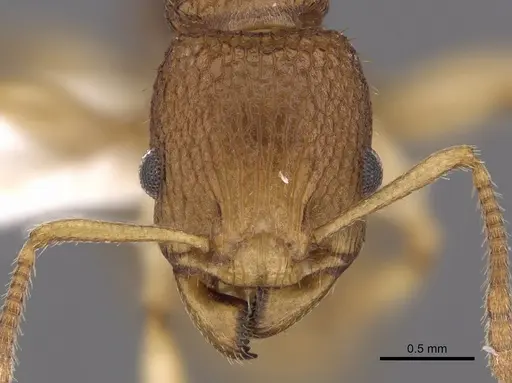
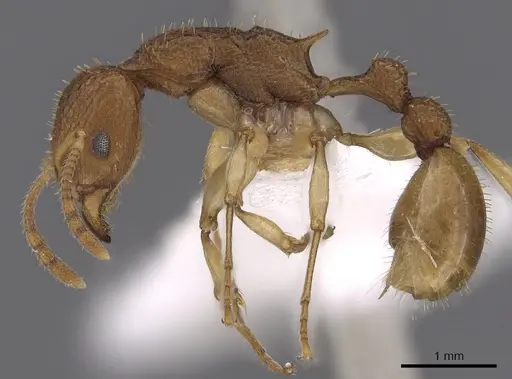
Workers can be identified by a nearly globular postpetiole in dorsal view, straight propodeal spines, and mandibles with 8-9 teeth [1][2]. Body size is small, inferred to be up to 5mm from related species.
Housing and Nest Setup
Given their arboreal nature, use Y-tong (AAC) or plaster nests with small, tight chambers. Include moisture-retaining materials like moss. Test tubes can work for founding colonies but monitor for mold. Ensure all openings are sealed with fine mesh to prevent escapes [3].
Feeding and Nutrition
No specific dietary studies exist. Offer sugar water or honey alongside small live prey like fruit flies or springtails, scaled to their tiny size. Remove uneaten food promptly to prevent mold.
Temperature and Humidity Requirements
Maintain warm conditions around 24-28°C based on tropical habitat [3]. Keep nest substrate moist but not waterlogged, mimicking rainforest humidity.
Challenges and Considerations
This species is expert-level due to rarity and lack of husbandry data. Escape prevention is critical, and colonies may grow slowly. Be prepared for experimentation and careful monitoring.
Frequently Asked Questions
How do I house Paratopula catocha ants?
Use a Y-tong or plaster nest with small chambers, based on their arboreal nature [3]. Include moisture-retaining materials and ensure escape prevention.
What do Paratopula catocha ants eat?
No specific data, offer sugar water and small live prey like fruit flies, scaled to their size.
What temperature do Paratopula catocha ants need?
Keep them warm at 24-28°C, based on tropical origin [3]. Avoid below 22°C.
Are Paratopula catocha ants good for beginners?
No, this is an expert-level species due to rarity and specific requirements.
How big do Paratopula catocha colonies get?
Unknown, no colony size data available.
Do Paratopula catocha ants need hibernation?
No, as a tropical species, diapause is unlikely.
How long does it take for Paratopula catocha to develop from egg to worker?
Unknown, no data, estimates of 6-10 weeks are speculative.
Can I keep multiple Paratopula catocha queens together?
Unknown, colony structure is unconfirmed, do not attempt without evidence.
Where does Paratopula catocha live in the wild?
In Sulawesi and Brunei, in lowland dipterocarp rainforests, arboreal [3][1].
Why is Paratopula catocha so rare in the antkeeping hobby?
It was described in 1988,is arboreal, and difficult to collect, contributing to rarity [3][1].
Report an Issue
The current care sheet is based fully on literature. See inconsistencies, or something that's incorrect? Please , it will be resolved after review from an admin. Contributing to the blogs tab also helps providing information, to make us be able to further improve the caresheets. Thank you for your support!
References

Dieses Caresheet ist lizenziert unter CC BY-SA 4.0 .
Community-Blogs
CASENT0178559
Auf AntWeb ansehen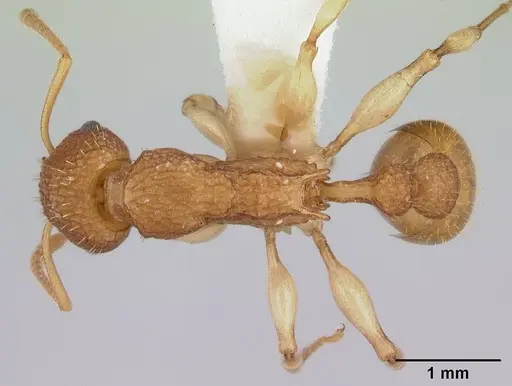
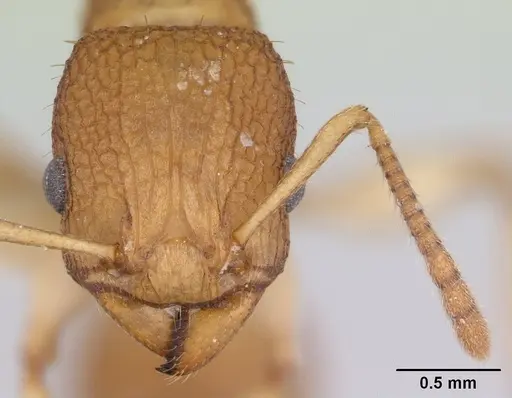
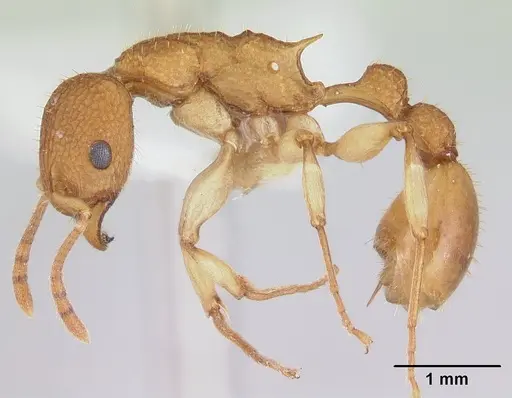
CASENT0901743
Auf AntWeb ansehen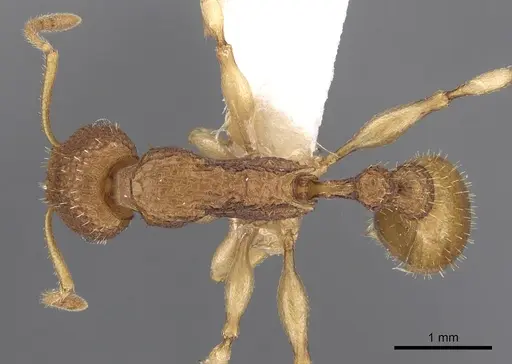
Literatur
Verbreitungskarte wird geladen...Produkte werden geladen...