
Ocymyrmex laticeps
- Wiss. Name
- Ocymyrmex laticeps
- Tribus
- Crematogastrini
- Unterfamilie
- Myrmicinae
- Autor
- Forel, 1901
- Verbreitung
- In 0 Ländern gefunden
Einleitung
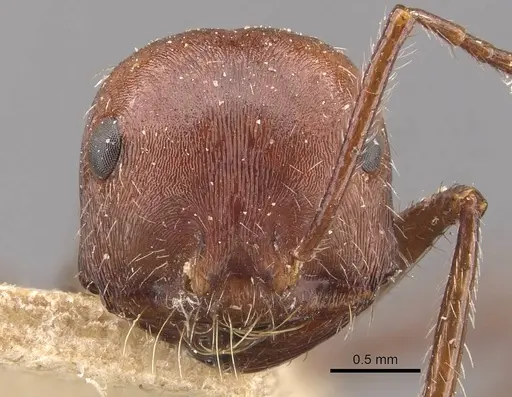
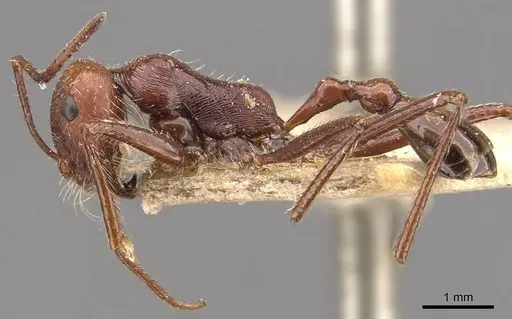
Ocymyrmex laticeps is a medium-sized ant native to Angola in southern Africa. Workers are 7.2-7.6 mm long and have a reddish coloration with a darker alitrunk and a yellowish-orange gaster base that darkens toward the rear . This species is thermophilic and forages individually during hot daytime on dry surfaces, scavenging for dead and dying arthropods .
Quick Summary
- Difficulty: Expert
- Origin & Habitat: Ocymyrmex laticeps is known only from Angola in the Afrotropical region, specifically from the Mossamedes and Cubango-Cuito areas [1]. As a thermophilic species, it inhabits hot, dry surfaces where it forages individually during the hottest parts of the day [2].
- Colony Type: Colony structure is completely unknown. Only worker specimens have been described, and no research has documented queen number, colony size, or social structure.
- Size & Growth:
- Antkeeping:
- Temperature: Based on [2], this is a thermophilic species that forages during hot daytime. Aim for warm conditions in the low-to-mid 30s°C in the foraging area, with a cooler retreat area so ants can self-regulate.
- Humidity: As ants from hot, dry habitats, they prefer arid conditions. Keep the nest substrate relatively dry with only minimal moisture [2].
- Diapause: Unknown, no research has examined seasonal behavior.
- Nesting: Nesting preferences are unconfirmed. Based on related Ocymyrmex species, they likely nest in soil or under stones in arid ground. For captivity, a dry setup with a digging chamber or Y-tong/plaster nest works well.
- Behavior: Ocymyrmex laticeps workers are fast-running thermophilic scavengers that forage individually during the hottest parts of the day [2]. They use indole-3-ethanol from their pygidial gland to lay chemical trails to food sources [3][4]. They are likely defensive due to their desert survival strategy, but no specific aggression data exists. Escape prevention should be moderate, they are medium-sized ants but very fast and active.
- Common Issues: completely unknown biology, this is one of the least-studied ant species in captivity with no documented care information., no queen data, only workers have been described, so founding behavior and colony structure are unknown., extreme heat requirements, as thermophilic ants, they need high temperatures that may be difficult to maintain consistently., poorly understood diet, while known to scavenge, specific nutritional requirements are unconfirmed., potential escape artists, their fast running speed and active foraging means they may escape if barriers are inadequate.
Understanding the Challenge: A Nearly Unknown Species
Ocymyrmex laticeps presents a unique challenge for antkeepers: virtually nothing is known about its biology in captivity or the wild [1]. AntWiki explicitly states 'Nothing is known about the biology' of this species, and scientific literature only describes the worker morphology. No queens, males, or colony samples have ever been documented. This means every aspect of captive care must be inferred from the limited data we have about the genus and related species. You will essentially be a pioneer with this species, and careful observation will be your most valuable tool. Document your observations thoroughly, they could contribute to future care guides for this and related species.
Temperature and Heating
This is perhaps the most critical factor for keeping Ocymyrmex laticeps. Workers are documented as thermophilic ants that forage during the hottest parts of the day in their natural habitat [2]. They are adapted to extreme heat, so you should aim for foraging area temperatures in the low-to-mid 30s°C. A heating cable or heat mat on one side of the enclosure can help achieve this. However, always provide a cooler retreat area so the ants can regulate their body temperature. Place the heating element on top of the nest rather than underneath to avoid excessive drying. Monitor with a reliable thermometer and adjust based on ant behavior.
Feeding and Diet
Based on the limited data available, Ocymyrmex laticeps workers are primarily scavengers that run rapidly over hot, dry surfaces searching for dead and dying arthropods [2]. They forage individually rather than in groups. For captive feeding, offer small arthropods like fruit flies, small crickets, mealworms, and other insect fragments. They are likely protein-focused, but you can occasionally offer a drop of diluted honey or sugar water to test acceptance. Remove any uneaten prey within 24-48 hours to prevent mold. Since they are active foragers, feed them 2-3 times per week, adjusting based on colony consumption.
Housing and Nest Setup
No research exists on the natural nesting preferences of Ocymyrmex laticeps, but the genus as a whole is associated with arid, hot habitats. For captive housing, a naturalistic setup with a digging chamber or a Y-tong/plaster nest works best. The key requirements are high heat capacity, low humidity, and minimal moisture. Use a dry substrate like sand or a sand/soil mix that holds its shape for tunneling. The nest chambers should be relatively tight, these are medium-sized ants that prefer enclosed spaces. For the outworld, provide a smooth surface area for foraging since they are active runners. Ensure escape prevention is adequate, while not tiny, their speed makes them capable of finding gaps.
Behavior and Observation
One of the most interesting aspects of Ocymyrmex laticeps is their foraging behavior, they are documented as individual foragers that run rapidly across hot surfaces searching for dead arthropods [2]. This is different from most ant species that use tandem running or mass recruitment. Their large pygidial gland produces indole-3-ethanol, a newly discovered substance in insect secretions that they use for trail-laying [3][4]. Watching this behavior in action will be one of the joys of keeping this species. They are likely defensive given their desert survival strategy, so observe from a distance rather than disturbing them. Their speed is their primary defense, in the wild, they outrun predators and competitors on hot surfaces.
The Pioneer Keeper's Role
If you are keeping Ocymyrmex laticeps, you are a pioneer in antkeeping. No care guides exist, no one has documented colony development, and no one has described how they raise brood or how long it takes. Every observation you make has value. Keep detailed notes on: temperature preferences, feeding behavior, humidity tolerance, growth rate, and any unusual behaviors. Share your findings with the antkeeping community. This species represents an opportunity to contribute genuinely new knowledge to both the hobby and scientific understanding. Start with conservative conditions and adjust based on colony health and activity levels.
Frequently Asked Questions
How difficult is Ocymyrmex laticeps to keep?
This is an expert-level species, possibly the most challenging ant to keep due to the complete lack of documented care information. Nothing is known about their biology, colony structure, or captive requirements. You will essentially be discovering how to keep them through observation and experimentation. Only experienced antkeepers should attempt this species.
What do Ocymyrmex laticeps ants eat?
They are scavengers that primarily seek dead and dying arthropods in the wild. In captivity, offer small insects like fruit flies, small crickets, and mealworms. They may accept protein-rich foods more readily than sugar, but you can test acceptance of diluted honey or sugar water occasionally. Remove uneaten prey within 24-48 hours.
What temperature do Ocymyrmex laticeps need?
As thermophilic ants, they need warm conditions. Aim for foraging area temperatures around 30-35°C with a cooler retreat area. Use a heating cable or heat mat on one side of the enclosure. They are adapted to extreme heat in their natural habitat.
Do Ocymyrmex laticeps need hibernation?
Unknown. As a tropical/subtropical species from Angola, they likely do not require a true diapause. However, no research has examined their seasonal behavior. They may show reduced activity during cooler periods in captivity.
How big do Ocymyrmex laticeps colonies get?
Unknown. No colony data exists in scientific literature. Only worker specimens have been described. Related species in the genus may reach several hundred workers, but this is purely speculative for Ocymyrmex laticeps.
Can I keep multiple Ocymyrmex laticeps queens together?
Unknown. No queens have ever been documented for this species, so colony structure is completely unconfirmed. Do not attempt combining unrelated queens without any data to guide you.
How long does it take for Ocymyrmex laticeps to develop from egg to worker?
Unknown. No research has studied their development. Related Ocymyrmex species may provide rough estimates, but this has not been documented. Expect it to take several months based on typical Myrmicinae development at warm temperatures.
What size nest should I use for Ocymyrmex laticeps?
Use a nest with tight, enclosed chambers scaled to their medium size (workers are 7.2-7.6 mm). A Y-tong or plaster nest with low humidity works well. They prefer dry conditions, so ensure good ventilation while maintaining heat.
Are Ocymyrmex laticeps ants aggressive?
No specific aggression data exists, but as desert-adapted thermophilic ants, they are likely defensive. Their primary defense is their extreme speed, they outrun predators on hot surfaces. Handle with care and observe from a distance.
Where is Ocymyrmex laticeps found?
This species is known only from Angola in the Afrotropical region, specifically from the Mossamedes and Cubango-Cuito areas. It is closely related to Ocymyrmex cursor, also from Angola.
Do Ocymyrmex laticeps ants sting?
No specific data exists, but Myrmicinae ants typically have stingers. Given their size and desert survival strategy, they likely can sting. However, they may be too fast to need to use their stinger often, their primary defense is running away.
Why is Ocymyrmex laticeps so rarely kept?
This is one of the least-studied ant species in existence. AntWiki explicitly states 'Nothing is known about the biology.' Only worker specimens have been described, no queens, males, or colony data exist. They are essentially unknown to science, making captive care extremely challenging.
Report an Issue
The current care sheet is based fully on literature. See inconsistencies, or something that's incorrect? Please , it will be resolved after review from an admin. Contributing to the blogs tab also helps providing information, to make us be able to further improve the caresheets. Thank you for your support!
References

Dieses Caresheet ist lizenziert unter CC BY-SA 4.0 .
Community-Blogs
CASENT0909074
Auf AntWeb ansehen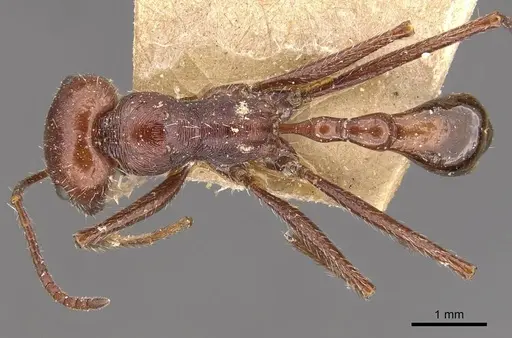
Literatur
Verbreitungskarte wird geladen...Produkte werden geladen...