
Myrmica rigatoi
- Wiss. Name
- Myrmica rigatoi
- Tribus
- Myrmicini
- Unterfamilie
- Myrmicinae
- Autor
- Radchenko & Elmes, 1998
- Verbreitung
- In 0 Ländern gefunden
Einleitung
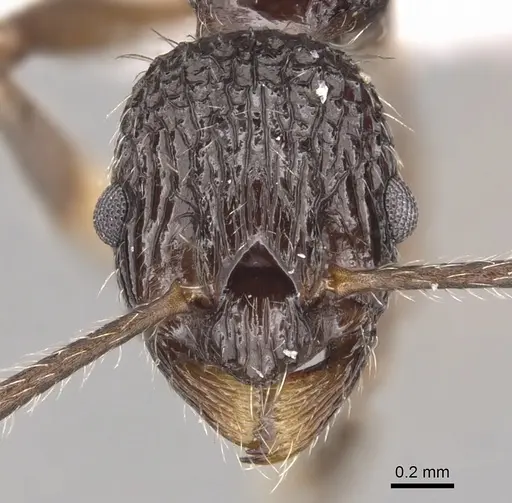
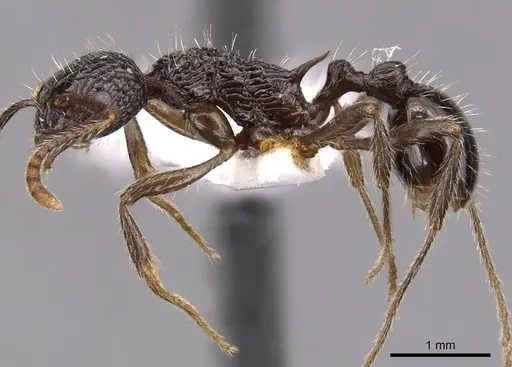
Myrmica rigatoi is a small ant species native to the Himalayan regions of Pakistan and northern India. Workers measure approximately 5mm in total length . This species belongs to the inezae species group, characterized by a smooth clypeal margin (not notched), long propodeal spines, and rounded propodeal lobes . The mesosoma has distinctive sinuous rugae and coarse reticulations on the dorsal surface . M. rigatoi is endemic to the Himalayas, specifically found in the Changla Gali and Hazara Durgo Gal regions of Pakistan at elevations between 2200-2300 meters . Nothing is known about the biology of this species in captivity , making it a challenging species for antkeepers who enjoy documenting previously unstudied behavior.
Quick Summary
- Difficulty: Expert
- Origin & Habitat: Himalayan regions of Pakistan at 2200-2300m elevation. Found in high-altitude mountain habitats [4][5][6].
- Colony Type: Unconfirmed, colony structure has not been documented in scientific literature.
- Size & Growth:
- Antkeeping:
- Temperature: Cool to cold conditions expected based on high-altitude Himalayan origin. Start around 15-20°C with a gradient, similar to other Himalayan Myrmica species. Adjust based on colony activity and observe preferences.
- Humidity: Moderate to high humidity likely needed. Himalayan environments at 2200m experience moderate moisture. Keep nest substrate moist but not waterlogged, with some drier areas available.
- Diapause: Yes, strongly recommended based on high-altitude origin. Myrmica species from cool climates require winter dormancy. Provide 3-4 months at 5-10°C during winter.
- Nesting: No specific nesting data exists. Based on related Myrmica species, likely nests in soil or under stones in natural habitat. Use test tubes for founding colonies, then transition to Y-tong or plaster nests with chambers scaled to their small size.
- Behavior: Behavior is undocumented. Based on genus-level patterns, expect typical Myrmica behavior: moderate aggression when defending the nest, workers that actively forage for protein and sugar sources. Escape risk is moderate, workers are around 5mm so standard barrier methods should work.
- Common Issues: no biological data exists, this is essentially an unstudied species in captivity, growth and development timeline is unknown, making colony management challenging, hibernation requirements are inferred rather than confirmed, no documented diet acceptance, must experiment with standard Myrmica foods, queen and colony structure unconfirmed, may have unexpected social structure
Discovery and Taxonomy
Myrmica rigatoi was first described by Radchenko and Elmes in 1998 from specimens collected in Pakistan [7]. The species was originally placed in the ritae species group but was later transferred to the inezae group due to morphological similarities, particularly the shape of the petiole and propodeal spines [2][3]. The species name honors Dr. Fabrizio Rigato of the Museo Civico di Storia Naturale in Milan, a colleague of the describing authors [7]. Only the worker caste has been described, queens and males remain unknown [7]. This species is considered endemic to the Himalayan region, specifically known from Changla Gali and Hazara Durgo Gal in Pakistan [4].
Habitat and Distribution
M. rigatoi is found exclusively in the Himalayan mountains at elevations between 2200-2300 meters above sea level [5][6]. This places it in a cool, mountainous environment with distinct seasonal temperature variations. The type locality is Changla Gali in Pakistan, with additional records from Hazara Durgo Gal [4]. The species is part of the Indomalaya biogeographic region [7]. The high-altitude habitat suggests this species is adapted to cooler temperatures and likely experiences significant seasonal changes, including cold winters that would require hibernation behavior.
Identification and Morphology
Workers of M. rigatoi are approximately 5mm in total length, making them a small Myrmica species [1]. The most distinctive morphological features include: a clypeus without a median notch (smooth anterior margin), very long propodeal spines (ESLI index of 0.52), and rounded rather than pointed propodeal lobes [2][3]. The mesosoma dorsal surface features sinuous rugae (wavy ridges) and coarse reticulations (net-like sculpture), but never transverse rugae [1]. These features distinguish it from related species like M. curvispinosa (which has ESLI 0.35) and M. kothiensis (which has ESLI 0.33) [1]. The propodeal spine length relative to the mesosoma is a key diagnostic character.
Keeping an Unstudied Species
Because nothing is known about the biology of M. rigatoi, keeping this species requires a scientific approach and patience [5]. You will essentially be documenting behavior that has never been observed in captivity. Start with standard Myrmica care: test tube setups for founding colonies, protein foods like mealworms or fruit flies, and sugar water or honey as an energy source. Document everything, when eggs appear, how long development takes, what foods are accepted, and how the colony responds to different temperatures. This species is recommended only for experienced antkeepers who understand that they may encounter unexpected behaviors. The lack of data also means you cannot rely on established care timelines, be prepared for slower development than typical Myrmica species.
Temperature and Seasonal Care
Based on the high-altitude Himalayan origin (2200-2300m), this species likely prefers cooler temperatures than most commonly kept ants. Start with a range of 15-20°C as a baseline and observe colony behavior. If workers are consistently clustered in warmer areas of the nest, gradually increase temperature. If they avoid heated areas, reduce or eliminate heating. During winter, provide a hibernation period of 3-4 months at 5-10°C, this is critical for many Myrmica species from temperate and cool climates. The seasonal temperature swings at their natural elevation (from warm summers to cold winters) suggest they have evolved specific physiological responses to winter dormancy. Do not skip hibernation as it may affect queen fertility and colony longevity. [6][5]
Feeding and Nutrition
No specific diet data exists for M. rigatoi. Based on genus-level patterns, they likely accept standard ant foods: protein sources like small insects (fruit flies, pinhead crickets, mealworms) and sugar sources (honey water, sugar water). Myrmica species are typically omnivorous and will collect both protein and carbohydrates. Start by offering small amounts of protein once or twice weekly, along with constant access to sugar water. Remove uneaten prey after 24-48 hours to prevent mold. Since this species is from a high-altitude environment, they may have different metabolic needs than lowland Myrmica, observe carefully and adjust feeding based on colony growth and acceptance. Document food preferences as this information will be valuable for the antkeeping community.
Nesting Requirements
No specific nesting data exists for this species. In the wild, Myrmica species typically nest in soil, under stones, or in rotting wood. For captivity, use standard setups: test tubes with water reservoirs for founding colonies, then transition to formicaria (Y-tong nests or plaster nests) as the colony grows. The small worker size (around 5mm) means chambers and passages should be appropriately scaled, not too large, which can cause stress, but not so small that workers cannot move comfortably. Maintain moderate humidity within the nest, similar to other Myrmica species. Provide a moisture gradient so ants can choose their preferred humidity zone.
Frequently Asked Questions
How difficult is Myrmica rigatoi to keep?
This is an expert-level species because virtually nothing is known about its biology in captivity. You will be documenting behavior that has never been studied, which requires experience with ant keeping and careful observation. Not recommended for beginners.
What temperature should I keep Myrmica rigatoi at?
Start around 15-20°C based on their high-altitude Himalayan origin (2200-2300m). Observe colony behavior and adjust gradually. Cooler temperatures are likely more appropriate than the warm conditions preferred by many tropical ants.
Does Myrmica rigatoi need hibernation?
Yes, hibernation is strongly recommended based on their high-altitude origin. Provide 3-4 months at 5-10°C during winter. This is typical for Myrmica species from cool climates.
What do Myrmica rigatoi ants eat?
Diet is unconfirmed, but based on genus patterns they likely accept small insects (protein) and sugar sources (honey water). Start with fruit flies, mealworms, and sugar water. Document acceptance carefully.
How long does it take for Myrmica rigatoi to develop from egg to worker?
This is unknown, no development data exists for this species.
How big do Myrmica rigatoi colonies get?
Colony size is unknown, no colony data exists. Related Myrmica species typically reach several hundred to a few thousand workers.
Can I keep multiple Myrmica rigatoi queens together?
Colony structure is unconfirmed. Without data on whether this species is monogyne or polygyne, combining unrelated queens is not recommended. Wait for documented research on colony structure.
What makes Myrmica rigatoi special compared to other Myrmica?
This is one of the least-studied Myrmica species in captivity. It belongs to the inezae species group and is endemic to the Himalayas. Keeping this species gives you the opportunity to document behavior that has never been observed in captivity before.
Do Myrmica rigatoi ants sting?
Myrmica species have stingers, but their sting is typically mild due to their small size. The stinger may not penetrate human skin effectively, though some keepers report mild irritation.
Where is Myrmica rigatoi found in the wild?
It is endemic to the Himalayas in Pakistan, specifically the Changla Gali and Hazara Durgo Gal regions at 2200-2300 meters elevation.
When will Myrmica rigatoi have nuptial flights?
Nuptial flight timing is completely unknown, this species has never been studied in captivity and no flight data exists.
Is Myrmica rigatoi a good species for beginners?
No. The complete lack of biological data makes this an expert-only species. Beginners should start with well-documented species like Myrmica rubra or Lasius niger.
Report an Issue
The current care sheet is based fully on literature. See inconsistencies, or something that's incorrect? Please , it will be resolved after review from an admin. Contributing to the blogs tab also helps providing information, to make us be able to further improve the caresheets. Thank you for your support!
References

Dieses Caresheet ist lizenziert unter CC BY-SA 4.0 .
Community-Blogs
CASENT0904551
Auf AntWeb ansehen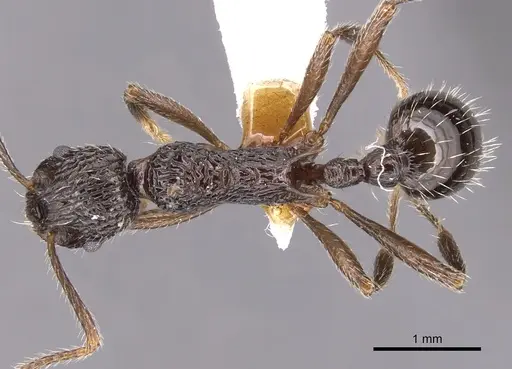
Literatur
Verbreitungskarte wird geladen...Produkte werden geladen...