
Monomorium niloticoides
- Wiss. Name
- Monomorium niloticoides
- Tribus
- Solenopsidini
- Unterfamilie
- Myrmicinae
- Autor
- Forel, 1910
- Verbreitung
- In 0 Ländern gefunden
Einleitung
Monomorium niloticoides is a small ant species native to the Eastern Mediterranean region, specifically found in Israel and Lebanon. Originally described as a variety of Monomorium venustum and later classified as a subspecies of Monomorium niloticum, it is now recognized as a valid species . Workers are tiny ants with light coloration typical of the genus. These ants inhabit dry to semi-arid regions, with documented populations ranging from coastal beach areas (Jounié in Lebanon) to mountainous regions up to 700m elevation (Beirut to Beit Meri) and the Judean Hills and Dead Sea area in Israel . The species shows ecological flexibility, being present in various habitats without strong association with any particular ecosystem type . As a member of the Myrmicinae subfamily, workers possess a stinger capable of injecting venom composed of piperidine alkaloids for defense.
Quick Summary
- Difficulty: Unknown, Insufficient data for assessment
- Origin & Habitat: Eastern Mediterranean, Israel (Judean Hills, Dead Sea area) and Lebanon (Beirut region, coastal areas). Found from sea level beaches to 700m elevation in mountainous areas. Related populations reported from Syria, Jordan, Egypt, and Saudi Arabia [1][2][3].
- Colony Type: Unconfirmed, colony structure has not been studied. Most Monomorium species form single-queen colonies, but this specific species has not been documented.
- Size & Growth:
- Queen: Size data unavailable, no documented measurements
- Worker: Size data unavailable, inferred from Monomorium genus as small (~2-4mm)
- Colony: Unknown, no colony size data available
- Growth: Unknown, no development data available
- Development: Estimated 6-8 weeks based on typical Monomorium genus patterns at warm temperatures (Development timeline is inferred from genus-level data, not species-specific research. Actual times may vary.)
- Antkeeping:
- Temperature: Estimated 22-28°C based on native range climate (Eastern Mediterranean). Provide a warm area in the nest with a gradient allowing thermoregulation.
- Humidity: Low to moderate, native to dry to semi-arid regions. Keep nest substrate moderately dry with occasional moisture zones.
- Diapause: Unknown, no documented winter dormancy requirements. Based on Eastern Mediterranean distribution, a mild winter rest period may be beneficial but this requires keeper experimentation.
- Nesting: Natural nesting sites unconfirmed. Based on genus patterns, likely nests in soil under stones or in small cavities. In captivity, test tubes or small nests work well. Provide moderate dryness.
- Behavior: Behavior is unstudied. Based on genus typical behavior, these are likely docile, non-aggressive ants that forage individually for small prey and honeydew. Their tiny size makes escape prevention critical. Workers possess a stinger but are too small to effectively sting humans. They are considered docile.
- Common Issues: tiny size makes escape prevention challenging, standard barriers may be insufficient, no species-specific care information available, keepers must rely on genus-level assumptions, colony development may be slow, patience required during founding phase, winter requirements are unknown, may need experimentation to determine appropriate rest period, wild-caught colonies may have unknown parasites or health issues
Distribution and Native Habitat
Monomorium niloticoides is restricted to the Eastern Mediterranean region, specifically Israel and Lebanon. In Israel, the species is found in the Judean Hills (region 11) and the Dead Sea area (region 13) [1]. In Lebanon, populations have been documented at the Jounié sandy beach strip and commonly between Beirut and Beit Meri at elevations up to 700m [2]. This distribution pattern suggests the species tolerates diverse conditions from coastal beach environments to semi-arid inland hills. The species shows ecological flexibility rather than strict habitat specialization, being present in various habitats without strong affinity for any particular association [3]. Related populations are reported from Syria, Lebanon, Jordan, Egypt, and Saudi Arabia [1].
Nest Preferences and Housing
Natural nesting behavior has not been documented for this species. Based on typical Monomorium genus patterns and the dry nature of their native habitat, they likely nest in soil beneath stones or in small natural cavities in the ground. For captive care, standard test tube setups work well for founding colonies. The small size of workers means you should use appropriately scaled nest chambers, tight spaces that feel secure to the ants rather than large open areas. Y-tongs with small chambers are suitable. Provide a moderate dryness level in the nest, with perhaps a small water tube for humidity but avoid overly damp conditions.
Feeding and Diet
Specific dietary preferences are unstudied for this species. As with other Monomorium ants, they likely forage for small insects, aphids, and honeydew in nature. For captive colonies, offer standard ant foods: small protein sources like fruit flies, pinhead crickets, or mealworm pieces, plus sugar water or honey as an energy source. Given their tiny size, prey items should be appropriately small. Feed protein 2-3 times per week and keep sugar water available continuously. Remove uneaten prey after 24 hours to prevent mold.
Temperature and Seasonal Care
Temperature requirements are not specifically documented, but the Eastern Mediterranean distribution suggests a preference for warm conditions. Aim for 22-28°C in the nest area, with a temperature gradient allowing workers to choose their preferred zone. A heating cable on one side of the nest can create this gradient. Winter care is uncertain, no documented diapause requirements exist. Based on the mild climate of their native range, a short winter rest period may be appropriate, but this requires keeper experimentation. Monitor colony activity and adjust based on how they respond.
Frequently Asked Questions
How long does it take for Monomorium niloticoides to raise first workers?
The exact timeline is unknown for this species. Based on typical Monomorium genus development patterns, expect approximately 6-8 weeks from egg to first worker at warm temperatures (around 25°C). The founding phase may take longer if the queen is claustral and relies solely on stored energy reserves.
What do Monomorium niloticoides ants eat?
Specific dietary studies are lacking, but Monomorium ants typically eat small insects and honeydew. Feed your colony small protein sources like fruit flies, tiny crickets, or mealworm pieces, plus sugar water or honey for carbohydrates. Offer protein 2-3 times weekly and keep sugar water available constantly.
Can I keep multiple queens together?
Colony structure is unconfirmed for this species. Most Monomorium species are single-queen, but polygyny has not been studied. Do not combine unrelated foundress queens, this risks fighting and colony failure.
What temperature should I keep Monomorium niloticoides at?
Based on their Eastern Mediterranean distribution, aim for 22-28°C with a gradient. A warm area around 25°C is likely ideal. Provide a heating cable on part of the nest to create variation. Avoid temperatures below 18°C for extended periods.
Do Monomorium niloticoides need hibernation?
Diapause requirements are unknown. The mild climate of their native range (Israel/Lebanon) suggests they may not need a true hibernation, but a short winter rest period may be beneficial. Monitor your colony's activity patterns.
Are Monomorium niloticoides good for beginners?
Difficulty level cannot be assessed due to limited species-specific data. This species is not commonly kept in the antkeeping hobby, and no established care protocols exist. Only experienced keepers should attempt this species, as care must be developed through experimentation.
How big do Monomorium niloticoides colonies get?
Maximum colony size is unknown. No documented colony size data exists for this species.
What type of nest should I use for Monomorium niloticoides?
Use small, tight-fitting nests appropriate for their tiny size. Test tubes work well for founding colonies. For established colonies, Y-tongs with appropriately scaled chambers are suitable. Keep conditions moderately dry.
Why are my Monomorium niloticoides escaping?
Their tiny size allows them to escape through standard mesh and gaps. Use fine mesh barriers (like nylon mesh), ensure all lid seams are tight, and apply fluon to the edges of the outworld. Check for any gaps larger than 1mm.
Report an Issue
The current care sheet is based fully on literature. See inconsistencies, or something that's incorrect? Please , it will be resolved after review from an admin. Contributing to the blogs tab also helps providing information, to make us be able to further improve the caresheets. Thank you for your support!
References

Dieses Caresheet ist lizenziert unter CC BY-SA 4.0 .
Community-Blogs
CASENT0908748
Auf AntWeb ansehen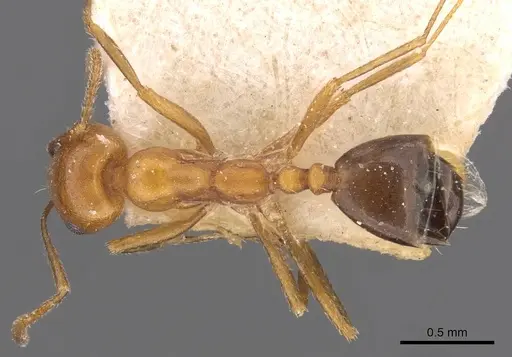
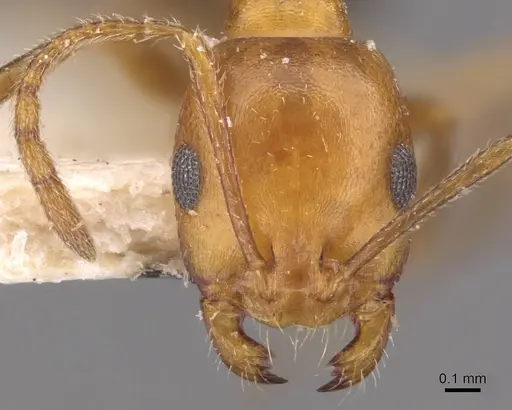
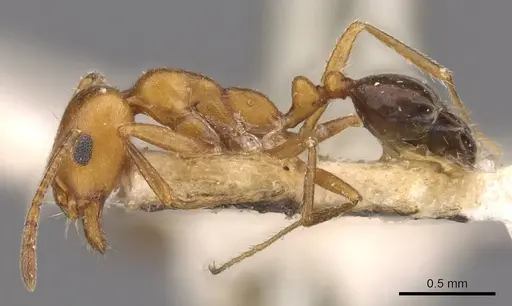
Literatur
Verbreitungskarte wird geladen...Produkte werden geladen...