
Messor hismai
- Wiss. Name
- Messor hismai
- Tribus
- Stenammini
- Unterfamilie
- Myrmicinae
- Autor
- Collingwood & Agosti, 1996
- Verbreitung
- In 0 Ländern gefunden
Einleitung
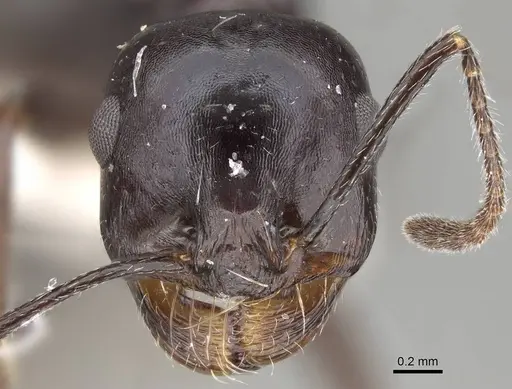
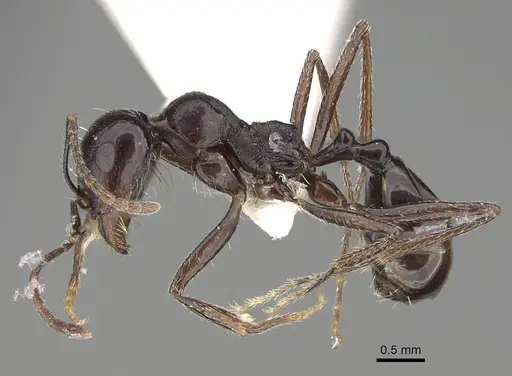
Messor hismai is a small harvester ant native to the Arabian Peninsula. Workers measure approximately 5.3mm in total length with a glossy black body, distinct propodeal spines, and smooth nodes and gaster. This species was described from Wadi Hisma in Saudi Arabia at 1120m elevation and has also been recorded in the United Arab Emirates . The workers are monomorphic - all workers are similar in size without major/caste differentiation. As a Messor species, these ants are seed-harvesters that collect and store seeds. Nothing is specifically documented about this species' biology.
Quick Summary
- Difficulty: Medium
- Origin & Habitat: Saudi Arabia and United Arab Emirates, desert and semi-arid mountainous regions at approximately 1120m elevation [1][2]. The type locality is Wadi Hisma, a desert wadi system in northwestern Saudi Arabia [3].
- Colony Type: Unconfirmed, colony structure has not been documented for this species.
- Size & Growth:
- Antkeeping:
- Temperature: Keep at 24-28°C. These ants come from a hot desert region and tolerate warm conditions. A heating cable on one side of the nest creates a useful gradient.
- Humidity: Low to moderate, desert species prefer dry conditions. Keep nest substrate relatively dry. Allow portions to dry out completely between waterings.
- Diapause: Unknown, not documented for this species. Specimens have been collected in March, suggesting seasonal activity patterns.
- Nesting: Use dry nest materials, plaster, Y-tong, or soil nests work well. Provide a dry outworld area for seed storage.
- Behavior: Typical harvester ant behavior, they forage for seeds and store them in granaries within the nest. Workers are moderately aggressive and will defend the colony. They are not extreme escape artists due to their moderate size, but standard escape prevention is recommended. They are diurnal foragers, active during cooler parts of the day in their natural hot habitat.
- Common Issues: seed mold, stored seeds can develop mold if humidity is too high, check and remove affected seeds, colonies may decline if only fed protein without sufficient seed offerings, slow founding, queens may take months before first workers emerge, test tube flooding can be fatal, ensure water reservoirs are appropriately sized
Nest Preferences and Housing
Messor hismai does well in dry nest setups typical for harvester ants. Plaster nests, Y-tong formicariums, or soil nests all work well. The key is providing dry conditions, these ants come from arid desert environments and do not tolerate damp conditions. The nest chambers should be appropriately sized for their approximately 5mm workers. In the wild, they likely nest in soil or sand. The outworld should be spacious enough for seed storage behavior and foraging activity. [4]
Feeding and Diet
As a Messor species, M. hismai is primarily a seed-harvester. They collect seeds from plants and store them in granaries within the nest. In captivity, offer a variety of seeds, grass seeds, millet, sunflower seeds (cracked), and commercial ant seeds work well. Additionally, provide protein sources like small insects (fruit flies, small crickets, mealworms) especially for growing colonies and queens. Sugar water or honey can be offered occasionally, though seeds should form the bulk of their diet. Remove uneaten seeds periodically to prevent mold. [4]
Temperature and Seasonal Care
These ants come from the hot Arabian Peninsula, so they prefer warm conditions. Keep the nest area at 24-28°C, with access to warmer areas if they choose to move there. A heating cable placed on one side of the nest creates a useful temperature gradient. The seasonal care for this specific species is not documented. Specimens have been collected in March, suggesting spring activity. Most Messor species benefit from a mild cool period in winter, but this is not confirmed for M. hismai. [2][3]
Behavior and Colony Dynamics
Messor hismai exhibits typical harvester ant behavior. Workers forage actively during the day, collecting seeds and carrying them back to the nest. The species is described as monomorphic, meaning all workers are similar in size without major/caste differentiation. Colonies are defensive and will attack threats to the nest. Founding behavior is unconfirmed for this species, claustral founding is typical for the genus but has not been documented specifically for M. hismai. [4]
Frequently Asked Questions
How long does it take for Messor hismai to have first workers?
This is not documented. The founding behavior of this species has not been studied. Expect a wait of several months during colony establishment.
What do Messor hismai ants eat?
They are seed-harvesters. Offer a mix of seeds (grass seeds, millet, cracked sunflower seeds) as their primary food. Supplement with small insects for protein. Remove uneaten seeds regularly to prevent mold.
Do Messor hismai ants need hibernation?
This is unknown for this species. The seasonal requirements have not been documented. Most Messor species from temperate regions benefit from a cool period, but this has not been confirmed for M. hismai.
Can I keep Messor hismai in a test tube?
Test tubes work for founding colonies. Use a standard test tube setup with a water reservoir. Once the colony reaches 20-30 workers, consider moving to a proper formicarium with space for seed storage and foraging.
Are Messor hismai good for beginners?
They are moderate difficulty. The main challenges are the unknown founding phase duration and the need for dry, warm conditions. This species is not well-documented in antkeeping, so some experimentation may be needed.
How big do Messor hismai colonies get?
Colony size is not documented for this species. Related Messor species can reach several hundred workers, but M. hismai specifics are unknown.
Do Messor hismai ants sting?
Messor ants have stingers but are not particularly aggressive toward humans. They will defend the nest if threatened, but their sting is mild.
When should I move Messor hismai to a formicarium?
Move from test tube to formicarium once the colony reaches roughly 20-30 workers and you see seed storage behavior beginning. Ensure the new setup provides dry conditions and space for granaries.
Why is my Messor hismai queen not laying eggs?
Newly mated queens often take time to establish. Ensure she is in a dark, undisturbed location at warm temperatures (24-28°C). Some queens take weeks or months to begin laying. Do not disturb the founding chamber.
What temperature is best for Messor hismai?
Keep them warm at 24-28°C. They are desert-adapted and can tolerate higher temperatures. A temperature gradient allows them to choose their preferred zone.
Report an Issue
The current care sheet is based fully on literature. See inconsistencies, or something that's incorrect? Please , it will be resolved after review from an admin. Contributing to the blogs tab also helps providing information, to make us be able to further improve the caresheets. Thank you for your support!
References

Dieses Caresheet ist lizenziert unter CC BY-SA 4.0 .
Community-Blogs
CASENT0922343
Auf AntWeb ansehen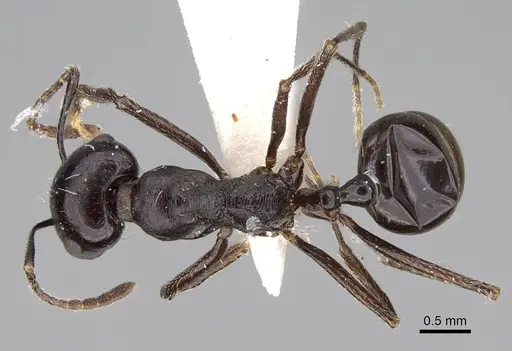
Literatur
Verbreitungskarte wird geladen...Produkte werden geladen...