
Meranoplus parviumgulatus
- Wiss. Name
- Meranoplus parviumgulatus
- Tribus
- Crematogastrini
- Unterfamilie
- Myrmicinae
- Autor
- Donisthorpe, 1947
- Verbreitung
- In 0 Ländern gefunden
Einleitung
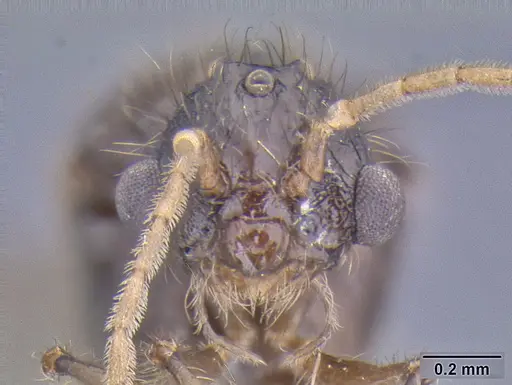
Meranoplus parviumgulatus is a tiny rainforest ant known only from the island of New Guinea, including eastern Indonesia (Irian Jaya) and Papua New Guinea . Originally described in 1947 as Tricytarus parviumgulatus from lost male specimens, the species was reclassified into the genus Meranoplus in 2014 when a neotype was designated . Males are approximately 4mm in total length and are dark brown to blackish with pale yellow antennae and tarsi . This species is extraordinary in that only the male caste has ever been described - no workers or queens have ever been collected, making it essentially unidentifiable in the antkeeping hobby .
Quick Summary
- Difficulty: Unknown
- Origin & Habitat: Tropical rainforest in eastern Indonesia (Irian Jaya) and Papua New Guinea, from sea level to 600m elevation [1]. The neotype was collected from primary rainforest at Tekadu, Lakekamu Basin in Morobe Province, PNG [1].
- Colony Type: Unknown, only the male caste has been described. No information exists on colony structure or queen number.
- Size & Growth:
- Queen: Unknown, queens have never been described for this species
- Worker: Unknown, workers have never been described for this species
- Colony: Unknown, no colony data exists
- Growth: Unknown
- Development: Unknown, no development data exists for this species (No brood development studies exist for this species.)
- Antkeeping:
- Temperature: Estimated 22-28°C based on tropical rainforest habitat. Start around 24°C and observe colony activity.
- Humidity: High humidity likely required, tropical rainforest species typically need 70-85% humidity. Keep substrate consistently moist but not waterlogged.
- Diapause: Unknown, no seasonal data exists. Tropical species from PNG likely do not require hibernation.
- Nesting: Unknown, no natural nesting observations exist. Based on genus patterns, likely nests in soil, under stones, or in rotting wood in humid forest floor microhabitats.
- Behavior: Completely unknown. The genus Meranoplus contains diverse ants with varied temperaments, but most are not particularly aggressive. No observations exist on escape behavior, foraging style, or defensive responses for this specific species.
- Common Issues: no captive husbandry information exists, this species has never been kept in captivity, only the male caste has been described, making it essentially unidentifiable in the hobby, no workers or queens have ever been found or described, risk of obtaining misidentified specimens if ever available in trade
Species Identification and History
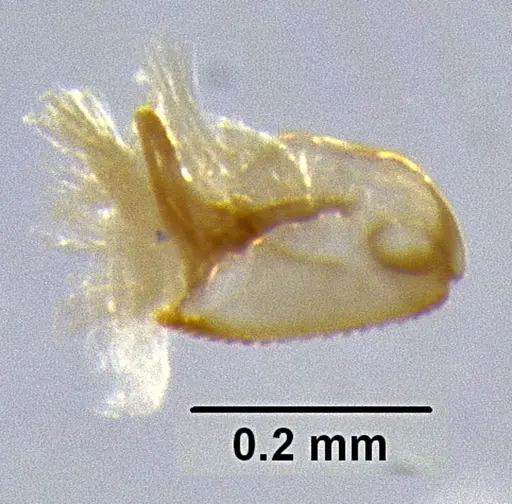
Meranoplus parviumgulatus has a complicated taxonomic history. It was originally described as Meranoplus parviumgulatus by Donisthorpe in 1947 based on three male specimens collected from Maffin Bay in Dutch New Guinea (now Irian Jaya, Indonesia) in August 1944 during the Ross expedition [1]. The original type material was subsequently lost, and the species remained unidentifiable for decades. In 2014,Brendon Boudinot rediscovered this taxon and designated a neotype male collected from Papua New Guinea, Morobe Province, confirming its placement in the genus Meranoplus [1]. The species name means 'small-mouthed' (parvi = small, umgulatus = mouthed) in Latin, referring to the distinctive morphology of the male's head and mouthparts. This species remains known only from males, no workers or queens have ever been collected or described, making it essentially impossible to identify in the antkeeping hobby [1].
Distribution and Natural Habitat
This species is endemic to the island of New Guinea, with confirmed records from eastern Indonesia (Irian Jaya) and Papua New Guinea [1]. The known elevation range spans from sea level to at least 600 meters. The neotype collection site was primary rainforest at Tekadu in the Lakekamu Basin, Morobe Province, PNG, collected in January 2000 [1]. The original specimens came from Maffin Bay in the lowland forests of Irian Jaya. This suggests the species is a true rainforest inhabitant, likely preferring the humid, shaded microhabitats typical of tropical forest floors. The collection dates (January and August) indicate mating flights probably occur during the wet season in PNG, but this is inferred from collection data rather than direct observation of nuptial flights [1].
Current State of Knowledge
The biology of Meranoplus parviumgulatus is completely unstudied. We have no information on worker morphology, queen appearance, colony size, colony structure, founding behavior, diet, development time, or any aspect of captive care. This is one of the least known ant species in the hobby, and likely one of the least studied ants in the world. The genus Meranoplus contains approximately 80 described species distributed primarily in the Old World tropics and Australasia, with most species nesting in soil or under stones in forested areas. However, even generalizing from the genus to this specific species would be speculative. There are no captive colonies of this species in the antkeeping hobby, and it is extremely unlikely that any specimens exist in private or institutional collections. Any ant labeled as M. parviumgulatus in the trade would be essentially unverifiable without males for comparison [1].
Estimated Care Guidelines
Because no captive information exists, all care recommendations are rough estimates based on what we know about the species' habitat and related ants. Keep the colony at tropical temperatures around 24-26°C, with a slight gradient if possible. Humidity should be high, think damp forest floor conditions, around 70-80% relative humidity. Nesting should likely use a moist substrate setup, such as a test tube with water reservoir or a naturalistic terrarium with soil. Foraging and diet are complete guesses, but based on typical Meranoplus and other small Myrmicinae, they likely accept small insects and may also exploit honeydew or sugar sources. Given their tiny size (males are about 4mm), escape prevention would be critical if specimens ever become available. These estimates have very low confidence, this species should be considered an 'advanced mystery' suitable only for researchers or extremely experienced antkeepers willing to experiment with completely uncharted husbandry [1].
Frequently Asked Questions
Can I keep Meranoplus parviumgulatus as a pet ant?
No, this species has never been kept in captivity and no workers or queens have ever been described. It is essentially impossible to obtain verified specimens, and even if you could, there is no care information available. This species exists only in museum collections as preserved males.
How do I identify Meranoplus parviumgulatus?
You cannot reliably identify this species without male specimens for comparison. Workers and queens have never been described, so there are no identification keys for the castes you would typically keep in captivity. Any ant sold as this species in the hobby would be unverified.
What do Meranoplus parviumgulatus eat?
Unknown, no feeding observations exist for this species.
Do Meranoplus parviumgulatus ants sting?
Unknown, no defensive behavior has been documented. Most small Myrmicinae can sting but rarely penetrate human skin.
What temperature do Meranoplus parviumgulatus need?
Estimated 22-28°C based on their tropical rainforest habitat in lowland PNG. Start around 24°C and observe colony behavior. This is a guess with very low confidence.
How big do Meranoplus parviumgulatus colonies get?
Unknown, no colony size data exists for this species.
Do Meranoplus parviumgulatus need hibernation?
Unknown, no seasonal data exists. As a tropical species from near the equator in PNG, they likely do not require a diapause period, but this is unconfirmed.
Are Meranoplus parviumgulatus good for beginners?
No. This species has no captive care information, has never been kept in captivity, and only the male caste is known to science. It is completely unsuitable for beginners and would be extremely challenging even for experts.
When do Meranoplus parviumgulatus have nuptial flights?
Likely January and June based on collection dates of male specimens, but this is unconfirmed. Nuptial flight timing has never been directly observed.
Where does Meranoplus parviumgulatus live?
Only in New Guinea, specifically eastern Indonesia (Irian Jaya) and Papua New Guinea. They live in tropical rainforest at elevations from sea level to 600 meters.
Report an Issue
The current care sheet is based fully on literature. See inconsistencies, or something that's incorrect? Please , it will be resolved after review from an admin. Contributing to the blogs tab also helps providing information, to make us be able to further improve the caresheets. Thank you for your support!
References

Dieses Caresheet ist lizenziert unter CC BY-SA 4.0 .
Community-Blogs
CASENT0171191
Auf AntWeb ansehen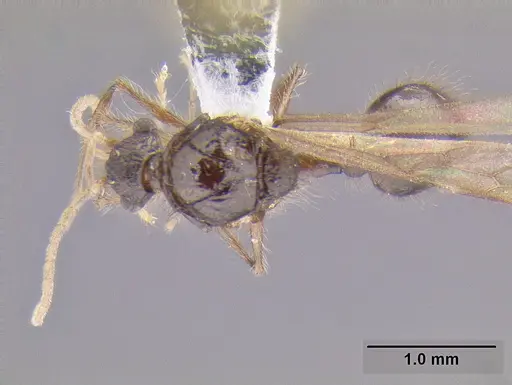
Literatur
Verbreitungskarte wird geladen...Produkte werden geladen...