
Lordomyrma jingpo
- Wiss. Name
- Lordomyrma jingpo
- Tribus
- Crematogastrini
- Unterfamilie
- Myrmicinae
- Autor
- Liu <i>et al.</i>, 2021
- Verbreitung
- In 0 Ländern gefunden
Einleitung
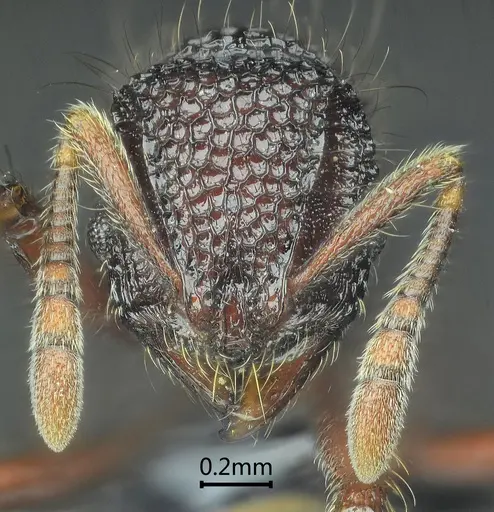
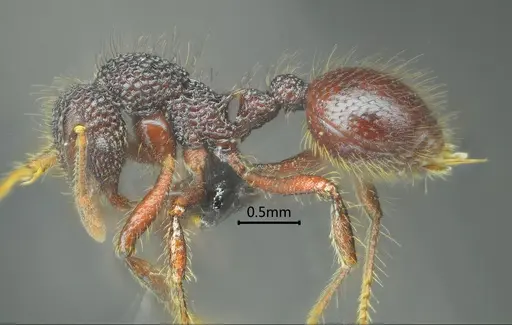
Lordomyrma jingpo is a small ant species recently described from Yunnan Province, China. Workers measure approximately 4.1-4.3mm and queens approximately 4.7mm in total length. They have a distinctive bicolored appearance - head, mesosoma and waist are blackish brown while the abdomen (gaster) is reddish brown. They feature long propodeal spines, well-developed antennal scrobes, and a smooth, shiny first gastral segment. This species was discovered nesting in soil within a fragmented valley lowland rainforest at 590m elevation in Yingjiang County . This species has an extremely limited known distribution - documented only from a single nest containing 12 workers,1 queen, and 3 winged females. The species is named after the Jingpo minority people who reside in the type locality region. Lordomyrma jingpo is closely related to Lordomyrma reticulata and Lordomyrma idianale but can be distinguished by its smooth first gastral segment and bicolored body .
Quick Summary
- Difficulty: Unknown, insufficient data for assessment
- Origin & Habitat: Yunnan Province, China (Yingjiang County, Nabang Town, Palan Village) at 590m elevation. Found nesting in soil within a fragmented valley lowland rainforest. The soil was classified as latosol, a type of red tropical soil common in humid forest environments [1][2].
- Colony Type: Single-queen colonies (monogyne). The only known colony consisted of 12 workers,1 queen, and 3 winged females [1].
- Size & Growth:
- Queen: ~4.7mm total length [1]
- Worker: ~4.1-4.3mm total length [1]
- Colony: Only one wild colony documented with 12 workers, colony size estimate unavailable [1]
- Growth: Unknown, no development data exists for this species
- Development: Unconfirmed, no direct observations exist (Development timeline has not been studied for this species.)
- Antkeeping:
- Temperature: Based on the species' origin in subtropical Yunnan lowland rainforest, aim for warm conditions around 22-26°C. The valley rainforest habitat suggests they prefer stable, warm temperatures with moderate humidity. Provide a gentle temperature gradient so ants can self-regulate.
- Humidity: The valley lowland rainforest origin indicates moderate to high humidity needs. Keep the nest substrate consistently moist but not waterlogged, think damp forest floor conditions. Provide some drier areas within the nest for the ants to choose if needed.
- Diapause: Unknown, no data on overwintering requirements. Yunnan has mild winters at 590m elevation. Monitor colony behavior and reduce feeding during winter months if activity decreases.
- Nesting: In nature, they nest in soil within lowland rainforest. For captive care, a moist substrate-based nest works well, either a naturalistic setup with soil or a plaster nest kept humid. The small colony size means they don't need large spaces. Tight-fitting lids are important as they can escape through small gaps.
- Behavior: Behavior has not been extensively documented. As a Lordomyrma species, they are likely relatively docile. Workers are small so escape prevention is important despite their calm temperament. They probably forage individually for small prey and honeydew. The presence of winged females suggests nuptial flights occur, but timing is unknown. This species belongs to subfamily Myrmicinae, tribe Crematogastrini, which typically use a smear defense mechanism with their modified stinger, however, given their tiny size, sting risk to humans is minimal [1].
- Common Issues: Very limited species data means care requirements are largely inferred, expect some trial and error, Small colony size makes them vulnerable to stress, handle gently and minimize disturbances, Humidity management is critical, too dry causes desiccation, too wet causes fungal problems, Escape prevention is necessary despite their small size, they can fit through tiny gaps, Wild-caught colonies may have limited genetic diversity affecting colony establishment
Nest Preferences and Housing
In the wild, Lordomyrma jingpo nests in soil within valley lowland rainforest environments. The type specimen was collected from latosol soil in a fragmented rainforest valley at 590m elevation in Yunnan Province, China [1]. For captive care, a naturalistic setup with moist soil or a humid plaster nest works well. Given their small colony size, they don't require large enclosures, a test tube setup can work for founding colonies, while a small formicarium with soil chambers suits established colonies. The key is maintaining consistent moisture without waterlogging. Provide a nest area with multiple connected chambers scaled to their tiny size. Escape prevention is important, use tight-fitting lids and fine mesh barriers [1][2].
Feeding and Diet
The specific diet of Lordomyrma jingpo has not been documented. Based on typical Myrmicinae feeding patterns, they likely forage for small insects, honeydew from aphids, and may accept sugar sources. Offer a varied diet including: small live prey (fruit flies, pinhead crickets, springtails), protein sources (mealworms, bloodworms), and sugar water or honey. Feed small amounts several times per week, removing uneaten food to prevent mold. Since colonies remain small, overfeeding is a common mistake, provide only what they can consume in 24-48 hours. Fresh water should always be available.
Temperature and Seasonal Care
Lordomyrma jingpo comes from subtropical Yunnan at 590m elevation, a warm, humid environment with mild seasonal variation. Keep the nest area at roughly 22-26°C, avoiding temperature extremes. A heating cable on one side of the nest creates a gentle gradient allowing self-regulation. Room temperature within this range is often suitable. Regarding diapause (winter rest), no data exists for this species. Yunnan winters are mild, but the specific requirements are unknown. If colony activity decreases during winter months, reduce feeding and slightly lower temperatures (by 2-4°C) to simulate natural seasonal slowdown. Monitor colony behavior rather than forcing a strict hibernation schedule [1].
Colony Structure and Reproduction
The only known wild colony of Lordomyrma jingpo consisted of 12 workers,1 queen, and 3 winged females (alate reproductives) [1]. This confirms single-queen (monogyne) colony structure. The presence of winged females indicates sexual reproduction occurs through nuptial flights, though the timing is unknown. Queens measure approximately 4.7mm while workers are approximately 4.1-4.3mm, a modest size difference typical of many Myrmicinae. The colony was collected from soil in March 2015,which may indicate spring is the active season for this region. For antkeepers, starting with a single queen is the typical approach. Colony size data is limited, only one wild colony has been documented [1][2].
Behavior and Temperament
Lordomyrma jingpo behavior has not been extensively studied, but the genus is generally known for calm colonies. Workers are small and likely forage individually rather than in large raiding parties. This species belongs to subfamily Myrmicinae, tribe Crematogastrini, which features a modified flattened stinger used to smear venom onto enemies rather than pierce flesh. However, given their tiny size (approximately 4mm), sting risk to humans is minimal. They are probably shy and prefer to retreat rather than engage threats. For antkeepers, this means gentle handling and minimal disturbance to colonies. Escape risk is present despite their docile nature, their small size allows them to squeeze through tiny gaps, so excellent escape prevention with fine mesh and tight lids is essential [1].
Frequently Asked Questions
How long does it take for Lordomyrma jingpo to produce first workers?
The egg-to-worker timeline is unconfirmed for this species. No direct observations of development exist.
What do Lordomyrma jingpo ants eat?
Specific diet has not been documented. Based on typical Myrmicinae feeding patterns, they likely accept small live prey (fruit flies, springtails), protein sources (mealworms, bloodworms), and sugar water or honey. Feed small amounts several times per week and remove uneaten food promptly.
Can I keep multiple Lordomyrma jingpo queens together?
No, this species is monogyne (single-queen), confirmed by the single documented colony. Multiple unrelated queens will likely fight. Only keep one queen per colony.
Do Lordomyrma jingpo ants sting?
They belong to Myrmicinae which have a modified stinger for smear defense, but their tiny size (approximately 4mm workers) means they pose minimal sting risk to humans.
What temperature do Lordomyrma jingpo need?
Based on their subtropical Yunnan origin, aim for 22-26°C. A gentle temperature gradient allows self-regulation. Room temperature within this range is often suitable.
How big do Lordomyrma jingpo colonies get?
Colony size is not well documented, only one wild colony with 12 workers has been recorded. No estimate for maximum colony size is available.
Do Lordomyrma jingpo need hibernation?
Diapause requirements are unknown. If colony activity decreases in winter, reduce feeding and slightly lower temperatures. Do not force cold hibernation, their native Yunnan has mild winters.
Are Lordomyrma jingpo good for beginners?
Difficulty level cannot be assessed due to limited species data. Very limited information exists for establishing best practices.
What humidity do Lordomyrma jingpo need?
The valley lowland rainforest origin indicates moderate to high humidity. Keep nest substrate consistently moist but not waterlogged, damp forest floor conditions. Provide some drier areas for choice.
When will Lordomyrma jingpo alates (reproductives) appear?
The timing of nuptial flights is unknown. The only documented colony had 3 winged females present alongside the queen, suggesting sexual brood is produced but flight timing is unstudied.
Report an Issue
The current care sheet is based fully on literature. See inconsistencies, or something that's incorrect? Please , it will be resolved after review from an admin. Contributing to the blogs tab also helps providing information, to make us be able to further improve the caresheets. Thank you for your support!
References

Dieses Caresheet ist lizenziert unter CC BY-SA 4.0 .
Community-Blogs
ANTWEB1060548
Auf AntWeb ansehen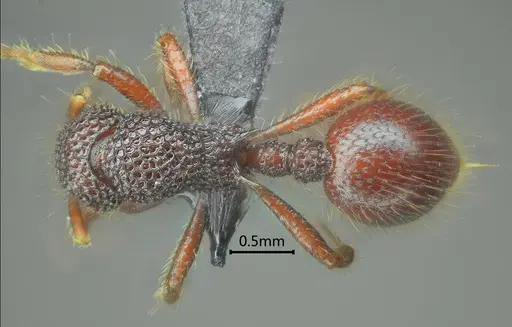
Literatur
Verbreitungskarte wird geladen...Produkte werden geladen...