
Loboponera trica
- Wiss. Name
- Loboponera trica
- Tribus
- Ponerini
- Unterfamilie
- Ponerinae
- Autor
- Bolton & Brown, 2002
- Verbreitung
- In 0 Ländern gefunden
Einleitung
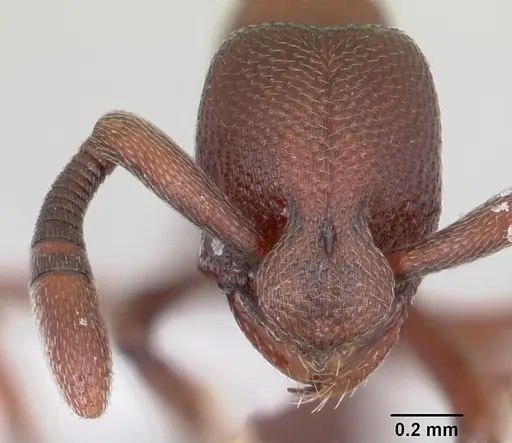
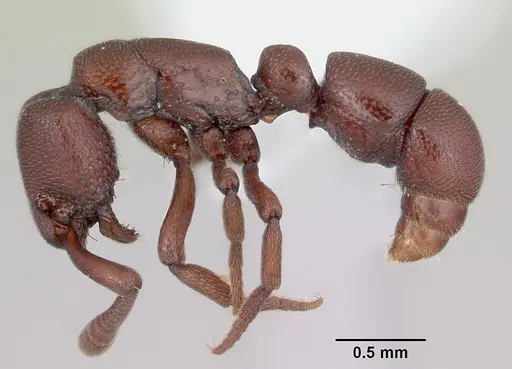
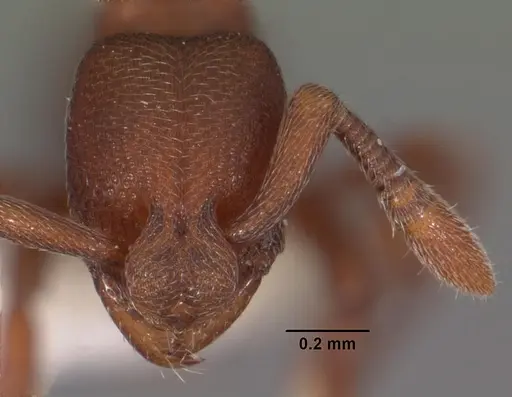
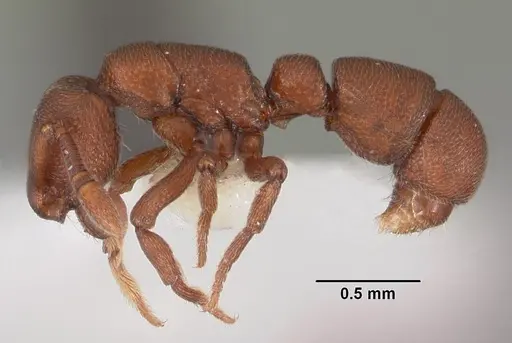
Loboponera trica is a tiny ant species measuring about 3mm in total length, native to the rainforests of West and Central Africa. Specimens have been documented in the Democratic Republic of Congo and Ivory Coast . This species belongs to the Ponerinae subfamily, known for predatory behavior and functional stings. L. trica is distinctive because it completely lacks standing hairs on its body, instead displaying a uniform fine dense sculpture across its head, alitrunk, and gaster . The species was formally described in 2002 by Bolton & Brown and remains poorly studied in scientific literature .
Quick Summary
- Difficulty: Medium to Hard
- Origin & Habitat: West and Central African rainforests. Specimens have been collected from leaf litter and dead wood in the Democratic Republic of Congo and Ivory Coast [1][2].
- Colony Type: Colony structure is unconfirmed. Based on typical Ponerinae patterns, likely single-queen colonies.
- Size & Growth:
- Queen: Unconfirmed, estimated slightly larger than workers based on genus patterns
- Worker: 3.0mm total length (TL) [1]
- Colony: Unknown, likely small colonies based on typical Ponerinae patterns and tiny worker size
- Growth: Unknown, likely slow to moderate like most Ponerinae species
- Development: Unknown, no specific development data exists for this species (No direct development data exists for this species.)
- Antkeeping:
- Temperature: Keep warm at 24-28°C. As a rainforest species from Central Africa, they need stable warm conditions [1].
- Humidity: High humidity required, rainforest leaf litter dwellers. Keep substrate consistently moist but not waterlogged. Provide a humid gradient with a moist side and slightly drier areas [1].
- Diapause: Unlikely, being a tropical rainforest species, they probably do not require a true diapause. Maintain warm conditions year-round [1].
- Nesting: In nature they nest in dead wood and leaf litter. In captivity, a naturalistic setup with moist substrate (coco fiber, soil mix) and hiding spots works well. Test tubes with cotton can work if humidity is maintained. Provide small chambers and tight spaces scaled to their tiny 3mm size [1].
- Behavior: Ponerinae ants are typically predatory with potent stings. L. trica likely forages in leaf litter for small prey. Their small size and lack of standing hairs make them distinctive. Escape prevention is critical due to their tiny 3mm size, use fine mesh barriers and tight-fitting lids. They are likely nocturnal or crepuscular foragers based on typical Ponerinae behavior [1].
- Common Issues: escape prevention is critical, at only 3mm, they can squeeze through the tiniest gaps, high humidity requirements can lead to mold if ventilation is poor, predatory diet means they need live prey, not suitable for keepers who want hands-off feeding, limited availability makes obtaining a colony difficult, slow growth and poor documentation mean beginners may struggle with care
Nest Preferences and Housing
Loboponera trica naturally nests in dead wood and leaf litter within rainforest environments [1]. In captivity, you should recreate these humid, concealed conditions. A naturalistic setup works best, a shallow container filled with moist coco fiber or a soil mix, with pieces of dead wood, leaves, and bark for hiding spots. The substrate should remain consistently moist but never waterlogged. Given their tiny 3mm size, provide small hiding spots and tight spaces between substrate materials. Test tube setups can work if you maintain high humidity around the tube, but these ants may do better in small plastic containers with moist substrate. Always use excellent escape prevention, their small size means they can escape through gaps you might not notice with larger ants.
Feeding and Diet
As a Ponerinae species, Loboponera trica is likely predatory like most ants in this subfamily. They probably hunt small invertebrates in leaf litter, think springtails, tiny mites, and other micro-arthropods. In captivity, offer small live prey appropriate to their size: fruit flies, pinhead crickets (very small), and other tiny insects. You can also try small pieces of insects like crushed mealworms. Sugar sources may be accepted occasionally, but Ponerinae ants are primarily protein predators. Feed them small prey items every few days, removing any uneaten prey after 24 hours to prevent mold. The exact dietary preferences of this species have not been documented, so be prepared to experiment with different small prey items. [1]
Temperature and Humidity
Being a rainforest species from Central Africa, these ants need warm and humid conditions. Maintain temperatures between 24-28°C, a heating cable on one side of the enclosure can create a gentle gradient if your room temperature is cooler. High humidity is essential: aim for 70-85% relative humidity. The substrate should feel consistently moist to the touch. Mist the enclosure occasionally, but avoid standing water. Good ventilation is important to prevent mold while maintaining humidity, small holes covered with fine mesh work well. Unlike temperate species, they do not require hibernation or cooling periods. Keep conditions stable year-round. If you notice workers clustering together excessively or becoming less active, check that humidity and temperature are within range. [1]
Behavior and Temperament
Loboponera trica is a Ponerinae ant, and this subfamily is known for having potent stings, even though these ants are tiny, their sting should not be dismissed. They likely forage at night or during twilight hours, hunting through leaf litter for small prey. Colonies are probably small and secretive, nesting in concealed humid locations. Their most distinctive physical feature is the complete absence of standing hairs combined with dense fine sculpture covering their entire body, this makes them easy to identify under magnification. They are not aggressive toward humans but will defend their nest if threatened. Due to their tiny 3mm size, excellent escape prevention is absolutely essential, even standard ant keeping setups may have gaps too large for these minute ants. [1]
Frequently Asked Questions
How long does it take for Loboponera trica to produce first workers?
The exact development timeline is unknown. No specific development data exists for this species.
Can I keep Loboponera trica in a test tube setup?
You can try, but it may not be ideal. These ants naturally live in leaf litter and dead wood, so they prefer a naturalistic setup with moist substrate. If using test tubes, ensure high ambient humidity and provide hiding structures. A small plastic container with moist coco fiber works better for this species.
What do Loboponera trica eat?
They are likely predatory on small invertebrates. Feed small live prey like fruit flies, tiny crickets, springtails, and other micro-arthropods. Small pieces of crushed insects may also be accepted. Sugar water can be offered occasionally but is not their primary food source.
Are Loboponera trica good for beginners?
Probably not. This is a poorly documented species with specific humidity and temperature requirements. They are tiny, making escape prevention challenging, and their predatory diet requires live prey. Unless you have experience with Ponerinae ants, consider more established species first.
How big do Loboponera trica colonies get?
Colony size is unconfirmed, but based on their tiny 3mm worker size and typical Ponerinae patterns, colonies likely remain small, probably dozens to a few hundred workers at maximum. Do not expect large colonies.
Do Loboponera trica need hibernation?
No. Being a tropical rainforest species from Central Africa, they do not require hibernation or cooling periods. Keep them warm and humid year-round.
When should I move Loboponera trica to a formicarium?
Wait until the colony reaches at least 20-30 workers. These ants prefer naturalistic setups with moist substrate rather than commercial formicariums. A small plastic container with moist coco fiber and hiding structures works well.
Why are my Loboponera trica escaping?
At only 3mm, they can squeeze through incredibly small gaps. Check all openings, seams, and ventilation holes. Use fine mesh (0.5mm or smaller) for ventilation. Even standard ant keeping equipment may have gaps too large, examine everything under bright light.
Can I keep multiple Loboponera trica queens together?
This has not been documented. Based on typical Ponerinae patterns, single-queen colonies are most likely. Do not attempt combining unrelated queens without research specific to this species.
Report an Issue
The current care sheet is based fully on literature. See inconsistencies, or something that's incorrect? Please , it will be resolved after review from an admin. Contributing to the blogs tab also helps providing information, to make us be able to further improve the caresheets. Thank you for your support!
References

Dieses Caresheet ist lizenziert unter CC BY-SA 4.0 .
Community-Blogs
CASENT0003113
Auf AntWeb ansehen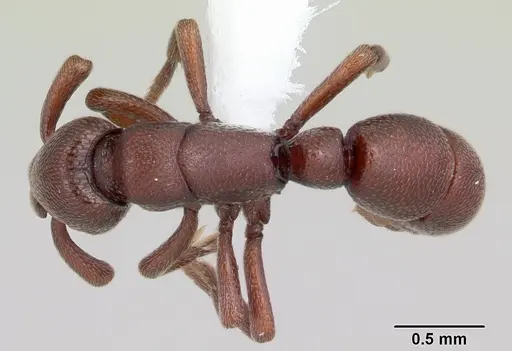
CASENT0102322
Auf AntWeb ansehen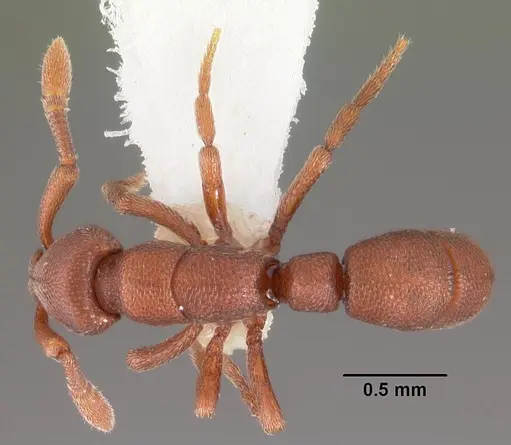
Literatur
Verbreitungskarte wird geladen...Produkte werden geladen...